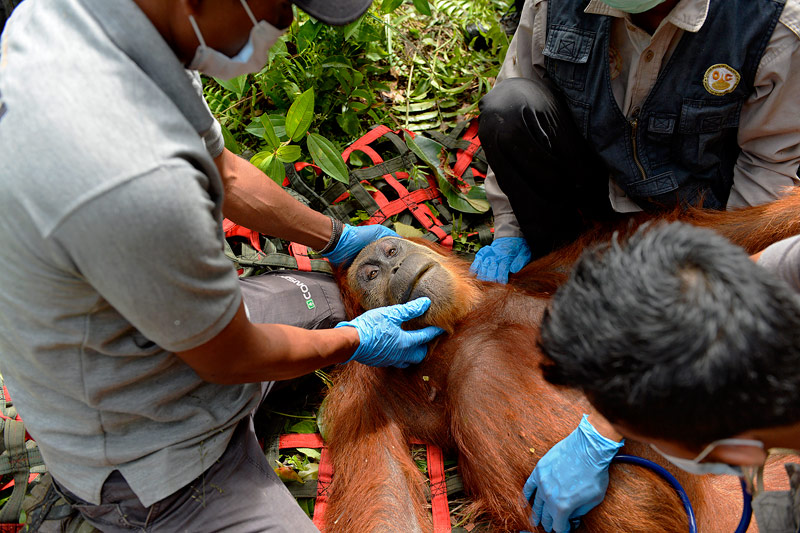
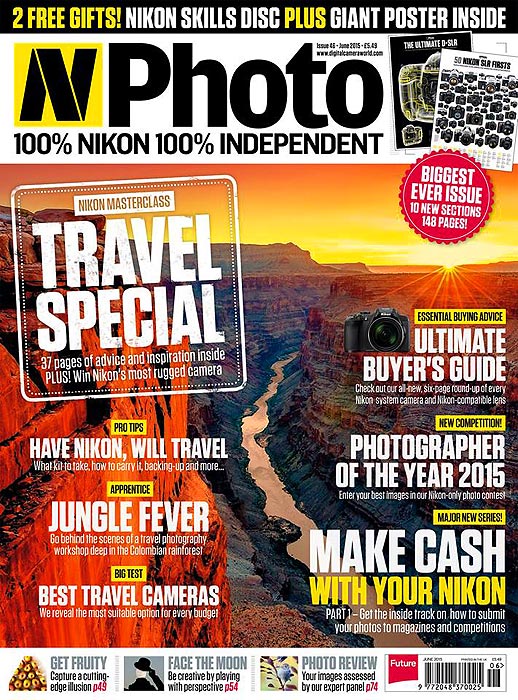
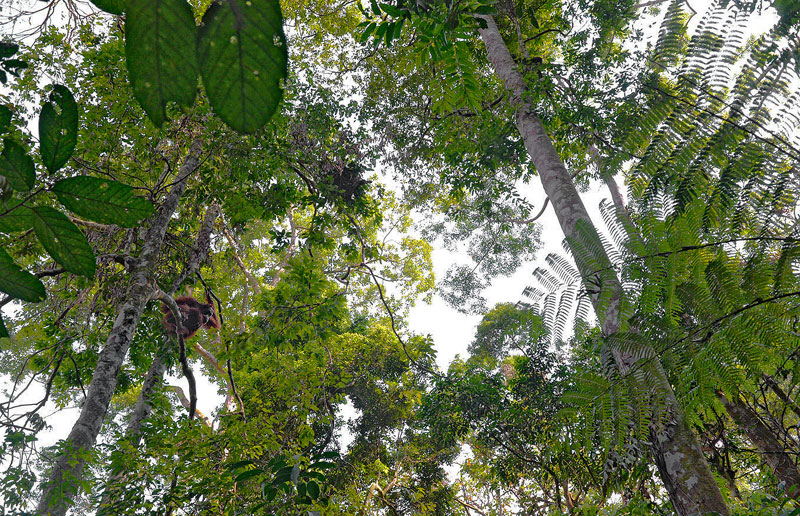
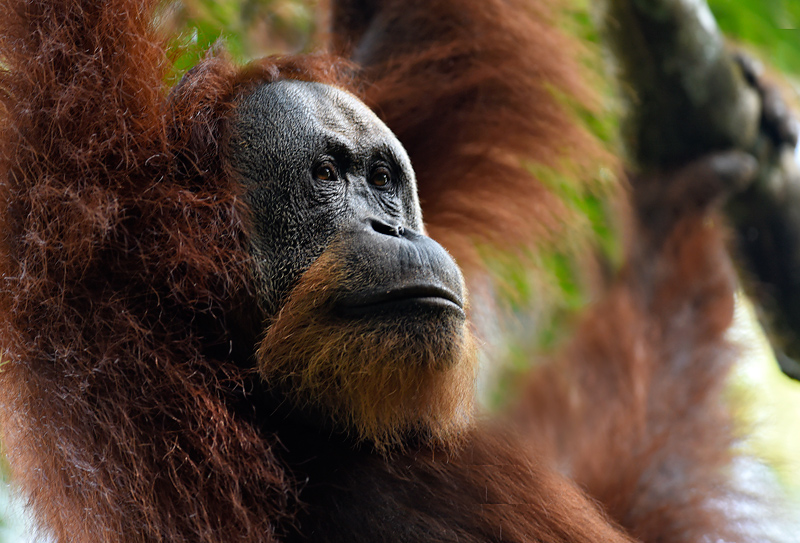
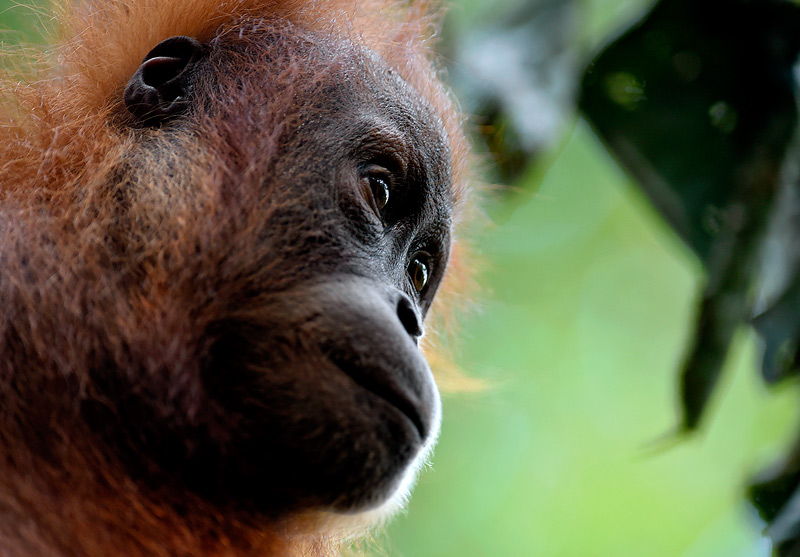
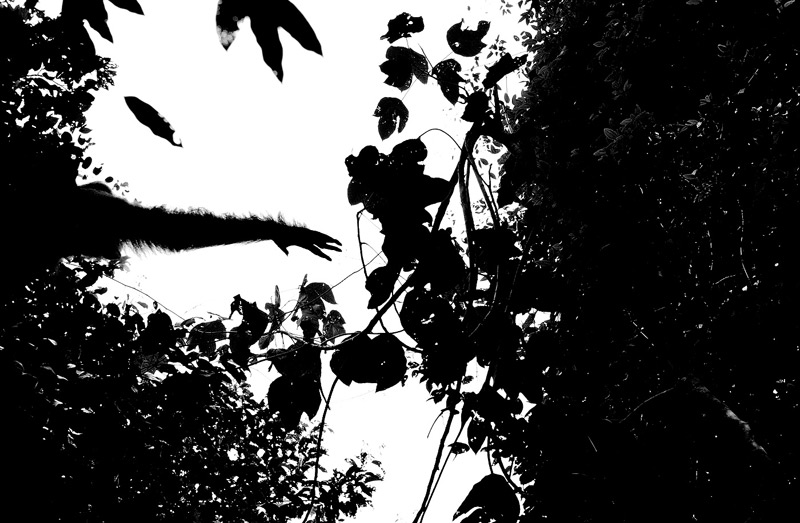
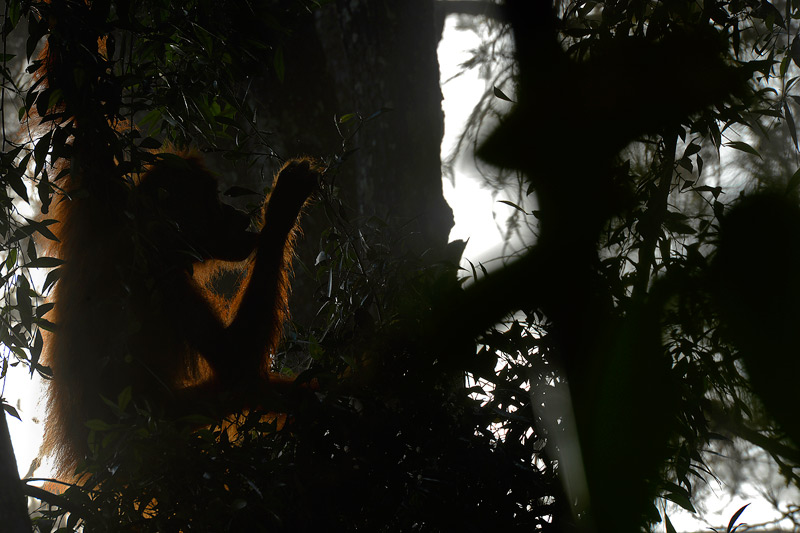
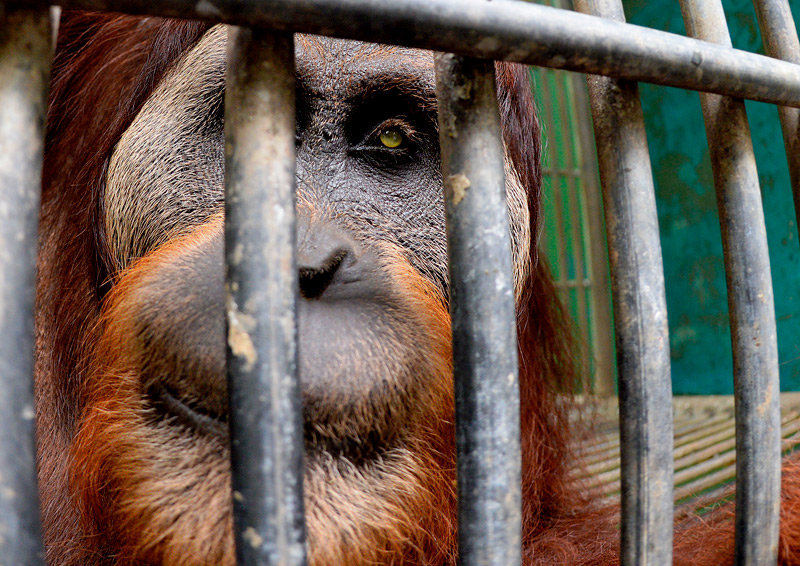
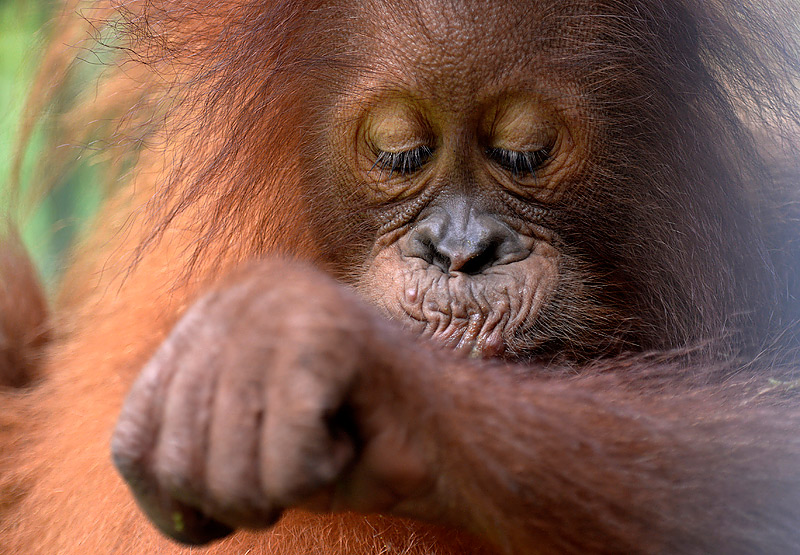
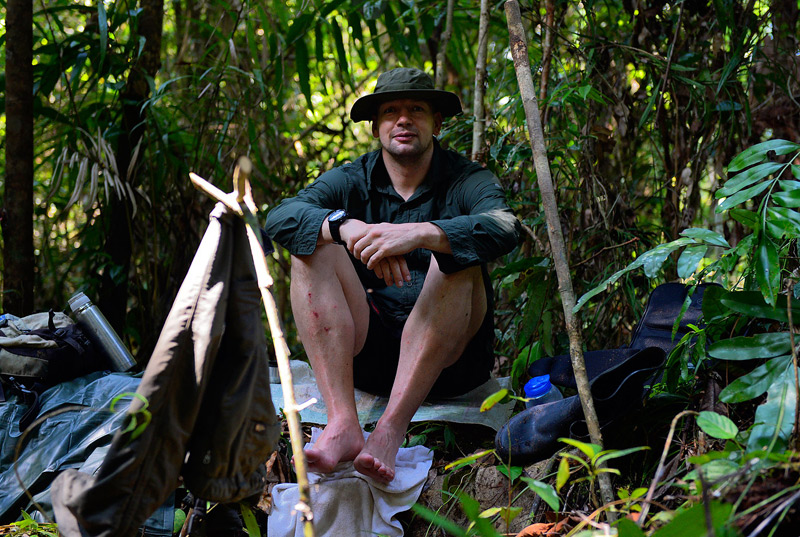
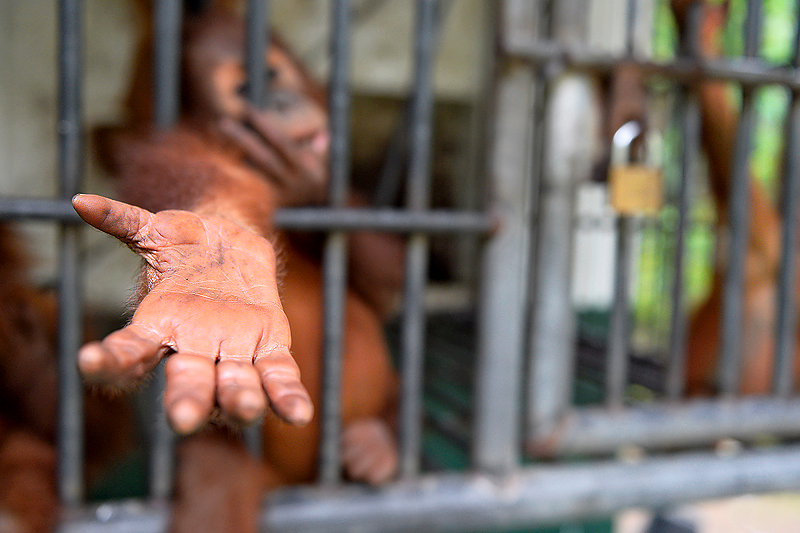
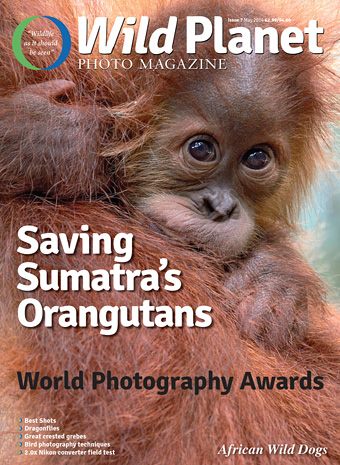
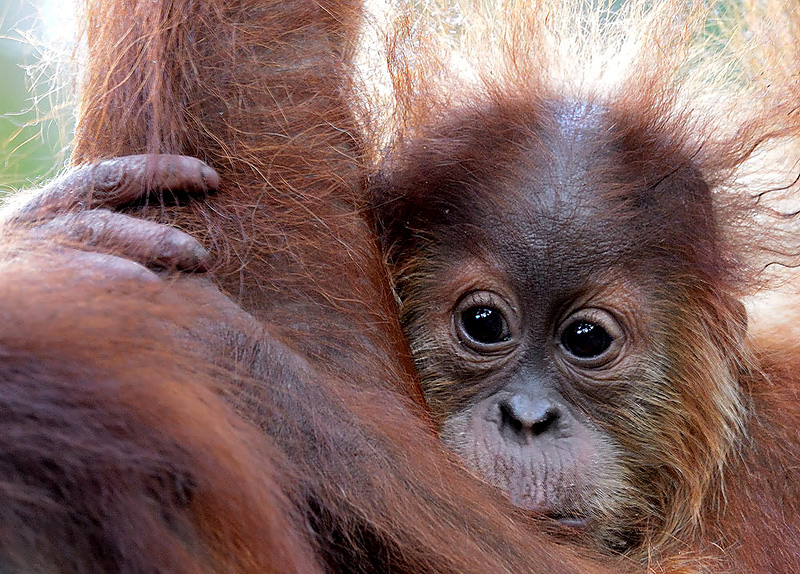
In the June issue of N-Photo magazine, out now in all good newspaper shops and online there is a brand new feature called “On assignment”. Paul the editor asked me if I could be the first photographer to launch this and talk a little about my recent two week trip to Sumatra shadowing and living with the HOCRU ream from the Orangutan Information Centre. You can see this post on my blog by clicking here.
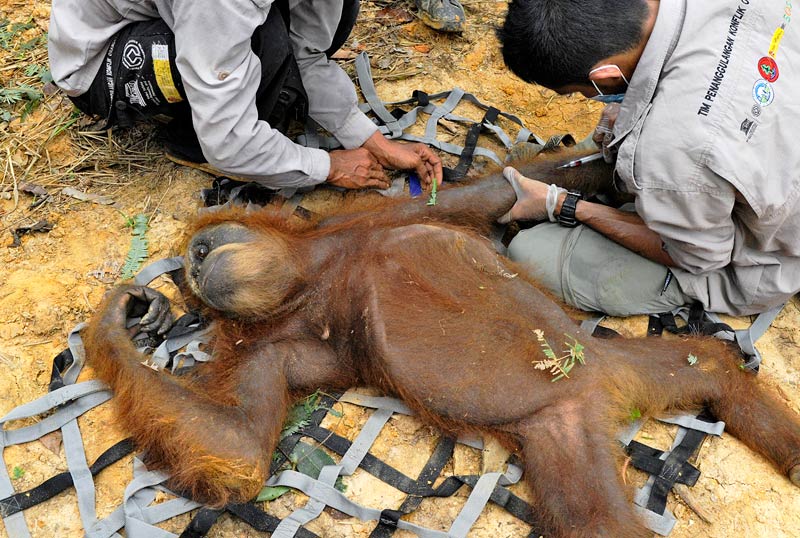
The work they do is amazing and it has been a privilege to work alongside this team since 2012 on my first trip with them on my “Spotlight Sumatra” 2 week trip. To see those blogs going back a few years now please click here. Below is the first rescue I did with this amazing team back in 2012.
It was a very tough 2 weeks back in February of this year, but very rewarding and I hope my images continue to gave those critically endangered Sumatran Orangutans a “voice” outside of their native home of Sumatra. At the same time show the world of the wonderful work these charities are doing on the ground.
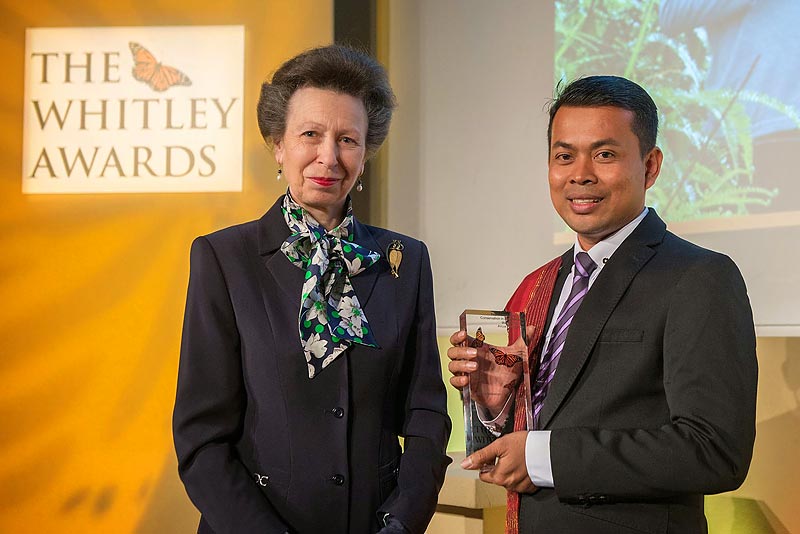
Since my return from Sumatra, Paunt Hadisswoyo the founder of OIC- Orangutan Information Society has won the prestigious international nature conservation award & prize ” The Whitley Award. Which recognizes his tireless work to save these great apes and their forest homes at the same time educating the local people in saving their country and in return you save all those critically endangered animals that live there ie- Sumatran Tiger, Rhino, Elephant and Orangutan. Click here to see this amazing news.
Paunt is seen here being presented by the HRH The Princess Royal at a ceremony at the Royal Geographical Society, London and I couldn’t be happier for him and all the OIC team on the ground back in Sumatra they do an amazing job and often at their own risks, so well done all.
The magazine is available in many formats from online to a magazine format available in most papershops in the UK. I hope you enjoy this and it once more sheds light on whats happening there and also to those on the ground working tirelessly to save these great apes and their forest homes. I also go through a few tips and camera information on this assignment too. Thanks to Paul and the team at N-Photo for asking me many thanks.
I have always given alot back from my own photography since turning professional in October 2009 making my living solely from this industry that has changed so much during that time. Anyone that can see can take a photograph, what takes time is learning to see, I truly believe in this saying when it comes to wildlife photography.
On the second week with my clients I decided to restrict myself to one lens on each safari and post my favourite image from that day along with how I took the image, the settings behind the image and my thought process behind the image. This will I hope help you to get into the mindset of a working wildlife photographer and hopefully inspire you to think, see and take shots differently.
I have decided to post just one image on my blog from each day which will be very different to my previous trips to Ranthambhore. Hopefully it will demonstrate how one image can really speak for you, how it can tell a story at the same time making you a better wildlife photographer, restricting yourself to one image and thinking more about angles, composition and not just snapping away and thinking first and seeing the image within the image or the story as the title says.
The beauty of photographing wildlife is that it is always changing and evolving, encountering the unexpected. In this environment the wildlife photographer must learn to work with these changing environmental conditions and behaviours. Make best use of those and capture that wild encounter with your camera and the result cannot always be predicted .
The first safari of the second week started on Tuesday with new clients and the following images I hope will inspire you, help you and above all go someway into seeing a different way of thinking when you’re looking through your viewfinder. At the same time learning you so much about the subject, the environment it lives in and above all more about you and your own photography.
Tuesday 21st April 2014
Camera Settings – nikon D4S, nikon F2.8 300mm, F4, 1/200, iso 400, matrix metering, -0.3ev exposure compensation.
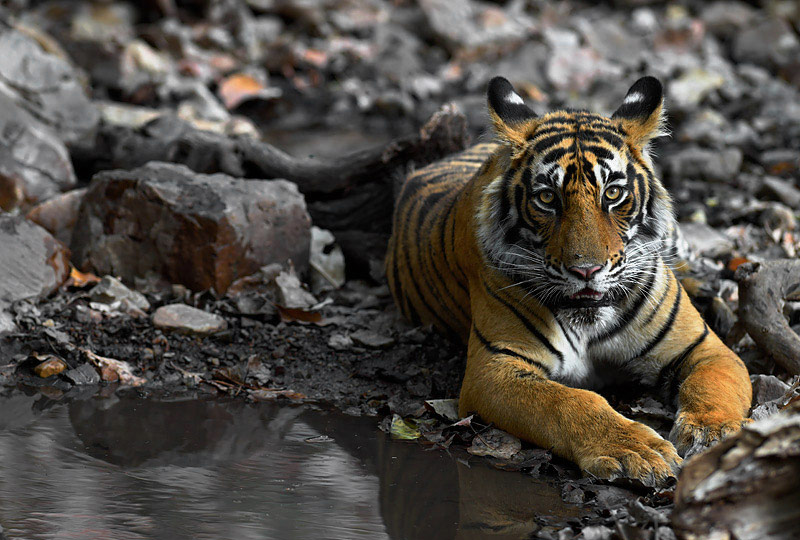
A mother Bengal Tiger and her one year old cub drink from a small forest pool in the late afternoon sun. On our afternoon drive with temperatures reaching nearly 42 drgees we came across this female and her two cubs. We parked up in a postion away from them and turned our engine off. She was sleeping for round two hours on and off and we just watched her and the cubs it was just magical. After they started to become alittle more active and they moved around and played before heading towards this small pool.
I was working with a fixed focal lens so I couldn’t zoom in or out and I was framing them the best I could. I focused my camera on the cub in the foreground and followed them down to this pool through my viewfinder. I was running out of room and did my best to keep them both in the frame very aware not to clip or cut one out and this was the result. Making best use of what angle you have is key when working with a fixed focal length. Soon after then moved off and all three vanished back into the forest.
Two young Bengal Tiger cubs sit waiting for their mum after they heard her calling for them in the morning light. I was only going to get focus on one and depth of field so I choose the front one. This resulted in the cub in the background being burred and giving a strong outline of another tiger. Both soon moved off into the undergrowth and later found their mother who took them off into the forest.
Thursday 23rd April 2015
Camera settings – nikon d4s, nikon f2.8 300mm, f5.6, 1/2000, iso 400, matrix, +1.0 exposure compensation.
A Black headed Ibis feeding in the dawn light. I followed the bird through my viewfinder from right to left and placed the subject over the the right so the bird would be walking into the frame.I used continuos servo mode to capture any movement and freeze it with a high shutter speed. The result is seen here with the birds beak open and foot raised which adds a sense of movement to this image. I chose to under expose a little too to gain a strong outline creating a wonderful silhouette.
Friday 24th April 2015
Camera settings – nikon d4s, nikon f2.8 300mm, f4, 1/500, iso 1000, matrix metering, -2.0 ev exposure compensation.
A Black Drongo bird taken in the morning light. We parked up to just take in the surrounding then this bird landed feet in front of me. I really love these birds and their fork-shapred tails that live in the national park. This bird landed on these naturally occurring grasses and I composed him over the the righthand side of my viewfinder giving space to the front of the bird as I watched through my viewfinder. I waited for a little interest in the form of action or a certain look. Then the bird looked straight at me in something I call first contact. When a wild animal makes first contact with a human and this was the result.
Saturday 24th April 2015
Camera settings – nikon d4s, nikon f2.8 300mm, f8, 1/1000, iso 200, matrix metering, -1.0 exposure compensation.
We spent a wonderful few hours in the morning sitting and watching this family of Bengal Tigers. There were three cubs and a female Tigress that would come from the safety of the long grass, then play and then vanish back into this long grass. So I chose the aperture F8 so I could gain more depth of field. Under exposing for the light as it was very bright and we were shooting into the light.
Once all three cubs came out from cover composition was hard as I was using a fixed focal length lens and so I had to really try to keep them all in the frame. I placed my focus spot on the cub in the middle and this was the shot I took. I have changed it to black and white because more often and not images that are contrasty look better in this format.
Sunday 28th April 2015
Camera settings – nikon d4s, nikon f2.8 300mm, f 5.6, 1/1000, iso 400, matrix metring, -0.7 exposure compensation.
A young Bengal Tiger cub sitting near a forest pool makes first contact with me. A saying I describe when human meets wild animal and for a split second theres an intense stare that can often look straight through you. Composition wise I composed him over to the right, placing my focus spot on the eyes and leaving negative space over on the left. I took a few images and was carful not to spook him with the noise from my cameras shutter button.
Those are my images from week two, I have lots more but I wanted to post these hoping to inspire you and try different things within your own photography. Being more selective and disciplining yourself to a few images or using one lens I feel makes you work harder and inevitably a better wildlife photographer. two weeks and twenty-four safaris for me have flown by once more and Id like to thank everyone one of my clients for your time and I hope you enjoyed the time you spent searching and photographing Bengal Tigers here.
Thank you to Sealskinz for the products that have helped me on this two week trip to India which have really protected me and my gear in some hot and tough conditions.
If you’d like to join me on my 2016 trip then please see the following link, many thanks.
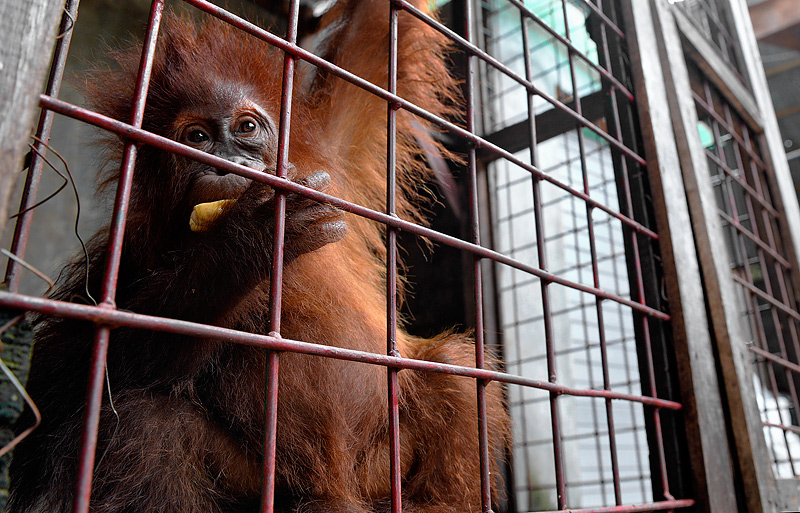
Firstly I’d like to update those that follow my blog on the young female Sumatran Orangutan being held as a pet I covered in my first blog. Over the last week I have been informed by email thatshe has now been rescued which has made me very happy and her path back to the wild begins now which is wonderful. The full story of her rescue and how shes doing now can be read on this link.
The following blog tries to cover my last days on the island of Sumatra.
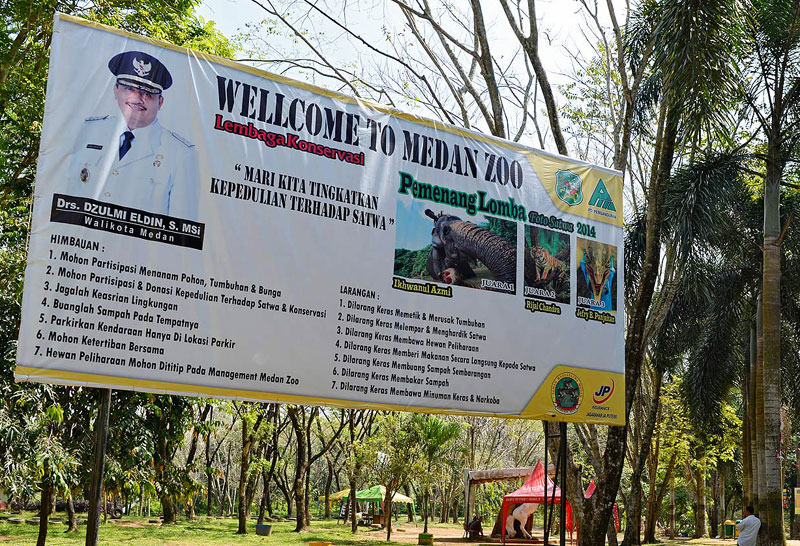
This day I had been dreading from the moment Id seen it on my itinerary. I’d joked about it to those that had asked me all week. Knowing the reasons I had been asked though I really wanted to help. As it got closer my bad jokes increased and my nervous laughter hid my fear of going. The place- MEDAN ZOO
The reason I went is sensitive at the moment but will be disclosed soon, so I cant say nothing yet. From the time I was dropped off until I left the zoo some several hours later I felt I was in a bad dream. that I’d gone back in time to the Victorian freak shows. I went alone, pretended I was a tourist with a camera. I cant remember the last time I voluntarily went inside a zoo and paid.
I paid my money, went through the front gate and the police and security where there, they said “Hi Mr” a common opening line. They wanted me to pose for photos with them so I did. Playing dumb and smiling back at what they were saying. I wanted to get into this place now. I stood on the front looking in, their voices and cameras going off as they posed with me, and shaking my hand after.
Seconds later I was in, I went to the toilet a stinking room with a hole in the ground. I got out my camera equipment and made it ready for whatever I was going to seeing with the smell of strong urine around me. Two cameras. two lens were the weapons of choice and what I was going to use to do what was asked of me and anything else that came. I had no idea what awaited me at that point.
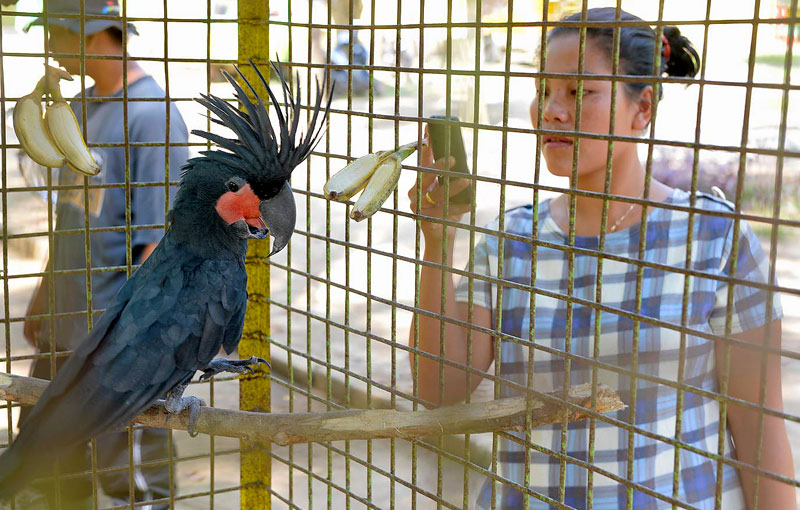
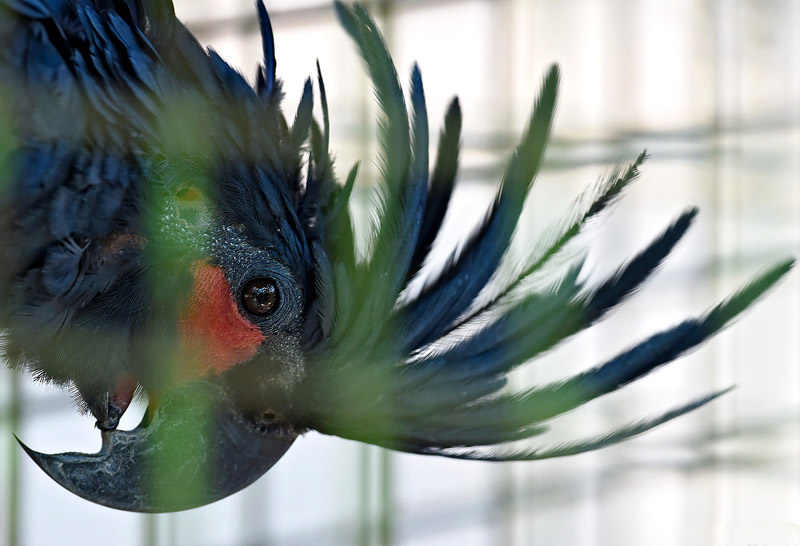
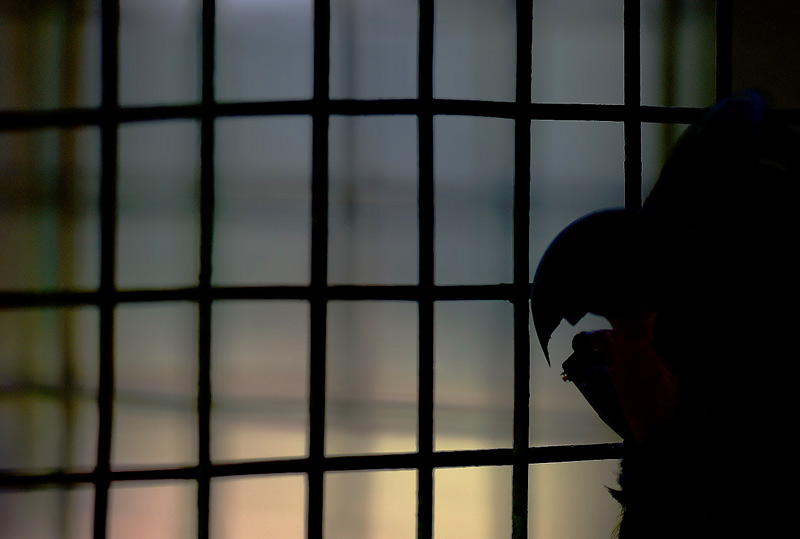
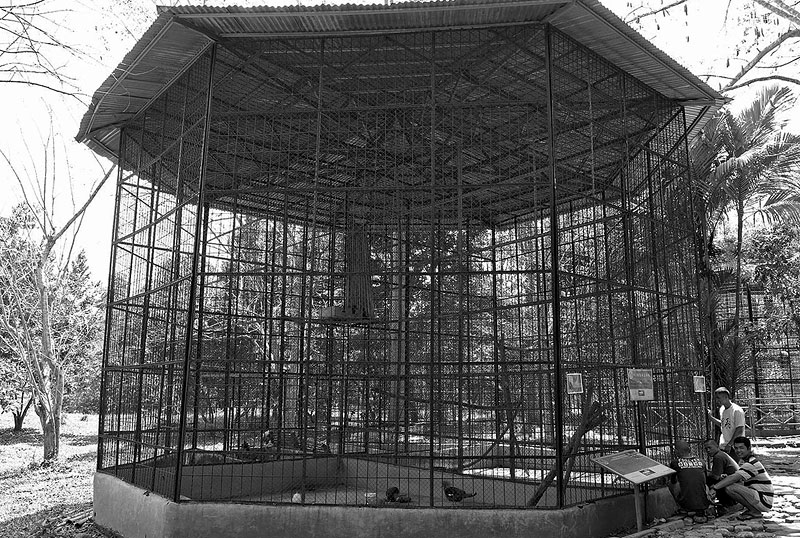
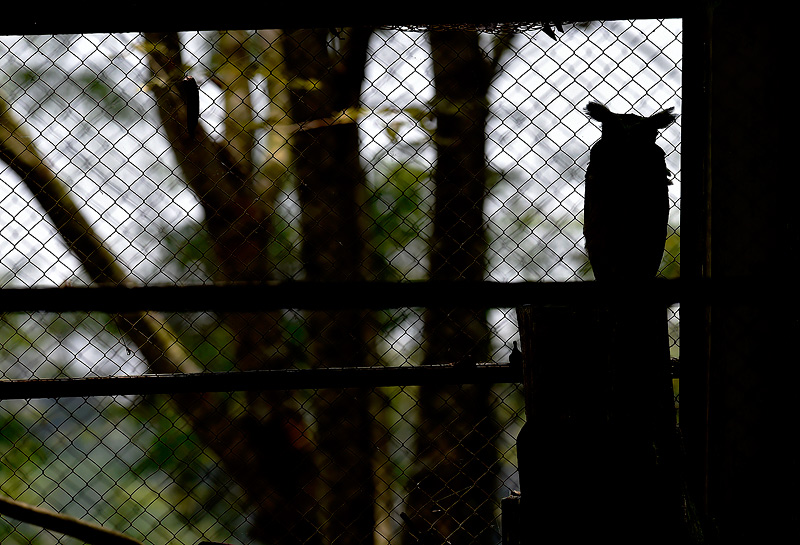
Feet from the gate were three cages with different birds in, the last cage held three Black Cocktails, beautiful looking birds. As I walked past their cage I stopped and looked into their cage. One male and two females, one female showing the signs of stress with scars and feathers missing, their calls and small cages upset me, I took a few photos and moved on. Not long after I came across the mission as I will call it, I spent a good hour or so there photographing an creature that’s half-blind and living in great distress. The charities are trying to get him released so while this is going on I cant say anything but I will once the campaign is up and running.
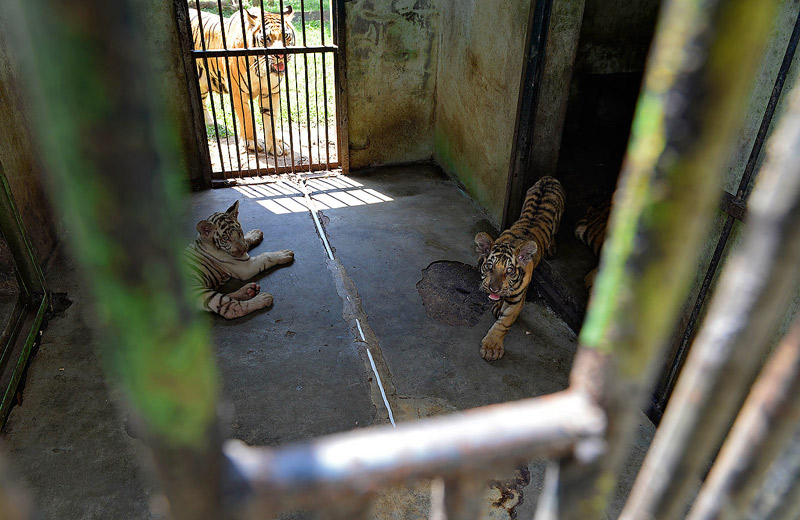
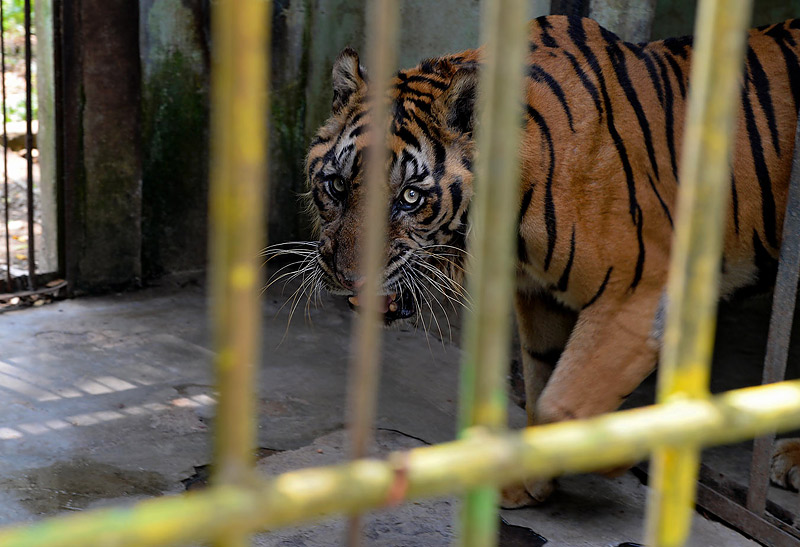
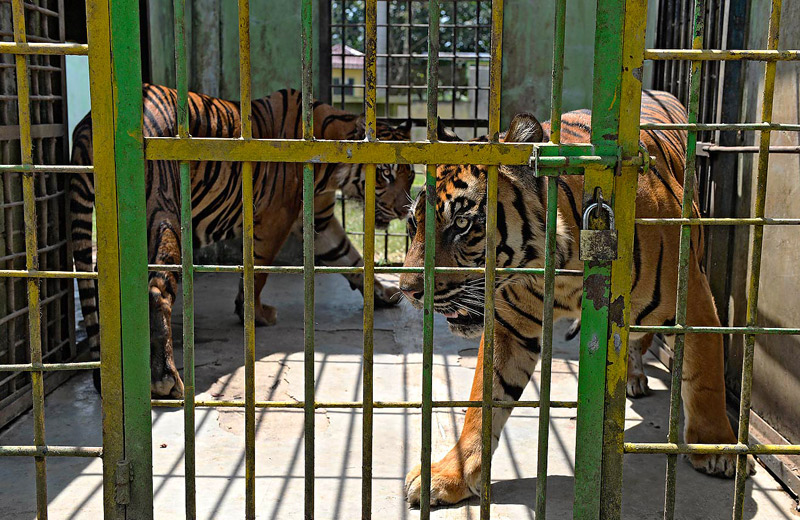
I then went to the Tiger enclosure, I was looking for the Tiger keeper, I was told to ask for a “Mr Fixit” and I found him a young man, wearing a white t-shirt hanging around the Tiger enclosure. I was able to see areas the public cant if i paid him money. I nodded and he opened a small gate and to my left were small cages. I soon heard the booming roar of a Bengal Tiger echoing through the place. I had been told there were 12 Tigers – 8 Sumatran Tigers ( 4 cubs) and 4 Bengal Tigers. The zoo is tiny and when I first heard this I couldn’t believe the number. Once I had been let through the small gate I saw the cages all lined up on my left, painted green and yellow.
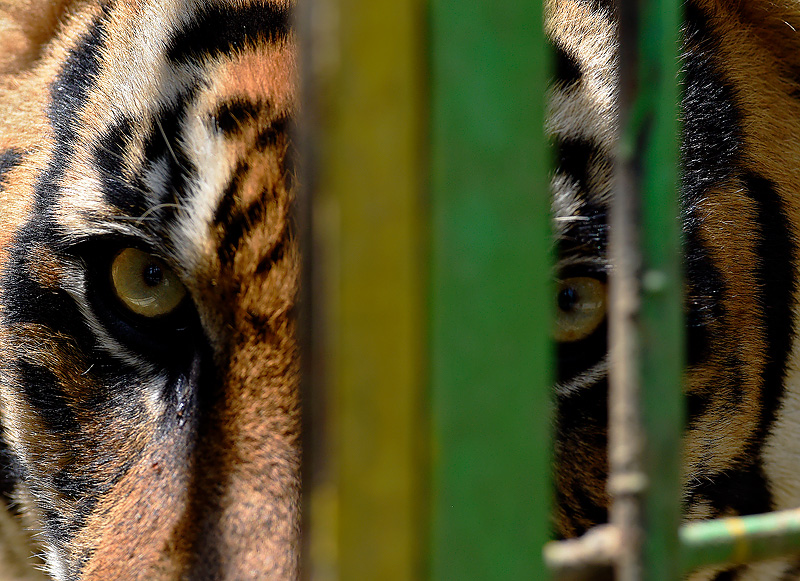
The roars of different Tigers rang out, I was left to take photos as the keeper went off somewhere. I worked my way down slowly moving from each cage. I didn’t know how long I had. I first came across 4 Sumatran Tigers in a small cage, as soon as I saw them they let out a very aggressive “hiss” a warning dont come any closer. What struck me was how tiny the cage was.
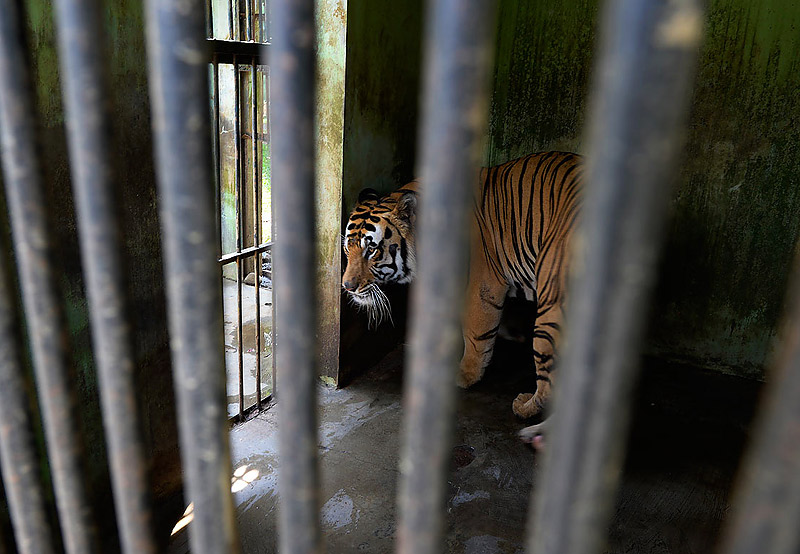
Next to them were two adult Sumatran Tigers, brothers I was told. Following each other around the smallest cage you could imagine. There was an outside part but it was closed. The temperature was around 36c and they were panting really heavy and if they made eye contact with me they would come straight at the cage and jump up.
Next to them was a male Sumatran Tiger with his female partner outside and she was unable to get inside. He was angry, real angry I only had to look at him and he came straight at me with only the cage between us.
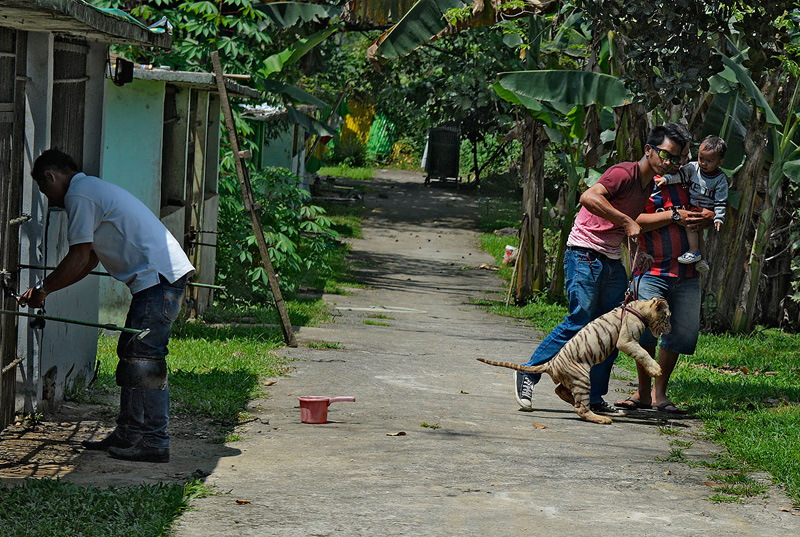
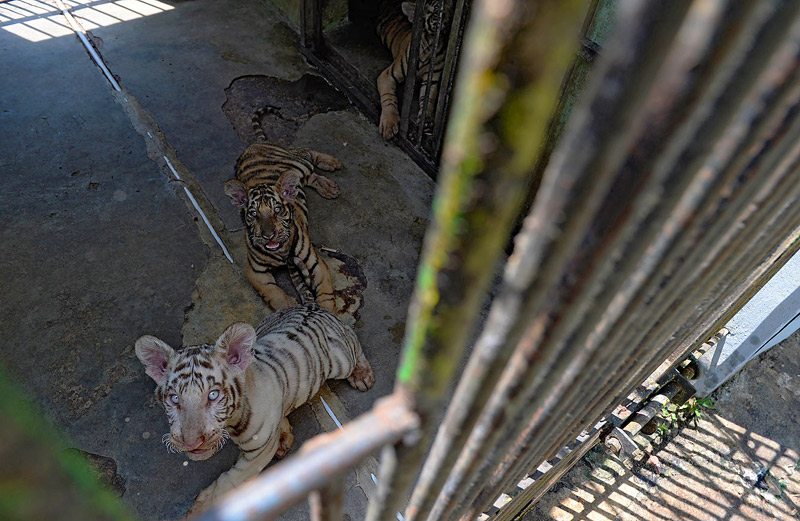
Then behind me I noticed the keeper had come back and he had a small family with him, a woman with a young baby and the husband. They went to my right and he went and opened a cage up, then I saw a white Tiger being dragged out on a lead. For the next 10 minutes I watched as the family posed with this baby Bengal Tiger for photos, smiling and posing. I have to say I don’t know how I took these photos you see below without putting down my camera and doing something. The keeper then dragged the cub back to the cage and he showed the people back out. I then went to that cage I found 3 Bengal Tiger cubs one was lighter in colour. He was the one I saw dragged out.
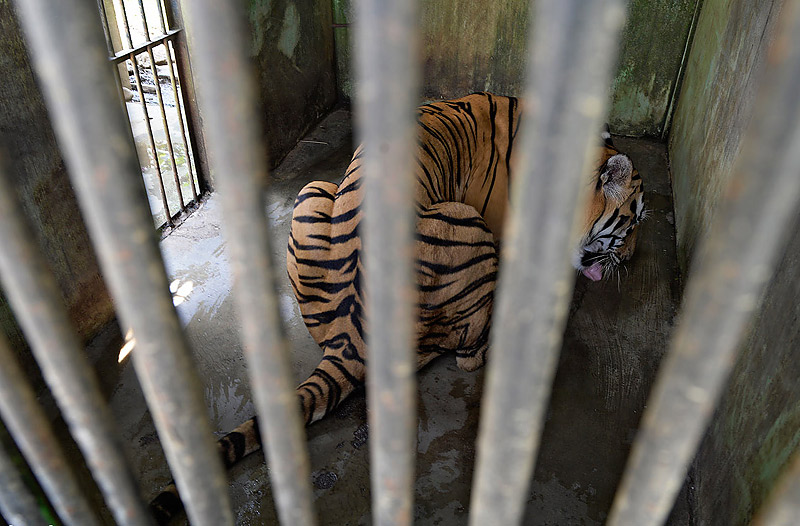
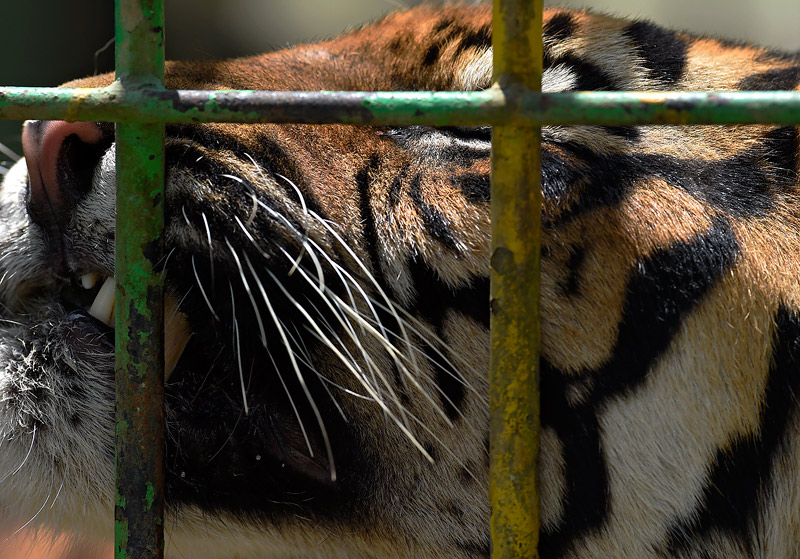
I sat down, I could hear their father roaring, his call was booming, I took a few images and then moved to the next cage where I saw the biggest Tiger I have ever seen. A male Bengal Tiger that filled his cage, walking around, panting and roaring. Stopping a few times to lick the water on the floor as there was no bowl of water. I couldn’t see where the water was coming from.
He kept roaring and I made a small video, its so upsetting to watch. Again I took some photos, I dont no how, I had my mirrored sunglasses on should the keeper come back. They hid the tears in my eyes at what I had seen, as I looked at this Bengal Tiger go round and round and round, then stop, lick the floor then carry on. It was shocking truly shocking to watch.
The keeper came back and I had to leave, he told me it was 20,000 Indonesian rupiah, I didn’t want to gave him this because I was supporting his actions by doing this. I’m still angry at myself for giving him this money to go “behind the scenes” I truly am. He charged people for access and also the photos, I didn’t have any photos with that cub, I declined when he asked. How I didn’t put my camera down, pick him up and throw him into the Tigers cage I don’t know- “Play dumb craig, don’t get mad” I keep saying to myself as I let this dirty piece of scum take money from me and herd me around.
I then walked back to the main gate, I put my cameras away, dumb, emotionless, I wanted to get out of this hell and made my way to the main entrance. I was then picked up and driven back to where I was staying and I never spoke, numb with what I had just witnessed with my own eyes. I cant believe this is going on and places like this are allowed to even be open let alone have so many rare and endangered animals in such a small place.
The images below appear in the order I saw them and I hope they show you this hell hole, a true hell hole. I can’t summoned anymore words so I will leave these images of one of the worst places I have had the misfortune of ever visiting and seeing. There are also two short videos showing the conditions of the Sumatran Tigers and the lone male Bengal Tiger.
Am I sorry I went? No, I went for a reason and I unearthed a place that needs demolishing brick by brick its so bad. I take photos of wildlife because I love wildlife, here I was photographing pure suffering and it was tough, real tough. How can we do this to animals? How can owners, directors of zoos do this? where are the laws in place to protect such abuse?.
The next day I set off to spend time in the jungles of the Gunung Leuser National Park with Darma my friend and guide. I haven’t seen him since September 2012 when I spent 4-5 days in the jungle with him, so it was nice to see him and catch up before our trek to find Sumatran Orangutans in the wild. It was beautiful to be back in the jungles, the noises and smells are just amazing. After the previous days I needed this to balance everything out in my head that I had seen. Seeing the great sadness of animals takes its toll on you after the event and I had began to feel this inside so it was great to be back in the jungles with Darma.
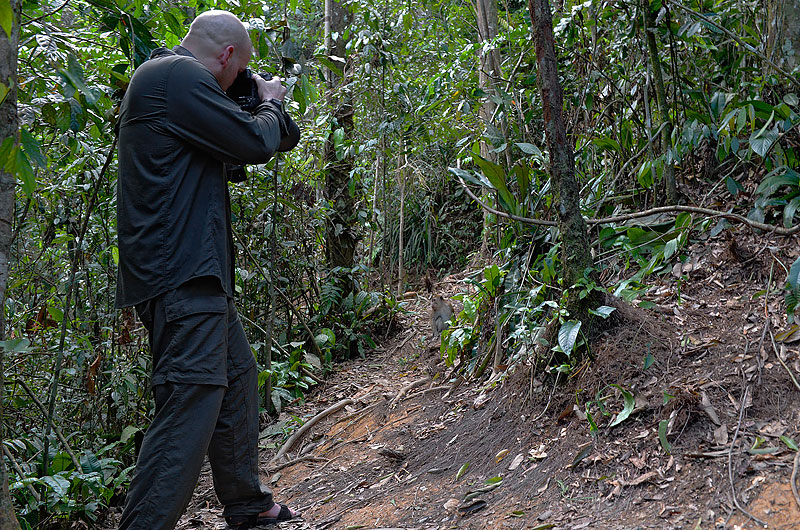
Every now and again while trekking we’d hear something behind us, it wasn’t from the trees because we were listening and watching for the Orangutans but it kept coming from ground level. So we stopped, on this path, I took my gear off, and I picked up my camera and waited to see what came around the small blind bend behind us.
Soon we found what the noise was, a loan Long-tailed Macaque slowly walking on the ground, no troop with him, completely alone with a few scars and bite marks on his body. Most probably ousted from a troop and alone now. As I was taking this photo Darma got my second camera and took this you can just see him on the path. He made me laugh, with his bold advances.
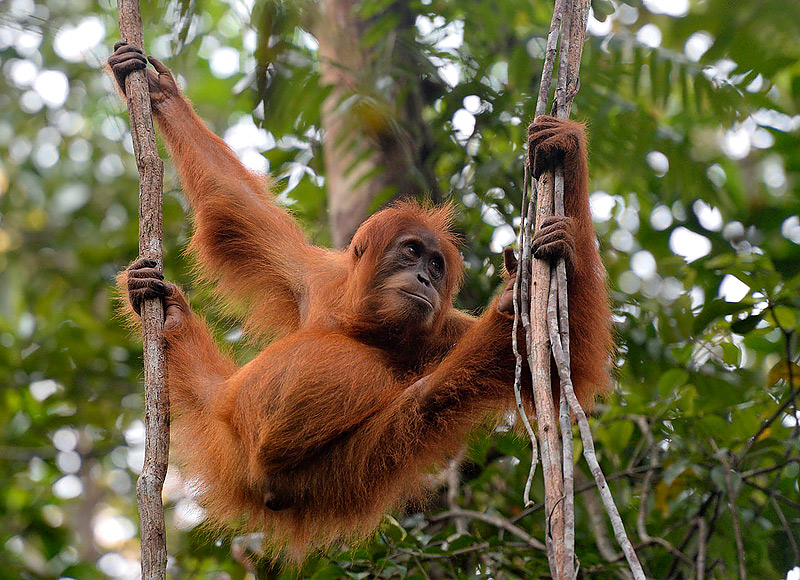
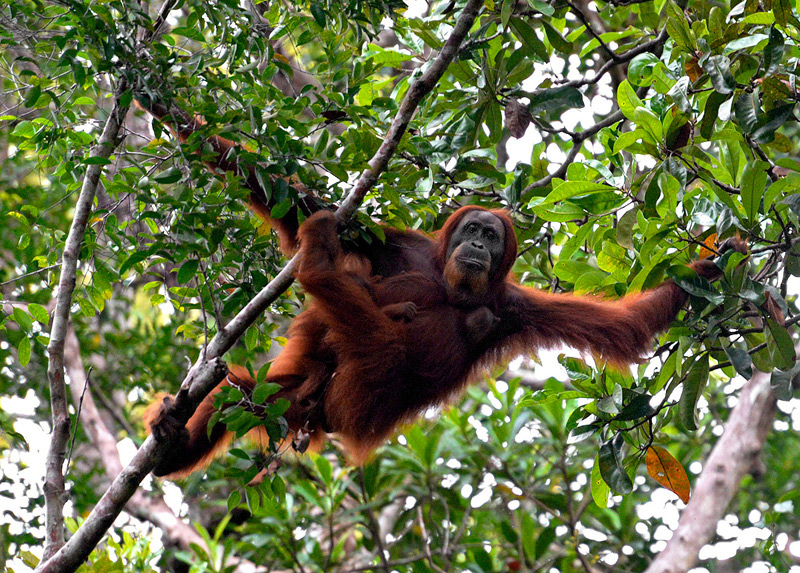
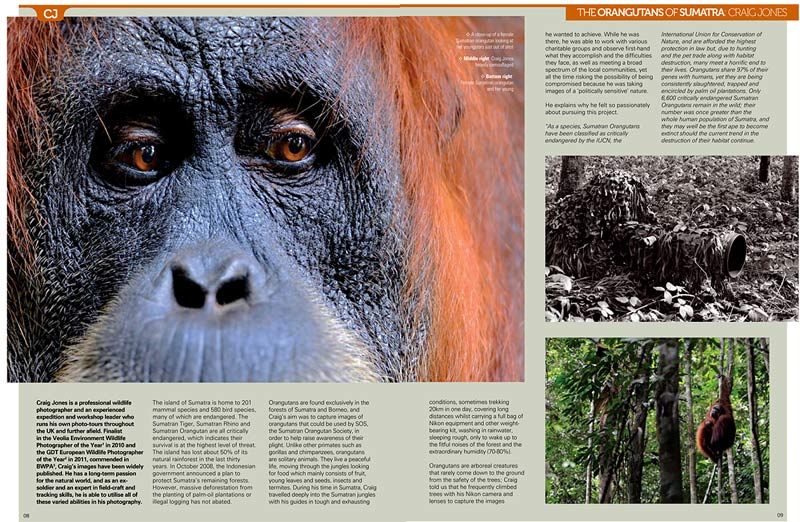
He followed us for a good 30 minutes or so each time we stopped he stopped it was funny and made me laugh. They can be aggressive too so just best to leave them be as we did and he soon vanished into the forest. I felt a bit sorry for him alone but Im sure he’ll find a troop to join again. Soon we were in the middle of one of the best rainforests in the world and the following are some of my favorite images, I managed to get of these wild Sumatran Orangutans during the time I spent with Darma.
After some amazing encounters in the jungles the time had come where I had to leave Darma and head back to the team. I was sorry to leave him and the forests and Orangutans, I truly was. I spent the next three days in the field with the HOCRU rescue team from OIC, searching and monitoring areas for Sumatran Orangutans. Very interesting to see how they track and try to read the signs that there were or had been Orangutans around. I also saw one of their techniques to move on or scare any Sumatran Orangutans they come across that is in an area they shouldn’t be or are isolated.
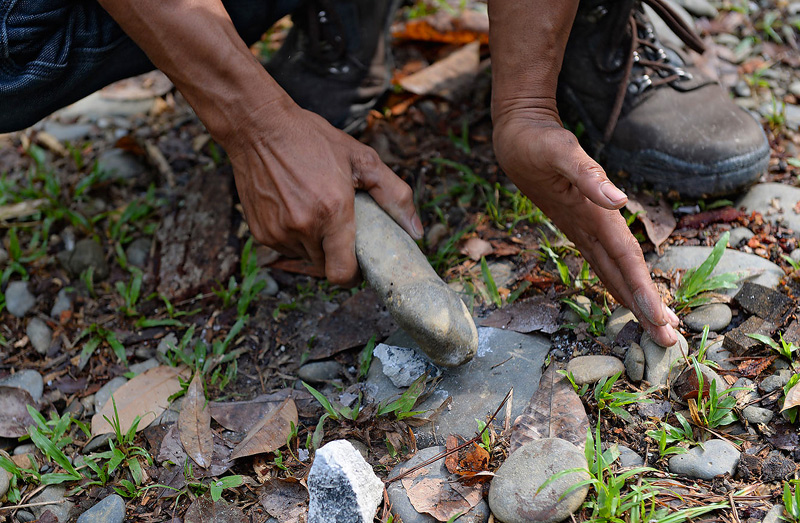
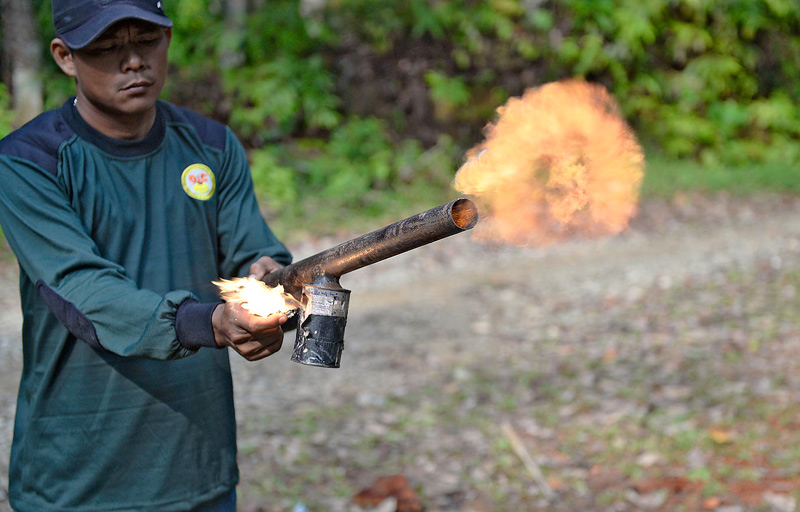
They use a bamboo canon and the noises made scares the orangutans and moves them on, If that fails then the last resort is to dart them and move them to a safer place. But I was told the noise works in most cases. Its made up of a metal tube and a small can welded on and a gap for oxygen to get inside. They call them Bamboo canon because they teach local farmers to make them out of bamboo and also to train them using these. Carbite, small stones, water and oxygen ignites the “gas” given off, it then makes a small charge and loud bang.
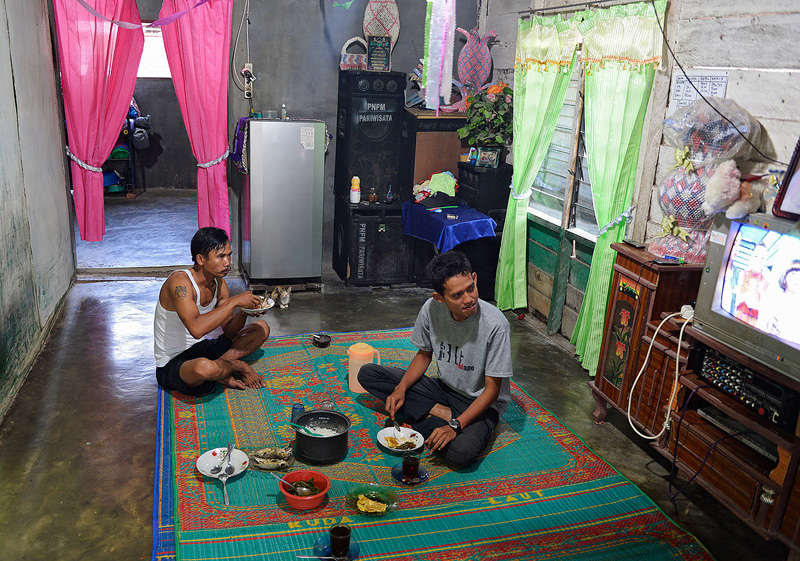
During this time I spent the nights in one of the teams house- Rudi. A kind family man who introduced me to his family, they lived in a small village not far from where we were searching. All the houses are made of wood with very simple amenities, children play happy in the alleyways and everyone is proud and very friendly. We slept on the floor and I was made very welcome.
We don’t no how lucky we are back home, people here live happy, simple lives with very little but each other, very enduring to witness. OIC has a network of locals that help them all over Sumatra so once night falls their team can sleep on the floor and have a meal that night. Then the next day continue with their work, its what we did for the first week or so of my trip.
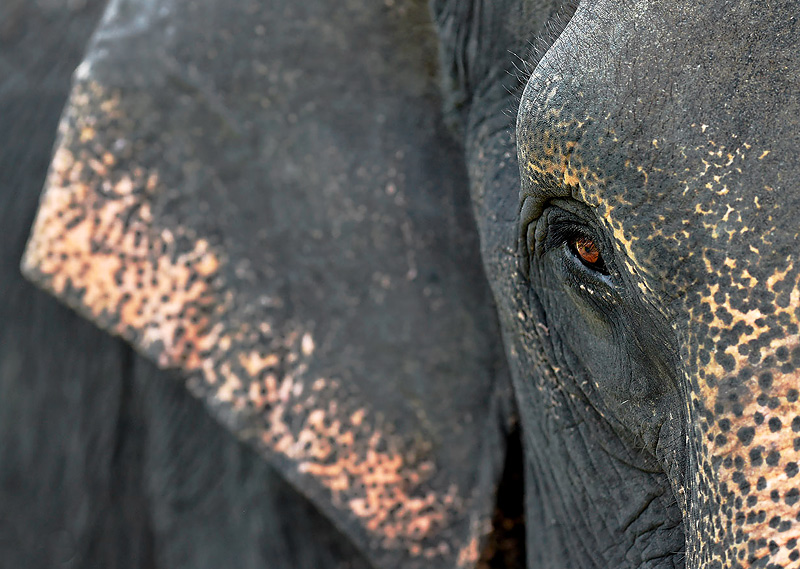
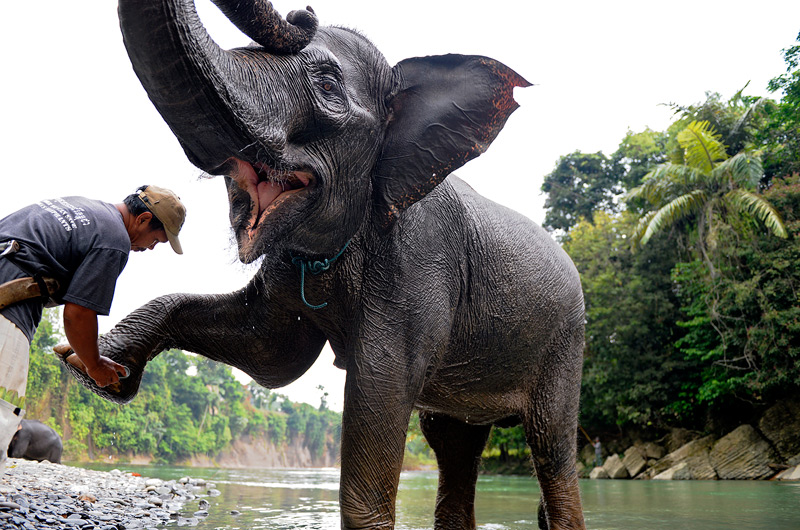
Once my time had come to an end in the field I then headed to spend the time with the CRU team in Tangkahan. They patrol the nearby forest with rescued and ex captive Sumatran Elephants that have all been trained to form part of the anti-poaching patrols into the national park. Each month they do several patrols into the jungle and do vital work. When not patrolling the public can wash them in the river and take photos and so forth which generates an income and an awareness of their importance in Sumatra.
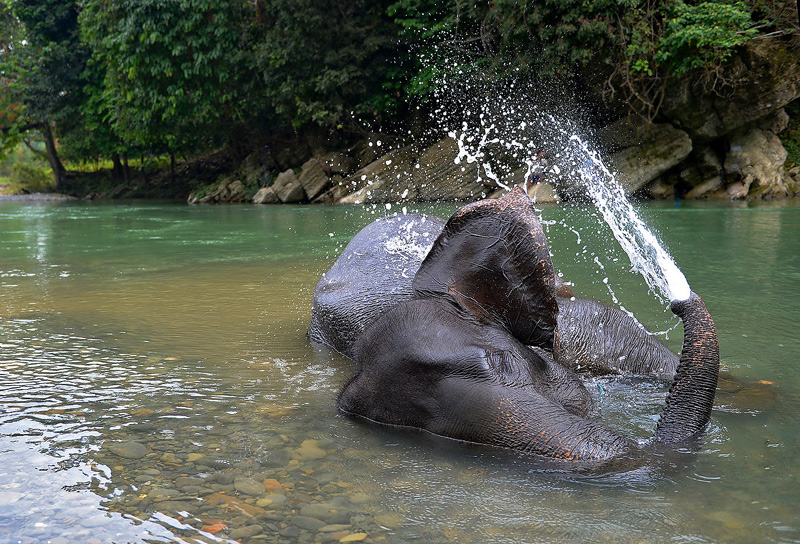
Something very peaceful about Elephants when you’re near them, powerful, massive animals yet so gentle and beautiful. A female Sumatran Elephant took a shine to me,so I joined her in the river. A wonderful moment to be so close to such a massive animal, she splashed me and lay on her side as I took photos of her. I asked her keeper what was her story. He told me she was 27, and was held captive by a policeman for 15 years, then rescued and now she’s part of this CRU team.
She was beautiful as she splashed me and displayed in front of me in the water. Once they are all washed they are led away by the keepers and kept in an enclosure with an electric fence and are looked after very well I have to say. Shame they aren’t in the wild but their lives didn’t work out to well but at least they are safe and alive.
There are fewer than 2000 in the wild and I have been lucky enough in the past to hear them call in the jungle but never seen truly wild ones. This perhaps will be the closest I will ever get to one in Sumatra which is very sad really. Another animal on this wonderful island under great pressure from poachers and deforestation. More information about these Elephants can be seen on the following link .
On my last full day and night in Sumatra I went undercover, photographing other primates and animal markets in Medan. Posing as a tourist with an interest in certain animals. Just my camera and someone to take me to these places. Sumatra has many animals that are protected, most are crucially endangered. One such primate is the Siamang, they are endangered. But sadly nothing and I mean nothing is done to enforce the law to protect them. In Sumatra there are thousands of primates and other animals being held in such conditions and nothing is done.
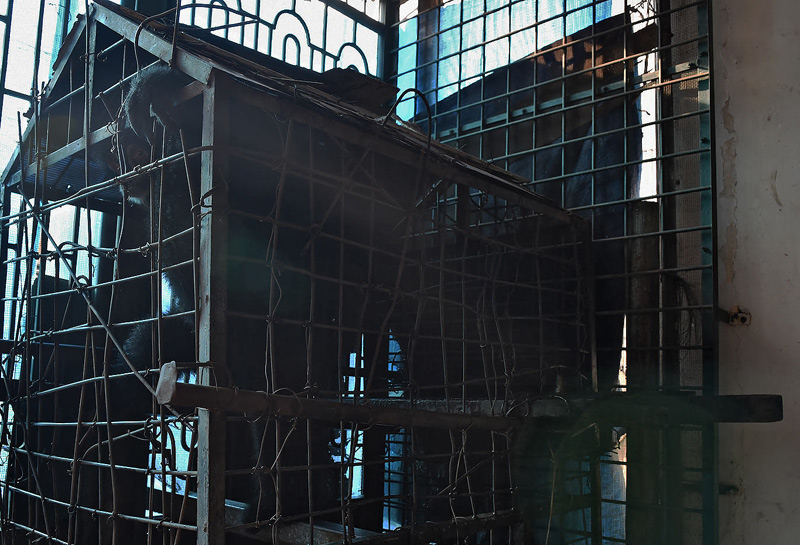
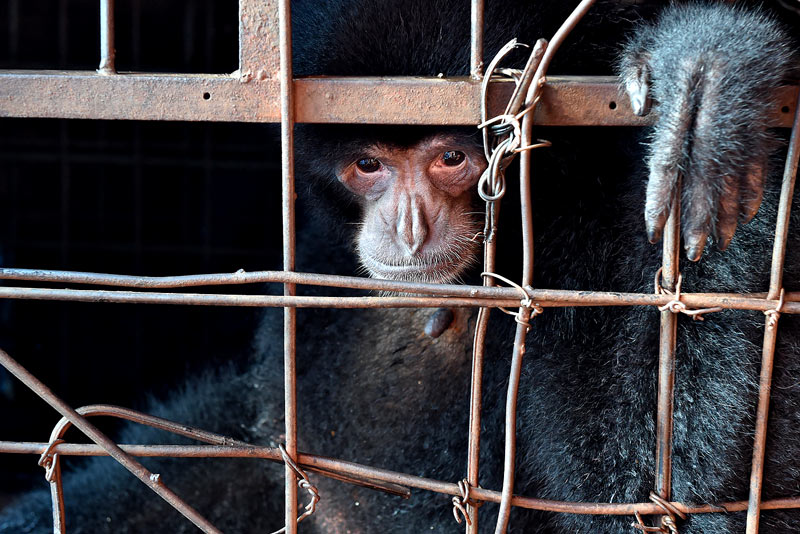
When I went to this place I gained access by pretending to be interested in Siamangs. Once inside I looked around to see how many people were there, I identified one male and female, and I tired to work out what was the feeling of me being there etc and an escape path should it go wrong. To my left I saw this piece of metal which was a sort of cage. As I got closer and I saw a face peer back at me from the darkness, it made me jump. Then the loudest call you ever heard rang out.
The person I was with asked about the Siamang and she was 8 years old and had spent that whole time in this cage from the wild. The room smelt of urine and it was so, so sad. Playing an interested tourist while filming and taking photos was so hard for me, I almost couldnt take photos it was so shocking and sad. The problem is there is nowhere for these Siamangs to be released too. Through my work over the last several years you have all seen just how hard it is for the Sumatran orangutan let alone any other primates.
She was terrified to see me and these images show that piece of metal that has been her prison for 8 years. Sitting in darkness, coming from the shadows to see who I was. Something so wrong about how animals and birds are kept in Sumatra. With the following photos I wanted to try and make her look beautiful, she may never have had her photo taken. I hope you see her beauty as I did in these images because somewhere in that tangled mess of metal, a living being lives.
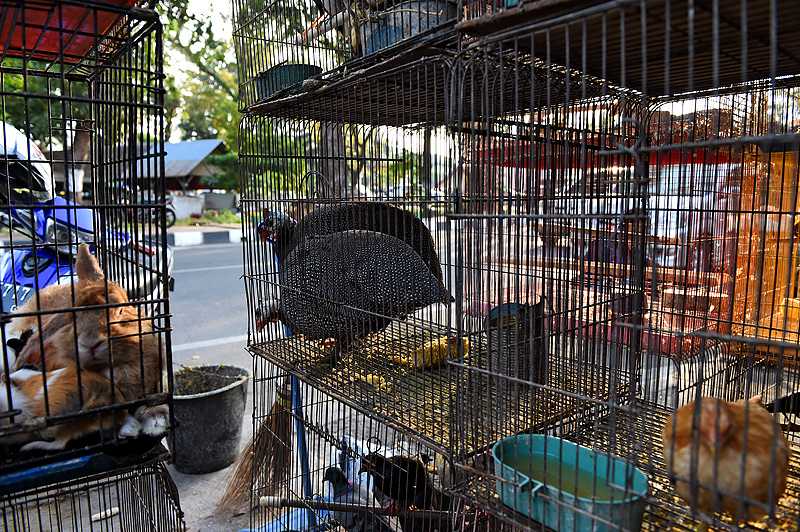
After here I went to a market but it was too dangerous for a Westerner with a camera so I went to a smaller one and saw rare birds, and other animals in tiny cages, only feet away from busy roads. Soon after I took a few photos I was told no more by locals wanting me to move on. People don’t want you to see anything. The cruelty and suffering was everywhere to see and heartbreaking to it really was.
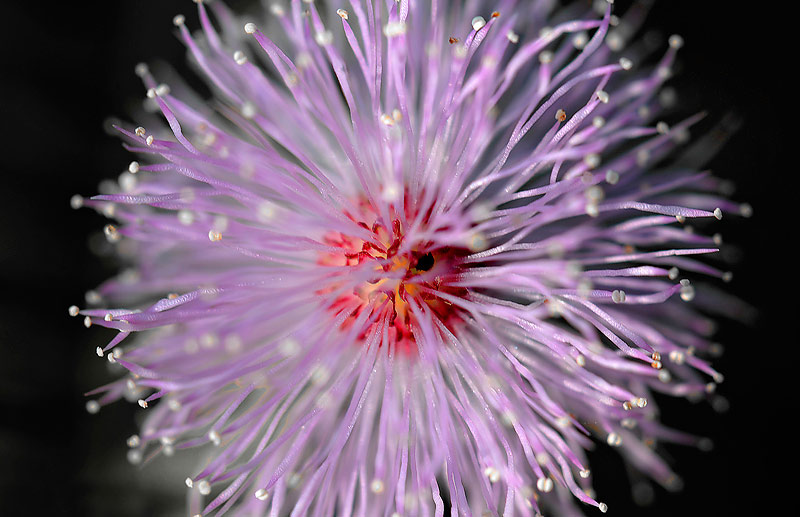
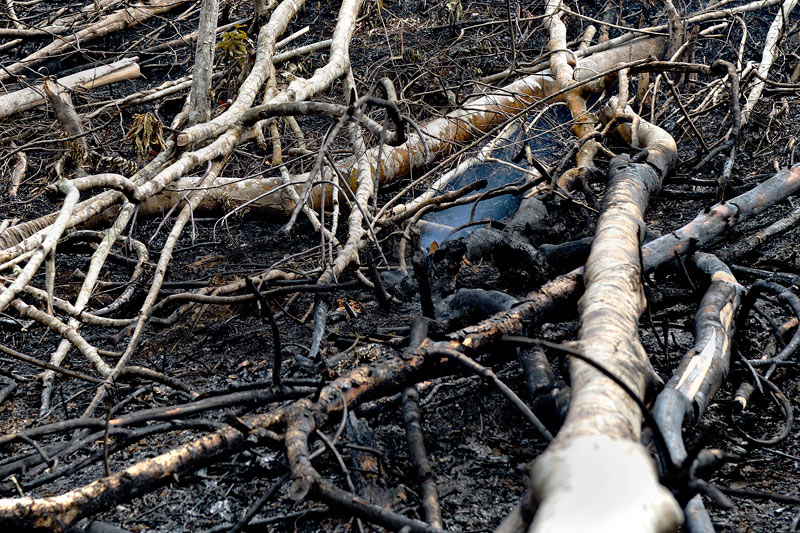
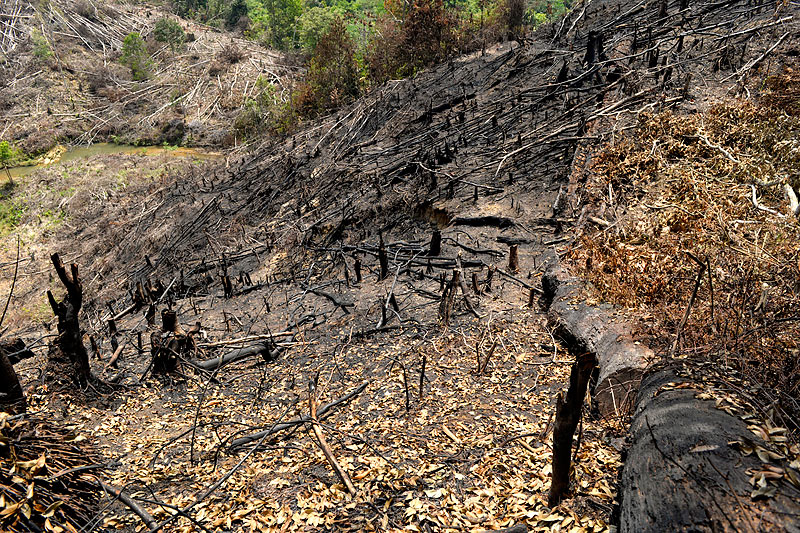
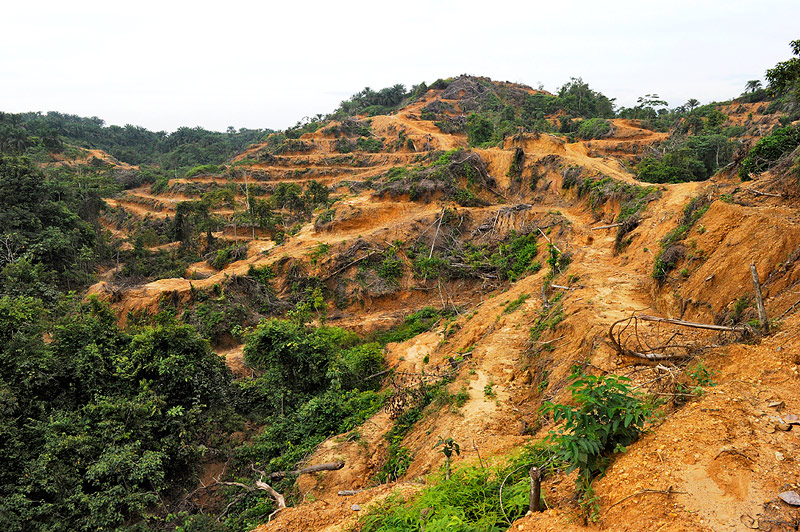
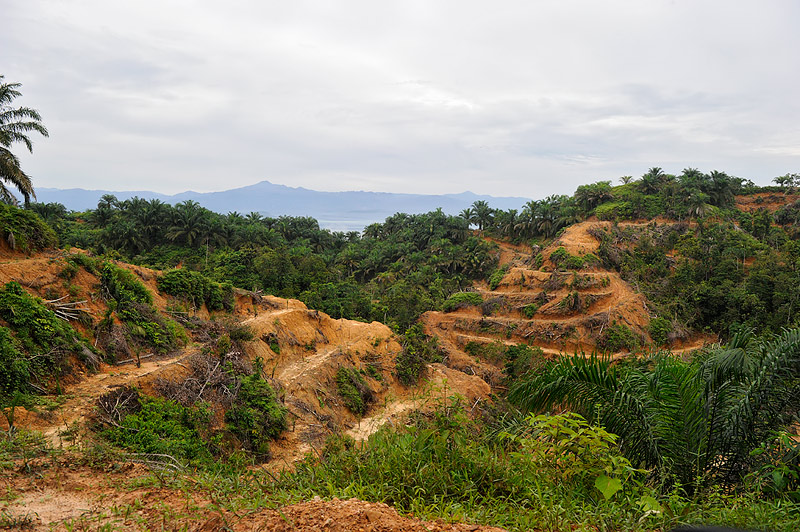
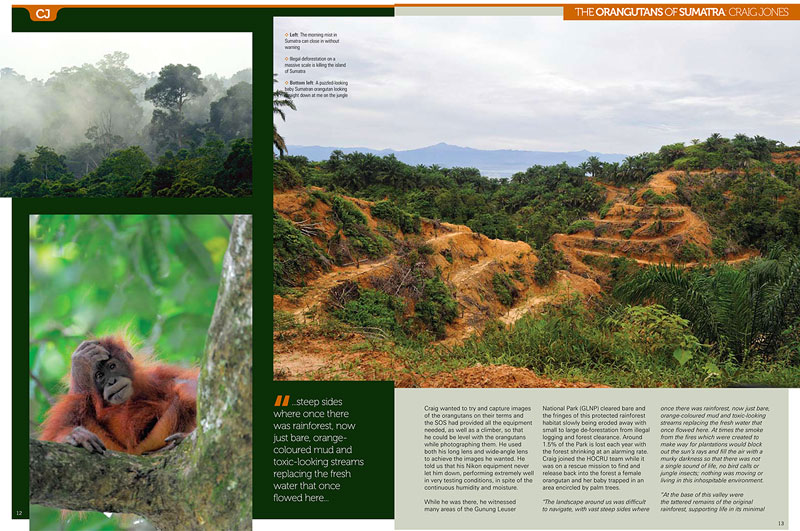
Very little has changed since I first began coming to Sumatra several years ago now apart from the care and rescuing of these great apes. Forests are still cut down illegally, encroachment into protected areas still happens, this happened while I was there and the images below captured this. Burnt, smashed forests flattered and nothing is done to protect it as locals steel land day by day illegally. Among all this destruction plants and flowers still grow though. Natures defiant act to those killing the soil with their selfish actions.
Habitat loss is still happening at an alarming rate, forests to release rescued or rehabilitated Sumatran Orangutans is running out. A viable wild population of Sumatran Orangutans cant just come from confiscated or ex pet trade Sumatran Orangutans who are taken from their mums, who are killed in the act. You have to save the wild Orangutans habitat and rescue those stranded and cut off from the forests to have a truly wild, viable population of these great apes for the future. Empowering and working with local people to protect and save their natural resource which in turn keeps alive all the wildlife there.
Long term initiatives like reducing corruption, massive changes in management regimes and actions, long-term institutional change, as well as monitoring trade and prosecuting criminal behavior will take too long to develop to an effective level to halt the immediate crisis. Without direct intervention in the national parks the Orangutans along with other forest-dependent wildlife- like the Sumatran Tigers and Elephants will become progressively scarcer until their populations are no longer viable.
Given the rate of deforestation in the past several years, and the recent widespread investment in oil palm plantation’s and bio diesel refineries, calculations suggest that 98% of lowland forest maybe destroyed by 2022. The incentive to log the protected areas will grow as timber companies run out of supplies outside of the parks, in turn they will start to destroy the national parks. These areas have to be protected and many times during my visit to Sumatra I heard and was told by locals that the government is letting everyone down by the lack of enforcement here.
There are some 2155 field rangers at the last count that patrol an area of 108,000km square. They have no access to helicopters, aeroplanes and necessary arms or military patrolling skills that would enable them to prevent illegal activity. Logging companies use bribes and are better armed and equipped than most rangers. If the rangers had the necessary training, communication, transport and arms then they’d be better placed to protect and prevent these illegal acts against the protected forests. The Indonesian government does have such a small force in the shape of their SPORC -rapid response ranger units. However their impact and presence is too small and they lack the mandate, training and equipment to prevent illegal loggers from operating inside the protected areas.
The removal of illegally grown plantations, mining and agricultural development inside the national parks is another major issue that needs addressing.
Reducing the rate of deforestation over Indonesia as a whole will also have a dramatic impact on the regional carbon dioxide emissions and thus help to prevent dangerous levels of global climate change. If the logging of national parks continues unchallenged it could under-mine the protected area concept worldwide. The Indonesian initiative is to strengthen the protection of their parks therefore they urgently need substantial support from the international community if the Orangutan habitats and national parks are to be rescued from this growing state of emergency that’s happening there now.
Two weeks of pain and hurt, I’ve seen things that have truly brought me to tears and upset me. Cruelty towards animals you wouldn’t believe that angered me, and still weeks after my return trouble me inside. How the members of the rescue team do this week in and week out is something we should all be very proud of. When something is so wrong and so corrupt that everything you do is tainted and against you how do you go on? Well these guys do.
My aim with my two week trip shadowing the rescue team was to show what work they do and how they battle not only against the illegal trade in Sumatran Orangutans but the lack of real guts on the ground to enforce the laws laid out now by the various international laws that Indonesian have agreed to many times in the past.
Thank you to everyone in Sumatra, and around the world that help to keep these great apes alive. Thank you Panut and your team for looking after me once more, great people doing remarkable work. Thank you to the HOCRU rescue team from OIC for the laughs and for your determination in helping to keep the Sumatran Orangutans alive. When you are threatened or bullied for your work in helping/rescuing these Sumatran Orangutans remember the whole world is behind you and those cowardly people that have to cage and hurt animals don’t stand for good they stand for evil and are weak to the core. That weakness makes them vulnerable, see this and you have nothing to fear. Respect to you all, take care.
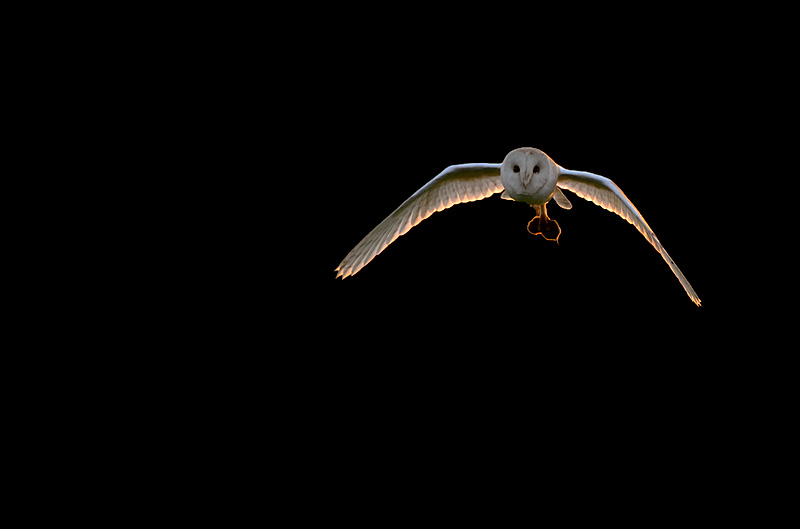
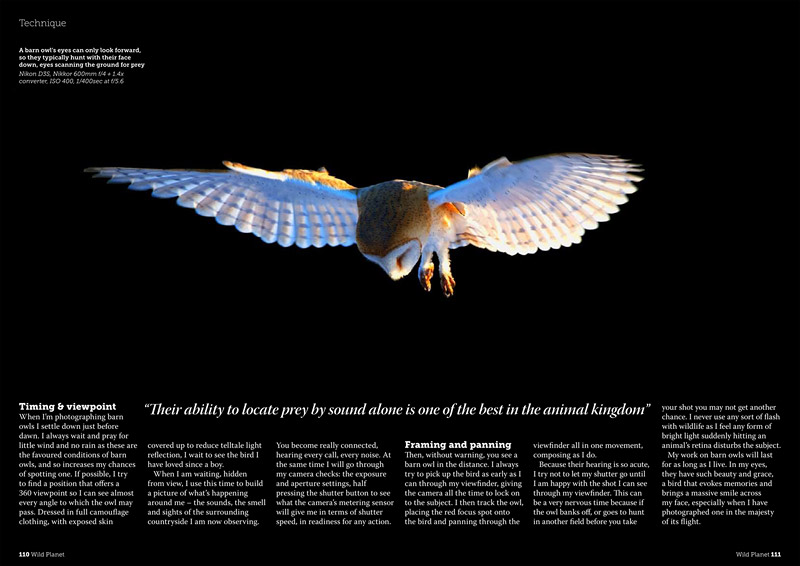
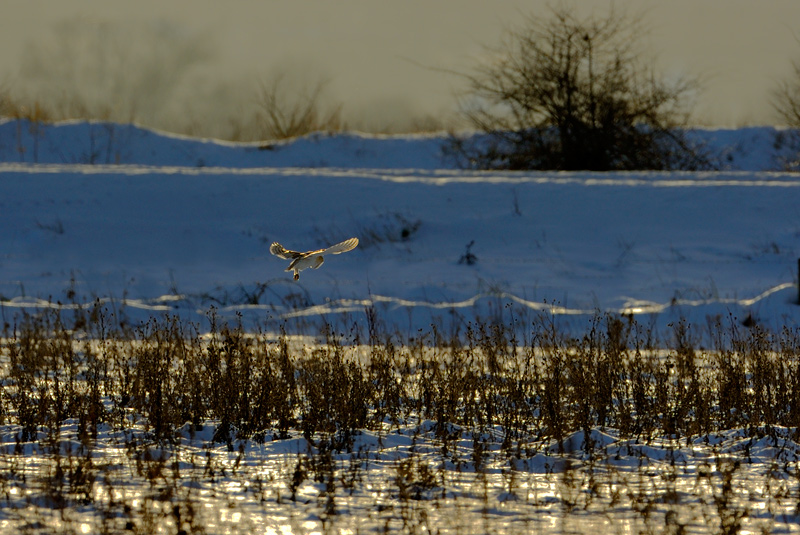
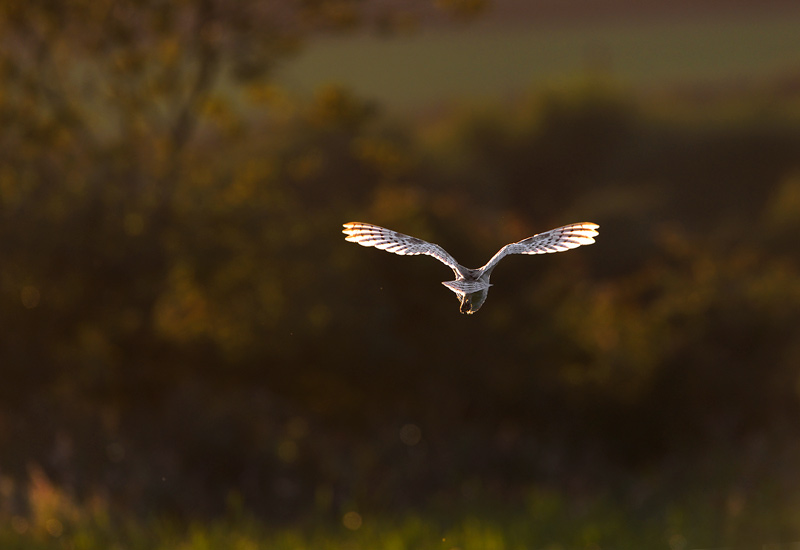
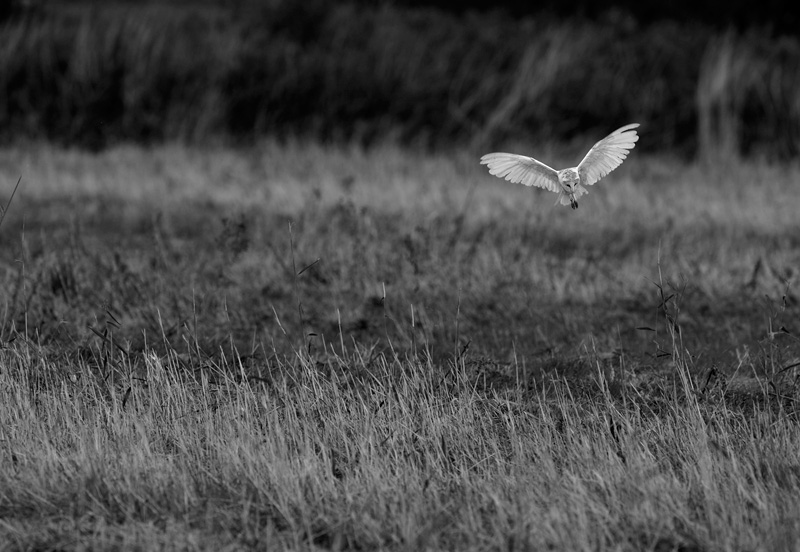
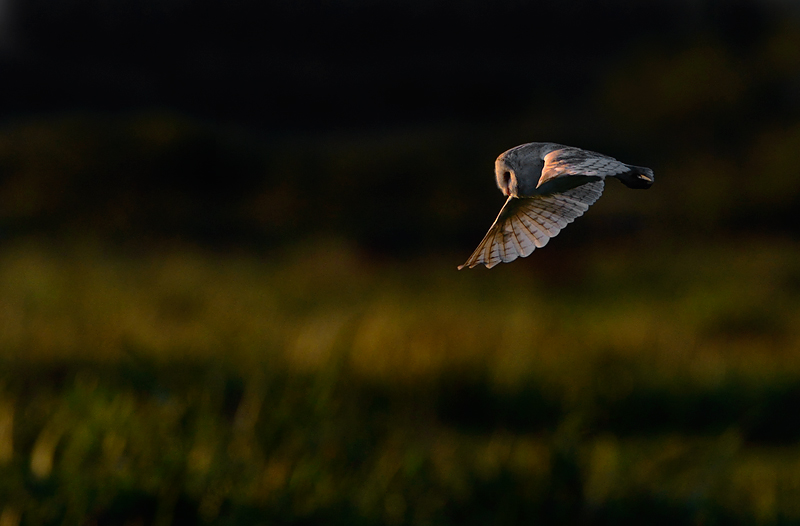
In the February’s issue of the highly acclaimed photographic magazine ; Wild Planet I have my third article published to date, talking about my life-long love of Barn Owls and the struggles they face with the changeable weather conditions here in the UK.
My first memories of Barn Owls are from childhood, where I’d rush home from school, dump all my school bags, pick up my little rucksack, bird guide and binoculars and head on my push bike to a nearby stretch of farmland not far from my home in the hope I’d see a pair of Barn Owls Id spent many years watching. I did my first ever project on Barn Owls for the the Young Ornithologists Club (YOC) which is now the Wildlife s Explorers Club. Recording trips in and out of the nest with what prey, collecting pellets, drawings and all sorts it was amazing.
Quartering over farmland, hovering with moth like silence, flying effortlessly on the wing in the half-light at dawn or dusk is the supreme hunter, the Barn Owl. A bird that has always created a sense of great excitement and fascination for me. In British folklore, a screeching Barn Owl is believed to predict that a storm or cold weather was imminent. During a storm, if a Barn Owl was heard, it indicated that the storm was nearly over.
You wait and wait for a passing glimpse and a view into this bird’s life entrenched with mystery, then from nowhere and without warning one turns up in perfect silence, gliding, riding the currents of air, traveling effortlessly. Eyes glued to the ground beneath, on the lookout for small rodents that they feed on, as you witness their very distinctive appearance with a white heart-shaped face with no ear tufts and sharp black eyes all contributing to its striking appearance.
Those large black eyes only let the Barn Owl look forward in a fixed position and cannot move to the side, so consequently the Barn Owl has to turn its head to see to the side or back. Their hearing is amazing and the ability to locate prey by sound alone is one of the best in the animal kingdom.
Barn Owl’s feathers make them perfectly adapted for silent flight, but this makes them prone to water logging so they are not well suited to hunting in wet weather. The key to an owl’s silent flight is in its feathers, the next time you find an owl feather, turn it on its side and look at the edge — the line of fibers is scalloped, like a stretched seam. The slight alteration in shape allows the feather to cut the air without making sound, making them perfectly aerodynamic.
For more of my article, how I work with wild Barn Owls and alot more information then please click on the following link. Also there is a link to Barn Owl Trust, based in Devon who have brought out a conservation handbook on Barn Owls, its a comprehensive guide for ecologists, surveyors, land managers and ornithologists.
Some of my images of Barn Owls were used in this handbook and I also help the trust with my images to help to raise awareness of these owls and the issues that face them.
I hope you enjoy the article as much as I did writing this. Over the last couple of weeks I have been out and found a brand new Barn Owl sight in an amazing and old setting that Im looking forward to working on this year as one of my major projects. Also the family of Barn Owls I photographed a couple of years back have also returned so it looks very promising this year with regard to Barn Owls fingers crossed.
Barn Owls are protected by law and so shouldn’t be disturbed so please be careful if or when you come across one. They have suffered in recent years due to extreme weather so they need all the help they can to build back up. The information and protected status of this owl can be read further on this link.
I hope this winter will be kinder to them and I look forward to showing you my new images of Barn Owls in the coming months, many thanks.
Saturday, December 13th 2014, just another date in many ways, people going about their lives, shopping for Christmas. Many people today will visit their supermarkets, watching what they spend and getting the best deal for themselves and their families unaware of a ruling that comes into place on this day. That new law has taken years to come into effect and it finally bears wings and flies today.
Over 500 million consumers in Europe from today will become aware that palm oil is in their food they eat. Ingredients will have to be clearly labelled, saying exactly what it says on the tin with two clear winners. Sustainable palm oil and more importantly the wildlife that live in the places where palm oil is devastating their homes in the shape of their rainforests. Click here to see the EU law which comes into effect today.
One such place is Sumatra, a place I have visited several times now to be among an animal I find such beauty in, they have brought a smile to my face since childhood, the Orangutan. Being around them brings me such joy and comfort, it’s like being alongside a human being. Peaceful, caring, intelligent, beautiful are a few words that come to mind when I think of these great apes.
Until this day palm oil in our food was hidden, often labelled as vegetable oil misleading the consumers and the true origins of its beginning. Giving people informed choices to buy food items from today is a great result and a small step in the right direction to saving what’s left of the worlds rainforests and in turn some of the most endangered animals anywhere on the planet. Click here to see a very simple guide and what it means.
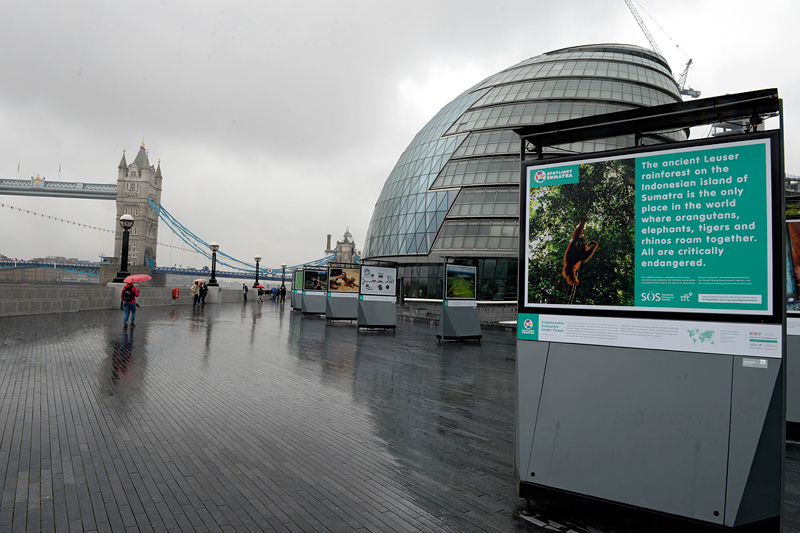
In 2011, SOS led a coalition of conservation groups, including Elephant Family, Orangutan Foundation, Save the Rhino, the Jane Goodall Institute, the European Association of Zoos and Aquaria (EAZA), and the Ape Alliance, in a joint campaign to tackle the problem.
Following their “Clear Labels, Not Forests “campaign, the EU adopted a new law which requires the labelling of specific vegetable oils, including palm oil, on food products throughout Europe. Companies were given three years to comply, and the new legislation comes into force today.
Mandatory labeling will support vital changes in the palm oil industry by allowing shoppers to make informed choices about what they buy. Responsible companies that make or sell products containing palm oil will want to reassure their customers that their products are not contributing to deforestation and loss of wildlife. Retailers and manufacturers now have the incentive to play their part in transforming the palm oil industry and breaking the link between palm oil and deforestation.
Its amazing news and one I wanted to share with the many followers of my blog, the best Christmas for those Orangutans that face a daily struggle to survive and live a peaceful life. I was there in March of this year working with another charity on the ground, shadowing the work of SOCP– Sumatran Orangutan Conservation Programme who have the only quarantine facility on the island.
I spent two days at that place in Medan the captal of Sumatra, this place is the very end of the line for those crucially endangered Sumatrta Orangutans that have been rescued and confiscated. At times what I saw I couldn’t really speak about or make senmse of, as I sat with baby Sumatran Orangutans looking at me, me looking at them. I cried, I sat and I cried and I really couldn’t understand why man was doing this and how we could inflict such cruelty on an animal that is us and we are them I like to say.
One of the shocking and direct consequences of poaching Orangutans is the death of the mother who is killed in the process of poaching the younger Orangutan. Shock for the baby is devastating and those that survive have a marked existence with so many crucial skills missing. Their lives of forests swapped for a life chained to a post or a cage that’s too small as they grow.
This situation is tolerated and considered normal in Sumatra and Borneo, keeping one of these guardians of the forest can elevate the social status of the person.When they are rescued the road back to the wild is hard without their mother, this makes their independent survival almost impossible. I witnessed many rescued Orangutans during my time in Sumatra. Most have forgotten the pain they went through and forgiven their jailers but just hearing their individual stories sent shivers down my spine and filled me with such sadness
This is my tribute to those Sumatran Orangutans, that are afforded the very highest protection in the world yet are killed every single day in Sumatra and the government does nothing.
I’m going back to Sumatra next year, shadowing the work of those teams once more, things are changing alittle and more interest and knowledge of the plight of those Orangutans and the other rare animals that live on Sumatra are becoming news which is good.
My aim as its always been from day one is to give those Sumatran Orangutans a voice through my work, and since my first visit in 2012 I have kept to that promise I made to those Orangutans I spent time with high in the tree tops. I will continue that promise for as long as I live simply because they are us and we are them and to let them go extinct on our watch would be truly shocking, many thanks.
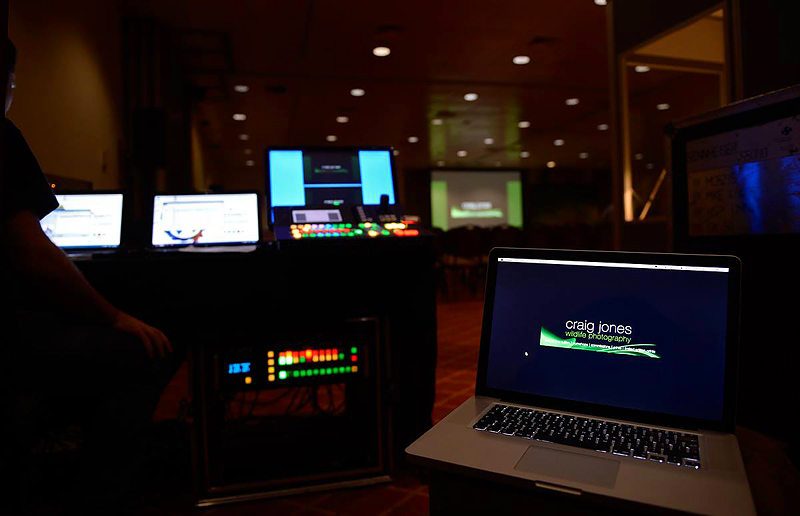
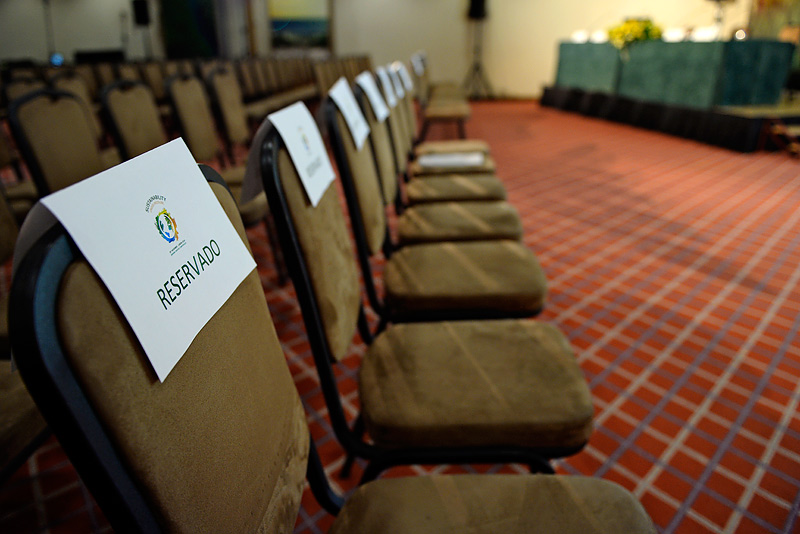
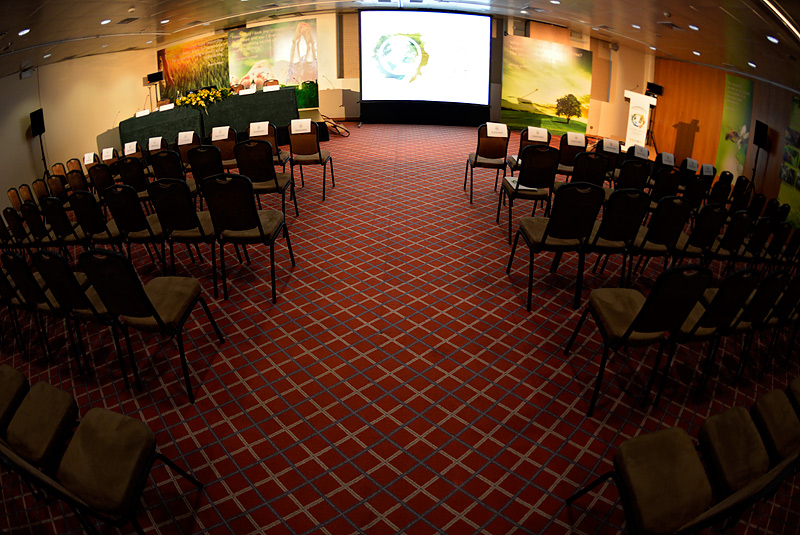
I have just come back from two days in Lisbon, Portugal having attended a conference on sustainability presented by the Jeronimo Martins group. I was invited along with many others to give their presentations and talk about their respected views on this. I was chosen because of my work in Sumatra on my self-funded trips their showing through powerful imagery the effect palm oil and timber manufacturing- mostly all illegal is having on this beautiful island.
Jeronimo Martin is a Portuguese corporate group that operates in food distribution and consumer products manufacturing. It operates around 2,800 stores in Portugal, Poland, and Colombia. The group is a world leader in food distribution operating throughout Europe from their main strong holds in Portugal and Poland. With operations in Colombia too. their influence on this sector is massive.
After a short flight from Manchester I was met at Lisbon airport and driven to my hotel, then later onto the venue where I went through some tests and set up my talk. When I got into my room a birthday card and chocolates were waiting for me as a welcome gift which was lovely as it had been my birthday the days earlier. Later I was taken to the venue where I went through some tests and set up my talk up for the following day.
My plan was to show through images taken on my trips to Sumatra the beauty of this country, its wildlife more so those crucially endangered Sumatran Orangutans and the destruction of this country at the hands of palm oil plantations and timber manufactures.
I was careful not to come over as an expert there as these guys knew their stuff, it was my aim through my photography to show what I know and have seen. I got to the venue early, got use to the layout and had a coffee and then the people started to arrive. I was introduced to many people including the CEO of the whole group. I had around 30 minutes in which to show the beauty, horror and suffering from what Id seen fro myself in Sumatra and get over my message to this distinguished audience.
I was on in the afternoon which gave me time to settle in and watch the others.I never really plan a talk so much as in the images go together and speak for me at times. I just talk from my own passion, knowledge and understanding of that situation I’m showing at the time. I have a basic framework I work too but on the whole I can remember every moment and every image once I look at an image and the story behind that.
My talk went well, it was my aim to take them on a journey to Sumatra through powerful images and emotive music, you could hear a pin drop as they watched and saw those images of what is happening there and those beautiful Sumatran orangutans I spent time with and have left behind. My aim to show, shock and reveal the truth of the palm oil industry, and the illegal logging I think really hit home to everyone there. I dont think there was one person in that room that will never forget the words- Sumatran, Palm oil and Orangutans.
I was really impressed with everyone’s talks and the powerful message to this well established company’s mission statement where they are substituting palm oil for vegetable oil. The opening speech from the CEO was very powerful and set the tone for the whole day for me.
Since my first trip to Sumatra I made a promise to those Orangutans I spent time with in the jungles there that I would do my best in order that their voices would be heard and their plight. To this day I have kept to this promise and below are a few of the talks, articles and presentations I have done since that first visit to Sumatra.
I return to Sumatra next year also to carry on my work and passion for these beautiful apes I have been fascinated with since childhood and I hope my images will always remind people of just how beautiful they are and that we are them and they are us as I say. Click on each image below and it will take you to the place that image was taken or article/photo published.
I was invited to talk about the Orangutans as part of the Sebastiao Salgado “Genesis” exhibition NHM 2013.
I flew home full of pride and joy having seen and heard the amazing work being done by committed people there which is having a massive effect on an industry that drives the need for such high demand for palm oil. I was there as a wildlife photographer and I have seen the end result to whats happening in Sumatra, to be around those powerful people that can possible change what I have seen on the frontline there was wonderful. I became a wildlife photographer to place a frame around something I had seen in the wild, to then show to people what beauty we have around us. In the case of Sumatra not only the beauty but also the devastation that is happening there.
To use my images for the good of a creature I have loved since a small child is a dream and as a wildlife photographer I have a duty of care not only to my peers who view my work and want to know how I took that image and the skills used but mostly importantly to those animals I see and spend time with in the wild. This for me is truly the greatest thing about being a wildlife photographer.
Being real to myself and more importantly my work is key and has been since I first picked up a DSLR. My love for wildlife stretches over three decades and it was an honor to attain this conference and talk about these great apes. Thank you to all the staff at Jeronimo Martins for looking after me and booking everything and taking care of my stay there in Lisbon. I met some wonderful people and contacts and I hope to be doing more of this to help those Sumatran Orangutans in the coming months.
Ask yourselves what you can do for wildlife, not what wildlife can do for you. The three charities I have worked with in Sumatra that were mentioned in my powerful talk can be seen on the following links – Sumatran Orangutan Society- SOS , Orangutan Information Center – OIC Sumatran Orangutan Conservation Programme – SOCP Please help and support their work its a massive battle out there in Sumatra and there aren’t many charities on the ground there, these guys are on the coalface, the cutting edge and in some parts hell on earth once you see what humans can do to their planet and the animals.
To see more of my talks or book one please see the following link, many thanks.
Over the last couple of weeks I have been running my One to Ones and doing my own projects and I have noticed the weather and more so the temperatures. I have been longing for a frosty morning, where the sun just warms your face as you breath in the cold, crisp air. But as of yet apart from one or two days of almost there frosts I haven’t witnessed any yet.
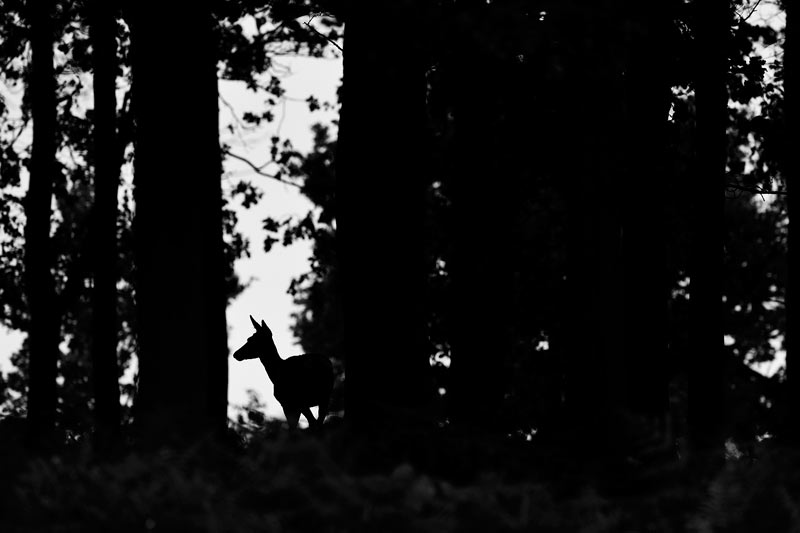
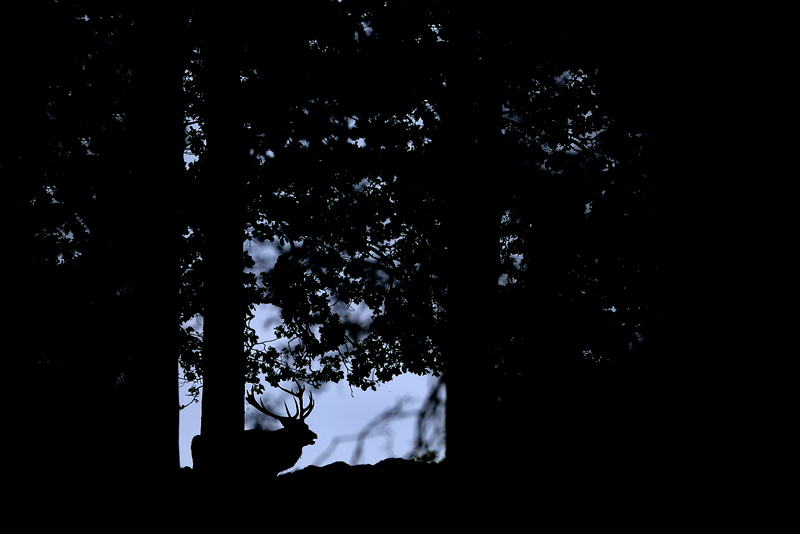
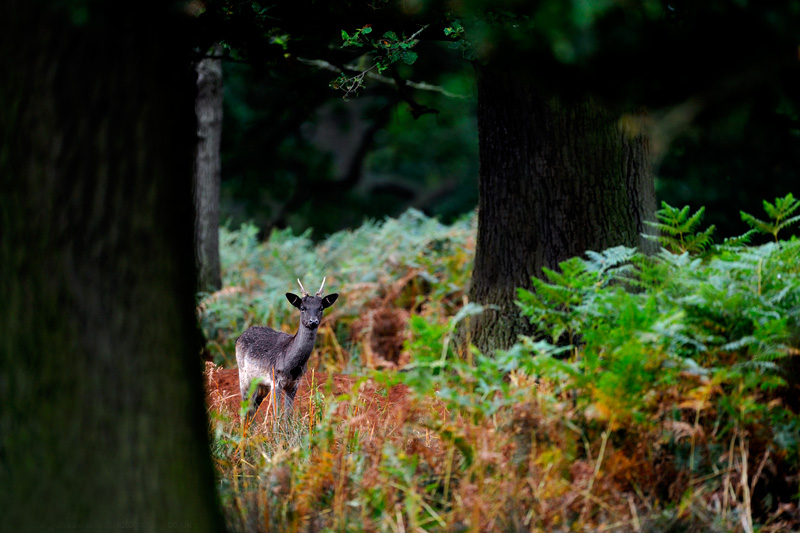
I managed a few days watching the Deer Rut in various places over the last week or so, some days with clients, others alone and each morning it wasnt really that cold. Im no weather man or expert but its hard to not see the mild to warm temperatures we are facing. I only hope as in previous years we wont be tricked into thinking how nice this is then all of a suddenly we are faced with snow and freezing temperatures when the gulf stream changes its mind.
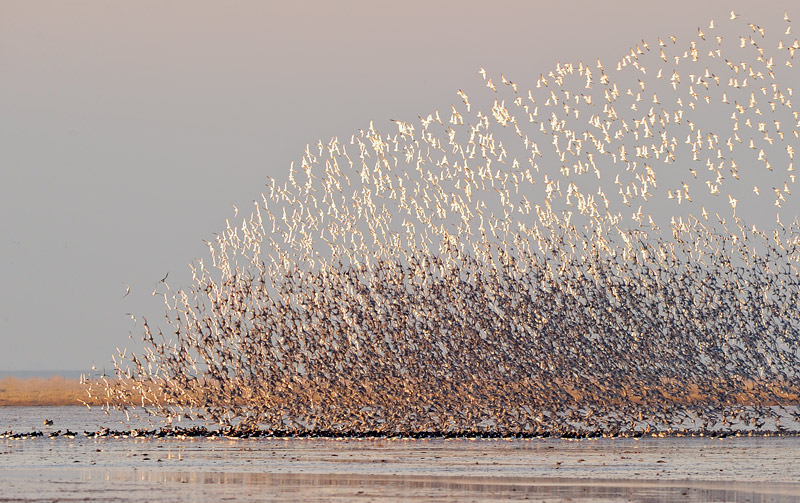
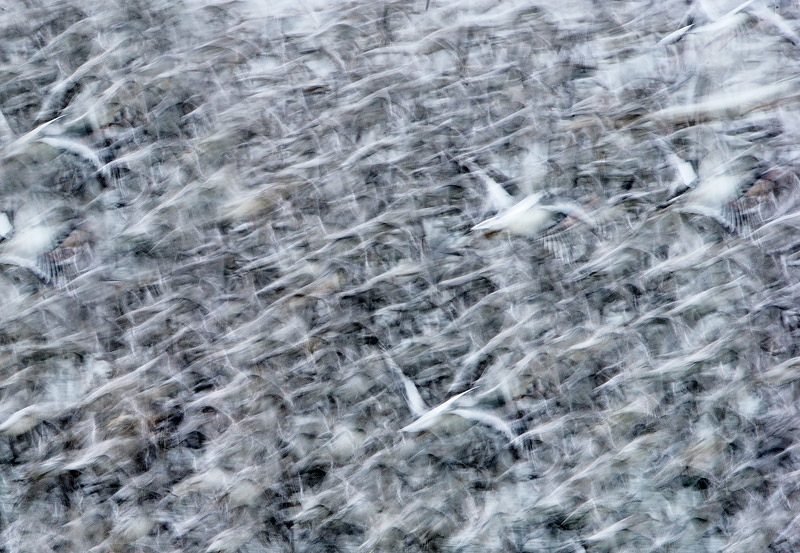
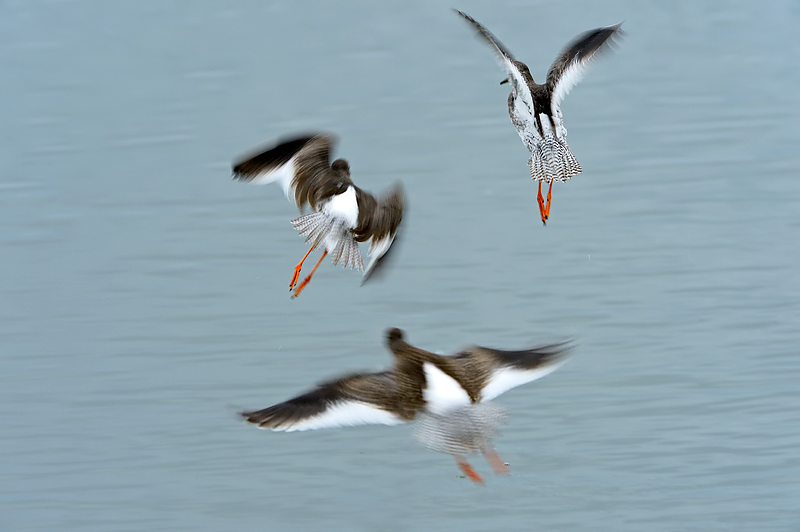
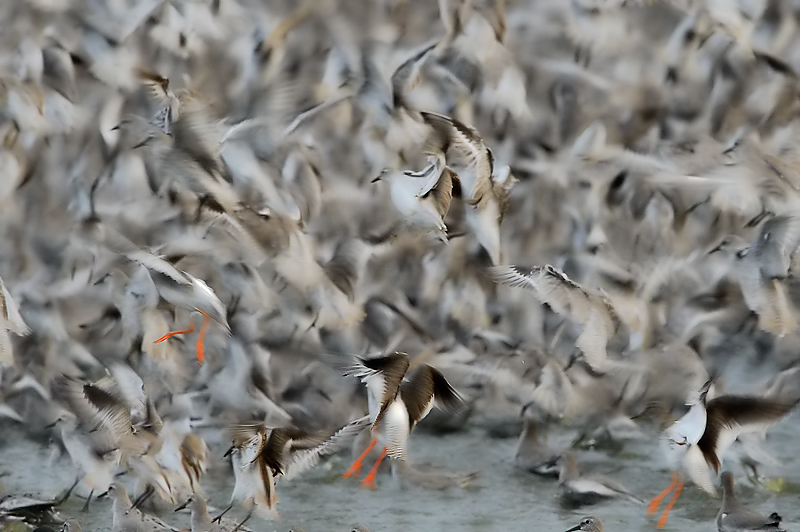
During the last couple of weeks I have been in Norfolk too, watching and marveling at a sight in nature that still amazes me and blows me away, the Spring Tides. Where you can witness thousands of Waders twist and turn over the mudflats of the Norfolk Wash as the sun slowly starts to rise. As the incoming tide covers the land the waders are forced into the air as the seawater consumes the land.
This produces some of the most beautiful and spectacular scenes in the natural world for me as these waders dance in the air. Turning one way then the other and flashing black and white as they do. It’s a truly spectacular thing to witness and the following images I hope capture that moment I speak so fondly of.
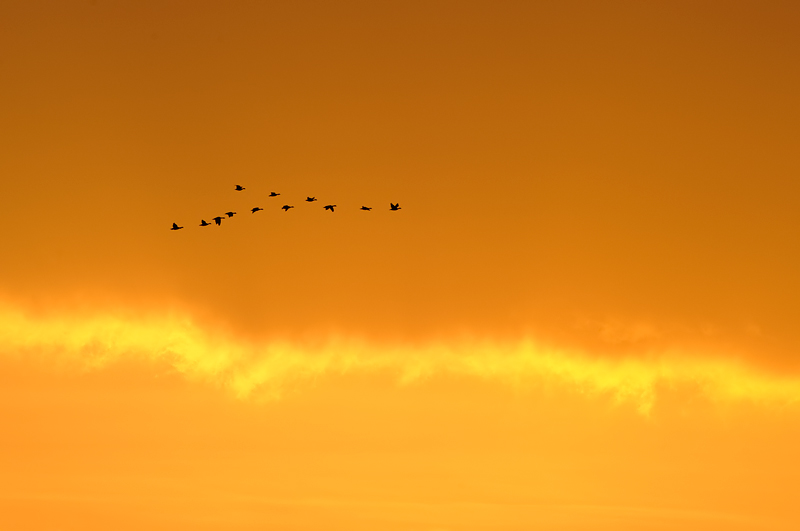
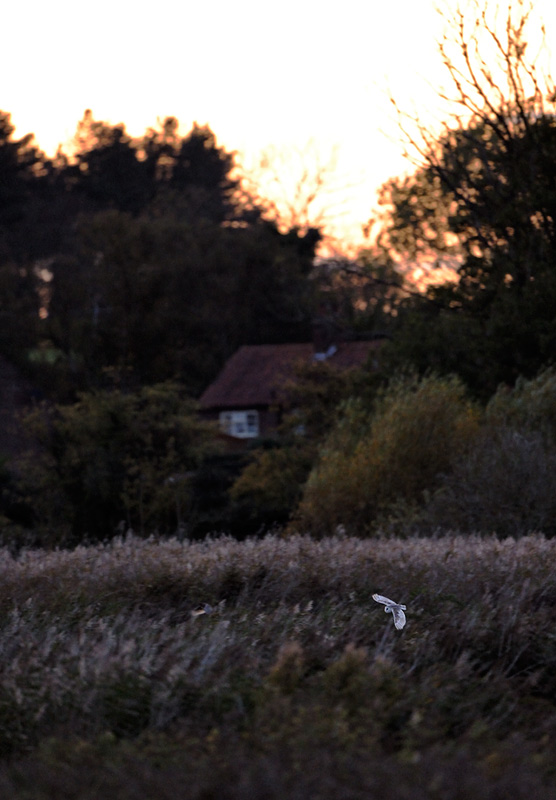
At dawn the skies are full of Geese travelling inshore from their roosting sites just off the coast and they travel into land to feed all day before heading back out. The noises they make as they fly in is amazing as they fill the sky. My clients also had some luck too with the Barn Owls and I have included a few of my favorites from those days I spent with clients.
Thank you to everyone of my clients that joined me and I hope you all enjoyed your time with me among the beautiful countryside. If youd like to see what workshops and photo tours I run then click on the following link, many thanks.
The Eyes of Nikon Photo Exhibition held in Shanghai, China
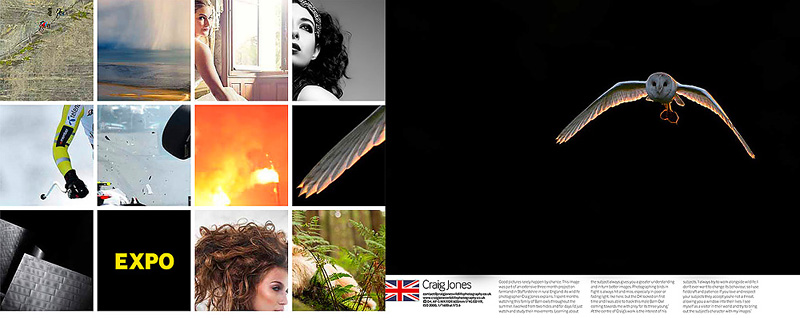
The Eyes of Nikon Photo Exhibition, a complete collection of photos captured with Nikon digital SLR cameras and NIKKOR lenses by photographers active around the world, will be held from August 23 (Saturday) through September 30 (Tuesday) at the Nikon Plaza Shanghai. Nikon, Japan have just sent me a few photos of this exhibition, where my work was one of the 12 from original 21 photographers chosen to be part of this event. It will be touring around and fingers crossed coming to London.
Approximately 28 large prints of photos captured by 12 of the photographers who contributed to the Eyes of Nikon photo collection and active in the fields of art, fashion, sports, and nature will be exhibited at this photo exhibition to be held in Shanghai. The exhibition will serve as a place where visitors can view the works of photographers active on the world’s front lines, with exhibition of not only printed photos, but also slide shows displayed on a large screen.
I was chosen at the beginning of the year to become one of the Eyes of Nikon photographers and part of this amazing book that celebrates 80 years of Nikon lens and cameras and to become one of the Eyes of Nikon photographers which can be seen on the following link One of my images that were part of this exhibition can be seen here.
My work is becoming more recognized by Nikon, the equipment I have used since turning professional and several articles and images have been published showing how well that equipment in some testing places has stood up to everything.
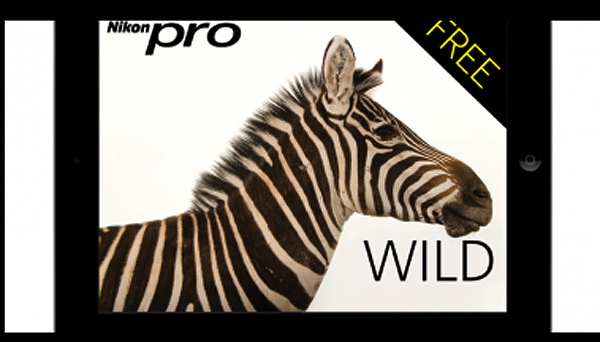
Nikon launched Nikon Pro WILD: a FREE tablet edition that’s an exclusive supplement to Nikon Pro magazine to celebrate the best in wildlife photography. Click here to see and here to download.
Nikon Pro magazine celebrating everything that’s great about Nikon products and services. Nikon Pro is the tri-yearly print and tablet magazine for professional photographers and serious enthusiasts. It features the best in photographic imagery and technical advice from around the world.
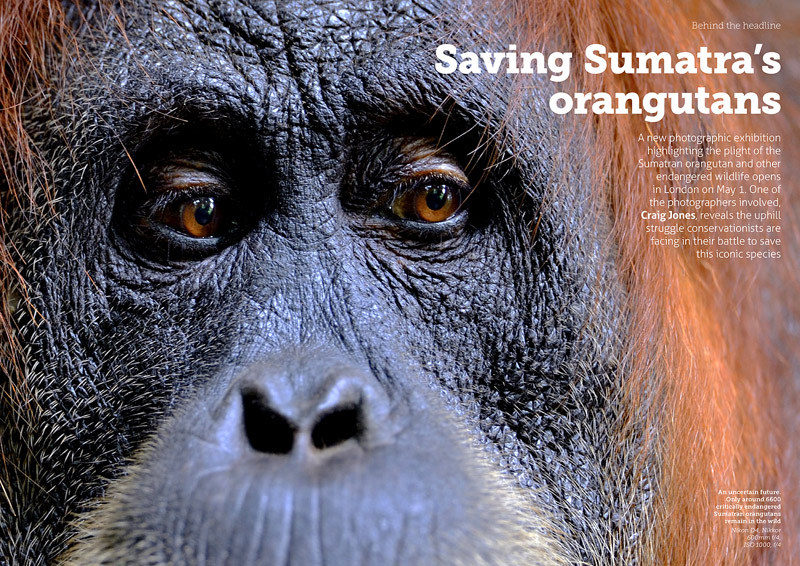
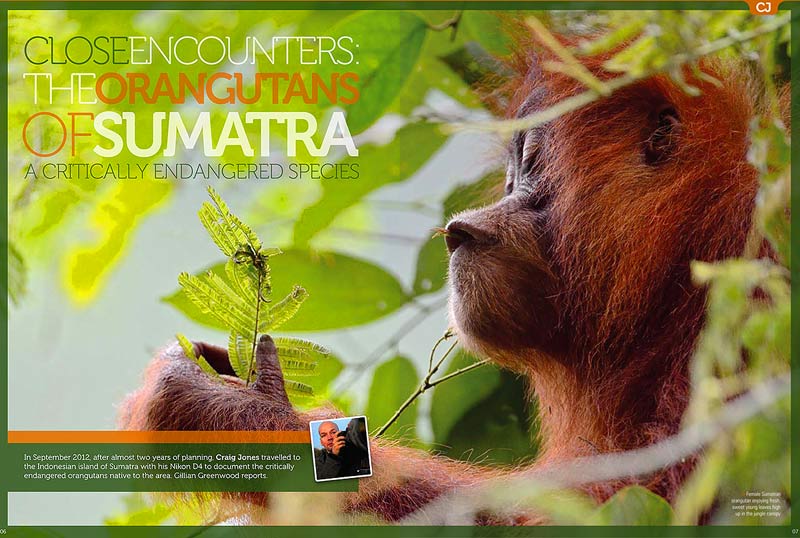
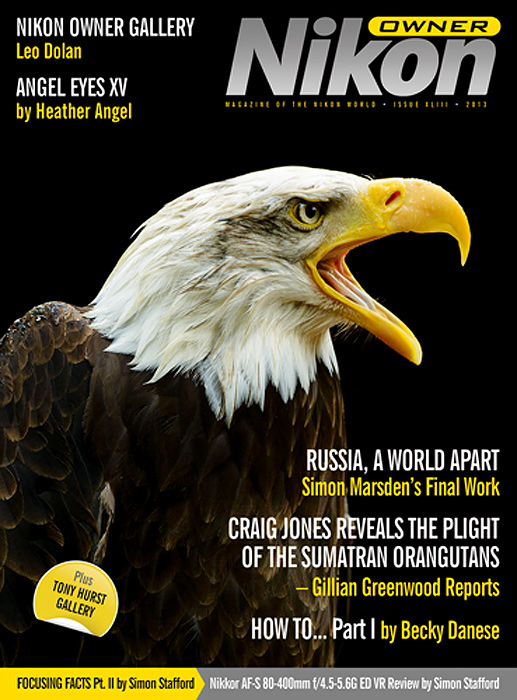
Nikon Owner magazine published an article covering my on going work to highlight through my work and self-funed trips there whats happening to the criucally-endangered Sumatran Orangutan. Too see the link and the magazine please click here.
There’s news that the Eyes Of Nikon exhibition will be touring to other countries and fingers crossed it comes to London, when I get more news I will let you no on my blog many thanks.