Firstly, a very Happy New Year to all my friends, clients and those that follow my blog, thank you for your continued support and friendship, I hope 2013 is a good year for you all. To kick off the new year it gives me great pleasure to share that one of my Sumatran Orangutan images graces January’s issue of the much respected BBC Wildlife Magazine. The image has such a special meaning to me and it’s very fitting that it’s published in the 50th Birthday special too. I have copies of this magazine dating back to the early eighties.
The Orangutan is one of our closest relatives in the animal kingdom, sharing 96.4% of our DNA. Indigenous people of Indonesia and Malaysia call this ape “Orang Hutan” which literally translates as “Person of the Forest”. They are intelligent, friendly, and very gentle and spending time with these animals gave me so many wonderful memories which I will treasure. These animals are native to Indonesia and Malaysia, and their survival is seriously endangered by illegal logging, forest fires including those associated with the rapid spread of palm oil. Over the last few years timber companies have increasingly entered the last stronghold of the Orangutans, the protected national parks. I’ve seen this first hand travelling around Sumatra.
The situation is now so acute for both the Borneo Orangutan and the Sumatran Orangutan, both of these species are classed as endangered and critically endangered respectively by the World Conservation Union (IUCN) and are listed on Appendix 1 of the Convention on International Trade in Endangered Species of Wild Fauna and Flora (CITES).
After my first week in the jungles of Sumatra I was sad to leave Darma, but equally I was very sad to leave the Orangutans that I had seen and spent some wonderful moments with, watching and capturing with my camera. It felt like I’d lost someone as during the intensity of those days trekking through the dense jungles looking for these guardians of the forest I became very close to these Orangutans. I hope they will remain safe, I will be returning to these amazing jungles next year. Here are some images of the Orangutans I saw and left behind in Sumatra, these moments were special.
I have named the image above “Hope”. Hope is a great thing, without it you can become crushed, you should always have and believe in hope. The Sumatran Orangutans are in a fight for their lives and need every bit of help. This image, of a baby Sumatran Orangutan playing with her mum sung out that word to me. Her mum is called Sepi and again she was rescued from a vile world you couldn’t even imagine, many years ago and has been given a second chance in life. The baby is called Casa and is a year and a half in age. Born in the rainforests of Gunung Leuser National park, she represents the future. Watching her cling to her mum here, acting shy just like a human baby. She saw me and tried to hide behind her mum’s fur.
After I left Darma we drove north to the providence of Ache where I spent two days with the HOCRU team– (Human Orangutan Conflict Rescue Unit). I will be telling you this story in my next blog and not here for reasons I will explain in good time. After two tough and exhausting days I spent the rest of the second week with the OIC team, witnessing the wonderful work they do in the community and the re-forestation areas with replanting programmes in order to give the land back its rain forests. I spent two days at the Re-forestation site, which is on the edge of the Gunung Leuser National Park. Its a small, self contained house where workers spend time replanting the forest in different areas in the neighbouring areas.
Since 2005 they have been involved in the reforestation of degraded land through tree nursery and replanting projects, and have planted over half million trees to date. This project involves the regeneration of illegally cleared forest land in the Besitang region of the Gunung Leuser National Park (GLNP). The programme is the first of its kind in Sumatra, with OIC being the first and only NGO granted permission to conduct restoration work within the national park. Working in close collaboration with the national park government authorities and local communities, the project aims to undo damage caused through illegal large-scale conversion of forest into oil palm plantation agriculture.
I helped the team out during my time there, often they spend three to four weeks at a time here away from their families doing this work. It was amazing what they have achieved in just a few years through hard work, passion and a belief that things can change running through all the team members. I also planted some trees that fingers crossed will become put of a new rain forest in the future, another wonderful moment for me on a personal front.
In addition to the forest rehabilitation, the project also provides sustainable alternative livelihood schemes for local people living adjacent to the park. They benefit from the restoration of natural ecological services, having previously suffered droughts as a result of high water uptake from the illegal planting of oil palms, and also receive business development training. There is a strong educational element to the project too, with training and skills development on tree nursery management and replanting seedlings. Indigenous tree species are planted to hopefully put back what was taken with the illegal actively conducted in these areas before these projects were set up.
I also visited some of the offices the team has, where classroom based education and training goes on within the communities. All building awareness of the plight of the Orangutans and their habitats which in turn are the homes of those people that they try to educate about what’s happening to Sumatra.
After a wonderful few days seeing this brilliant and committed work that is going on I headed North to Ketambe, an area within the province of Ache. I was going to be staying with the Ketambe Reforestation and Ecotourism Development Initiative team (KREDI) which is part of OIC/SOS. The organisation works at the grassroots level in northern Sumatra to raise awareness of the critical importance of the sustainable use of natural resources and ecosystem conservation.
For the first few days I was invited to a two day workshop put on by OIC. The local communities turn up along with Ministry for National Park delegates in the region. Regional commanders from the police and military. They are invited to voice their concerns about the problems in the area mainly caused by the large scale de-forestation. Slideshows, talks are put on and everyone is encouraged to talk about their issues while still trying to help and save the forests and the Orangutans. However, people have to make a living and people there were saying and in the absence of any real help from the government, people are left to just do whatever thay have to in order to survive and feed their families.
Travelling around this area of Aceh I witnessed many areas of the Gunung Leuser National Park (GLNP) cleared bare and the fringes of this protected rain forest habitat slowly being eroded away with small to large de-forestation and illegal logging and forest clearance. At times the smoke from the fires would block out the suns rays and fill the air with that heavy smoke smell you get from burning. Seeing this on such a large scale was truly shocking and nobody was doing anything to stop it. It goes unchecked. Panut the founder of OIC told me around 1.5% of the GLNP is lost each year this way and is shrinking at an alarming rate.
On the surface the country is driving itself into a brick wall as fast as is humanly possible, because the carbon emissions, the green houses gasses the air population is everywhere in Sumatra. The whole area of Indonesia produces so much green houses gases from burning, it now has such a major role in the global weather patterns and the fast changing weather we are all seeing.
Through translators I heard many members of the public who had turned up for this two day workshop say the government of Indonesia does not protect the forest, they allow large scale illegal logging to go on unchallenged . Sitting at the back and hovering around with my camera I was met with a little suspicion at first, until I was introduced as a friend from England just on holiday, that was my remit and I said nothing.
It was clear to see and hear from local people that it is those that you have to work with if you’re ever going to safeguard the rainforest and then in turn the amazing array of wildlife they support. They feel helpless with a government that does not firstly protect their forests and secondly hand out licences to palm oil companies that come in and turn the whole place into a foreign landscape so far removed from the wonderful rainforest they rip up so violently.
With no safeguards in place the critically endanged Sumatran Orangutans are a flagship species, along with the Tigers, Elephants and Rhinoceros and have little chance of survival. That’s the cold and hard truth from what I heard and saw during my time there. Flying in the face of that, with passion, hope and drive are the guys from OIC/SOS that work tirelessly with the communities, schools, and local people in order to just keep that hope alive, hoping the animals that live on this island Sumatra and neighbouring island Borneo may just have some kind of future.
After being around for those two days, watching and listening to the proceedings and trying to blend in as much as possible the head guys seem to accept me and wanted to talk to me through a translator. I had to remember though I was on holiday so I didn’t really say too much just listened. At the end of the day I asked for a group photo of them all and I took the chairs out for the officials, told people where to stand and even had the front row straightening their arms out, they all took it in good faith and here everyone is.
The backdrop being that special place everyone is fighting to keep, the Gunung Leuser National Park, which I found would be the perfect background when putting together this image. I learned a lot over those two days, I had amazing access to locals, their politics, their unhappiness and their total bewilderment at a government that is failing them at each time of asking. At times I felt like I was on an undercover mission, sailing under the radar and trying to become a local if that makes sense? I applaud the whole team for their work over those two days, amazing and very inspiring seeing how doing something is better than doing nothing. These workshops are put on as often as OIC can manage and afford and from my point of view are invaluable in building trust and respect.
Over the next couple of days we visited the local schools in the area in the ‘OranguVan’, a mobile environmental library. They present conservation films hoping to raise awareness about issues such as illegal logging, the pet trade, and the dangers of disturbing the rainforest ecosystem. The van travels around North Sumatra and Aceh, visiting local communities and schools. They provide free access to books, hold discussions and debates, show environmental films and give presentations on Orangutans and the importance of conserving their habitat.
They have a cycle-powered cinema that shows a wide range of education films. A team member cycles to produce the power needed for the projector. When we drove in to the schools the kids went mad, running out of their classrooms and mobbing the van which was great to see. Staff told me they use to do this once a week but now with funding being low they only manage it once a month, sometimes more if possible which I found really sad. The classrooms were very basic compared to ours in the UK but everyone was so polite and kind, the teachers came to say hello and introduced me to the children. Through a translator I said hello and why I was there which met with cries of “ohhh and Ahhh”.
Many of the children were shaking my hand and then placing my hand on their foreheads which I found out later is something to do with their religion, it was a wonderful time.
We visited three different schools as well as visiting locals communities in the evening, presenting these films and giving away books as presents for the children, which in turn sent out a strong message to look after your environment and its animals.
Each time the children would gather round the van and the team would hand out books that contain information about the Orangutans but in a funny way, as a story, to make it easy to remember. Once the books have been given out the children then settle down to read them, either standing up or sitting down.
Some absolutely brilliant work going on and happening in this area from the OIC/SOS team. I really enjoyed my time here and the whole team looked after me during my time there. All the children posed for this final farewell photo.
The day before I was due to head back to the capital of Sumatra, Medan, I was told about a place that had recently been illegally cut down. Work had stopped as locals had seen the burning and reported this to the relevant people. However, the people that did this, cleaned many hectors of primary rainforest from the GLNP which is protected and should not be cut down by law. Below I am standing on a once proud tree now flat on the ground.
Beautiful trees littered the ground, their roots sticking up into the air where they were violently cut and felled. I was told this happened recently and to try and get rid of the trees they set fire to the whole area. A lot of the fires had gone out but a few remained. As I stood there I just couldn’t make sense of why anyone would do this.
Majestic 300 year old trees just thrown over like they were nothing surrounded by primary forests. It greatly moved me standing there, the silence only broken every so often with a single bang that echoed down this valley. A lone logger was cutting down a tree in the distance even as we stood there. I was speechless. I sat and looked around alone, plants still clinging to the tree trunks, fruits on the ground, roots sticking up into the air. This is happening everywhere on Sumatra and Borneo.
It was such a scene of devastation, and it was a really sad end to a great week. However, I witnessed lots of positive stuff and real hope for the future. The next day I travelled back to Medan which took nearly all day, my guide dropped me off at my over night hotel, only the second time in two weeks that I’d had a bed as all the other times it was the floor, the car seat or the ground that was my bed, so I was looking forward to a shower and the bed. The following day I flew back to the UK and at this stage everything I’d seen and witnessed just seemed like a blur in my mind.
On my third blog I will cover the rescue, a day that moved me with what I witnessed!
Just before I go I’d just like to remind you of a couple of talks coming up towards the end of October. I will be presenting a number of presentations and talks alongside Panut who I had the pleasure of spending time with in Sumatra. He has worked in Orangutan Conservation for over a decade and has a dedicated team in Sumatra all doing their best for this great apes survival. For more details of these talks then please click here. I will also be doing this presentation on Thursday 25th October at the Natural History Museum in London as part of their Nature Live talks.
You can see this by clicking here. I hope you’ve enjoyed my two Sumatra blog posts so far. If you’d like to help SOS with anything you can think of then please click here to be taken to their website, many thanks and I look forward to seeing you on my talks.
They say a picture paints a thousand words, I hope this one does, tt’s a Female Tigress wondering through her territory in the morning light, taken in Ranthambhore Tiger reserve, India. This photograph captures the moment when she became aware of my presence as I sat in a small jeep, hidden from view, thousands of miles from home, engine turned off and the air thick with alarm calls. I could not only feel my heart beat I could hear it among the forest noises as I captured this photograph.
On 29th August 2012, the Supreme Court in India decides the plight of the Royal Bengal Tiger by those that maybe haven’t even seen or even been to those areas now that they may condemn to the history books. India is home to half the world’s tiger population, according to the latest census released in March 2011 by the National Tiger Conservation Authority, the current population is estimated at 1,706 – up from 1,411 in 2008. A link hear to the recent ruling can be seen.
The Supreme Court wants the Tiger reserves to restrict tourism to the buffer zones, but the problem in Ranthambore, as well as other reserves, is that the only area it can designate as buffer is not somewhere tourists would want to visit, let alone tigers. There, the buffer zone is a wilderness with very little flora or fauna, littered with gravel mines. To reach the zone, tigers would have to travel 35 miles from the main park, and even cross main roads. So these proposed plans and buffer zones just won’t work and will be the beginning of the end for Tigers in India.
Ranthambhore Tigers are doing really well and the reserve is run to a strict rule. At present there is 25 cubs there doing well, one family being brought up by their Father, the first time in history this has been reported. And my group of clients this year had the amazing privilege of witnessing this and capturing the images of dad with his two cubs as their mum had died and he was bringing them up alone. To read the story of this case click here.
Animals only breed when they are happy, so how are tourists distributing them? as in core areas Tiger numbers on the whole are on the up. Nature would tell us if it wasn’t happy with falling birth rates, Tigers numbers falling or dying. But she tells us the opposite here in Ranthambhore. A place I know well and love, having visited many times over the last several years. I’ve met many drivers, guides and people that live in and around the tourisms area of Ranthambhore whose whole economy is based on tourism, take this away and they have nothing.
All of which rely on the Tiger for their livehood, but more than that they love, cherish and look after these animals. Keeping them as safe as they possibly can. Remove all of this and this will send the Tigers into the history books I believe and many others on the ground also do. I’ve been told its called – community based conservation, and the tiger will be exterminated without it.
I am no scientist but it’s so clear the Tigers are ONLY living because of these people and tourism, let’s hope they carry on keeping Mother Nature’s most beautiful animal as safe as it can. I hope they make the right decision for the Tiger first and foremost, keeping this animal alive, safe and well for the future generations to see just how beautiful they are, good luck to the Tiger and also the Indian people.
I am off to Madagascar at the weekend for my 11 day photo tour there so once I return home I will up date my blog on the courts ruling as the date of the hearing coincides with when I’m away, many thanks.
Spotlight Sumatra is a celebration of the breathtaking array of life found in the island’s unique rainforests, and a call to action to collectively do all that we can to save this fragile ecosystem, the last stronghold for many critically endangered species. I will be travelling to Sumatra in September 2012 for two weeks. Alongside my guides, we will venture deep into the jungles for up to three or four days at a time, even longer if we are lucky, to track and photograph wild Sumatran orangutans.
Jungle life will be basic but great, trekking by day and sleeping in hammocks by night. I have many ideas and plans for different images and photographs that SOS can use to help raise awareness of the plight of this Great Ape – maybe the first Great Ape to become extinct should current trends continue in the destruction of their forest homes. With many tour operators, photographers and members of the public venturing to the island of Borneo to see and photograph orangutans, I was shocked that very few people go to Sumatra. I hope to show the world Sumatra needs help just as much in saving its rainforests as the neighboring island of Borneo.
Only 6600 critically endangered Sumatran orangutans remain in the wild. Most of these depend on the rainforest habitat provided by the Gunung Leuser National Park in northern Sumatra for their survival. Removal of illegal palm oil plantations, replanting and guarding the orangutans’ home territory along with education and public information campaigns are carried out by the Sumatran Orangutan Society and their partners in Sumatra, the Orangutan Information Centre.
SOS is dedicated to the conservation of Sumatran orangutans and their forest home and their work is helping to protect and conserve this area for the future. I first saw one of these amazing animals in the year 2000 in a rehabilitation centre in Thailand, where I saw a male orangutan, an experience that touched deep into my soul, as I watched and looked into the eyes of one of our closest living relatives in the animal kingdom.
This has stayed with me until the present day and now I am trying to help in my own way by using my photography to help SOS, in turn helping this animal. The principal focus of my trip will be the orangutan, capturing them within their natural habitat, looking for behaviors to capture and so on.
I will be capturing some beautiful photographs of these animals, alongside images showing their rainforest home. I will visit some of the most magnificent forests on Earth, which is also the domain of many other beautiful and stunning animals and birds, some of which only live in this part of the world and nowhere else on the planet. I will be using my tracking skills and fieldcraft, camouflage and jungle survival, having spent some time in these environments previously as a member of the armed forces.
I will be reporting back once I reach the few places where there is internet access, and you’ll be able to read my updates from the field on this SOS blog. I will be capturing images of SOS and OIC’s different projects but on the whole my time will be spent in the jungle, listening and watching for clues of what wildlife is around us. I am looking forward to meeting and working with the locals there, whose knowledge of these jungles is second to none and without whose skills it would take me much longer to navigate this landscape.
I cannot wait to wake up to hear the sights and sounds of the jungle, the calls, the noise, the smells. It’s going to be an amazing two week adventure where I hope to capture the beauty of this animal with my lens, which is controlled with my heart and eyes. I will be getting involved also helping the locals, I will be presenting some short films and slideshows showing them wildlife outside of Sumatra. A lot of people will not have ventured outside of their native country but it’s my aim to bring wildlife to them during the time I am there using a small bicycle-powered cinema which is used for educational talks and film screenings.
The sole aim of this trip is to highlight the plight of this most beautiful of apes. I will be showing you the kit I’m taking, clothing and equipment, posting live updates and hopefully transporting you to this rarely visited part of the world.
I visited the UK headquarters of SOS in Oxford this week to finalise my two week trip there soon with the UK director, Helen Buckland. Going through some projects and work the charity want me to visit once I’m on the ground. Capturing the whole story of Sumatra the best way I can. While I was there these two orangutans where really keen for me to see where they originally came from and gladly posed for me in front of a map of Sumatra.
There will be more news and updates soon before my departure and to keep up to date with this amazing trip please visit SOS’s website here and view the projects, alternatively click on their blog. Its going to be an amazing trip, never been done like this before with a complete view to highlighting the plight of this great ape. I look forward to showing you this island and its amazing wildlife very soon.
Announcing a new wildlife workshop I’m doing in conjunction with Calumet Photographic covering fieldcraft. After the great response to my article in Practical Photography giving my top ten tips and advice on fieldcraft I will be running this workshop over two days enabling you to learn one of the most important elements to wildlife photography. The dates for this workshop are Saturday 27th October and Sunday 28th and can be seen by clicking here
All wild animals that have no or very little contact with humans are scared and fear man. They see and smell us the moment we enter their world of which they are designed for and we aren’t. They have an in built fear of man and see us as a threat to their lives. For me, it’s how the person deals with that level of fear and stress using their fieldcraft that’s important.
Good fieldcraft is especially important for the effectiveness of wildlife photography. Concealment is what keeps you from being seen and allows you that private window into the subject’s life. Fieldcraft is the art of looking and reading the animals behaviour in parts dealing with the visible signs the animal will show you.
Come and join me on this two day Fieldcraft/Rutting Deer workshop. On the first day I will present some slideshows, go through what fieldcraft I use within my own work. I will demonstrate what you need to do in order to improve your own wildlife photography. The second day will start just before dawn and fingers crossed with get a frosty morning with some nice light as this will add a great deal to your images.
You will be able to put into practise what you learned on the first day on the ground on the second day. Wind direction, smells and watching for the behaviour that will be around us all. The month of October is a key time in the Deer’s own calendar, it’s a time when the males fight to keep control of their females that they will later go on and breed with.
Many male Fallow Deer’s want this chance to mate and so the rut is born. The air will be thick with testosterone as we witness one of autumn’s magical times. You will learn many skills during these two days,where fieldcraft for me is one of if not the most important tool in any wildlife photographer’s box.
For more information or to book this workshop then please click here to be taken to Calumets website many thanks.
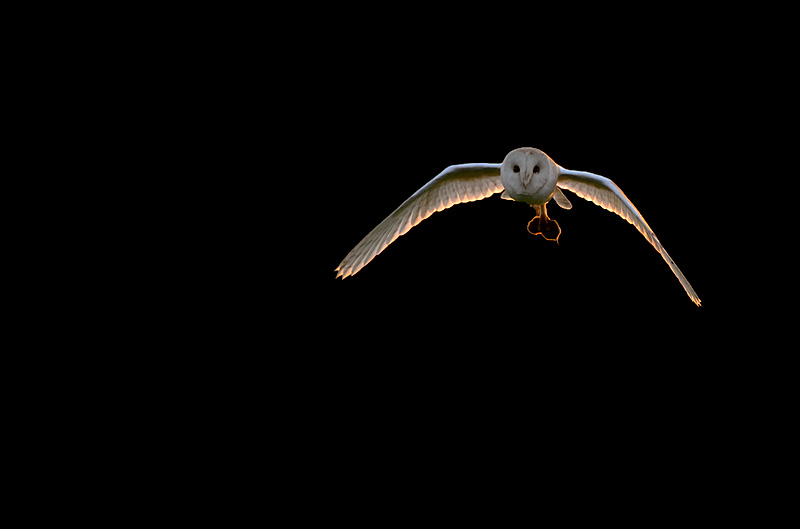
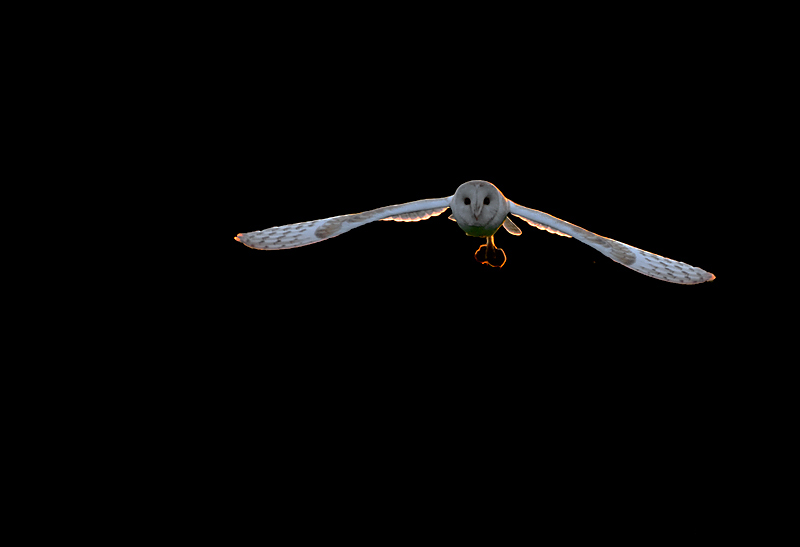
Quartering over farmland, hovering with moth like silence, flying effortlessly on the wing in the half-light at dawn or dusk is the supreme hunter, the Barn Owl. A bird that has always created a sense of great excitement and fascination for me. In British folklore, a screeching Barn Owl is believed to predict that a storm or cold weather was imminent. During a storm, if a Barn Owl was heard, it indicated that the storm was nearly over.
The custom of nailing a Barn Owl to a barn door to warn off evil persisted into the 19th century, something you just wouldn’t believe people would do but back then strange things went on and happened to these amazing owls.
The Barn Owl had a sinister reputation, a bird of darkness, where people associated it with death. The Ancient Greeks and Romans saw owls as a symbol of wisdom. Athena the goddess of wisdom is often depicted in art with an owl perched on her shoulder. Sometimes owls were also viewed as messengers from the gods, full of wisdom and helpfulness.
Over the last several weeks I have been watching a family of Barn Owls live out their lives in an old disused building overlooking some beautiful countryside . In some of the most testing weather since records begin two adult owls have raised three healthy chicks that now are almost ready to take their places among our countryside. With the wettest June on record it’s been hard work watching the parent birds put their own lives on the line by hunting in this wet weather.
A lot of the time though the weather has broken and this has allowed the owls to hunt and build up their larders of food which is a key behaviour among Barn Owls. This stored food then helps during the long periods of wet weather.
With no sign of improvement it’s hard to believe its summertime in the UK. I like to study air pressures and weather fronts as it really helps within my work. The reasons for this wet weather are simple when you take a look at the weather charts, the jet stream.
During most summers the jet stream lies to the north of the UK, so rain-bearing weather fronts and depressions miss us and hit Scandinavia instead. This year however this jet stream has shifted southwards and is lying over France and southern Europe, this has left the UK wide open to these depressions and all this wet weather.
One possibility to what maybe moving this jet stream is warming temperatures between the Arctic and the tropics and the shrinkage of the north polar ice cap. These changing weather conditions and patterns may be around a lot more than we think in the future where alongside wildlife we’ll have to learn to live and change alongside this ever present climate change that are here to stay for sure.
My hide is some distance away, completely hidden from view and well camouflaged. The image above is the view I have from my hide and one of the perches they are using now, exercising their wings and doing their tester flights just before sunset each evening. I move my hide to a different place under the cover of darkness as not to disturb them and also once the dawn light comes up the wildlife will see the hide and accept it as part of the landscape. Again cutting down on any stress, and disturbance to the wildlife and in this case the Barn Owls.
With a mixture of different focal lengths, tele-convertors, crop modes in camera and time I’ve been able to photograph this family and capture them going about their lives at this location. Wild Barn Owls are protected under the Wildlife and Countryside Act 1981 and so should never be disturbed in any way. I am using really high ISO’s on my camera in order to get some shutter speed, as they aren’t coming out until around 9-9.30pm. I never use any sort of flash with wildlife as I feel any form of bright light suddenly hitting an animals retina disturbs the subject.
When you work somewhere new like this site, you gradually build a picture of movements, favourite natural perches, flight patterns etc. This is a skill you have to learn in order to try and second guess where and when your images will come from. This takes time and is very time consuming but for me its the very essence of real wildlife photography. At the same time you learn so much about the subject, and the habitat in which they live. The image above is of the paler male Barn Owl perched on a stone lintel, he is so stunningly beautiful.
The Barn Owls use the main barn as well as some smaller buildings which often both the adult and young perch on. Hours pass by, with nothing, not a sound, then a white flash passes by my hide, a corus of loud hissing noises can be heard as the adult owls come in with prey. This image below is the male Barn Owl who likes to perch on the pitch of this old roof here and on this evening my hide was close and by pure luck he landed, stopped and looked straight through me.
I was too close really, so I went for a close up of his amazing and beautiful, heart-shaped face. I managed to take just one photo on silent mode before he flew off and carried on hunting, and this is that amazing moment captured here. The male has much lighter plumage around the breast and face and has a completely white chest nothing else, the female on the other hand is slightly bigger and has black spots on her chest.
The ability to see things that are hidden and hunt completely undetected are key to a Barn Owls life and survival. Often without warning they arrive and vanish before you have any chance to capture this. I always like to capture wildlife as seen on the ground, going about their lives with no disturbance by my presence at all, I like to compose my subjects on whatever they land on.
They are venturing out more and more now and it won’t be long before they completely leave the comfort of this building and start to live and roost among the many trees littering the surrounding landscape. When I leave the site in almost total darkness I often see one or both of the parent birds flying over the farmland with one of the younger ones in tow, their white bodies giving an almost floating appearance as they fly and dive.
Maybe they are having hunting lessons, learning their craft, who knows but it’s very enduring to see and both adult owls have been brilliant parents that have managed to feed and bring up their brood in some of the wettest weather since records begin.
I hope to continue to follow the progress of this Barn owl family over the next several months, where any day now the young will fully fledge and leave the place that’s been their home now for several months. Its been a special and privileged time for me to witness these amazing owls live their lives around me. Often I’ve just sat and marveled at their antiques, and behaviours, with each youngster having their own personality. They is one that’s just slightly smaller than the others and seems to need more attention from his parents which is so enduring to see and watch.
I will be releasing a few more Barn Owl limited edition prints soon which will be available framed or unframed and in canvas format to go along one of my favourite ones that can be seen and purchased here if you scroll down to the bottom of the page. Where 50% of the profits from each sale go to this trust I support with my work, because I love Barn owls and want to help them.
The Barn Owl Conservation Handbook is a comprehensive guide for ecologists, surveyors, land managers and ornithologists written by the Barn Owl Trust. I help this trust in any way I can in order to help this amazing owl keep safe and it’s survival. After the launch of this guide last week I received this from the Barn Owl trust, which was wonderful and I’m so glad my Barn Owl images can help. Dear Craig
I am very pleased to say that the Barn Owl Conservation Handbook we started writing in January 2010 has finally arrived and the first copies are being mailed out today. This publication represents a major milestone in the Trusts history.
On behalf of my co-authors and all the books future beneficiaries I would like to thank you for your unique contribution in providing your wonderful photograph of a Barn Owl hunting in flight during daylight that appears in colour on the back cover alongside Mike Toms testimonial.
Without your photos, the Handbook would not be as good as it is. Thank you very much indeed. David
David J Ramsden MBE
Senior Conservation
Officer
Click here to be taken to their website and to purchase this guide. Also this as many charities in today’s times is run on donations so if you can help them to carry on their wonderful work then please do so and visit their website by clicking here many thanks.
My photograph of the highly secretive and stunningly beautiful Dartford Warbler has made the front cover of the July issue of Bird Watching magazine, which I’m overjoyed with. With another Dartford Warbler covering a double page spread inside this favorite magazine of mine.
This tiny, secretive bird, often only ever glimpsed darting between bushes on lowland heaths. They emit a harsh rattling call before vanishing into cover, only to reappear somewhere else having worked their way through the thick cover they love to live in.
I have been really lucky to have seen this bird so close after travelling to many wonderful places in the UK on the lookout for this attractive bird with a hope of seeing and photographing its beauty. These images were taken in Wales and north of their southern stronghold in the UK.
Their feathers, calls and behavior were a total pleasure to watch and photograph and there is a wonderful article on them in this issue. You can see the larger version of the front cover here and also the double paged image by clicking here, hope you enjoy the article and images many thanks.
One of the most important tools in wildlife photography is fieldcraft. Getting to know the subject, spending time watching, listening and looking, learning its behavior, its habits and calls. In turn all of this will reward you with a far better chance of capturing images that show the subjects natural behavior.
Regardless of the level of photographic skill your at you will need to learn fieldcraft to capture those images you see while among Mother Nature. With this though comes a great responsibility and integrity to your own work and your own foot print you’ll leave behind you when you leave the wildlife and go home.
Wildlife photography’s power rests on the belief that it represents an event that occurred naturally in the wild, something witnessed and recorded by the photographer with his camera at that given time. Clever use of friendly animals, hot spots, bait and the per-arranged perches or props along with digital technology has forced everyone to re-evaluate and question the validity of images they see now.
Living animals have feelings, emotions not to dissimilar to our own, tap into that whatever the subject maybe and you will see the real and true beauty of wildlife unfold in front of you. Apply your passion and respect on top of fieldcraft and the images will come.
Many species of mammals and birds will allow you to approach them closely if you are careful and take your time, no fast movements and using the correct techniques. Read the land for yourself, see what’s in front of you, in between you and the subject, use natural gulley’s and shapes to break up your approach. Never make the mistake of walking directly towards your subject as the chances are the animal will have long gone.
All wild animals that have no or very little contact with humans are scared and fear man. They see and smell us the moment we enter their world of which they are designed for and we aren’t. They have an in built fear of man and see us as a threat to their lives to put it bluntly. For me its how the person deals with that level of fear and stress using their fieldcraft that’s important.
Animal tracks tell you so much about what’s happening around you. It’s their highway, the way animals navigate their chosen habitat. Look for darkened earth a clear sign there’s life around. Just standing still for several minutes and look to see any natural lines, faltered grasses or earth moved or piled up. This then will give you a bigger picture of the main routes in and out of a forest say or farmland track leading to a wood and so forth.
Look towards the sun when studying tracks, you will see the shadows better. Footprints in soft ground will begin to deteriorate around the edges within 2 hours depending on the humidity, sunlight, and breeze giving you vital clues to what and how long ago an animal passed by that spot. The depth of the tracks and length of the stride can indicate the weight of the subject and the physical strength of the animal that made them.
Find out which way the wind is blowing making your approach better as most animals have a great sense of smell and it’s the first thing to give you away. The wind always wants to be blowing into your face, this will blow your scent away and remember to forget the aftershave or perfume along with soaps that are high in perfume as these will be picked up from great distances away. It is also important to recognize and learn the signs of stress within the animal so you know when to stop and leave the animal well alone. The last thing you ever want to do is cause undue stress and disturbance through your actions in order to get the shot.
Clothing, wind direction, covering the ground, shape, shine, staying low, can all help in capturing those moments in nature where you have to work harder with some animals than others. Some species will accept human presence quicker, taking only hours, where as other more sensitive subjects will take weeks if not months.
It’s the way I work while capturing wild animals in their their natural habitats while working very ethically alongside nature. Composing the wildlife to show others how they go about their lives,where they live and conduct their lives. So correct fieldcraft is an integral part to the way I work as a wildlife photographer. Being at one with nature is amazing and with time and effort and applying good fieldcraft everyone is capable of capturing those beautiful moments I am blessed with seeing each time I enter the natural world.
In July’s issue of Practical Photography I give my top ten tips and advice in order to help you, whether you’re just starting out or more accomplished in regard to fieldcraft the article is written passing on my many years of experience in this field over the years. Fieldcraft is the foundation to my work and style as a wildlife photographer today and has been since the moment I picked up a camera.
Look at the Foxes ears below, he couldn’t see me, but he could just make out the faint noise of my shutter noise from my camera. Each ear is facing in a different direction, one facing forward and the other facing towards where he heard the noise. He’s doing this to locate the sound in a bid to locate me, wonderful animal behaviour you can learn to read by using your fieldcraft skills.
Today people really want to see how you got the image and as a wildlife photographer you not only have a duty of care to your subject’s welfare but also to the general public who buy your work or follow you I feel. Showing and explaining how that image was taken, the skills you employed to achieve the image are paramount today.
The most important tip and piece of advice I can give in improving your fieldcraft is respect your subject, let wildlife live their lives without fear or stress from your presence. Apply all my tips from the article and the animal will benefit first and foremost and be able to carry on with their lives. Applying these tips will also allow you to capture images with a real story. Leaving little or no disturbance from the photographer is the best piece of fieldcraft you can learn and apply.
People then can see your fieldcraft and subject knowledge behind that particularly image. Learn the basics of fieldcraft and you can implment these to any real time situation within the amazing world of nature you will come across. I hope you enjoy the article which you can see by clicking here, many thanks.