Entries Tagged ‘Wildlife Workshops’:

Mull-The Briefest Of Encounters

Filed in Places Of Interest, Workshops on Nov.05, 2011

Nature offers you in most cases just the briefest of encounters in which to witness a moment you see with your eyes and if you are lucky enough with your camera, so that you can show others that special encounter you shared with nature. Nowhere is this more apparent than the beautiful island of Mull. The island lies on the west coast of Scotland and has a breathtaking coastline of 300 miles. The climate is a mixture of snow, rain and sunshine, and from the moment you step onto this beautiful island the wildlife is everywhere, and the scenery is stunning. With Mull’s famous own micro-climate the weather changes from clear skies to angry skies in a moment, pouring rain gives into calm, windless conditions, light you dream of as a photographer is replaced with almost zero visibility.

Having just returned from 4 days there,  I again feel blessed with some of the close encounters I witnessed.  A lot of the time the clouds afforded me no or little light, then in an instant rays of sunlight would pierce through momentarily lighting up this amazing landscape, giving the land beneath the clouds life.

The rain at times was heavy giving you poor visibility, so we just impravised and used our vehicle as a hide in order to still capture the wildlife that was around.  Because of the vast size of Mull and the lochs, sometimes the best option for seeing the wildlife here is to drive around on the off chance you may see a silhouette of an Otter feeding or a certain bird feeding and so fourth.

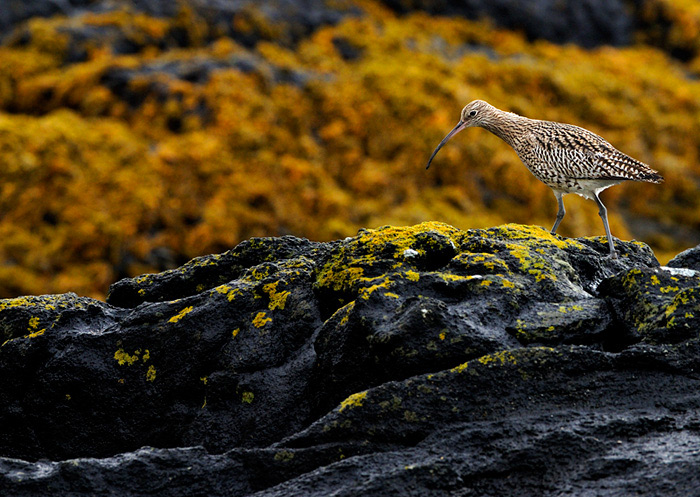
I do love to work and stay in the same area.  Sitting in a place that you become so tuned into, where every plop, every noise, every dive from a bird you hear, you immediately look with great excitement to see what made that noise.  This for me is one of the best things about wildlife photography, the peacefulness of waiting, the minutes turning into hours, all the time waiting for just that briefest of encounters in which you get a view into a wild animals world, where the camera enables you to capture what you saw, capturing the beauty of the subject, preserving that moment forever.
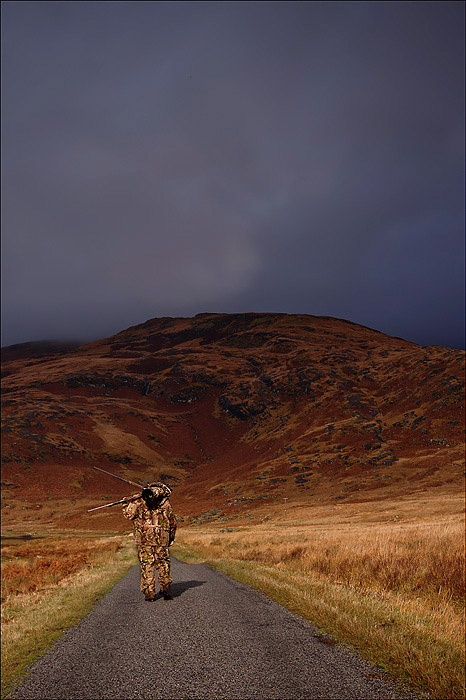
During those 4 days the weather did break occasionally, affording me a little more light which in turn gave me more shutter speed should the wildlife show, and in a lot of cases the wildlife showed up during those briefest of spells to feed and clean, and in some cases have a nosy at me clicking away from the mobile hide in which the vehicle had turned into.

The camera settings and key drills I go through during those quiet times really pay off when nature spontaneously turns up, with an almost automatic routine of checking the shutter speed, iso levels and moving the focus spot etc.  The hard part is to then second guess where your subject will go, as they will have an acute fear of man, giving you only seconds to take the shot.

There were some great encounters on the island, some close, others at a distance, but never the less still wonderful to witness. During my stay it was a case of juggling your time along with the weather. Once the cloud had broken and warmed the landscape the island was awash with colours and its beauty came alive making it a pure joy just watching for Otters, Eagles and the many other species of wildlife that live on Mull. One evening a female Hen Harrier chose to brave the weather and started hunting over the marshland only to disappear as quickly as she’d showed up.

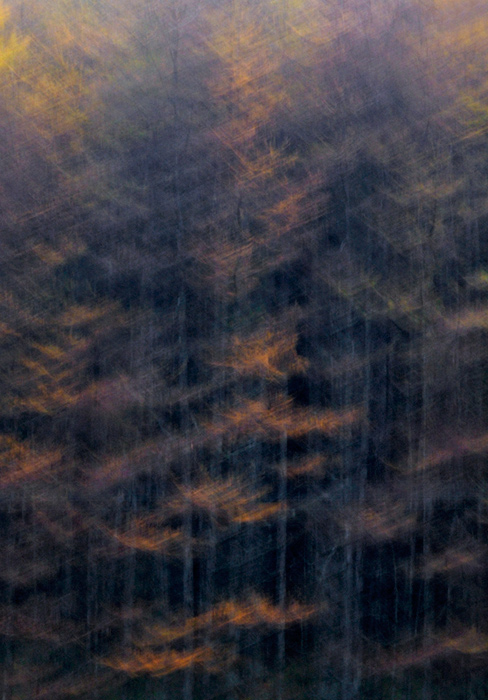
My knowledge of Mull is something I rely on most of the time, the places I’ve found or discovered over many hours and days during my 2-3 trips to Mull each year.But often or not wildlife can pop up at anytime and those places I’ve worked at before were a little tougher in the weather during my time there.  While waiting for your chosen subject or wildlife to show there is always a shot to be taken as I say. This arty,slow shutter speed image focusing at the heart of a pine forest, where the autumn leaves just offer a splash of colour to the image.
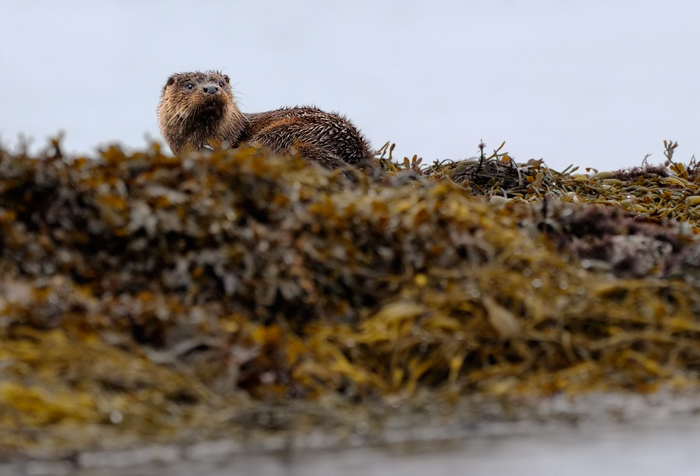
During high tides and when they start to retreat is a good time to watch for Otters, where in most cases unlike their counterparts they live in the UK’s rivers, these European Otters can been seen during day light hours, hunting, sleeping and generally lazing around. As with all wildlife though, great care must always be exercised when approaching wildlife in order to capture that briefest of encounter.  I prefer to get into place under the cover of darkness and wait, on the off chance that my fieldcraft skills and knowledge of a certain areas pay off and the subject may just give me that brief glimpse into their life.

I’d had a fleeting encounter of a female Otter entering the water not far from her holt and as the clouds broke I chose to spend sometime there hoping she’d come back, but she didn’t.  The tide times on Mull were early in the morning, so on the next day, after that brief encounter captured above, I returned to the same place where I’ve had some good luck during my past visits. Although nothing is ever guaranteed with wildlife, and she nor her young showed the following day, and with the weather changing from overcast to rainfall I was confined to the vehicle for the rest of that day, searching in vain for Otters and other wildlife.

And it always seems customary for me while waiting for a subject to turn up,  a Stonechat always turns up in a lot of cases, gaining confidence and coming closer, in an almost curious manner to see what I am, which always makes me laugh.  They are a stunning looking bird and very inquisitive in nature, with care and respect, and no fast movements from you, they’ll come quite close to you, sussing you out, whether you are friendly or not, or maybe this is just how I perceive this during the long hours of waiting, who knows.

I was hoping to see some if not all of the deer rut on Mull, but I feel I was just a little late this year. I never witnessed any stags at all, which would suggest that they were all off feeding and building up fat reserves in order to survive the impending cold weather, as during the rut stags dont feed, instead they protect their ladies and territory from would be opportunists. After the physicality of the rut they go off to feed, and as there was no sign of any majestic stags roaming around, I was just to late.

I did have some nice encounters with female Red Deers though and the shot of the trip were these four females all looking at me.  I’ve called the image “game over” as literally it was game over as they’d spotted me and then moved but not before I got a couple of shots.  the shot below being the better of those, capturing that moment and briefest of encounters when they saw me, heard me and knew I was there, nice try.

Amazing to see them in this beautiful sighting of Mull, so close and in stunning condition.  I managed a few other sightings most of which were taken in dense woodlands where they love to hide, making it a harder prospect to photograph. This image below was taken in the early morning, showing such habitat.  Soon after she disappeared, as though she was never there.

On the last day I had one last steady drive around the island.  And among the choppy waters on that mornings hide tide was a dog Otter feeding and working the shore.  I left the vehicle and tried to position myself where I thought the Otter would come past. I managed to capture just one image from the most briefest of encounters on that wet and faithful morning.  The Otter was working the coastline looking for crabs and other food items.

Here he took a short cut over the coastal rocks instead of swimming around.  I just got him with this image, a blink of the eye and he was gone. Some encounters though are too special and live on in your heart and this was one, but lucky for me I had just one image to remind me of the closest encounter with a wild Otter that I have ever had in my life, amazing.

I stayed, hoping he’d reappear but again it wasn’t meant to be so I moved on to another Otter spot on the island. Whenever home time is looming or your packing up I find the subjects appear from nowhere and in an act of almost defiance they teese you knowing your time is almost up. After a short drive south, there was another dog Otter, and he was cleaning and grooming himself. Again only the briefest of encounters that I captured, but another wonderful moment in the life of a wild Otter.
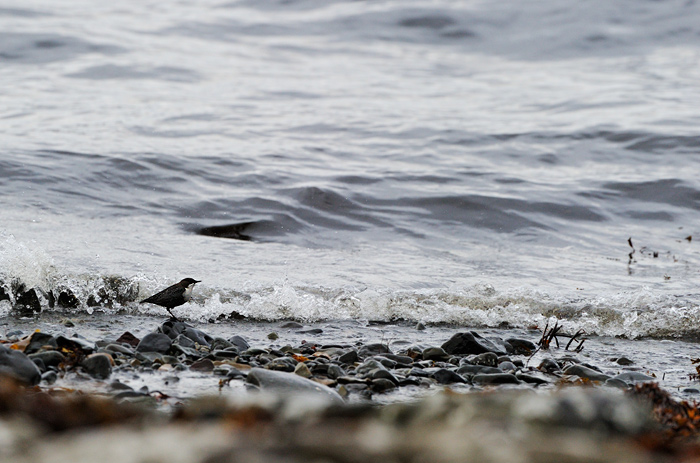
After lunch on the last day I saw a small bird feeding among the freshwater streams entering the loch, it was one of my favourite birds, the Dipper. It felt good to see them here and very different among the coastal waters of Mull.  The light had gone at the time but you can just see the little fellow below on the sea edge.
During my time on Mull the weather was testing at times, but it also offered a great deal in terms of atmosphere, with the sun constantly battling to break through the dense clouds to warm the land with its rays. In the distance a large bird was sitting on some rocks, appearing to be looking for prey, the wind was strong so the bird seemed happy just to try and sit out the windy weather that would zap his energy should he take flight, it was a beautiful adult Buzzard in amazing conditon.
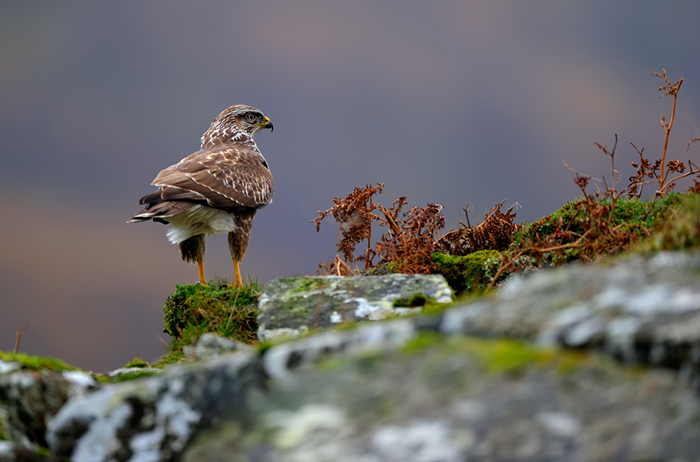
Slow movements in getting my lens up and out of the window, placing the beanbag down so slowly you didn’t want to look up just in case the bird had flown, in this case he hadn’t.  One shot, two shots, relax and watch, I was saying to myself in my head, as Buzzards are very very shy in nature and one move to many and you’ll never see them again.

He took off, turned around and faced the wind, while jostling the strong winds, all the time looking below himself for food. The engine had been turned off at the first instance, the vehicle was on a slight bank which allowed the handbrake to be taken off and roll forward hoping to keep up with the Buzzard as he went from post to post looking for food.

He heard my camera, as captured above.  It killed me to stop but I did for a few seconds hoping he’d settle and not be disturbed by my presence that was my vehicle with me shooting from the window.  He carried on looking as the vehicle slowly rolled forward, enough to capture him full frame in all his glory with the image below. I couldn’t believe that I was capturing such a jumpy bird, with a clear background, fence line post and looking out to sea. He stayed for a minute or so before flying off, carried along on the wind and out of sight.

Soon after it was time for home and the long drive south once on the mainland. I am always amazed at the wildlife on Mull, the peace, the tranquilness of this place, where just sitting and watching wildlife live their lives around you is truly a wonderful thing to witness and be part of while on this island. Whether it rains or is baked in sunshine the wildlife always gives you the briefest of encounters into their lives, and if you capture them with your camera then thats great, if not they’ll always be in your heart and mind I say.

I run two trips to Mull each year, one in June and the other in October, our base will be the picturesque village of Tobermory, with its brightly painted buildings, overlooking the harbour of Tobermory and facing out to Calve Island and the sound of Mull. We stay in a great hotel overlooking the bay and I have 2 places left on each trip for next year so if you would like more information on them please click here to see my “Magic Of Mull” photo trip.

And before I go, I’m a guest expert in December’s issue of Practical Photography on sale now, a great magazine, full of advice, tips and gear reviews each month. One of my Barn Owl shots along with the tips and how I got the shot are included in this issue, carrying on my passion for showing how I work in the field at the same time helping others to take better photos.


Read full post

The Beauty Of Wildlife-Calumet Manchester

Filed in Wildlife, Workshops on Oct.17, 2011

Where did the time go I asked myself as yesterday came to an end?  Two wonderful days showing eight clients ‘The Beauty of Wildlife’, firstly at Calumet Manchester in their brilliant studio/classroom and the second day out on the moors of the Peak District, Derbyshire, on my wildlife workshop in conjunction with Calumet. The aim of this workshop is to demonstrate the simple techniques that I apply to my own photography and to then share these with the group.

I demonstrated to the group how to approach their subject using fieldcraft skills without causing any distress to the animal, this in turn lets them relax, which will present you with the best opportunities to photograph their beauty, expressions and behaviour.

The first day was a mixture of talks, slideshow presentations and photographic tips and advice, followed by a cup of tea and biscuits.  After which I went through each clients camera showing how to get the best from each make and model in readiness for the second day out on the moors, where those tips could make all the difference to a well composed image while at the same time learning more from the wildlife that live in this part of the world. All the information and advice we discussed was contained in a handout I’d prepared for each client as seen above, this would help once the group had gone home to use as a reference guide.

Photographing wildlife in ‘the wild’ is the only real and true way of learning about behaviour and fieldcraft, so it was very important for me to show the group on the second day how I work and go about getting the images that I achieve, while working with subjects that are free to come and go as they please and have fear for humans, where you have to work the land and the environment to try and obtain an image, straight from the wild so to speak. The group was a great mix of people, from all over the UK at varying levels of competencies and were really good company.

We had some amazing light on the second morning of the workshop.  We met at 5am in the pitch black of the morning and there was a low lying mist, but above I could see the world’s atlas as I call it, the stars, so I knew this would clear as we made our accent. I had gone through some key elements to wildlife photography the previous day in my presentation to the group. One of those elements was ‘light’. Find it, work with, and create your image alongside what light you have.  So after a 40 minute accent in total darkness, guided by our small tourches we reached the area in which the grouse, hare and other wildlife of the Peak District make their home in.

Straight away over to the east the sun was just beginning to force its way up, burning off that surrounding mist and exposing a warm, wonderful glow to the area. I quickly saw a silhouette of a Red Grouse, let the whole group know and watched as they all used fieldcraft, slow movements and got themselves into place, went through the settings, checking shutter speed and so forth, using the key skills and elements I’d touched on the previous day.

The images above show that wonderful moment and all of the group had at least one image, capturing several elements that came together during the few minutes this grouse allowed us into his life. Light, colour, silhouette, composition and exposures all working together to produce a lovely and different image, what a great start to the day.  I couldn’t have asked for more for the clients. I wanted to try and capture some of the colours and shapes of the clouds during this amazing moment so I used a wide angle to try and focus on the bird while showing the colours.  He took off not long after and you can just make him out over to the left, very small in the frame with blurred wings. It gives you an idea though of the wonderful site the group had that morning.

During the morning we were all treated to many different encounters as the heathland and moors came to life. Grouse flying, landing, settling down on rocks to call and state their claim to a given area, wondering who these shadowy figures were at that time of the morning, moving around this beautiful and unique environment. Rain and mist came in afterwards, so we all took shelter and waited for the visibility to improve and for the mist to go away, which it did sometime later and the sun shined all day there afterwards.

The group followed the advice I’d given the day before on another real key element within wildlife photography, fieldcraft!  Approach with care, stay low, and see and read the signs on the ground in front of you, look for light and above all respect the subject more than any photograph. All the group were brilliant and got some amazing encounters and images through their hard work , ‘you only get out what you put in’.  This is the key.

After lunch the group were free to explore for themselves, put into practice skills and tips I embedded throughout those two days and it was really good to see them all going about their own work and capturing some lovely images with strong composition, good use of natural light and above all listening and watching wildlife to build a picture of whats happening around you.

Being in the wild really showed the guys how to capture images using fieldcraft and watching and listening to wild animals in their own environments.  This is the only true and real way people will learn this key skill I believe. When I met up with the bosses at  Calumet Photographic I stressed that I would only like to work among nature, showing people key elements you must learn and use to be able to photograph wildlife. After the two days I think the whole group enjoyed those two days, learning and benefiting so much this way, which is my main aim when delivering this beauty of wildlife workshop to the public.

A big thank you to all the clients for your time and efforts during the two days.  I really hope you got a lot from the days and learned something new. You were all great on the second day and looking back now you can see through the images you captured why the early start was so important to capturing lovely images of wildlife.

I have another two wildlife workshops planned in conjunction with Calumet Photographic, Saturday 21st & Sunday 22nd January and Saturday 10th & Sunday 11th March, with other ideas for the spring including a 2 day workshop in the beautiful county of Norfolk, photographing the spring coming alive with wildlife. More details will be posted on Calumets events site very soon and I will update my blog when they are finalized.

Also many of the workshop participants hired camera equipment on the day from Calumet which worked really well for the clients, so if you’d like to attend and hire your equipment then just speak to Calumet, Manchester and it can all be arranged for you when you turn up as their service is excellent. The same goes with the many wonderful workshops I run here in the UK and abroad where you can hire from your nearest Calumet dealer before you come on any of my workshops should you wish to hire. For details of prices and rates contact your nearest branch on the link here.

Calumet,  Manchester have a Autumn open day on the 9th November where I will be in attendance to help or answer any queries or questions about wildlife photography, they have lots of other things going on that day including a free camera sensor clean, special offers along with some brilliant companies offering advice and help. So if you are in the area pop in to say hello.

These workshops have been included in this months BBC Wildlife magazine as part of their photographic tours/trips, again for the second year running along with one of my favourite images of a Barn Owl hoovering and hunting as their main image, covering two pages 112-113 of the October issue, it looks amazing, or you can view online here and last years, where have the last 12 months gone.  Many thanks again to all the clients who booked, it was nice to meet you all and thanks for a great two days.


Read full post

Wildlife Photography-Helping Others

Filed in Advice On Wildlife, Photography Tips, Workshops on Sep.30, 2011

I have just returned from the Welsh capital, Cardiff after two wonderful days filming for the online training company PhotoTraining4U. The site offers quality training for all photographers at an affordable price. The site is based on streaming video that capture photographers at work. PhotoTraining4U is aimed at both professional and amateur photographers alike and is structured into bite size learning films, over 800 at present, each around 20 minutes.

On the first day we went through where and how my love of wildlife, nature and photography began, forming the great passion I have for the natural world today which is the foundation to my work and images. The second day I was out among nature, my office as I call it, watching and looking at the beauty of nature all around. The beauty of photographing wildlife is that it is always changing and evolving, encountering the unexpected and in this environment the photographer must learn to work with these changing environmental conditions and behaviours.  The result cannot always be predicted, which makes fieldcraft one of the most important skills you have to learn to be fully connected to wildlife.

I always try where possible to work the land as I put it, and stay away from staged or set up shots where bait is placed out while you wait, preferring the more natural image, as seen or shot when I encountered the subject, not changing an animal’s behaviour to obtain an image. You just never know what will turn up working in this manner, so being ready to capture what you see is key through composition, fieldcraft and the correct camera settings.

I have always loved helping people and when I first started in wildlife photography this carried through. I know how hard it is to get help or advice when you are first beginning to take photos of wildlife, what works?  What bag to buy?  Is this lens any good? What camera settings? the list goes on.  Emailing professional wildlife photographers asking for help or advice most of which never return your email,  so because of this I like to show others the techniques I have taught myself, what works and what doesn’t while on the ground, in the theatre of wildlife.

During the first day Mark Cleghorn, Director and founder of PhotoTraining4U went through several interviews with me on film, going back to the beginning, where it all started which was fun.  As I was talking I was reliving some of the funny moments I could recall, the tiny things that made all the difference, which all set me onto the path today.  We went through some of my images where I explained the motivation behind each shot, how and why I captured the images on show while being filmed, which was very new to me as I am normally behind the camera a lot of the time, when not working with clients on various workshops and trips.

That evening we went to a local marshland area not far from Cardiff town centre, this for me was perfect to go through some basics within wildlife photography.  I had not visited this area before and upon arriving to a new site I wanted to demonstrate that you can always witness something within wildlife.  A saying I have said from the beginning of my own work is that there is always an image to be taken no matter where you are.

When I arrive somewhere new I always look for the light and get a feel of the place, where the wildlife is or may turn up, direction of light, possible different images and so on, I find my brain is almost scanning around and presenting me with choices in an almost automatic way, if that makes sense?  While the photography was going on, Jay the cameramen was filming and I was explaining what I was doing and looking for, giving useful tips and advice. Both Mark and Jay where brilliant in helping me to relax in front of camera and I think my sheer passion and true love of wildlife carried me through.

That evening we all went for a lovely meal and I got to see the passion and resolve behind the company and I was very impressed with all of the team and their future plans. Then it was back to my hotel in readiness for the early start and the amazing light I was hoping for.  Mark had found a place not to far again from the town centre which was surrounding by housing, a little oasis within the urban environment which supports many different species of wildlife.

We wanted to show and demonstrate that when you are just starting out or have started out that wildlife is everywhere, lakes and marshland/grasslands are everywhere around the UK, ‘green lungs’ as I have called them in an early blog posted a while back now. These areas have often been left to their own devices, brimming with wildlife which makes a great addition to the urban habitat surrounding them, which can be photographed in close proximity to where you live, capturing those moments with your camera.

Both Mark and Jay came with me on that early morning start, after the first days interviews I had told mark of my affection with cold toast,so it was a nice surprise to see two slices prepared and wrapped up in foil as I was picked up, which was really funny and made me laugh in the darkness of that morning. When I arrive in a new place that I have no knowledge of, I always find myself looking around, smelling the air and really trying to build a picture in my own head of what’s going on around me and tell tale signs or clues to what wildlife may or may not be around.

I always find east with my compass, knowing where the light will come from will really help in capturing images in the morning light. I had a look around the lake, worked out where I’d like to settle and got myself into place and all set up for the rising sun, which had slowly started to creep up before me. Jay and Mark set up their cameras and again just left me to it and started to film and photograph me while at work, as I explained all the time what I was doing, looking for ,camera settings and so on.  The light was amazing, calm water with no ripples giving you that affect that the birds, in this case Mute Swans were floating in space.

Swans are big and powerful birds that are really beautiful when you take a closer look. They have a calmness about them if left alone which shows off their great elegance and beauty.  I wanted to capture that beauty within these images as they calmly drifted effortlessly around where I witnessed at times them closing their eyes and sleeping. Such gentleness and calmness I saw and that I hope I have captured with these images.

These Swans kept me company throughout that morning coming in close to see if they would be fed, then retiring to a safe distance should I present some bread or other food for them. I didn’t use any food as I just wanted the birds to come and go as they wished, even though they had a slight tolerance to humans they were still wild animals and free to come and go. As it happened I captured some wonderful moments using my trusted long lens and much loved wide angled lens which is perfect for wildlife and getting those wider shots I love seeing and photographing.

I spent a good several hours around the lake and surrounding area that morning and had some wonderful moments, making several short films, all explaining my craft for PhotoTraining4U. I will be going live on the site in January 2012 when I will officially join the site as one of their masters, covering my passion of wildlife photography for them.  The films I’ll be shooting with the team will follow me as I work the land, from dawn to dusk.  I will showing members how I work, photographing wild animals within their habitat, showing their different behaviours and characters within photography.

I had a really good time, big thanks to Mark, Jay and the rest of the team.  Thank you all for your hospitality and warm welcome, and I look forward to working with you guys. As I mentioned I will be going live on the site in January 2012, becoming their master on wildlife photography. Where all the films I will be making can be seen on there website, so if you’d like to know more information then visit PhotoTraining4U’s website or email me direct here.

And just before I go I heard back from the British Wildlife Photographic Awards – BWPA last week and my short-listed Red Grouse image in the Habitat category was beaten by a Red Grouse wide angled shot, almost the same as mine, without the light, so I was a little gutted there, the winning image there was amazing. I entered some amazing images captured in the wild but they didn’t get anywhere, with alot of images doing well from set up sights which aren’t the same as finding the image through your own hard work in my eyes.

It really puzzles me to what judges are looking for within a wildlife photograph for a competition, where it comes down in the end to the photographers integrity to disclose the facts of the shots, that can be judged alongside the image. Good luck to all those who won or where commended. Here is the image, 15 minutes crawling forward to capture this male Red Grouse calling down the valley which was covered in morning mist, shot with a 24-70mm wide angled lens

And one of my favorite images entered into the same competition, two Great Crested Grebes going about their courtship, captured here swimming alongside each other in a show of affection towards each other.


Read full post

Precarious Start In Life

Filed in Animal Behaviour, Wildlife, Workshops on Jul.08, 2011

Fraught with danger, and extremely hazardous, it is the precarious life of many young animals as they now turn from a dependent youngster to an adult during this time of the year.  The countryside is awash with animals, fresh from the protection of the homes built by experienced parents several months earlier. High pitched calls litter the river banks and woodlands, as birds, and mammals beg for food from their hard pressed parents who spend all of their time being attentive to their off spring.

Witnessing these special moments can be some of the most enduring moments within mother nature, as we watch the high level of dependence unfold before our very eyes, youngsters mimicking their parents, learning the key skills that will hopefully keep them alive in the cruel and often unforgiving world they are about to enter.

Over the last couple of months when time has allowed I have been watching a few of my favourite species, one being the Dipper and the other the Puffin. At the several different sites I’ve been visiting this year, some Dippers have nested early, others quite late and most have been doing really well. During the many trips to these sites either alone or with clients on my ever popular Dippers of the Dales workshop and one to one’s, they’ve been very active.

In most cases the Dipper nests really early in the year around mid to late March/April time. If the first brood is successful the same birds try for a second brood later on, one of the major problems then though is the water height of the river. If it drops the Dippers are forced to abandon the second nest as they follow the river downstream. This has happened this year with one pair of Dippers, where the river has dried up, leaving small pockets of water in which to feed in.

Over the last several weeks we’ve had a good amount of rain and at other sites where the Dippers have nested and were on their second brood several chicks have died due to rising water levels.  The nests where sighted just under waterfalls and as the level of water rose, the power of the waterfalls have sweeped a large part of the nests away leaving 2 chicks where there had been 4 youngsters to each set of parents.

This left these small, vulnerable birds homeless and alone on the river bank as the parent birds struggled to find and feed them.  The life of a Dipper chick is a dangerous one, as the power of the water calms many of them, then there are the many predators also.  With a high mortality rate among their number nature has evolved these birds to have large broods and sometimes two throughout the breeding season but still only a few survive the dangerously insecure and perilous journey they take to become adults.

The young don’t have the trademark white bib yet, instead their plumage blends into their habitat amazing making these birds really hard to spot among the riverbank vegetation.  The young I have watched that have lost their home have been well looked after, where the parent birds have hidden the youngsters the best they can in darkened areas of the riverbank, so fingers crossed these last few survive.

I have made a short film just to illustrate just how small and vulnerable this Dipper was, turfed from his nest a little too early due to the nest being damaged through rising water levels. Even this young their “Dipping” behaviour can be seen which was so wonderful to witness.  The last remaining Dipper chicks on my last visit had moved further down river, following the flow of water and witnessing how attentive their parents were, so it all looks good for their survival fingers crossed, its one of the most precarious starts though within the natural world with a very high mortality rate.

My other firm favourite also shares that most precarious of beginnings into the natural world and that is the clown of the sea; the Puffin.

I have visited the island of Skomer many times this year and never tire of seeing these beautiful, comical and funny seabirds that come to this little island, off the coast of Wales to breed and rise their young for a short time each year, before returning back to the perilous stormy seas of the Atlantic. They come ashore early to late March and reaffirm their bonds after meeting their partners.  Those that have lost or don’t have a partner then set out on the journey to find one as thousands of these birds come ashore during this time.  Its a frantic time, lots and lots of action, but everything settles down and then they start raising their young in the underground burrows on the island.

My last visit there was this week on a one to one, after a bright start the heavens opened and we both got really soaked as Skomer can be an unforgiving place when the weather changes. I wanted to try and convey the changing weather conditions that were approaching the island with this image below. It shows the incoming storm and a pair of Puffins displaying a resolve to sit the storm out by staying put as the Puffin here in the foreground clearly demonstrated to us.

If you were a script writer that specialized in comedy you’d find it hard to write the script for these birds as they are just so funny to watch, and I am convinced they love non-threatening human company, once you win their trust and keep that distance, you can enjoy unrivaled humour where I’m often seen laughing as I take photos of these birds. Then occasionally they let out a long moan like call, which is their own way of communicating with each other, again it’ll have you in stitches as its unplanned and often unannounced when it happens.

As it rained we scrambled to cover our cameras and were treated to a few and brief sightings of Pufflings, the name given to baby Puffins.  Almost Jackdaw like in appearance with no colour to them.  These birds slowly made their way to the edge of the burrows in which they had just spent the previous several weeks living in underground.  Really nervous at first, with an adult bird there with them, as a show of support for the appearance.

I could see as I watched they were nervous of which they had good reason as large Gulls always patrol the skies over where these birds breed.  Alot of the time the Puffins get robbed of their catch, or even worse the Gulls take their chicks ,so extreme caution is always best. When this chick came out above, the adult bird seemed to be fussing over him, being really attentive towards the young Puffling, eventually he settled down and did a few wing exercises then went back underground. Lovely to see the interaction between the parent and youngsters, very enduring to see and watch.

At another entrance to a burrow a Puffin was cleaning as the rain came down and suddenly the young Puffin appeared, standing a little further out from the burrow, watching his parent clean.  Their beaks will grow over time and their colourless appearance is in stark contrast to that of the adult birds.  In a few weeks all the Puffins along with their young will leave for sea and not return to land for the next 8 months.

The precarious life of an young Puffin is beset with difficulties, fraught with danger in the waters of the Atlantic where they’ll spend most of that time, eating, sleeping out a sea.  It has to be one of the toughest existence’s within the natural world I can think of, where only the strongest will survive and return to land after that period at sea.

Fingers crossed these two make it, many thanks to all my clients who have seen these amazing birds with me over the last several weeks, I know many have learned alot more not only about wildlife photography but also the behaviours of these two charismatic birds, many thanks.


Read full post

Mull-Sculpted By Nature

Filed in Photography Tips, Places Of Interest, Workshops on Jun.27, 2011

Mull is a magical, raw, unplanned and thought provoking place where you can see and view beautiful wildlife. Red Deer roam the hills, Eagles soar over the skylines, Seals bask on exposed banks and Otters frequent the many bays and inlets along Mulls coastline. Almost every other telegraph pole there’s a lone Buzzard sitting, acting as a physical welcome to the island.  Mull’s magic derives from its special blend of mountain and coastal landscape which forms such a tremendous variety of habitats that offer excellent opportunities for wildlife.

For me the most memorable aspect of being on this beautiful island is viewing the abundance of wildlife against the entrancing background of tranquil loch shores and beautiful woodlands, amongst the architecture of amazing mountains, with the mornings being the best to see this island awaken.

I’ve just returned from a wonderful week with clients on my twice yearly photo tour I call “Magic of Mull.  The Isle of Mull lies on the west coast of Scotland and has a breathtaking coastline of 300 miles.  The climate is a mixture of rain and sunshine and from the moment you step onto this beautiful island the wildlife is everywhere and the scenery is stunning.  Our base for our 6 day adventure was the picturesque village of Tobermory, made famous by the children’s BBC programme Balormory, with its brightly painted buildings. The hotel is overlooking the harbour of Tobermory and facing out to Calve Island and the sound of Mull, which can be seen in the below image, on one of the many sunny days we had there during our stay on Mull.

Mull’s climate is extremely unpredictable and at any time of year you should be prepared for a wide range of conditions. The weather during our time on the island was good and kind to use. There were days that were overcast where we had rain but on the whole the weather was good.  After meeting everyone at the port of Oban, we took a short ferry ride over to Mull and then went on to our hotel that we were staying at for the week.  We had coffee overlooking the harbour and headed straight out for the day.

The pattern of events for each day were consistant, ensuring that clients get the best out of their time on Mull.  An Early start to get into place at one of the Otter sites and hopefully catch them as they wake and start to fish, head back to the hotel for our breakfast at around 8am,then collect our packed lunches and head out for the day.  The wildlife on Mull is generally accessible with the few exceptions of specialized birds along with the rare and legally protected birds that are not to be disturbed or approached as they are very senstive to disturbance.

When I have worked alone on Mull in the past I have stayed in one place for some time, getting a feel of the place, getting contacted as I call it.  But while leading a tour here for clients you have to juggle the need to see the wildlife along with the time constraints, as alot of the wildlife can be viewed only a short distance from the roads, which for me is ok but the way in which I work is working the land so to speak and this is something I was very keen to show the group.

As a group we covered both methods of approach this during our stay, where everyone enjoyed the fieldcraft tips and advice.  I also demonstrated how rewarding it can be on many levels when you blend into the environment, leaving the safety of the car and try to become part of the subjects world, thinking about wind direction, movement, in readiness to take the shot if you come across a chance and other fieldcraft tips and examples I showed and demonstrated. On the first day everyone had seen and captured some lovely images including the very shy male “dog” Otter that would show every so often.

During our time on Mull I had organised two great trips on consecutive days, one was three hours watching White Tailed Sea Eagles on one the Lochs and the other was a full days trip to the Treshnish Isles, a designated site of special scientific interest.

On the White tailed Eagles trip we sailed into the territory of a pair of these magnificent birds.  Due to the White tailed Eagle being so protected and looked after, close up views of these birds is almost impossible so this tip offers that chance.  We had a Gull escort to the site as they dived for bits of bread that the crew threw out for them.  There was no noise as the engine was stopped and a lone dead fish was thrown out.  The first real sign the Eagle was coming the Gull’s behaviour changed and they disappeared knowing this beautiful, massive bird was coming our way.

The sheer size of these birds becomes apparent when they soar past you, with a ten foot wing span they were truly stunning to see so close. They soared past, then in a flash dived for the fish, the whole thing was over in seconds. The whole group loved the trip and seeing these birds so close was a wonderful experience for them all.  The birds are truly wild and this trip has been passed by all the governing bodies that work to protect this bird with their ongoing work.

To see this behaviour without the fish placed out for them could take days of waiting around etc, so deep down for me from a wildlife photographers point of view it was too staged to pass the photographs off as a truly wild moment captured with my time and fieldcraft, but never the less a great way to see these birds and I can highly recommend the trip.

We visited the small islands of Staffa and Lunga the next day.  Staffa is a beautiful, uninhabited island which is home to hundreds of seabirds and set within waters teeming with marine life.  The island is best known for its magnificent columns of rock. The best place to see this is in Fingal’s Cave. Lunga is one of the best places in the UK to see Puffin’s and it is teeming with other birds too like Razorbill’s, Guillemots and Seals.

The name Staffa is thought to come from an old Norse word meaning wooden building staves, which look similar to the islands basalt columns.  The name is a reminder of the region’s Viking history.  People have marvelled at Staffa’s columns for centuries.  As you approach the island from the sea, you can see these columns of rock and the very impressive cave known as Fingla’s Cave.

According to legend, Fingal was a Gaelic giant who fell out with a Ulster giant and in order to fight Fingal, the Ulster giant built a causeway between Ireland and Scotland.  When the causeway was destroyed only the two ends remained, one at Staffa and the other at the giants causeway in Antrim.  The columns you can see today are the remains of this causeway.

Fingla’s cave named after this giant is the most impressive site on this small island, as you enter the smell if excrement is very strong as nesting birds and bats litter the small ledge and over hangs as you slowly walk in using the path people have used for centuries.  The shapes in the rocks formed by the sea over time are amazing, they look like they have been made by an experienced stone mason rather than the force of mothernature.  A great place and one I would recommend a visit to.

One of the best places in the UK to see Puffin’s, and teeming with other birds too, Razorbill’s, Guillemots and Seals is Lunga the second small island we visited that day.  It was a small journey to this stunning little island thats home to my favourite seabird the charismatic Puffin.

We spent over two hours on this lovely little island and from the moment you scale the landing steps and head up onto the flat top of the island the Puffins are not far from you.  Their calls can be heard first before they show themselves from the burrows and vegetation hiding them away from view.  We all got into place, settled and let the birds relax and over time if you sit still and don’t make too many movements the Puffins accept your presence and go about their lives around you which is wonderful to witness and watch.

As I was watching these birds and enjoying their interactions with each other this little fellow landed not far from me.  I was handholding the 70-200mm lens as he was close, he seemed to enjoy the company before flying off and back out to sea. The noises in the background are the other birds nesting along this cliff, Fulmars and Razorbills.

I wanted to portray the habitat the Puffins were nesting in, at the same time capturing one in flight with a wide angled lens to give you a sense of the world they live in. The images below shows the cliff and this coastal habitat on Lunga.

It is one of the best places in the UK to see Puffins that’s for sure, close up views, Puffins going about their lives all in close proximity of you as long as you stay still and make little or no movement.  Two great days and two very good day trips and the rest of the week flew by as we all concentrated on photographing Otters.

Each day we saw the Otters fishing far from shore among the different Lochs on Mull.  The shot the group wanted was a close up of this beautiful mammal and towards the end of the week and even on the last day those wishes were granted with a mixture of luck and being in the right place at the right time.  We were able to watch the same male Otter that had given us the slip most of the week, catch larger fish and come ashore not to far from where we were lying in wait.

He came ashore slightly higher up the beach at first, dispatching the fish he’d caught quickly then heading back out to sea to fish.  We thought that would be it as once Otters have had a good feed they tend to lie up somewhere for a sleep and this was late afternoon. But lady luck came again and he came back to shore with a larger  fish.  He ate the fish and that was the last we saw of him but a perfect end to a great week, underlining the sentence “you only get out what you put in” and the whole group did very well all week with the early starts and long days.

We were all sad to leave the island on the Friday but everyone had some great memories of this magical island sculpted by nature. A big thank you to all the group for your company during our time on Mull.  I hope I helped you all in seeing nature and learning more about her beauty while learning and showing you real and key camera skills that work on the ground.

I will be back on Mull in October during which time the Red Deer rut will be in full flow along with the amazing autumnal colours and snow capped mountains.  I have a few places left so to see the trip or book please click here. We stay in the same hotel over looking the bay of Tobermory, I always try to get clients the best place in which to stay as after a long day in the field comfort and good food is key.


Read full post

Norfolk in Monochrome

Filed in Photography Tips, Places Of Interest, Workshops on Feb.22, 2011

I have spent the weekend in the sleepy, tucked away county of Norfolk, one of my favourite places within the UK.  A bounty of diverse birds and wildlife which enrich this area throughout the year, making this a mecca for wildlife loving people.  I had clients with me during these two days on One To Ones covering the Spring Tides, Barn Owls and the many other species of wildlife that live along the North Norfolk coast, dominated by the Wash a large area of salt marsh which has one of the greatest concentrations of bird life within the UK, internationally important for many breeding birds and over-wintering wildfowl.

During the two days the weather became testing at times where the the sun stayed hidden behind a wall of cloud for the best part of the two days, just giving us enough light to capture some of the wildlife through photography.  With an almost colourless appearance to most of the images from both days I have chosen to present them in a black and white manner or Monochrome as the term is better known, where you have to look further and deeper into an image to see what is captured within its frame.

Devoid of colour the human eye is forced to look right into the image, spending more time in the absence of colour which can often let you know which species is displayed.  I have always loved black and white images, glimpses of a bygone era where you wonder in the absence of today’s technology how on earth they managed to capture such wonderful images.

Photography is the art of taking or making photographs, it is the creation of images by exposing film or a computer chip to light inside a camera.  The word photography comes from Greek words meaning to write or draw with light.  So by presenting these images in a black and white format from a well visited place I visit, it gives a different account of the images I capture during my many visits there during the year.  Simple composition and strong elements are key to all photography, more so with black and white, where some images you take and review on the back of the camera will lend themselves very well to this monochrome format.

Black and White Photographs are among one of my favourite styles, both to look at and to create.  Shooting for black & white is challenging, you immediately eliminate one of your building blocks of design;  Colour.  That’s one less tool that you have to compose with.  Personally I am drawn to the beauty that is created by black and white and always have been.  It makes the viewer focus on the strong compositions, textures and shapes as opposed to symbols, colours.  Contrast in photographic composition is an effective means of directing the viewer’s attention to the centre of the interest.  The positioning of the subjects elements to create contrast gives them added emphasis and directs the viewer’s attention all brought about in the absence of colour.

A photograph of wildlife on an overcast day can result in a dull photograph, but taking that same scene in black and white will help the viewer to see the contrasts and graphics of that image. Focusing on the emotions of the subject.

I have always said that there is always an image to be had from the moment I picked up a camera , if the main subject does not turn up then never put the camera down.  This is the advice I always give to clients.  Adopting this attitude and ‘can do’ approach will broaden your own ideas along with your creative style resulting in many interesting and different images from your encounters with nature, while at the same time learning new and exciting techniques within your  own photography, which can cross over into many different formats of this discipline.

Animal behaviour is something I love to capture within my work.  However simple you can learn so much from wildlife in general and more so the subject you are photographing.  This is another ‘learn’ I like to show all my clients and it can make the difference to your photographs on a massive scale.  During one of the days at Norfolk we were at one of the sites I know, where the incoming tides flood the gullies and inlets which provide great feeding for many different birds.  The Turnstones were busy turning stones, foraging for food, doing all the leg work for often little reward in terms of food.

Black-headed Gulls watched them, perfectly still, not really attracting any attention, then in the next breath bully their way in after the Turnstones had found a food item.  These couple of images show one Gull alone, watching a Turnstone feed, break open the mussel shell, for him to come in and steal the prize.  I chose to focus on the Gull with the second image clearly showing him watching this poor Turnstone work on this food source he’d found, clearly showing the Gulls intentions.

How wonderful nature is in every form and these simple behaviours are right under our noses alot of the time.  Always stay tuned in to where ever you are and never put the camera down.  This is the very best advice I can give.  My clients over the weekend hopefully went away with this and much more from the One To Ones– Spring Tides, Waders, Barn Owls days I run almost three times a month now throughout the year.

I show clients keys sights, go through their cameras and settings, I also cover fieldcraft, wind direction and the use of natural light, enabling all clients to go home with more tools in their ‘own box’, in turn helping to improve in all aspects of wildlife photography, at the same time showing behaviours in wildlife and the subject  in question, looking for impending action and movement, using whats around you to hide and conceal your presence and much more during these action packed days.

If there is anything I have touched on here that interests you or you want any further information on workshops etc then please send me an email here .  Thank you to Karl and Ingrid on Saturday and Jonathan on the Sunday for your company and I wish you all well in your photography.


Read full post

Spring Tides at Norfolk

Filed in Articles, Places Of Interest, Workshops on Jan.24, 2011

The first Spring Tides of 2011 graced the Norfolk coastline this weekend with its customary mix of dramatic weather conditions and amazing ariel displays as thousands of waders, mainly Knot twisting and turning as the incoming sea covers the land forcing them into the air. The effect this gives is amazing, one minute its a wall of dark and then the next a wall of white, twisting, turning like a massive fish out of the water. The Spring Tides only really happen around  3-4 times a month and in some months, like December, there weren’t any at all. When the sea comes in and covers the whole area forcing the birds closer to shore, they gather together for protection and by doing so form stunning shapes and patterns.

I was in Norfolk for the Spring Tides over two days, running One To Ones.  On the first day, Friday, the light in the morning was amazing, beautiful colours with small clouds giving the place that summers morning feel.  As the light came up thousands of birds were flying around, forming vast flocks, twisting and turning, all in perfect harmony with each other, creating a smooth fluid movement, which is breathtaking to watch.  Anyone who witnesses this does so in sheer amazement that something so beautiful happens on our own shorelines during the year. 

Once the sea has consumed all the land the birds fly around in an almost panic state before settling into the pools or pits as they are better known in front of the hides there. These offer them a safe place to roost in, rest and relax until the spring tide starts to retreat, exposing the vast areas of mudflats, where the sea has replenished the whole area with food brought in by the incoming tides.  Its then you get to see their numbers and sheer power, feeling the force as they take off from these pools, the noise is amazing and the sheer power of one of natures most amazing spectacles has to be seen to believed.

The light had faded a little, with the sun coming out one mintue then returning behind the clouds the next.  As we watched with great anticipation as the Knot slept, heads tucked into their wings, sleeping, waiting for the signal to return back to the vast mudflats where they can roost far out to sea. The photograph above shows this behaviour as thousands of Knot all sleep, huddled together forming these vast groups, occasionally the air was filled with them all calling, chattering to each other, moving, others flying in, swelling their numbers. Sometimes the wait is long then next it is short, but when it happens its amazing.  I had a sequence of one to ones with a few people during these days in Norfolk and the second group had never seen this event, which made it even more enjoyable.  So as we all waited, apertures ready, enough shutter speed to freeze this moment, fine tuning everything for that moment they take off, something I have witnessed many times over the years, where each time you see something different, then with no warning, no introduction, they go.

Birds start to take off as the others wait on the ground for their turn to join their group and return to the sea. Peeling off , perfectly timed formations take to the air back to where they belong, the power and force can be felt as you sit in the hides.  With the photograph above I wanted to convey this moment, how some birds wait for their turn while others have already taken off, following each other back to the safely of the sea, a truly amazing site within our wonderful wildlife in this country.

Then with only the last few birds to leave the land, the sky is full, thousands, upon thousands of birds take off, a shiver always goes down my spine upon seeing this, such is the power and beauty of this event.  After which a hot coffee is a must to warm you and reflect on what we  just saw. I then head around the coastline showing the clients the various places I visit, capturing images, going through techniques and helping everyone take better images, where at the same time seeing and learning what amazing wildlife we have around us and how they live their lives.

I also have a few Barn Owl sites I visit and work on.  During the day I show clients this area hoping that they turn up, as many people have never seen one of these amazing birds which are one of my favourite species. Then right on time, they arrive from know where, hunting the ground, they then disappear in a flash giving you a brief insight into how they hunt and go about their lives.

I have been running these great days now for sometime, where each month there are a few dates that this amazing event happens so if you wish to make an enquirey or book, then send me an email here and I will get back to you with dates,spaces etc.  These One To Ones can be run on an individual basis or as a group.  Big thank you to all the nice people I met this weekend, Roise, Martin, Stuart, Marjan.


Read full post