Entries in the ‘Places Of Interest’

Mesmerising Madagascar

Filed in Places Of Interest, Workshops on Sep.10, 2012

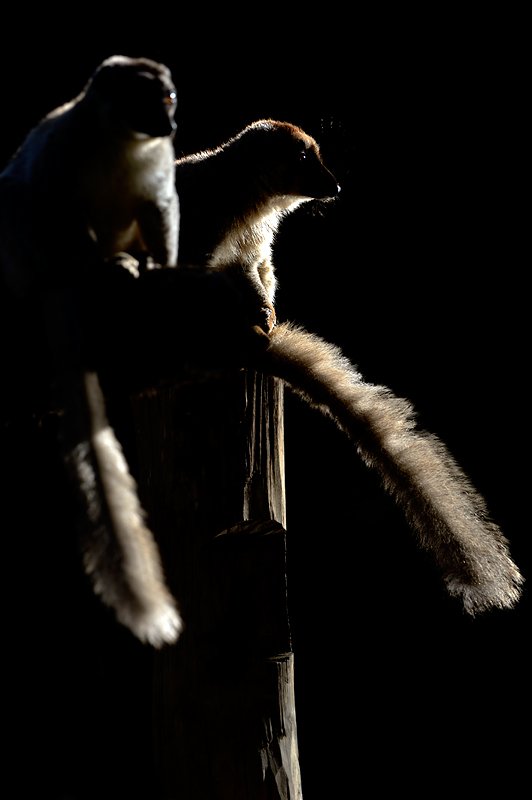
Madagascar the fourth largest island in the world!  Unique due to its diversity of species. It is known as the 8th continent and is a breathtaking place for wildlife. I have just returned from this amazing place where my 11 day photo tour took clients to some of the best places on the island.  Everyone witnessed the amazing aray of wildlife, flowers, and flora that this special island has to offer. The image below is of two Common Brown Lemurs sitting on posts near to the water as the evening sun began to set.  I under-exposed by two full stops to gain this effect.
A Golden Sifaka Lemur shown above moving through the trees which I was lucky enough to capture here with a fish-eye lens.  I have changed the image to black and white showing you just how dense this area of primary forest in Mantadia National park is. Another fisheye image from the same amazing forest can be seen below, showing some of the forests strange and wonderful trees.

Madagascar as we now know it, separated from the African mainland nearly 160 million years ago. Then 80 million years ago it broke away from India and from that moment it has stood alone in terms of an island within the India Ocean. This isolated so many species of wildlife to this one island, thus making its wildlife very different and unique, where many of the species only live and exist on this island.  You have to constantly look twice at things as you are just never certain if what you’ve just seen is living or a piece of wood, a twig, branch or something like that.

This image below clearly demonstrates what I have just described.  Its a Leaf-Tailed Gecko and it only lives on Madagascar in a few places on this island. It mimics the shape and colours of tree bark to blend in and hunt. It took several minute’s to see this amazing animal after our brilliant guide had found him for us.

The plants, flora and animals are amazing on this island and new species are constantly being found by scientists. The shapes and designs of them really intrigued me, with their armour style leaves, amazing patterns and spiders webs shinning like diamonds in the morning light with droplets of dew decorating them as seen in the following image, along with some of the amazing leaves and flora.  You can see a hole which marks the entrance to this spiders den.  I gazed at its design for ages with no sign of the occupant. We get some much from nature, ergonomic designs, waterproofing methodology and aerodynamics, all found in species of plants and animals everywhere on this island.

Madagascar is most famous for its wide variety of lemurs, these amazing creatures are found nowhere else in the world and new species are regularly discovered. The different species of lemur are spread throughout a variety of parks and reserves on the island.  This lemur was one of the main species everyone came to photograph. With their kind faces they were the perfect animal to photograph during our trip to this mesmerising island set among the Indian ocean.

Due to massive environmental degradation Madagascar’s species are some of the most threatened on the planet. With widespread destruction of habitat known as “Slash and Burn” which can be clearly seen once you travel around the island either by air or road.  This technique that is killing the life blood of this country is the traditional way for locals to plant rice, beans and corn to live off.

Small villages supporting many families are forced to settle right up to the edge of these primary forests where it’s clear to see the pressures on both the wildlife and the growing population. This has taken so much of Madagascar’s forests and replaced them with bare land covered either with crops or left just baron. Which in turn has rendered many species on the endangered list. None more so than the islands Lemurs, known for their wide eyes and by far the most famous of the islands residents.

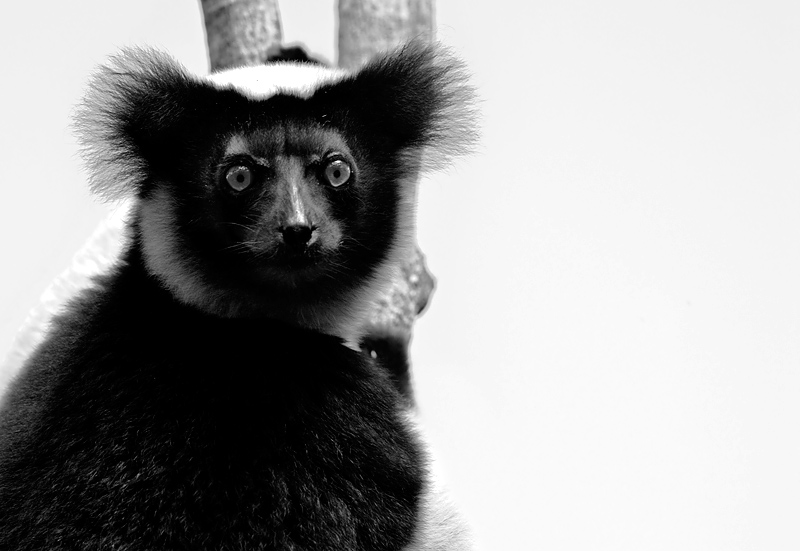
Our trip started in the forest resort of Vakona Lodge, a complex of bungalows sitting amongst the natural forests of Madagascar.  We were here for 3 days, exploring Andasibe and Perinet National Parks which are set up to safeguard this amazing primary habitat of Madagascar. One of the famous inhabitants is the Indri Lemurs.  These are the biggest of the lemurs with an incredible call that travels for miles. These live in the tree tops and rarely come down as they have a complete fear of man in Andasibe reserve. Capturing images of them was a little tricky due to the dense habitat but all of my clients managed to capture some wonderful images of this amazing lemur.

We had a great guide throughout the trip who’s knowledge helped us all to find and photograph the stunning wildlife this place has to offer. During our stay at Vakona lodge we went on a couple of night walks around these reserves. Madagascar is famous for so much wildlife, alot of which only comes out at night giving you a completely different experience than that in the day. When you lose one of your senses your body over compensates which means your hearing and sense of smell almost doubles in the absence of your eyesight. We’d stay on a road and only venture slightly off path once one of the guides had spotted something with his torch.

A photograph of a Boophus Tree Frog, which has adapted itself to completely blend into the leaves it uses to live and hunt from. We could only just make him out once a small torch light was placed under this leaf. It exposed his shape and his markings that mimic the leaves he uses, just how amazing is wildlife!

A Golden Web Spider sitting among its web waiting for the night time insects to fall fool of its beautiful woven web.

This amazing creature just mesmerised me.  It looked like something from a bye gone era, not out of place in the dinosaur age I thought. It’s a Short-horned Chameleon. I was using a macro lens for this image and the depth of field was very narrow. So I focused on his head while leaving his curly tail in the image to gave a sense of size and depth to this image. What a wonderful living creature this was to see and photograph, the night time walks were truly amazing.

During our time at Vakona Lodeg we had 3 days of wonderful walks through the primary forests of Mantadia National Park and Andasibe National Park, both areas saved from the slash and burn policy that has ravaged the forests of Madagascar. We came across a lot of wildlife during our time here and one of the best encounters was of a group of Golden Sifaka Lemurs.

These are one of my personal favourite Lemurs with their striking colours. This image is taken with my fisheye lens.  I wanted to try and show you how dense these amazing forests are and I managed to sit down as he fed above my head.  I was with a completely wild Golden Safaka Lemur, feet above my head, as he reached for this branch to feed on.  A truly amazing moment.

A truly beautiful species of Lemur that only lives in this area of Madagascar, hanging onto survival with its forest homes being cut down. A real pleasure to see this lemur who once covered the whole area of Madagascar. Now only really existing on the east coast in protected areas.

Another wonderful encounter at Mantadia National Park was seeing a pair of Collared Nightjars. Our guide had spotted these among the forest vegetation cuddled up so close to each other.  These birds have very poor eyesight during the daylight hours as they are totally nocturnal birds.

This renders them a little vulnerable during the day from prey.  I was also told by our guide people hunt them up for food. One by one we carefully approached these sleeping beauties and took a few photos of them before leaving them in the peace that we found them. They had such stunning markings and feathers and were so well camouflaged for their forest home.

After an amazing start to the trip we said goodbye to Vakona Lodge and the amazing reserves we had visited, and headed towards our next destination.  After a 45 minute boat ride along the Pangalanes canals, passing by local villages on the east coast of Madagascar we arrived at the private reserve of Palmaruim.
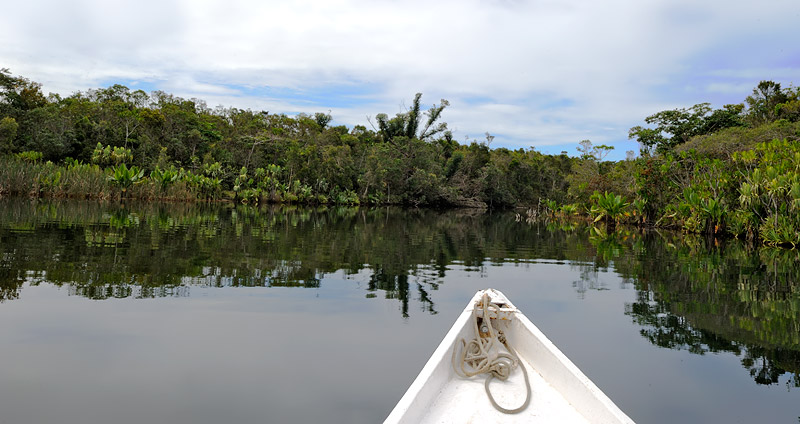
Staying at the Palmarium Lodge all clients had a wonderful bungalow overlooking the large lakes giving that real contact with nature feel within the location. This place has around 8-10 different species of lemurs including nocturnal lemurs too. Once we settled in we headed out for our first night walk with our guide at Palmaruim to witness the unseen wildlife that this area of Madagascar has to offer.

A wonderful close up of this Boophus Tree Frog.  Lit up by our guides torch light.

We had an incredible encounter with a Pigmy Kingfisher during our night walk.  This bird is only found in Madagascar. The light from the guide’s torch brings out the wonderful colour of its plumage under the cover of the moonlit evening. During our night walks we had to stay on a path and could’nt go off track, so to see this wonderful bird so close to our path was amazing.

The peace and tranquility of this place made it a wonderful few days, with each bungalow set among the reserves vegetation. A lot of the Lemurs here live in lowland forest, which is completely different to that of the primary forests we’d spent the previous several days at beforehand. Most of the lemurs were fed here and made for wonderful images for the clients. Seeing these beautiful primates up close with the help of a few bananas from our guide.

The wonderful face of the Coquerel’s Sifaka here, again only found now in a handful of places on Madagascar.

This is the Crowned Lemur named after the crown of brown colour seen on top of his head.

Along with the Golden Sifaka or Diademed Sifaka Lemur these Indri Lemurs are one of my favourites. It was very interesting to see that here in their lowland habitat the colour is more darker than that of their  black and white counterparts that live in the primary forests of Andasibe and Mantadia reserves which we’d seen earlier in our trip. Indri are the biggest Lemurs and for me are beautiful and very graceful as they move through the canopies of the forests.

During our stay at Palmaruim we were able to photograph the largest of the Chameleon family, a true dinosaur looking creature that only lives in a few places now. The Panther Chamelleon has a massive tongue which it hunts and catches its prey with. Their markings are truly special and here I captured him moving from a high branch to a lower branch. Giving a different view point to this amazing living creature who’s markings are just stunning.

We had a great time at both Palmaruim and Vakona Lodge which are staying on my itinerary for next year’s Madagascar photo tour as clients really enjoyed these places and its peacefulness along with its variety of wildlife. I took a few images of a wonderful spider we kept seeing during our time on Madagascar, the stunning Golden Web Spider.

The following day we took the boat once more but this time headed to Tamatave for our overnight stay at the Sharon Hotel. Traveling for two hours this time to reach our destination by boat we settled into our wonderful hotel in readiness for our early morning flight to the beautiful island of Sainte Marie where we would be finishing our photo tour hoping to see the Humpback Whales that come to this area to give birth and raise their calf’s.

Sainte-Marie, known as Nosy Boraha, is an island off the east coast of Madagascar, it’s a fantastic location to see Humpback Whales during the months of June until September.  The channel between Sainte-Marie Island and Madagascar is a hot spot for these whales.  Substantial groups of Humpbacks migrate from the Antarctic to this idyllic breeding place. These quiet giants find conditions here favourable for the growth of their young and it is also well suited to their courtship before their return towards the cold seas in late September.

We spent 2 days and nights at our beautiful Masoandro Lodge, with 1 whale watching trip each day.  The first day we saw nothing as we sailed in our small boat in the vast India Ocean. Crossing our fingers for the next days trip we all hoped we’d see the incredible Humpbacks.

I see many things while among nature that blow me away, many private moments I’m able to see and photograph, where I count myself very lucky indeed.  So following a mother Humpback Whale and her calf in the Indian Ocean the following day ranks right up there with the very best moments I’ve been privileged to see in my lifetime so far. The weather had turned from sunny to cloudy on this day and the sea looked rough, very rough and all of my clients decided to give the boat trip a miss instead opting for our last day in Sainte Marie, so I went alone, as fortune favours the brave I believe.

The sea was choppy at first but the weather broke and the sun came out.  We adopted a different tactic than that of the previous day and waited for signs that whales were around. We saw one and ended up following her and her calf, the guides kept the boat at some distance away and stopped the engine as not to make a single noise. Floating in the massive Indian Ocean in a small, tiny boat with the current throwing you around certainly gets the blood pumping through your veins to say the least.

We had followed her and her calf for nearly an hour, often we just drifted as they dived and played around our tiny boat. Sometimes stopping to play and flap one of their fins at each other, such lovely tender moments for such a massive animal. A few minutes had passed where we thought they’d dived deep and vanished. Then from nowhere the female jumped up, clearing the sea then landing in seconds. I had around a faction of a second to take these images. The power, noise, splash and the wave that happened during and after this jump, I just cannot explain in words.

Never have I seen anything so powerful created by a living animal in all my life.  I was speechless. The following sequence of images captures that incredible moment. What a way to end an amazing trip to Madagascar, my clients went the following day and were also able to see this pair and take some lovely images but the female never jumped so I count myself very lucky that day, as I witnessed something that will stay with me forever.

I would like to thank my clients who came from as far afield as the USA and Australia to join me on my photo tour. We had a great time, brilliant images, fantastic accommodation and a real laugh along the way. Thanks to Shaun Stanley from World Primates Safaris for helping me with the logistics on the ground, guides, hotels and transport as it’s the small things that make the big things happen. And lastly I would like to thank my guide, Rija whose knowledge of the amazing wildlife in Madagascar helped us all in capturing some wonderful images with our cameras.

I will be returning to this breathtaking island of Madagascar in October 2013. Visiting a lot of the places you’ve seen on this blog. So if you’d like to join me on this amazing photo tour next year then please click here to be taken to the link and all the information you will need, many thanks.


Read full post

Brown Bears of Slovakia

Filed in Places Of Interest, Workshops on Aug.05, 2012

Slovakia is one of Europe’s most mountainous countries, with lofty summits and deep-cut valleys making up almost a third of its area.  With the dramatic Tatra Mountains forming an amazing backdrop to this stunning area. The Carpathian Mountains in Slovakia has everything a photographer could wish for, beautiful landscapes and wildlife with that unspoilt feel to the whole area which is set in one of Europe’s most dramatic mountain regions. I’ve just returned from this amazing place after running a photo tour there with clients to photograph the beautiful Brown Bears that live in this region of Europe. It was my first trip there and I was blown away with the beautiful landscapes and wildlife.

This country offers a chance to get close to these amazing and powerful mammals from well protected hides. Where you are able to photograph wild Brown Bear in their natural habitat. Our hides were located at beautiful locations, very basic in design as they double up as places in which the rangers count the bear numbers. The scenery around each one was stunning, providing you with the perfect backdrop for Bear images.

Working from hides positioned in varied habitats gave us the best opportunities to photograph this amazing predator in the safest way possible. Each guest had the opportunity to photograph the animals in different locations against a variety of backgrounds, gaining a unique and privileged insight into their lives.

Photographing the Brown Bears took place mainly during the early mornings and nights, spending the time in these 2-3 person hides. During the day we grabbed as much rest as we could at our comfortable lodge and I also presented some slideshows which gave an insight to how I work and the key elements that I feel are important within wildlife photography. In between this I went through some of the images clients have captured, offering help and support to improve what they had already captured during their time with me.

In the 1920’s Slovakia’s brown bear population was almost eradicated by hunting.  From around 1932 until the 1960’s the hunting was stopped and the bears were protected. However, in the 1960’s this ban was lifted as the population of bears had reached a high level and conflict with humans was becoming a common event.  During this time though the population sharply dropped and by the mid 1980’s the bears were again at risk of eradication.

EU legislation was imposed as the European brown bear was now classed as an endangered species and therefore protected by EU law. To date the hunting of bears is still allowed in the Carpathian Mountains, but the number of animals killed is strictly controlled and only regulation shooting or protection shooting is permitted. Keeping the population at around just over 1,000 brown bears living in Slovakia’s mountains.

Still largely undeveloped, the glorious natural landscapes remain home to many animals such as Chamois, Marmot, Lynx, Eagles and Wolves. The mountains are also home to the brown bear, one of Europe’s most impressive and threatened predators. Amidst rugged mountains and ancient forests lies hidden one of the last strongholds of European wilderness. This whole area represents thousands of square kilometers of nature encircled by a sea of civilization.

It felt almost like a miracle that in the middle of Europe there still exists such a refuge for these amazing mammals. Throughout Europe there remains almost no area untouched by humans. Wildlife though is returning again to these places where it was once forced out. Around sixty years ago it wasn’t chamois or deer herds that roamed these valleys, it was cattle, grazing. Vast forest areas were destroyed and burned to make way for grazing areas for the livestock. Wolves were completely wiped out, and the entire National Parks records only showed several bears remaining.

Everything has changed since then, the valleys have become a safe home once more for the brown bears. Wolves are increasing their numbers with new cubs recorded each year. Species only found in primeval forests many years pervously are reclaiming their territories once again. This fascinating evidence of the power of nature tells us that many similar stories can happen anywhere in the world.  We only have to give nature enough time and space and by allowing this to happen the wilderness will return, and will become a place of inspiration for us all. A place where we can meet wild animals, living their lives in peace, while wondering through these ancient forests once more.

I felt I’d almost been transported back in time, hundreds of years back in time when these animals would have roamed all if not most of Europe freely without persecution. This story for me though is as much to do with the people who work and live in this area as it has the bears. Their patch covers hundreds of kilometers and staff and resources are thin on the ground to say the least. But it’s these guys here and many others throughout the world that are helping key species to hang onto life among the surrounding populations.

Whether it is Africa, India or here in Slovakia these people are key to the subjects survival, their knowledge, passion and love for the subject cannot be counted. In this area only 30 Brown Bears remain, the rangers have two camera trips, placed in and around these basic observation hides that we used, which record bear numbers at certain parts of the year.

Seeing a different environment for me always sends my brain into over drive, new smells, different tracks, different animals and remains of deer eaten by Lynx that roam these forests. I sat by the bones to try and get an idea of size through the prints of the these very rare animals.  Just sitting and watching always helps me in my thought process when trying to build a picture or recreate what went before me at that particular place.

To get any idea of the numbers of bears in this area or to see if any have gone missing the rangers place small amounts of maze around these hides. This is designed to basically get the bears to come to the area in which these several hides are placed. So they can keep tabs of the population. Either by using the camera technology or good old fashioned sitting and waiting. Censors are conducted once or twice a year at key times.

The other reason this food is put out is to hopefully discourage the bears at key times of the year traveling down to the towns and villages below these areas in which the bears live. Where conflict often results in the killing or serious injury of the bear, as people protect their property or livelihood.

To hear this was a shock for me and really sad as I hate any form of cruelty towards any animal, but in panic people often dont think until after the event.  Unfortunately this means that the lives of around 30 bears lie in the hands of wonderful and passionate people that work in this beautiful area daily. With population numbers increasing and tourism on the up, the bears sole existence is in the hands of man. On one side you have the gun, either to protect or to hunt them and on the other you have this amazing animal who was here first hanging onto life, while roaming these vast forests that once almost stretched the whole area of Europe.

They where just so amazing to watch and at times very comical and enduring. Here a female is seen scratching her nose area after a fly had just landed. The fly can just been seen hovering above after she’s moved the fly with her massive paw.

So for us as wildlife photographers on this trip, the real work of getting to see the bears had been acheived, as over the many years the rangers had placed maze as a supplementary food source, designed to bring these amazingly shy bears into a few areas of safety within this vast mountainous range, where you just may get the briefest of glimpses into their lives.

This place really only has one road in and one road out, you cannot roam around or create damage, as there are very strict rules in place to protect the wildlife. It’s also not safe to wander around because if you spook one of these bears they may attack you, otherwise they are frightened of man and just walk away. Often though at dusk you might see a lone bear using this road to navigate their way through the forests or just a short cut.

Once they have eaten the maze they disappear just as quickly as they had arrived, no playing around, no climbing, nothing. They are so quite for their size, and without any indication alot of the time they just turned up. Sometimes though you would hear a distinct noise of a fallen branch snap, breaking the silence of the moment, as a bear approaches or passes. Heart racing as your eyes almost pop out of your head looking for what had made the noise. Alot of the time the noises came from deep within the forest canopy so it left you wandering whether it was a bear or not.

I explained that as a wildlife photographer myself you have a duty of care to the subject but also to the viewing public, to tell the story and facts behind the image, as the power of wildlife photography rests on the belief that the image you captured represents an event that occurred naturally in the wild, something witnessed and recorded by the photographer with his/her camera at that given time. The moment it goes away from this is when you have to explain to the viewing public what is behind the image and how you took this.

For me personally you have to have a complete transparency to your work, even more so as a professional, in order for your peers and public to judge your skill when working with wild animals, demonstrating fieldcraft and sharing subject knowledge. In this case we wouldn’t have got near these bears without firstly the expert help from Jaro and secondly the small amounts of maze placed out for the bears.

This maze is only placed out for counting purposes at certain times of the year and for the very few photo tours that come to this beautiful place throughout the year. Again this is done so in such a delicate way as not to impact on any the wildlife and more so the bears. Which made the whole experience feel that bit more special knowing that only a limited amount of the public have been where you were sitting.

It was good to see that the bears hadn’t become use to the food and at the same time would never become use to humans or any form of interaction with them, which in turn will keep them safer from being harmed in the future. All that was left to do for us was to wait in those areas inside these very basic hides for our moment with this amazing and very rare mammal.

My aim as the professional wildlife photographer on this trip was to have all the clients ready for those moments and to have the confidence to use their equipment to the best of its ability, while watching and learning about this amazing predator. Everyone on the trip captured some really nice images of the bears, as at times they were elusive, which in turn made those encounters we did have just that bit more special.

I met some lovely people during my time there and I would like to thank every one of you for all the laughs, the company and for sticking with the early mornings and late finishes very well. I wish you all well in your photography, many thanks.


Read full post

Mull-Eagle Island

Filed in Places Of Interest, Workshops on Jun.12, 2012

The birds, the animals, the landscapes along with the local food and drink keep drawing me back to this amazing island more and more each year. It has a magical feel and presence to it, a place I could gladly just sit and watch the world pass me by with no time limit.

I’ve just returned from a wonderful week with clients on my twice yearly photo tour called “Magic of Mull.  The Isle of Mull lies on the west coast of Scotland and has a breathtaking coastline of 300 miles.  The climate is a mixture of rain and sunshine and from the moment you step onto this beautiful island the wildlife is everywhere and the scenery is stunning.  Our base for our 6 day adventure was the picturesque village of Tobermory, made famous by the children’s BBC programme Balormory, with its brightly painted buildings. Our hotel is overlooking the harbour of Tobermory and facing out to Calve Island and the sound of Mull.

Mull’s climate is extremely unpredictable and at any time of year you should be prepared for a wide range of conditions. The weather during our time on the island was good and kind to use. There were days that were overcast where we had rain but on the whole the weather was good.  After meeting everyone at the port of Oban, we took a short ferry ride over to Mull and then went on to our hotel that we were staying at for the week.  We had coffee overlooking the harbour and headed straight out for the day.

The pattern of events for each day were consistant, ensuring that clients get the best out of their time on Mull.  An Early start to get into place at one of the Otter sites to hopefully catch them as they wake and start to fish, then head back to the hotel for our breakfast at around 8am and then collect our packed lunches and head out for the day.

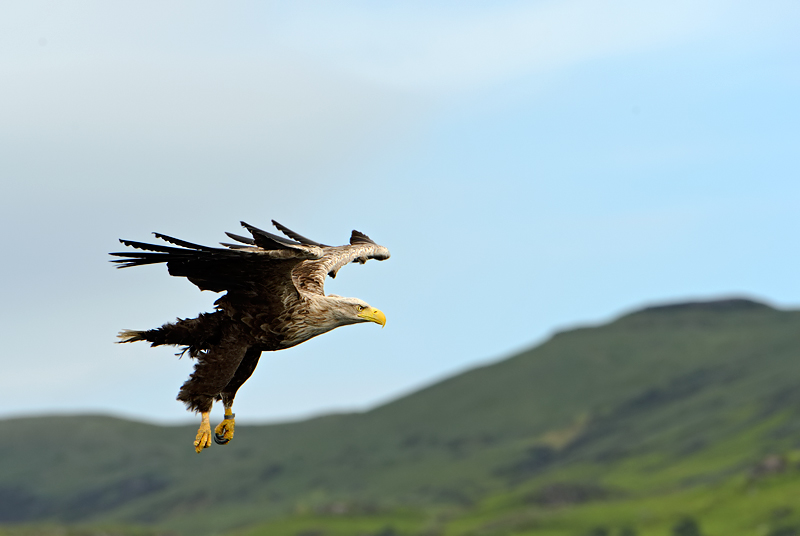
The wildlife on Mull is generally accessible with the few exceptions of specialized birds along with the rare and legally protected birds. These are not to be disturbed or approached as they are very senstive to disturbance, like the White-tailed Eagle below, which are doing really well on Mull, and so is the Golden Eagle.

When I have worked alone on Mull in the past I have stayed in one place for some time, getting a feel of the place, getting connected as I call it.  But while leading a tour here for clients you have to juggle the need to see the wildlife along with the time constraints, as a lot of the wildlife can be viewed only a short distance from the roads, which for me is ok but the way in which I work is working the land so to speak and this is something I was very keen to show the group.

As a group we covered both methods of approach during our stay, where everyone enjoyed the fieldcraft tips and advice.  I also demonstrated how rewarding it can be on many levels when you blend into the environment, leaving the safety of the car and try to become part of the subjects world, thinking about wind direction and movement, in readiness to take the shot if the opportunity came.

During our time on Mull I had organised two great trips on consecutive days, one was three hours watching White Tailed Sea Eagles on one of the Lochs, and the other was a full days trip to the Treshnish Isles.  Due to the White tailed Eagle being so protected and looked after, close up views of these birds is almost impossible so this tip offers that chance.

Today Mull is still one of the best places in the UK to see these amazing birds of prey. After centuries of persecution these birds were wiped out, it was shot, poisoned and its eggs were taken. Rewards were offered of eight pence for anyone killing a bird and twenty shillings for destroying a nest. By 1800, Scotland had become the sea eagles only safe refuge, but even here people were turning against them. Shooting estates wanted all birds of prey destroyed and the Victorian egg collectors wanted their eggs as trophies. Labelled as domestic livestock killers, and killing many game birds, these birds were not tolerated the same as they were centuries before and so bounties began and the slow demise of this bird began at the hands of ill-informed people.

The last breeding pair of White tailed eagles in the UK was recorded on the island of Skye in 1916, and sadly the last reported lone female disappeared from her nest on Shetland in 1918 rendering the bird extinct in the UK, a truly shocking and disgusting story to even write let alone believe we did this to this bird and even today the same is happening to many birds of prey with people having the same attitude.

So after an absence of almost 70 years conservationists were finally given the go-ahead to reintroduce these amazing birds. A total of 82 birds were imported under special licence from nests in Norway. The first wil -bred chick since the extinction was hatched on Mull in 1985 and so the birth of Eagle watch in its early stages was born. One of the many people behind the eagle’s comeback is the RSPB’s David Sexton. His tireless efforts and work started back in those early days is everywhere to see when you are on Mull. I often bump into him on my many trips to Mull each year and last week was no exception. A nice man and for me has brought this bird to many people’s attention which is brilliant.

Along with the Golden Eagle its one of my favourite birds of prey and every time I see this bird my heart beats faster. The boat trip I organise for my clients on their photo tour gives them the best and safest close up view of this amazing bird, by mimicking a fishing trawler towing a small boat it sails into one pair’s territory and gulls follow us. A fish is placed out for the eagle and the engine is killed as we wait in perfect silence for the world’s fourth biggest eagle to show. Without warning this massive bird approaches the boat, circles overhead then dives for the fish, then flies back to the nest all in the matter of minutes.

The bird now has the best protection available in law.  This trip lets people see these birds in the safest way possible, while maintaining complete respect for the bird.  Martin the skipper of Mull Charters gives a good introduction at the beginning of the trip and explains all of the do’s and don’ts. It’s amazing to see these birds so close and every client loves it as much. I would highly recommend the trip and you will be completely blown away by the bird’s size, power and grace.

We visited the small islands of Staffa and Lunga the next day.  Staffa is a beautiful, uninhabited island which is home to hundreds of seabirds and set within waters teeming with marine life.  The island is best known for its magnificent columns of rock. The best place to see this is in Fingal’s Cave. The shapes in the rocks formed by the sea over time are amazing, they look like they have been made by an experienced stone mason rather than the force of mother nature.

Fingla’s cave is very impressive, as you enter the smell of excrement is very strong as nesting birds and bats litter the small ledges and over hangs as you slowly walk in using the path people have used for centuries, a truly amazing place to visit.

One of the best places in the UK to see Puffin’s, Razorbill’s, Guillemots and Seals is Lunga the second small island we visited that day.  It was a small journey to this stunning little island that’s home to my favourite seabird the charismatic Puffin. We spent over two hours on this lovely little island and from the moment you scale the landing steps and head up onto the flat top of the island the Puffins are not far from you.

Their calls can be heard first before they show themselves from the burrows and vegetation hiding them away from view.  We all got into place, settled and let the birds relax and over time if you sit still and don’t make too many movements the Puffins accept your presence and go about their lives around you which is wonderful to witness and watch.

Puffins are going about their lives all in close proximity of you as long as you stay still and make little or no movement, capturing those moments with your camera.  Puffins are beautiful birds to watch and spend time with. Two great days and two excellent day trips.  The rest of the week flew by as we all concentrated on finding the elusive Otters, that had been giving us the slip most of the week.

Along with the White-tailed Eagle, Mull is famous for another amazing bird and another favourite bird of prey of mine the Golden Eagle. These birds are often seen soaring alone in their mountain habitat and aren’t as easy to see as the White-tailed Eagles. We all saw this amazing bird soaring effortlessly then disappearing as quick as they had turned up. I captured one adult bird with the image below flying over its territory among the moody looking clouds which added the ideal backdrop to this stunning bird of prey.

As each day passed by we saw Otters as we drove, hearing the plops and slaps that they make.  I showed everyone what to look for to identify Otter activity, fresh poo, mussels shells and fish bones all real clues to the presence of Otters. The more moisture and bounce to the poo lets you know just how old they are, giving you a real time idea of how long they were in that area and how old the poo is.

On the last day we were all in place and I saw a female Otter hunting in the tidal currents, I signaled one member of the group as soon as I saw this, also telling my client to let the other guys know who were scattered along the coastline. As I made my way over the wet rocks and slipping like a beginner on the TV programme-“Dancing on Ice” she carried on feeding just out of shot. I managed to capture her before she vanished.

Throughout the week the wildlife around the island was amazing and every client got some wonderful images with lots of images of subjects they’d not seen before which was great. We were all sad to leave the island on the Friday but everyone had some great memories of this magical island.

A big thank you to the entire group for your company during our time on Mull, a lot of you were repeat clients so it lovely to see you all again. We had a great laugh and I hope you’ll remember my Puffin impression for the rest of your lives. Its designed to help you in the field and know when they land around you.

Thank you Debbie at the Western isles Hotel, a beautiful hotel overlooking the sound of Mull and Tobermory, the base in which I run my Magic of Mull photo tours each year. Great atmosphere, lovely award winning food and great rooms and service. I hope I helped you all in seeing the amazing wildlife Mull has to offer, and learning more about the island while learning and showing you real and key camera skills and fieldcraft that work on the ground, many thanks and good luck to you all. For more information and next years dates on this amazing photo tour please click here many thanks.


Read full post

Tigers of India-Witnessing History

Filed in Places Of Interest, Wildlife, Workshops on May.23, 2012

The days just flew passed during our time in Ranthambhore, India.  We settled into our routine with twice daily safaris surrounded by nature, culture and the colours of this amazing country. By now all my clients had seen and captured some amazing images of Bengal Tigers which I was over the moon with.  As the host of this trip I organise and run myself with great help from my friends in India. Everyone’s wish was to see these animals at the same time and maybe capture them on camera and that’s exactly what they all did.

There are seven ‘old’ gates within the national park and twice a day we’d pass through the main gate, which is the way to one of the 5 zones that you are allocated before each trip.  Each zone is around 25 km plus in size, where your jeep has to stay on a small path which takes you around the chosen zone.  There is a very strict code of conduct on board eg. no shouting/loud noise and you cannot get out of the jeep, it’s all controlled really well with the Tigers welfare being paramount.

It was great to see some of the guards which I had made friends with during my many trips to this place over the last several years. They do an amazing job with limited resources keeping just over 30 Tigers safe from the ever presence of poaching. They showed me around and were very kind and helpful to my group by letting us pass through the main gate and onto our zone for that day with minimal fuss.  The photo below shows the ‘chef’ as he’s known, he’s worked for 38 years in Ranthambhore and knows every inch of the place, his wisdom and experience you just couldn’t learn overnight.

I took some presents this year for them, images of Tigers for their homes. I always get out of the jeep at checkpoints to shake their hands and introduce my clients to the guards. A warm embrace and smiles all round.  They all deserve respect for the job they are doing and I try to show that to them in my way, as respect is earned not given my late mum always taught me.

I only wished the many politicians and people involved with Tiger conservation around the world could see the frontline in the battle against poachers and give them more equipment and resources, because on the ground we are asking these fellows to risk their lives against a well organized band of poachers. Once these Tigers have gone the whole area falls and the Tiger will not return, very sad but money has to be channeled into helping the guards around India in keeping the Tigers alive. I was shocked and saddened by how these guys stop poachers with their limited resources.

As on so many other safaris the lady of the lake-T17 was hunting and patroling mainly in the morning.  Both jeeps had some wonderful moments photographing this lovely Tigress. Its real heart in the mouth stuff though as they seem to except the small jeeps we are in but I truly don’t think they know there’s an easy meal for them inside. This is always going through your mind as you take photographs as they pass by your jeep.  Nothing can ever prepare you for this, you have to witness this for it to truly make sense. I hope these images convey those special and priceless moments I took with these amazing and extremely rare Tigers, showing just how beautiful they are.

Salim my guide headed off on one such encounter and we parked up alone some distance in front of this patrolling Tigress. We could hear the distant calls of Peacocks sounding the alarm, letting the whole area know a Tiger was around, we just waited and waited until she came over the hill, paused and walked down and pass our jeep. I chose to shoot with my fisheye lens trying to convey the habitat which I love to show in my work and give the subject a sense of scale among her kingdom.

This image below captured her as she walked past our jeep and then vanished into the cover of the jungle, this was close, an experience I can see so clear in my head as I type now, but truly magical.

During one safari my clients and I witnessed a part of history, for a few minutes but what seemed like hours we were priviliged to witness something that’s been rarely spoken about in the past and even rarer to see.  A male Tiger rearing his young, totally unheard of in the tiger world. Only the female tigers were known to raise the cubs, but the male Tiger known as T25 has shown that the males also do it.  Wildlife experts say cubs are usually raised by their mothers and male tigers often kill cubs they come across. Officials believe there is no recorded evidence of males behaving like this.

It is common for male tigers to never even set eyes upon the cubs they father, especially when the mother is not present and many male tigers will simply see cubs as food. Their mum died on 9 February 2011 and ever since T25 has reared them and looked after them which is just an amazing story in its self but to see them on this day was magical, truly magical.

We had been in place for over an hour, waiting at a small natural drinking hole that had been refilled with the overnight storm we’d had. Then without warning we saw T25 coming from the shadows of the jungle, walking with great strength and power. The males are completely different to the females. They are shyer and very aggressive in their nature. Their physical size is alot bigger, with a rounder head and massive frame. You know when looking your witnessing a top predator with great power and presence.

We had gone through apertures, shutter speed, iso and making the adjustments to our cameras with the fading light, making sure should anything happen that we were ready. T26 a male Tiger walked down first, slowly but full of life, he sat down close to the water and began drinking fully aware we were there and he gave us a look to let us know that. An air of total confidence and control with no fear of nothing, thats when you know your king of the jungle.  We watched him quietly.

We heard a few small calls as he looked around at the different noises he’d heard as he was drinking. Then from nowhere one of his cubs appeared from the forest. She stood there few a few seconds looking for reassurance it was ok to join her dad before heading down to the water to drink.

She settled alongside her father as they both drank aware of the shutter noise from our cameras. It was a moment I’ll never forget, but at the time you’re just concentrating so much on capturing the moment it really doesn’t sink in until after.  He was always on guard, so to speak, and you sensed his protection of her by just seeing them together so close. The other cub never showed but both are doing very well I am told.

They drank for a few minutes before T25, the male got up and headed back into the dense jungle with his cub following.

He led the way as he’d done when first visiting the watering hole, his cub waiting behind until he went first. I managed to capture him here just looking back and giving a slight call to his cub. She then came from behind a tree and followed her father into the jungle. It was very touching to see this bond between them both played out before us, thousands of miles from home as we witnessed history in Ranthambhore one of if not the best place in India to see Bengal Tigers in the wild.

The whole week was brilliant and each evening my clients had their own best images from that day to talk through.  Each year the trip seems to get better and you really have to see one of these amazing animals in the flesh to truly appreciate their beauty. With so much wildlife in Ranthambhore the photographic opportunities are everywhere. A paradise in more ways than one for a wildlife photographer.

There’s something very human like when we look into the eyes of primates. Something that touches deep inside our soles where we see so much of our own human mannerisms. I did a close up of this young black faced langur monkey sitting close to his mum. I slowly walked forward as not to disturb the young one or the mum and this was the result making best use of the side lighting to bring out detail, shape and texture to the image, another wonderful and touching moment from Ranthambhore, India.

The week there passed far to quick and before we knew it the time had come to leave Ranthambhore and head off home. I wished I could have stayed as I really love this place and its Tigers.  It has a magical feel to it, an old fort taken over by nature. We headed for the airport the same way we came, packed lunches in hand as we started the journey home.

A big thank you to my clients for your company and another big thank you to Rag and Salim for your help and expert tracking and guidance with the Tigers. Many thanks to the staff at the Ranthambhore Bagh where we stay, great food, warm welcome and a great base for this trip.

I will be releasing a few more limited edition prints very soon to go along with the 3 others I currently have, where 50% of the profits go to a charity I work with to help rise money for Tigers around the world; 21 Century Tiger. Where they spend 100% of your money in helping Tigers around the world, these animals are in real danger of extinction and need as much help as possible so that future children get the chance to see this amazing animal in the wild.

Next years dates and information is up on on my website here, so if you wish to see these amazing images and capture some beautiful images working alongside myself and two of the best guides in India then contact me for more information.

I’ll be giving my top tips on fieldcraft in July’s issue of Practical Photography, which is out the second week of June. Fieldcraft when working with wild animals with their natural fear of man, away from per-planned perches, baited set ups and captive animals is the most important tool in any wildlife photographers toolbox.

Capturing real images as seen on the ground and not changed by the hand of man is what wildlife photography means to me as a professional, its the way I work when among nature.  I go through what works on the ground and how you can almost think like wildlife and become part of the landscape. All built on respect for your subject and wildlife around you, this is the foundation to my work today so I hope you enjoy the article.

And just before I go there are still a few places left on my Summer Tide workshop in Norfolk in conjunction with Calumet Photographic, for more information and bookings please click on this link. or click on their seminars page for Manchester and Drummond street branches with more workshops and talks planned very soon. For an idea of what you may see on this day then click on a previous interview I did here with Practical Photography covering my passion for this amazing event.


Read full post

Tigers of India-Beauty Personified

Filed in Places Of Interest, Workshops on May.16, 2012

I have just come back from an amazing trip to Ranthambhore, in the magical country of India. I was there with my clients on my Tigers of India photo tour, where we spent 7 days hoping to see and photograph one of nature’s most beautiful of animals, the Bengal Tiger. It’s the third year in a row I’ve been lucky enough to visit this amazing place and see an animal that is one of nature’s truly beautiful creations.

Upon arriving in Delhi and having collected our baggage we passed through customs with no problems, then headed to the arrivals gate to look for our driver, it’s at that point the noise and heat of India hits you. Ahead of us was a 373km drive to Ranthambhore Bagh, passing through the real India with its locals and small villages, making best use of what they have and where everyone has a smile for you. The people who have the least have the most in the form of happiness, a lesson there for the western world I always say.

The Ranthambhore National Park, which is a part of the much larger Ranthambhore Tiger Reserve, a Project Tiger reserve, lies in the Sawai Madhopur district of eastern Rajasthan. It is right now the only forest reserve in Rajasthan state and in the entire Aravali hill ranges where tigers exist. The Chambal River forms a natural boundary of the Park towards the east, and on the eastern shore of Chambal lies the central Indian state of Madhya Pradesh, this Project tiger reserve spans over 1334 sq. km of area, of which 282 sq. km is the Ranthambhore National Park.

Upon arriving at the Ranthambhore bagh, a lovely, warm welcome is always assured and after a quick freshen up we are served our lunch and we relax and unpack in readiness for the two safaris each day that begin the following morning. Never knowing whats in store and if you’ll see a Tiger.

The routine in the morning was an early start at 05.00am, the staff would make you an Indian coffee which was the perfect start to the day. The two jeeps I hire along with my guides arrive at 05.40 and we all set off to the park. I always tell clients to relax when trying to find nature as I have found if you put pressure on yourself then the nature just doesn’t show up. The mornings there are  beautiful, lovely sunrises, and the noises of the place are so different to that of the UK wildlife, so many different calls its just an amazing place. The light is just magical in Ranthambhore and I cannot explain just how beautiful the mornings there are.

There is also so much bird life in Ranthambhore, so many different species most of which I’ve only seen in books. Stunning, beautiful calls!  This place offers so much on every front. Alot of the animals and birds will let you know long before you realise a Tiger is around with their calls and sudden change of behaviour.  Like this Jackal below having seen and smelt a Tiger hidden away, he froze letting us know something wasn’t right.

The pitch and sound filling the whole area as you wait to see if and where the Tiger is. Then try to guess where he or she might show, then you have a few seconds to react, compose your camera and get the best angle you can for you photograph.

On every visit to Ranthambhore I have worked with two great guides, Ragh and Salim Ali. Salim has worked on many programmes filming Tigers in India and more so Ranthambhore. One of the best was Broken Tail, where he and followed a Tiger called Broken Tail for over a year. Working with the best guys on the ground always helps I believe and over the years now a lot of respect and trust has built up with these guys that help my clients see these amazing animals.

At the last count their was as few as 1700 Tigers left in India. In Ranthambhore there is as little as 38 now covering a massive area which is split into 5 zones. Each day you travel in one zone in the morning safari and then another zone in the afternoon safari, while sticking to a strict code of conduct. You cannot drive off the track your on, and you just pray that you get lucky and see a Tiger on that particular day.

Hearing those words from your guide “Tiger” you go into autopilot as you try to get the right angle for your clients in order to capture that fleeting glimpse of one if not the most beautiful creatures on this earth-the Tiger. Going through the planned settings and angles hoping and praying the Tiger stays still long enough for you to capture that moment.

You just don’t know where or when they will show up and this only adds to the excitement for me. My fieldcraft is very strong but its always amazing to see how Salim and Ragh read the tracks and tell tale signs of whats around and whats gone before us which are all key to tracking and finding your subject whichever country you are in.

On our first full morning safari, after our previous day of no sightings, we were photographing some Kingfisher’s when this Tigress came from our left.  Thousands of miles from home on a lone track among the beautiful jungles of Ranthambhore a lone female Tigress roams freely at dawn. The lady of the lake T17, I know her well, as several years ago when I made this journey alone, she was the first Tiger I’d ever seen in the wild. That moment rendering me speechless as I witnessed Mother Nature’s most beautiful of creations. So fitting for all my clients that she was the first Tiger encounter they’d had too. She is pregnant now, with only months to go before the birth.  I’d like to think she came to let me know she’s managed to become pregnant as there had been many unsuccessful attempts beforehand.

The power and grace of this animal is hard to put into words, beauty that’s truly amazing. I have seen many beautiful animals in my life from childhood to the present day but the Tiger really is beauty personified. We had an amazing close encounter with her on this particular morning.  She came from nowhere and walked her patch for around 20 minutes, scent marking, smelling the air and checking for other Tigers that may have entered her area.  What a welcome for my clients, witnessing this amazing Tigress so close.

Both jeeps had captured some amazing moments with her during that day, making everyone’s wish of seeing a wild Tiger come true very early on into the trip. Over the course of the week we were treated to some amazing views of this animal, but there were also times when we saw nothing which made those encounters just that bit more special upon reflection back at our lodge.

Each morning we’d all wait for our jeeps.  I’d go with one jeep in the morning safari then the other jeep in the afternoon. I’d be looking for angles, light and Tigers alongside my guide as we drove around looking for any clues that would tell us Tigers where around. I’m always on hand to offer help and support to my clients on all my trips, making sense of the smaller things in order for them to capture some amazing images to take home with them.

Once we got into our routine the time flied by, which always saddens me as I never want to leave this place once the week is up, such is the beauty and magic of the place.  It was great to see all the clients having some wonderful moments with the Tigers that live in this area. You are driven around and without warning you have seconds to compose yourself then start taking photos. Getting the right angle onto the Tiger is so important and our guides are brilliant at this.

T17 who we’d seen on our first mornings safari often traveled around at dawn and rewarded my group with some wonderful encounters throughout the week. The following images where taken of her hunting for food in the morning light. Such amazing behaviour to see and capture, just like you see at home when you watch a domestic cat trying to hunt birds on a lawned area.

We always visit the fort at Ranthambhore during the weeks photo tour, it’s a magic place taking you back to a bygone era. The Ranthambhore fort is believed to have been built in 944 A.D. by a Chauhan ruler. It is strategically located on the border of Rajasthan and the surrounding forests were used as an outer defence to the advantage of the fort, making it one of the strongest forts of Northern India.

The fort has many buildings inside of which only a few have survived the ravages of wars and time. Among the remaining ruins, the two pavilions, Badal Mahal and Hammirs court and parts of the royal palace gave you an idea of the old grandeur.

During the periods of waiting and hoping to find Tigers we all managed to photograph some of the stunning birds that live in Ranthambhore, some of my favourite I’ve included below. Starting with the handsome White-throated Kingfisher, a stunningly colourful bird that I captured in some nice light, and cleaning, composing the subject in his natural habitat.

The Black Drongo, with his beautiful fork tail and jet black plumage.

The stunningly beautiful Indian Golden Oriole, a shy bird which was really hard to photograph because any noise from the jeep and off they would fly. Here I got lucky and composed him among the branches singing away in the late afternoon sun.

And the Indian Peafowl or Peacock with its amazing colours and plumage.

The trip had been amazing for all my clients so far and with more Tigers to photograph and wildlife the time was flying past. In my next blog I’ll post some amazing images I managed to get along with one of my jeeps that witnessed the lone male Tiger looking after his two cubs as their mother had died. We had a brief encounter with one cub and her father drinking. This event has made the global news as it’s the first time it’s been reported happening with Tigers. You can view the story here and I’ll post some images and part two of the blog soon.

I’d like to take this opportunity to thank all my clients who came with me to India, thank you for your company everyone we had a really good time and many laughs along the way. I’m really glad you all saw and witnessed this beautiful animal in the wild and capturing some wonderful images. Many thanks to my guides, Salim and Rag who’s help and expertise really helped everyone in finding, photographing and seeing this amazing animal. The dates for my 2013 trip are now up on my website, click here to view them, many thanks.


Read full post

A Helping Hand

Filed in In the Press, Places Of Interest on Nov.18, 2011

Wildlife around the globe is in trouble, some species are on the brink of extinction and many others are threatened daily with habitat destruction and loss. The most endangered ones would have been long gone had it not been for a helping hand by humans.  Consigned to the history books with a stuffed version in museums to show us and remind us of what we lost. Without the hard work by the many wonderful people involved in helping to keep so many different species alive today, the worlds wildlife would be in an even worse mess than it is now.

Red Squirrels could be extinct in Britain within 20 years according to a recent review of some of the UK’s mammals,Scotish wildcats, hedgehogs and mountain hares are also at risk the report suggests. That report by Oxford University’s wildlife conservation research unit warns that mammals are being hard hit by intensification of farming along with other human activity. Damage and the loss of habitat is affecting not just the wildlife but also the rural economy because it creates a countryside devoid of wildlife, discouraging walkers, birdwatchers and many others whose money should be going into this economy. One of the biggest examples of this is that of the Red Squirrel, which was widespread throughout the UK until the introduction of the Grey Squirrel from America in the 1850’s.

This visitor to our shores is not only a more effective forger of food than the red but it brings with it the lethal disease called squirrel pox virus. The greys have colonised most of the UK now with the reds only really hanging on in Scotland but even there the virus-infected greys are moving into those areas. There are a few places south of the border of Scotland where you may see these adorable mammals, where red squirrel colonies are doing better thanks to a helping hand from wildlife trusts, volunteers and others concerned with the species not completely dying out from our shores as predicted by this report in around 20 years time which makes for shocking reading.

One place in England where numbers seem to be on the up is Formby, managed by the National Trust. Formby is well known as a special place to see red squirrels and numbers have recovered well following the deadly outbreak of squirrel pox virus in 2008. My last visit to this place was on the 18th December 2008, I remember it well as I had just taken delivery of my prime lens after using the older version of the Sigma 50-500mm lens. I wanted to put the lens through its places and chose Formby.

I decided to visit Formby hoping to see and photograph these cute and adorable mammals. What I didn’t know was that Formby had just recorded their worst year, with almost 80% of the reds having caught this dreaded pox and dying. When I got there I walked around the woodland walks most of the day and never saw one squirrel all day which was really odd as the place had been recommend to me and all of the research I’d done online suggested the place was full of red squirrels. Later that day I saw a warden and he explained to me the pox disease had almost wiped out the whole red squirrel population there and you would be very lucky to see one today which was really bad to hear.

I’d not been back since that day in 2008, until this week after researching some facts and figures and it seems that things are improving through the hard work and helping hand from the wildlife trust, and many other staff involved in the research and help to save these reds. The signs are that 2011 has been a good breeding year and Formby anticipate the results of the autumn monitoring will show that red squirrel population has recovered to over 60% of the pre squirrel pox level which is amazing and a great success story.

A few squirrel feeders were introduced in one particular place within Formby to give visitors a better chance of getting close views of red squirrels. They have been reintroducing in a controlled way so that the staff there can monitor the situation and avoid the reds becoming too dependent on supplementary food, maintaining their wild ways and feeding patterns. Many of the smaller woodland birds there also benefit from the feeders with the onset of the colder weather while larger birds like pigeons and crows are excluded by the design of the feeders.

During my time there this week I found the squirrels to be extremely shy, they would come down from the tops of the trees, their crawls scratching on the bark letting you know they were on the move. They’d come to the feeders and they’d grab something, run down the tree trunk and off to find a quiet place in which to bury their bounty for another day. Once the food had been consumed in the few feeders they’d concentrate their efforts on picking up the left over’s which had fallen from those feeders and littered the forest floor.

In a flash one or more would come, in a ‘grab and go’ style and vanish off into the distance to again bury their catch and return. Often they would chase each other around making for a really comical spectacle, once that stopped they’d get on with the stashing of food.

I used the natural light that was piecing through the tree canopy and often the squirrels would appear out of the dark areas and then disappear back into the shadows the next, it created a lovely effect though where I tried using the natural trees and branches they were using to compose my images on and around. Most of the time though the squirrels were on the forest floor making for that very intermit view point where you are level with the subjects eyes. I had a wonderful time and it was great to see these fellows doing so well with all the work and care in looking after their welfare by the trust.

If you’re planning a visit to Formby you have a much better chance of seeing a red squirrels on the woodland trails that form part of this area. The trust asks people to stay on these paths, don’t via off them or climb over the fences and don’t bring you own food as the wardens put a little bit of food out for them to go along with their natural diet. The reds spend much time feeding on natural foods like pine cones which are much better for them, and please respect these animals by not placing them under any stress in order for you to get an image, sit, wait and watch and you’ll get to see their patterns and bombing raids as I call them, ‘grab and go’ moves to feed then disappear back into the pine woodlands.

The threat of further squirrel pox outbreaks remains and squirrel workers are actively involved with residents in the local area in an attempt to contain outbreaks of the disease should it reoccur. Anyone seeing a grey squirrel or a sick red squirrel in the Formby area should report it to the National Trust rangers there. This guidance is laid down but the wildlife trust to protect these at risk animals. I will be going back to carry on capturing these adorable mammals and will update my blog to how they are doing in the future.

Several of my wader images from the amazing springtides in Norfolk made the papers this week, showing the beauty of this event. Click here to see The Mail online and here for the Daily Telegraph image of the day. And I had the image below printed in Wednesdays paper where it covered two pages and looked stunning with the details and colours of thousands of waders taking off.

I have put together some images that show the true beauty of this amazing event that happens in Norfolk throughout the year in this slideshow below.


Read full post

Mull-The Briefest Of Encounters

Filed in Places Of Interest, Workshops on Nov.05, 2011

Nature offers you in most cases just the briefest of encounters in which to witness a moment you see with your eyes and if you are lucky enough with your camera, so that you can show others that special encounter you shared with nature. Nowhere is this more apparent than the beautiful island of Mull. The island lies on the west coast of Scotland and has a breathtaking coastline of 300 miles. The climate is a mixture of snow, rain and sunshine, and from the moment you step onto this beautiful island the wildlife is everywhere, and the scenery is stunning. With Mull’s famous own micro-climate the weather changes from clear skies to angry skies in a moment, pouring rain gives into calm, windless conditions, light you dream of as a photographer is replaced with almost zero visibility.

Having just returned from 4 days there,  I again feel blessed with some of the close encounters I witnessed.  A lot of the time the clouds afforded me no or little light, then in an instant rays of sunlight would pierce through momentarily lighting up this amazing landscape, giving the land beneath the clouds life.

The rain at times was heavy giving you poor visibility, so we just impravised and used our vehicle as a hide in order to still capture the wildlife that was around.  Because of the vast size of Mull and the lochs, sometimes the best option for seeing the wildlife here is to drive around on the off chance you may see a silhouette of an Otter feeding or a certain bird feeding and so fourth.

I do love to work and stay in the same area.  Sitting in a place that you become so tuned into, where every plop, every noise, every dive from a bird you hear, you immediately look with great excitement to see what made that noise.  This for me is one of the best things about wildlife photography, the peacefulness of waiting, the minutes turning into hours, all the time waiting for just that briefest of encounters in which you get a view into a wild animals world, where the camera enables you to capture what you saw, capturing the beauty of the subject, preserving that moment forever.

During those 4 days the weather did break occasionally, affording me a little more light which in turn gave me more shutter speed should the wildlife show, and in a lot of cases the wildlife showed up during those briefest of spells to feed and clean, and in some cases have a nosy at me clicking away from the mobile hide in which the vehicle had turned into.

The camera settings and key drills I go through during those quiet times really pay off when nature spontaneously turns up, with an almost automatic routine of checking the shutter speed, iso levels and moving the focus spot etc.  The hard part is to then second guess where your subject will go, as they will have an acute fear of man, giving you only seconds to take the shot.

There were some great encounters on the island, some close, others at a distance, but never the less still wonderful to witness. During my stay it was a case of juggling your time along with the weather. Once the cloud had broken and warmed the landscape the island was awash with colours and its beauty came alive making it a pure joy just watching for Otters, Eagles and the many other species of wildlife that live on Mull. One evening a female Hen Harrier chose to brave the weather and started hunting over the marshland only to disappear as quickly as she’d showed up.

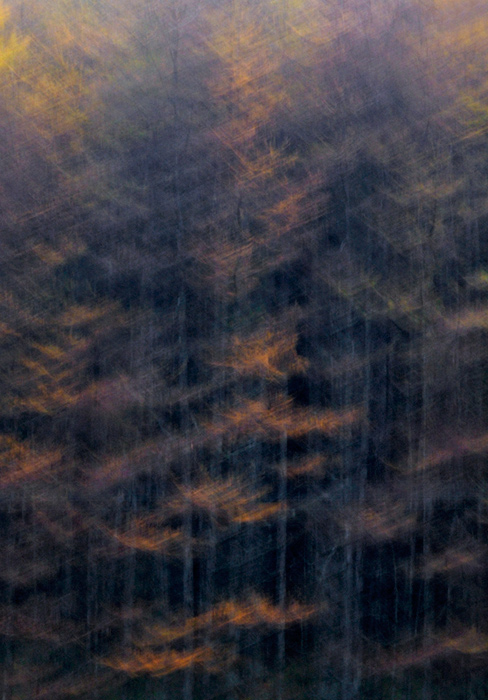
My knowledge of Mull is something I rely on most of the time, the places I’ve found or discovered over many hours and days during my 2-3 trips to Mull each year.But often or not wildlife can pop up at anytime and those places I’ve worked at before were a little tougher in the weather during my time there.  While waiting for your chosen subject or wildlife to show there is always a shot to be taken as I say. This arty,slow shutter speed image focusing at the heart of a pine forest, where the autumn leaves just offer a splash of colour to the image.

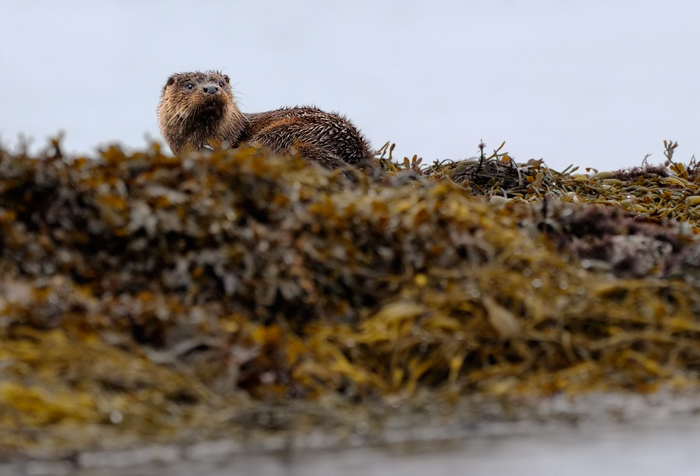
During high tides and when they start to retreat is a good time to watch for Otters, where in most cases unlike their counterparts they live in the UK’s rivers, these European Otters can been seen during day light hours, hunting, sleeping and generally lazing around. As with all wildlife though, great care must always be exercised when approaching wildlife in order to capture that briefest of encounter.  I prefer to get into place under the cover of darkness and wait, on the off chance that my fieldcraft skills and knowledge of a certain areas pay off and the subject may just give me that brief glimpse into their life.

I’d had a fleeting encounter of a female Otter entering the water not far from her holt and as the clouds broke I chose to spend sometime there hoping she’d come back, but she didn’t.  The tide times on Mull were early in the morning, so on the next day, after that brief encounter captured above, I returned to the same place where I’ve had some good luck during my past visits. Although nothing is ever guaranteed with wildlife, and she nor her young showed the following day, and with the weather changing from overcast to rainfall I was confined to the vehicle for the rest of that day, searching in vain for Otters and other wildlife.

And it always seems customary for me while waiting for a subject to turn up,  a Stonechat always turns up in a lot of cases, gaining confidence and coming closer, in an almost curious manner to see what I am, which always makes me laugh.  They are a stunning looking bird and very inquisitive in nature, with care and respect, and no fast movements from you, they’ll come quite close to you, sussing you out, whether you are friendly or not, or maybe this is just how I perceive this during the long hours of waiting, who knows.

I was hoping to see some if not all of the deer rut on Mull, but I feel I was just a little late this year. I never witnessed any stags at all, which would suggest that they were all off feeding and building up fat reserves in order to survive the impending cold weather, as during the rut stags dont feed, instead they protect their ladies and territory from would be opportunists. After the physicality of the rut they go off to feed, and as there was no sign of any majestic stags roaming around, I was just to late.

I did have some nice encounters with female Red Deers though and the shot of the trip were these four females all looking at me.  I’ve called the image “game over” as literally it was game over as they’d spotted me and then moved but not before I got a couple of shots.  the shot below being the better of those, capturing that moment and briefest of encounters when they saw me, heard me and knew I was there, nice try.

Amazing to see them in this beautiful sighting of Mull, so close and in stunning condition.  I managed a few other sightings most of which were taken in dense woodlands where they love to hide, making it a harder prospect to photograph. This image below was taken in the early morning, showing such habitat.  Soon after she disappeared, as though she was never there.

On the last day I had one last steady drive around the island.  And among the choppy waters on that mornings hide tide was a dog Otter feeding and working the shore.  I left the vehicle and tried to position myself where I thought the Otter would come past. I managed to capture just one image from the most briefest of encounters on that wet and faithful morning.  The Otter was working the coastline looking for crabs and other food items.

Here he took a short cut over the coastal rocks instead of swimming around.  I just got him with this image, a blink of the eye and he was gone. Some encounters though are too special and live on in your heart and this was one, but lucky for me I had just one image to remind me of the closest encounter with a wild Otter that I have ever had in my life, amazing.

I stayed, hoping he’d reappear but again it wasn’t meant to be so I moved on to another Otter spot on the island. Whenever home time is looming or your packing up I find the subjects appear from nowhere and in an act of almost defiance they teese you knowing your time is almost up. After a short drive south, there was another dog Otter, and he was cleaning and grooming himself. Again only the briefest of encounters that I captured, but another wonderful moment in the life of a wild Otter.

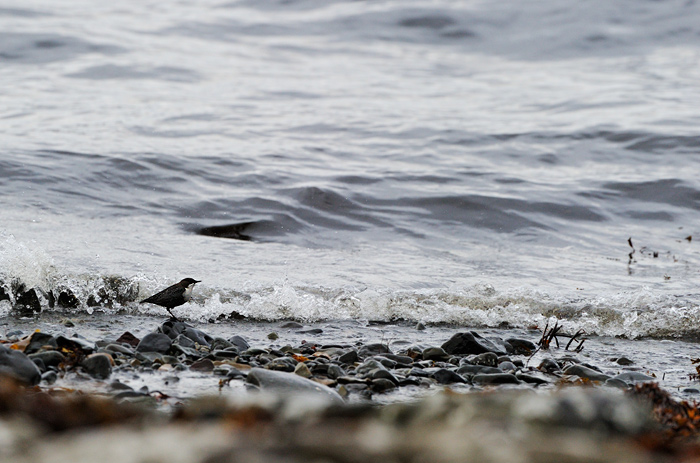
After lunch on the last day I saw a small bird feeding among the freshwater streams entering the loch, it was one of my favourite birds, the Dipper. It felt good to see them here and very different among the coastal waters of Mull.  The light had gone at the time but you can just see the little fellow below on the sea edge.

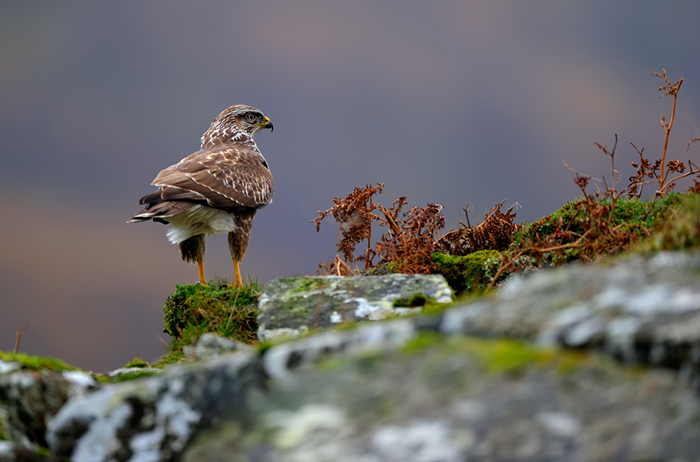
During my time on Mull the weather was testing at times, but it also offered a great deal in terms of atmosphere, with the sun constantly battling to break through the dense clouds to warm the land with its rays. In the distance a large bird was sitting on some rocks, appearing to be looking for prey, the wind was strong so the bird seemed happy just to try and sit out the windy weather that would zap his energy should he take flight, it was a beautiful adult Buzzard in amazing conditon.

Slow movements in getting my lens up and out of the window, placing the beanbag down so slowly you didn’t want to look up just in case the bird had flown, in this case he hadn’t.  One shot, two shots, relax and watch, I was saying to myself in my head, as Buzzards are very very shy in nature and one move to many and you’ll never see them again.

He took off, turned around and faced the wind, while jostling the strong winds, all the time looking below himself for food. The engine had been turned off at the first instance, the vehicle was on a slight bank which allowed the handbrake to be taken off and roll forward hoping to keep up with the Buzzard as he went from post to post looking for food.

He heard my camera, as captured above.  It killed me to stop but I did for a few seconds hoping he’d settle and not be disturbed by my presence that was my vehicle with me shooting from the window.  He carried on looking as the vehicle slowly rolled forward, enough to capture him full frame in all his glory with the image below. I couldn’t believe that I was capturing such a jumpy bird, with a clear background, fence line post and looking out to sea. He stayed for a minute or so before flying off, carried along on the wind and out of sight.

Soon after it was time for home and the long drive south once on the mainland. I am always amazed at the wildlife on Mull, the peace, the tranquilness of this place, where just sitting and watching wildlife live their lives around you is truly a wonderful thing to witness and be part of while on this island. Whether it rains or is baked in sunshine the wildlife always gives you the briefest of encounters into their lives, and if you capture them with your camera then thats great, if not they’ll always be in your heart and mind I say.

I run two trips to Mull each year, one in June and the other in October, our base will be the picturesque village of Tobermory, with its brightly painted buildings, overlooking the harbour of Tobermory and facing out to Calve Island and the sound of Mull. We stay in a great hotel overlooking the bay and I have 2 places left on each trip for next year so if you would like more information on them please click here to see my “Magic Of Mull” photo trip.

And before I go, I’m a guest expert in December’s issue of Practical Photography on sale now, a great magazine, full of advice, tips and gear reviews each month. One of my Barn Owl shots along with the tips and how I got the shot are included in this issue, carrying on my passion for showing how I work in the field at the same time helping others to take better photos.


Read full post

Always Inspired

Filed in Places Of Interest, Workshops on Oct.28, 2011

Inspiration can come in many forms and from many different avenues I believe, personally I get inspired by many different things, most of which are visual, where words dont need to be spoken, let the image speak for you and inspire those to see the wonderful world of wildlife and the subjects it supports. Over the last two weeks I have been working on my own projects at the same time working with clients in improving their own photography while seeing and witnessing that inspiration, which for me is nature.  Watching nature and capturing her beauty is a wonderful thing where I am at total peace,surrounded by her beauty.

Over the weekend I visited London for the annual WildPhotos 2011, a selection of the best photographers go through their work, how they work and tips etc which I find very inspiring and during the 3 years I have visited this event it never fails to ignite yet more passion in me. This year I had a nice surprise as the editor of the BBC Wildlife magazine, Sophie Stafford used one of my images, kissing Puffins so show the audience what the magazine look for when it comes to images submitted and different looks etc.

The image captures two Puffins kissing each other and going through their bonding process with the onset of the breeding season ahead of them. Nice moment as I sat there and looked up at this Puffin image, remembering the moment I captured them like it was yesterday. BBC wildlife magazine chose my image “Kissing Puffin’s for a full page spread in their June issue.

Last week I visited several different areas around the UK to photograph the annual deer rut, this year with the added warm temperatures and the warmest October since records begin it seems to have never really reached its peak, instead just slowly building with action and deer still calling and claiming their females as I write this.

I witnessed fighting, gentle young Fallow Deer learning their skills from their mums within the different habitats I visited from open grasslands to dense woodland that offered the deer a safe place to hide, making the process of finding them just that bit harder.

I witnessed some beautiful moments along with the males fighting for control over their females. I’d got into place just before dawn at all the places I visited, some I got really lucky at others the deer failed to show. One morning I was feet away from two fallow Deer’s stags fighting, t he noise of that smashing in to each other could be heard from far and wide such was the brute force. Then on the other hand I saw a young Fallow Deer following her mum through the thick cover only to become separated and disoriented.

The image below captures that special moment , soon after she caught up with her mum and everything was fine again.

Nature is wonderful to be around and spend time alongside where I am always inspired everytime. The places I go and also run my trips and workshops too always come up with something different and I am constantly learning more and more about the subjects or the environments and animal behaviours.

After my trip to London on Saturday just gone I had almost back to back one to ones in the Peak District, on my Mountain Hares workshop and then mostly in Norfolk for Barn Owls and two Spring tide days with the predicted high tides. Living out of my bag and just having time to charge my cameras batteries along with my own has been the routine but I love every minute. Helping clients take better photographs and learning more about their own equipment is something I pride myself on during the time spent with clients.

Over the three days we had a mixture of weather, sunshine, rain but on the hold the weather was kind to all my clients which is something I always wish for. As the dawn broke each morning the thousands of geese would travel in from their overnight coastal roost site and head inland to feed during the day light hours, before heading back out just before dusk.  The skies where full of calls,shapes,formations over our heads and it was amazing to witness. The dawn light was just amazing, with the cloud formations creating a very beautiful feel to those mornings with their shapes and colours.

The light was just stunning as the sky filled with geese and also waders during these spring tide days. Norfolk is famous for its winter flocks of geese, wildfowl and waders who begin to gather here to make their home during our winter months, amazing spring tides with thousands of Waders being pushed up the beach as the tide works its way in covering the mud and sand flats, submerging the whole estuary.

Once the majority of these areas have been consumed by the sea the birds are forced into the ‘Pits’ which are behind the beach where the RSPB have built a number of hides from which you can watch this amazing spectacle. Where large flocks of Knot, Dunlin, and Oystercatchers come into roost escaping the tide, forming great masses of birds as they all move and sleep in a synchronized manner.

The birds almost fly as one, one minute dark the next flashing silvery-white as they all turn one way their dark backs are facing you, then their pale undersides, in a show of coordination that is second to none, all without a signal or mishap. I have never seen any two birds ever make contact in all the years I’ve witnessed this beautiful site.

The only time you see them make any form of contact is on the ground when they hustle together shoulder to shoulder. The return to the mudflats once the tide starts to retreat is a less coordinated affair, but the smaller flocks still reward you with some fine performances. It can be a really quiet place most of the time, with the Waders feeding on the mudflats some distance away on the estuary, but on these high tides the place is awoken with a bang, bursting to life, and for me the place never disappoints, with so much going on it truly is one of nature’s wonders.

Once the sea starts to retreat it exposes the vast mudflats and this is when all the waders return back to feed on the rich food sources of the mudflats that make up this area of Norfolk.

On the last morning though the weather wasn’t the best,with overcast conditions, I took a few hi-key images that morning, capturing a different feel within the images. I covered this technique on my blog under photography tips sometime ago now, click here to read it.

After our time on the beach we leave and head around the many places I know around this stretch of North Norfolk’s coastline.  From my first visit on the Sunday I had witnessed some amazing behaviour while watching some Black Tailed Godwits. From a hide we watched as different adults would be feeding one minute then the next warn each other off, or away from the food source they were feeding on. Most went their own ways and there was peace, but a few times that peace was shattered with some of the most violent behaviour I have seen in birds.

Each bird would try to drown the other, forcing their heads under the water, the bird that submitted would then escape as quickly as possible. It was difficult to witness as we all watched on the three days we were there, with each client being amazed at this action at the same time a little taken aback such was the level of aggression.

The following series of images will hopefully show you what happened during these hard to watch moments. Nature is so beautiful, but at times so cruel too, where only the strong survive, this was a perfect example.

Truly breathtaking behaviour to see and capture this was, the bird seen being moved off was unhurt be the ordeal of being drown so everything was ok in the end. On these spring tide or Norfolk days I run we always finish the days at one of the Barn owls sites I know there hoping to capture this most beautiful on birds at work, hunting.  The owls showed up for all my clients which was nice as the sun set and once in the morning light,showing just what a master they are at hunting and flying silently.

Know matter how many times I visit an area I never fail to be inspired but something I witness, there’s always a different take on what I may have already witness. Many different images to be taken because you just do not know whats around the corner when you photography wild animals, this has been and always will be my greatest enjoyment while observing nature.

A big thanks you to all my clients over the last week, thank you for your company and I wish you all the best within your own wildlife photography.


Read full post