Entries in the ‘Workshops’

Mull-One Man And His Camera

Filed in Places Of Interest, Workshops on Jan.16, 2011

I have just returned from a wonderful week on the beautiful island of Mull in Scotland.  The island lies on the west coast of Scotland and it has a breathtaking coastline of 300 miles.  The climate is a mixture of rain and sunshine, and from the moment you step onto this beautiful island the wildlife is everywhere, and the scenery is stunning.  The island is a wonderful place to see Golden Eagles, White-tailed Eagles, Otters, porpoises and a whole host of Hebridean Wildlife.  My main aim was to capture through photographs the UK’s only species of Otter; the European Otter-Lutra lutra that live on this island.

Firstly, I spent two days at Caerlaverock Wetland Centre, a spectacular 1,400 acre wild reserve situated on the north Solway coast of Scotland with clients on one to one’s.  During our winter months this area becomes home to the whole Svalbard breeding population of Barnacle Geese, where some of the best views of this great wildlife spectacle can be seen from the hides within this beautiful place on the north west coast of the UK. 

The weather was a mixture of cloudy and sunny weather where both days the temperature struggled to pass freezing point, the pools that the birds use to drink from were frozen and many of the Geese were using neighbouring fields to feed from, the centre has two daily feeds.  They feed the Whooper Swans and the many other species of birds with a supplement feed consisting of grain, seeds and potatoes. The Whoopers also spend their winters with us before heading back to their breeding grounds in eastern and western Iceland. Whooper Swans are highly vocal, with sonorous bugling calls, used during aggressive encounters, with softer “contact” noises used as communication between paired birds and families.

It was a great two days with lots of good sightings of Barnacle Geese, which were on our most wanted list to see.  We had to travel a little away from the centre to catch up with them but were rewarded with a few shots of them feeding in the nearby fields before heading off to their over night roost sites on the Solway.  After the two days I then headed north, tackling the 326 miles drive to the port of Oban ready for my morning crossing to the island of Mull.

As I set off for Oban the weather looked fine and I was looking forward my morning ferry to Mull. An hour from Oban and I drove into what was little snow at first, but as the miles counted down on my sat nav the snow became thicker and covered the road in front of me.  However, I was so determined to reach my destination. It turned into a blizzard with inches of snow on the roads making driving harder, the ascent into Oban was hard with abandoned vehicles everywhere, motorists were stranded on all the main roads in and out of Oban. 

The police were out helping to dig cars out and in general doing a great job in the absence of any gritters.  I wanted to help the many people just walking around and stuck in their cars but the police just wanted the traffic to keep moving.  In 2 hours, 7 inches of snow fell wreaking havoc and shutting all roads into Oban, I had just managed to get through and finally got to my hotel at around 10pm, a journey that was to take 3 hours and 10 minutes on my sat nav turned out to be over 5 hours.  The cup of tea and free biscuits in my hotel room that night never tasted so good.

From the moment you leave the ferry at Craignure the vast space and amazing landscape of Mull is evident straight away.  Vast, snowy peaks litter the sky line dwarfing the landscape below, a place I truly love.

The main subject I aimed to work on in the days ahead, was the European Otter, whos population in Britain suffered a significant decline from the late 1950s to the end of the 1970s. By then the Otter was absent throughout England, rare in Wales and was only found in numbers in the north and west of Scotland.  The probable cause of this crash in numbers was because of the use of toxic agricultural chemicals which are now banned, this drained into rivers and accumulated in the bodies of the animals through their prey of fish.

In response to its fast decline the Otter was given full protection under UK law in 1978, recent studies have shown a significant recovery in numbers, where both government and voluntary organizations are involved with the protection of this species, which has now become a symbol of the great efforts from many conservation movements in saving this beautiful animal.  I wanted to spend as much time as I could watching this animal and hopefully document their behaviours during my short trip to this magical island.

Because of the vast size of Mull and the lochs, sometimes the best option for seeing these very elusive animals is to drive around on the off chance you may see a silhouette of an Otter feeding or moving on the rocks.  I have done this in the past but on this trip I wanted to find a place they where using and wait, using all my fieldcraft skills to become part of their landscape where their sense of smell and hearing is amazing. On my first day there I vistied two lochs that I know of, where I have previously witnessed Otters and cubs.  I chose one of the sites and went back for the rest of the first day. 

Whenever I visit a  new or old place within nature I always just sit and watch, look for signs, droppings, ensuring that I’m out of site with no camera, no pressure, staying low, placing every foot print carefully so not to make a sound, testing the wind direction, breaking up my appearance with camouflaged clothing and with no white skin exposed, as this reflects light and gives you away, but for me the moment you break an animals horizon its game over, whatever you are wearing, so the need to stay low and present no silhouette is very important and key to my fieldcraft, without using a hide or car in the hope of trying to get a feel of a place. 

I settled into a little inlet, where at high tide the sea came in really close and at low tide expose the lovely colourful seaweed covering the jet black rocks forming the coastline.  I had seen signs of Otters, broken mussel shells with a single puncture hole and the meat taken cleanly out with great ease leaving the in tact shells littering a high vantage point.  I know the Otters can hunt great distances but saw many black droppings and fish bones on this place telling me that I needed to stay here. So I did, getting myself into place before dawn each day, laying on the very slippery rocks for 7 hours a day without moving, my back was protected and covered by a line of rocks behind me, I had a great  vantage point out onto the loch with the high tide water just touching my boots. 

Tucked into the rocks, presenting the smallest target you could imagine, I waited, bending my frame to fill the steps and contours of the rocks, two days passed after which time you become so tuned into a place every plop, every noise, every dive from a bird you hear you immediately look with great excitement, this for me is one of the best things about wildlife photography, the peacefulness of waiting, the minutes turning into hours, all the time waiting for just that one moment in which you get a view into a wild animals world where the camera enables me to capture what I see, capturing the beauty of the subject, perserving the moment forever.

With every passing hour, sat motionless, you see so many other species of wildlife and over time you become accustomed to their presence and own individual behaviours, they become your friends, keeping you company, ready for the main event should they turn up.  With Mull’s famous own micro-climate the weather changes from clear skies to angry skies in a moment, pouring rain gives in to calm, windless conditions, light you dream of as a photographer is replaced with almost zero visibility.  I use a layers system when staying put in one place for some time, breathable under garments, covered with warm natural fibres finished of with rustle-free, waterproof clothing, this lets me take anything mother nature throws at me at the same time my camera and lens has two covers.

The first two days were long, traveling the 40 minutes from my accommodation to the loch on snow covered tracks.  Great care was needed.  Seeing this landscape awaken is so special with each day you witness these dawns really does make you feel alive.  I got into place each morning as the new dawn was breaking.  In the distance the massive peaks of the mountains looked down on me, the beautiful light choosing when and where it showed up that given day.

Two and a half days had passed when my luck changed, two Otters to my right breaking cover and feeding on something they had caught, slowly I moved my camera, a drill I had gone through many times before practising the turning arch of the tripod, assessing the ground to my front and what I could cover with the least movement as possible. The Otters could not smell me as there was no wind or ripples on the water.  As they fed I waited, they dropped down behind a large rock they had come out on.  I choose to stay put as chasing wildlife is never an option for me.

Then in a flash she was there, I let off two shots very slowly as not wanting to cause her any disturbance, she seemed to stand her ground for a moment, unable to make out what was making this slight noise made by my shutter.  Then she got into the water and began swimming towards me, I could not believe what I was witnessing, two extremes, days with nothing then in a flash a wild European Otter coming towards me.

Never in my wildest dreams did I ever envision a wild Otter swimming towards me so boldly, checking out what I was, nestled into the rocks.  She became almost too close too focus on with my long lens, right on the threshold of the minimal focusing distance.  I turned to portrait when she popped up from a deep dive,  coming up and standing in a real proud stance for a few seconds, smelling the air desperately trying to make out what was making this noise.  When things happen this quick you react on pure instinct so my thoughts at the time was that I just wanted to capture something of this magical experience.

Seconds later she went back into the water and started to swim to my left, I followed the trail of bubbles as she dived deep, surfacing only for air. Seconds later she popped up, hanging onto rocks, forcing her body out of the water in a strong vertical line, again to see what I was, just amazing and again acting on pure adrenaline I slowly let off a few shots wanting to capture this moment but at the same time reading her behaviour and not wanting to spook her.  This beautiful, sleek, silent hunter, moving with ease and grace through the water was suddenley out and crawling forward towards me on the rocks, just amazing.

My heart beat was bursting, I could feel the beats in my neck as she slowly moved up the rocks where I was able to compose her so that all images are full frame, she was that close.  What seemed like minutes was in fact seconds and she ventured no further and went back into the water, heading off to fish, her distance trail of air bubbles leading my eyes off into the distance.  I waited until almost darkness but I never saw her again that day.  I returned the following day and again no sightings. I still could not believe what I had seen that day, this shy, mainly solitary animal coming this close to me.

Otters are mainly nocturnal and hunt in open, marshy places, rivers, lakes, seashores and estuaries. They will often travel a long way overland, from one river system to another, in search of food. They are strong, agile swimmers and catch fish by chasing them underwater, the European Otters that choose to live in and around our coastline are slightly bigger than their river dwelling ones and have adapted very well to this testing environment appearing bigger when you first see them but they are the same species. For the slightly smaller version that live in our rivers, streams they are mainly active at night which makes sightings of them harder, fishing in and around fish farms, campsites etc, clear evidence can be seen when you walk around and look at the water inlet areas where they regularly patrol their territory, marking it here and there with droppings called ‘spraints’.  These have a scent which tells other Otters that the territory is already occupied.

As the days passed, looking and waiting to see Otters, I decided to change tack and the following day I went walking.  I wanted to try and capture wild Red Deer as they are very hard to get near to outside of their park habitat where you can witness and see them during the year.  The morning mist was heavy as I set off walking towards a few of the peaks that dominate this islands skyline.  As I ascended further up the mist seem to become even more thicker I did however see a lone Red Deer Stag but he vanished as quick as he appeared.

I went into nearby woods hoping the mist would clear alittle and photographed the different sizes and shapes of the large majestic conifer trees, using a slow shutter speed capturing the different colours and patterns of the straight lines of countless trees all in rows.

Giving a very arty effect from a simply technique.  The mist was clearing a little, so out came my OS map, and I carried on walking up on the path, now able to make it out again. With the thawing of the snow and the temperatures rising above freezing, there was a lot of water heading down bank causing waterfalls.  I’d often come across many waterfalls bursting with rain water, their power and size truly inspiring within this landscape.

I could see a natural clearing in front of me, the light was really poor, so I decided to get my flask out and have a cup of tea, upon taking my bag off I heard a noise, so I got my camera out and just stopped and listened, tuned into the habitat, listening to any alarm calls from wildlife to tip me off to what was about.  In the next breath this young male Red Deer appeared from the mist, standing there for a few seconds, making powerful eye contact with me, a couple of images and he was gone quicker than I could blink.  I cannot see or make out where he had gone so carried on making the all important, morale boosting hot, sweet cup of tea and a kit-kat my treat for the walk.

Another beautiful encounter I had been privileged to see and come across.  As the mist was clearing I carried on but found no more wildlife until I was descending, again coming a cross a lone Red Deer stag just below me, again a few shots in the poor light and this big fellow went and disappeared.

The week was almost over, time does fly and I would be sad to leave Mull so on the last day I spent 7 hours at the Otter site again.  The trip was well worth all the effort for that one magical encounter I had.  A special and magical moment I will never forget.  I have many encounters with wildlife using my fieldcraft etc but this one will never be forgotten as my time on the island was coming to an end.

I will be returning to the island again before my Magic Of Mull photo tour in June with a second trip added in October for the autumnal colours and the Red Deer rut. Many thanks to the lovely people I met during my stay there and a big hello to you all.


Read full post

Happy New Year

Filed in Places Of Interest, Workshops on Jan.04, 2011

As 2010 leaves us and a new year begins I would like to take this opportunity to wish you all a very happy and prosperous new year and all the best in the four coming year.  Now that the holiday period is over and the snow has melted in most areas it was nice to get out with the camera to blow the cob webs of Christmas off at the same time break in my new walking boots I had received as a present.  A walk around the Peak District in better conditions than before Christmas was the perfect taster for the trips and workshops coming up.

I love the vast open moorland and the views on a clear winters day are just stunning, and as ever the Red Grouse where out in numbers calling, patrolling their territories in the morning light, always on the look out for a female. Beautiful birds I love spending time with watching and listening to their calls.

I am heading to Scotland soon, to photograph some of the animals that live in and around this area over several days working the land, watching, listening, looking for clues using my skills and fieldcraft to capture wildlife in this amazing part of the UK.  If and when I can I will update my blog before heading home.

I have had some great interest in the Sumatran Orangutans trip in September so thank you to all those interested in this very different trip which is more remote and totally different then its neighbour Borneo.  Also my trip to Greenland- Arctic Adventure 2012 is almost ready where I have chartered a whole ex-racing yacht to head up to Greenland and Turner Island to see and photograph Polar bears, Whales and so much more living and operating from this ex-round the world racing yacht during our 14 day trip.  It will be an amazing adventure and something very different where the wildlife will not hear our approach, add to this a lower point of view almost level with the sea making for a perfect platform for wildlife photography.

I have one place left on my Tigers trip in May- Tigers Of India, witness this amazing animal in the wild, and just a quick reminder that I have 3 limited edition Tigers prints where 50% of the profit goes directly to helping Tigers around the world through the charity 21 Century Tiger who spend every penny raised on helping this amazing animal survive around the globe.

There are a few places left on my Masia Mara Migration trip also so if these or any of my other trips, one day workshops interest you then just contact me here for more details.  Big thanks to all those who have booked and I look forward to meeting you all in the coming weeks and months and helping you improve your wildlife photography at the same time learning you more about the wildlife around you and how to capture the things you see,  so all the best and many thanks


Read full post

Sumatran Orangutan Expedition

Filed in Charities, Places Of Interest, Workshops on Dec.22, 2010

Months of planning have finally all come together now in the form of this unique and bespoke photo tour to the amazing wilderness that is Sumatra. I will be leading this amazing Photo-Tour alongside expert trackers on the ground in Sumatra, working with the brilliant Charity- Sumatran Orangutan Society.

This charity is dedicated to the conservation of Sumatran Orangutans and their forest home, where each person on this photo-tour will directly be helping the Orangutan and their habitat, with money from each person booked onto this trip going to the Sumatran Orangutan Society, whose work is to help protect and conserve this area for the future of our closest relative.

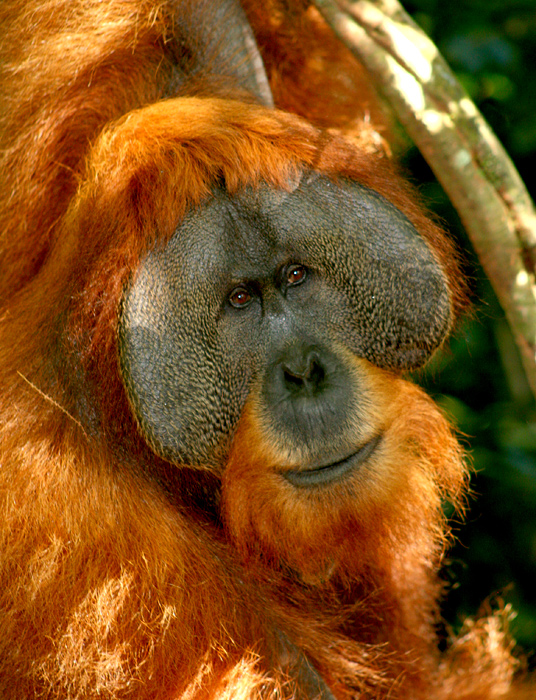
I have always been fascinated with these Great Apes for as long as I can remember and upon first seeing one of these amazing animals back in 2000 in a rehabilitation centre in Thailand I have always wanted to help them when and where I could.  I had a close encounter with a male Orangutan, an experience that touched deep into my sole, as I watched and looked into the eyes of these beautiful animals, it was something I have never forgot as I sat on the ground, mimicking their behaviour of picking up ants with a small stem.  A powerful male with pronounced cheeks denoting his age, was slowly moving towards me, closer and closer until I could hear him breathing.  He slowly and gently took the stem off me, his hand almost perfectly formed the same as a human, with dark nails, he then just slowly moved away and out of site, a moment I can see as I type these words.  

I was lost for words, an amazing moment that I can still see as if it was yesterday, such is the beauty, grace of this animal.  The principal focus of this photo tour will be the Orangutan, capturing them within their natural habitat, looking for behaviours to capture and so on, as we visit some of the most magnificent forests on Earth, which are also the domain of many other beautiful and stunning animals and birds, where some only live in this part of the world and nowhere else on the planet. Sadly the ‘Old Man of the forest’ has been subjected to relentless pressures which has reduced the world’s population by as much as 50% during the last 10 years. Hunting for meat and the demands of the pet trade have been contributory factors but the more significant issue has been the large-scale clearance of rain forest throughout this region leaving very few habitats left for these apes

There are surely few more enduring creatures in the world than the gentle giant of the rainforest’s, the Orangutan. With around 97% of an Orangutans genetic makeup being the same as a human and where such a close affinity to Homo sapiens is obvious upon gazing into their beautiful faces and watching their behaviour and how they conduct their lives. The evolutionary links with mankind are plain to see after such encounters with this amazing ape that now only live wild in two places in the world, Borneo and Northern Sumatra.

Across the Orangutans entire range, conversion of forests to oil palm plantations is occurring on a massive scale, logging continues even within protected areas, and planned road networks threaten to fragment the habitat of the last viable populations. These factors are responsible for the loss of over 80% of Orangutan habitat over the last 20 years. We have to save this amazing animal and during this tour I will also be photographing the story of the local people, the palm plants and conveying with moving and powerful photography what is happening to these amazing forests where I will be reporting back for SOS and updating their Blog alongside my own as and when I have wifi access out there.

We will also be planting new trees in areas that have been safeguarded and protected for the Orangutans and all the other wildlife that live here. With projects concentrating on teaching local communities about the benefits of reforestation and developing alternative livelihoods. SOS  distribute seedlings and have established organic forestry centres near degraded forest areas, providing training so that communities can produce their own seedlings for future replanting.

They have established a number of nursery and replanting sites in Aceh and North Sumatra, and have now planted over 570,000 seedlings an area we will visit so guests can have the chance to plant their own trees here, we will also work in the deforested regions around and within the Leuser Ecosystem, which is the most important remaining habitat for the Sumatran Orangutan.

The charity also works in restoring degraded areas inside the border of the Gunung Leuser National Park, working with local government and local communities to restore vital Orangutan habitat that has been damaged by illegal oil palm plantations established within the protected area. So much brilliant work is going on out there to save these animals.  This trip as you can see by the Itinerary will be truly amazing, covering different areas, sleeping in the jungle with its amazing noises and uniqueness all of its own. 

Along with the guides I will also be showing some interesting and key skills and survival techniques derived from my own experiences of working in these jungle habitats on different continents over the years while serving in HM armed forces.  The trip has it all and I am so passionate about helping these animals so if you would like to book or want more information then email me or contact SOS. And you can view the trip on the BBC Wildlife Magazine Website here

A big thank you to Helen- the  UK Director of the Sumatran Orangutan Society for all your help in making this trip happen, thank you to Different Travel for their help also, and lastly thank you to those who book on behalf of the Sumatran Orangutan, I look forward to seeing you all in Sumatra next September.


Read full post

Winter Waders- Norfolk

Filed in Places Of Interest, Workshops on Dec.04, 2010

The name of this workshop could not have been better named ‘Winter Waders’, as our three days there were christened with freezing temperatures, treacherous conditions and in parts gridlock on the roads but all and all we made the very best of our time there.  My group had travelled from all over the UK in the coldest snap for December since records began, with one guest having come from Ireland I was really happy that the 7am start time on the first day that all guests had made the slow and dangerous journey safely.

The biting temperatures cut through us all on the first day forcing us to move more rapidly between the various sites and beeches that I know, as the wind and penetrating temperatures worked against us, but the guys were great and we still were able to capture images on this cold introduction to Norfolk.

We had some good sightings on the first day using a mixture of fieldcraft and a touch of luck.  Thousands of Pink, Greylag, Brent geese filled the sky.  They were all over the place due to the strong, prevailing winds driving in from the coastline.  A lot of them were flying above the clouds which made it hard to see but their calls could be heard no matter what.  When the clouds did break briefly the sun came through and we were lucky, and had a few lovely encounters.

I can never predict or promise that the wildlife will turn up and my attuide has always been that there is always an image to be had or captured no matter what, so with the weather being so bad we still were able to capture some lovely images of waders and other wildlife that spend their time in Norfolk.  During our time there the weather was a mixed bag, with the snow not hitting this part of the UK on the first day or so.  However, the following morning we were scrapping the snow off our windowscreens and thats when we knew the snow had caught up with us. The Geese were on the move really early in the mornings and it became hard to capture clean shots of them flying over, but most of the guys had wide angles so we were all able to capture the Geese overhead.

I showed different technique’s to the group, panning, waiting until they were straight over head to add drama, low in the frame, minimal ground, slower shutter speed for the wing blur, capturing impending movement within the image, something I have always loved to do.

Daytime temperatures rarely broke past freezing point but as we moved around different sites it became less of a problem until you remained still, which happened mainly when we were photographing different waders and gulls low on the ground for some time, to obtain a more personal point of view. I love to capture behaviour within my style of wildlife photography and this image of an adult Herring Gull trying to stay upright in the strong winds was very funny to see.  Using the light available I composed him so that the image coveys an air of menace to the gull, which I really liked, with one side of him lit and the other in dark.

The wind was causing all sorts of problems and we saw many different waders in ones and twos, blown off course, struggling to land and stay on the ground as they were trying to feed on what ever they could find.

The pattern of events over the next few days were similar, anticipating what the weather had in store and if the wind would drop, watching and photographing the winter waders and migrants and also spending sometime with the Barn Owls.  We were also lucky that it never rained over the three days as this increased our chances of seeing Barn Owls, even though the ground was frozen.  The days are shorter and the light is less during the winter months and if the ground is permanently frozen the Barn Owls primary prey of fieldvoles and other rodents tend to stay huddled together during the coldest spells at night, only really venturing out during the day which makes for the best times to see Barn Owls hunting during really cold spells.

On most of the days we saw the Owls, hunting with real purpose, diving with such force as to break the covering of snow on the ground, at the same time capturing their prey.  The majority of the time they seemed to fail but on the odd occasion they stayed on the ground where they could have been eating their prize as quickly as possible, replenishing much needed supplies of energy to survive. They were hunting in fog, snow and windy weather, such was the need to feed.  I always feel uncomfortable seeing nature work at a pace which is dictated by the conditions, right on the line on survival but such is nature where they say only the strong survive, but for me still very uncomfortable to see.

On the final evening the clouds broke and we had a lovely sunset, the colours lit up the horizon, the sky full of geese, the sounds of which sounded almost like surroundsound as the geese were having their final feed, then heading off to their overnight roost sites.

Thank you to all my guests who came on my workshop, great company.  I hope you got a lot out of the three days and even with the the weather against us we were still able to capture lovely images and at the same time see this beautiful coastline.  I look forward to seeing a few of your images,  many thanks.


Read full post

Some Days You Just Get Lucky

Filed in Places Of Interest, Workshops on Nov.17, 2010

Over the last few days I have been really busy with One to Ones/Workshops and on all of them the weather and the conditions just came together perfectly and the sunrise was breathtaking with the wildlife showing up also making for an all round great few days for my clients. I guess you could say that some days you just get lucky.  Setting off for the higher peaks within the Peak District National Park, Derbyshire in total darkness gives a whole different feel to the experience as losing part of one of your major senses heightens the others you have. 

Making judgments with a narrow field of vision really makes you come alive, carefully placing your feet and focusing using the light from the moon, aided with the head touch that illuminated our path, we watched the frosty morning chill begin to warm with the upcoming spectacular sunrise.  Reaching the summit at nearly 2000 feet as the sun breaks the horizon, bathing the whole place in a warm, orange glaze.  Making you feel as though you are standing on top of the world with the mist and clouds beneath you sheltering the population from this hidden world you must work at to see.

My client Matthew from Wales wanted to see the Red Grouse in its natural habitat and I have several different sites with different levels of approach. The route we chose meant the ascent was in the dark using the moons light to illuminate our path alongside our head torches, carefully making our way to the summit as the sun came up. In all the years I have been visiting the Peak District I have rarely witnessed such a beautiful morning, the crunch of the morning frost under foot, the air chilled from the over night frost and the Red Grouse were everywhere feeding on the tender shoots the sun was thawing out. Their constant ‘bubbling’ calls echoing down the valley with the morning mist adding great drama.

As we made our way through this amazing landscape of Heath/Moorland the colours of the place were stunning and apart from the odd walker we had the whole place to ourselves which left a silence you’d only know if you find somewhere remote within nature and watch the world go by. I went through fieldcraft techniques which for me is a key competency in wildlife photography.  If you are to get close to a wild animal you need to watch and look for clues, behaviour, listen for calls, which vary in different pitch to suite the subjects mood, progressively getting higher in pitch once they see something they perceive as a threat. Breaking a animals virtual horizon is the key-  shape, shine, silhouette, you can look like a bush but approach without respecting the forementioned and off they go.

Red Grouse are very comical and display many different behaviours you rarely see from a distance when passing them on the narrow walkways carved into the landscape from years of walkers pounding these routes through this breathtaking landscapes.

The heaths and moors of the Peak District are an eerie exposure of peat covered moorland sitting about 600m (2000 ft) above sea level. Large wind carved eroded rocks sit among vast plateaus and rock formations supporting a healthy population of these amazingly hardy Red Grouse.  These iconic moorland birds make their home on these moors and are reliant on their camouflaged plumage to blend in to this habitat, where the only time you know they are around is when you stumble upon them when you are walking as they explode from the ground, taking flight with a unforgettable distress call.

I take everything with me on these One To One/Workshop days, packed lunches, large flask, cold drinks, first aid, in fact everything bar the kitchen sink is placed on my back in preparation for any event mother nature should throw at us in these changeable environments..

One of my favourite images from the two days with Matthew was this lone male Red Grouse below, perched on this prominent rock, his call echoing down into the valley beneath him, a truly beautiful picture to see and one I was privileged to capture with a wide angle, as I had crawled forward for some time to get closer, then all of a sudden he popped up onto this rock and began singing. 

A real mixture of luck, fieldcraft and timing coming together in one of those rare moments you are afforded within wildlife photography from time to time. We had some other lovely encounters with these beautiful birds I am very fond of, so a big thank you Matthew and I’ll see you in a few weeks on my Winter Waders  workshop at Norfolk. I have many One To Ones running throughout the Winter months now on the lead up to next years Spring/Summer time just have a look on my website under Workshops then click on One To One and take a look or send me an email should you wish me to meet you at a place of your choosing.

I will be presenting 3 x45 minute Wildlife Photography workshops at this years North West Birding Watching Fair at WWT Martin Mere .  Whatever the weather this Festival is an enjoyable and informative day out.  I will be going through simple techniques that I use, showing you how to improve your own photography accompanied with a few slide shows and a brief practical session going through anything you wish.  So if you are free on the Sunday please pop by to say hello many thanks.


Read full post

Mull In Autumn 2011

Filed in Places Of Interest, Workshops on Nov.10, 2010

Our wildlife workshops to the island of Mull, Scotland are getting more and more popular as the perfect trip to capture the true beauty of this amazing place, so we are adding another trip to the itinerary for next year. The aim of this second trip is to capture the stunning autumnal colours there at this time of the year, along with the beautiful Otters that live on Mull, and their cubs, also rutting Deer, White tailed Eagles and much more amazing wildlife. For wildlife photographers who are eager to bring their photography to the next level, or people wishing to see the beautuful wildlife this island has to offer, our photo trip really does cover everything.

The Isle of Mull lies on the west coast of Scotland and it has a breathtaking coastline of 300 miles, the climate is a mixture of rain and sunshine. From the moment you step onto this beautiful island the wildlife is everywhere and the scenery is stunning. The island is a wonderful place to see Golden Eagles, White-tailed Eagles, Otters, porpoises and a whole host of Hebridean Wildlife.  

Our base will be the picturesque village of Tobermory, with its brightly painted buildings. Overlooking the harbour of Tobermory and facing out to Calve Island and the sound of Mull is our Hotel, you’ll be treated to picturesque views over the harbour and as well as comfortable accommodation, you’ll enjoy fine cuisine in the restaurant, prepared from the best locally sourced ingredients to make your stay even more memorable, all of the rooms have a sea/harbour view. It will be a wonderful chance to show you the best places that I have found on my many trips to this amazing island and to pass my knowledge of these onto you so you can really enjoy ‘The Magic of Mull’.

This photo tour is for four people maxim, with two places having already gone such is the popularity and beauty of this island. I like to keep all my trip numbers down to around four people if I can as this gives everyone quality time with me while I show and teach everything I use myself within wildlife photography, fieldcraft, composition, camera skills and showing and pointing out photographic opportunities constantly during your time with me.

The dates of this trip are – Sunday 23rd October – Friday 28th October 2011, the price per person is £800.00, this includes all food, including packed lunch, all transport on the island, rooms with sea views, all guidance and expertise from myself.  They are on a first come first served basis, so if you would like to know more info or book then go to my Magic Of Mull page on my website and fill out the booking form or send me an email and I’ll answer any questions you may have many thanks.


Read full post

The Deer Rut -A Little Behind

Filed in Wildlife, Workshops on Oct.19, 2010

As the trees lose their leaves and the countryside is turned in to a mosaic of stunning colours, animals all around the country are feasting on the bounty of food that is plentiful now, from berries to horse chestnuts, the countryside is a wash with food.  Birds starting to migrate to and from the UK with lots going on.  My time has been completely absorbed with this beautiful season, autumn.  One of the most spectacular events in the natural world during the month of October is the rutting of Red, Fallow and other species of Deer in and around our country.  However, this year this event is behind within the timing of the seasons and well overdue where previously the rut would be in full swing now.

Over the last week I have been to several different places throughout the UK where there is a good population of both Red and Fallow Deer and the clear evidence was that among the posing and the gesturing things really hadn’t kicked off  or so to speak, with the air thick with the very strong smell of each deer, with the males posturing to the other males in a show of strength in order to control and hold onto their females who are never that far away during this time, such is the competition to mate with them the moment they come into season by the ever present and opportunistic males that roam the land during the rut.

During my time at Bradgate Park, Leicester, which is one of the places I visit, the deer have been really slow to start their rut this year, so while I was waiting I started to photograph the Black-headed Gulls as you could hear them from miles away with the loud, screening calls.  I composed this image in portrait mode and the shadow is formed by a large treeline to the left covering in parts this little brook that runs through Bradgate into darkness.

One of the places I visit in the UK has a really good woodland area and when you walk through these woods with their well established and majestic trees there is always a lot of actively around with youngsters and females darting all over the place, but then you can come across a male Red Deer, and upon first sighting, those few first seconds all things flash through your head as you are close to a large animal who is full of testosterone, eye contact cannot be averted as you watch him and he watches you.  I always stop and start to retrace my steps for a moment as not wanting to disturb the animal first and foremost but also to diffuse the situation as I feel my heart doubles in speed.

The image below was just one of those precarious moments that I found myself in during the last week, where this large male Red Deer just appeared from no where, approaching from around this tree he stood there with a clear look of menace upon his face, firmly standing his ground where his posture and stance told me he was to be left alone.  The moment you forget these animals are wild and highly aggressive during this rutting period is a moment you may live to regret should they attack.  My advice is try to stay at a safe distance away from the animal and a safe distance is one where you don’t intrude into its personal space, if you do, back off slowly and leave them in peace.

With the Autumnal colours the Fallow Deer blend in so well within these habitats and their coats are beautiful to see, with clear markings throughout, as the two photos below clearly show with this male who had a stunningly beautiful coat for the ladies.

I was lucky enough to see a little action at one of the locations from a group of female Red Deer that were following around the dominant male most of the time with a younger female becoming a little boisterous, as I watched them through the viewfinder I could see their behaviour change and in a flash they both rose up and started to kick out at each other but as soon as this started it finished and I count myself very lucky to have witnessed and captured this brilliant behaviour among Red Deer females.

The male Red Deer pictured early went onto challenge the dominant stag, calling to each other, their primeval sounding roars echoing all around the place, the air changed as each male roared with the females choosing to sit around the dominant stag as he called out, matching each and every call from his competition, brilliant behaviour to watch.

Then in a flash they started to fight, twisting and turning each others neck with their massive antlers until one submits and by doing so he loses his females which in this case happened, a cruel world where only the strong survive as the saying goes.

A big thank you to all the people I met and that came to say hello over the weekend during the Great Peak District Fair in Buxton, with thousands of people coming through the doors it really was a great event.  I was displaying my work and again it went down really well, so thanks for sales and workshops purchased.  My Gift Vouchers sold really well as presents for Christmas where they come in a really nice black envelope and are sent signed and dated by myself.  I have a place left on my Tigers trip and there are still some places left on my other Photo-Trips  for next year, should you wish for more info on them then send me an email on my contact page and I’ll be happy to go through anything you wish to know.

For 2012 I have secured a sailing yacht and I have chartered this for this amazing 14 day trip around the coastline of Iceland for two days before heading north to Greenland for Polar Bears and many other animals that live in this breathtaking place.  Living on broad this ex-racing yacht will enable us to see the amazing wildlife from the water, where we will then go ashore, exploring the different areas off the beaten track. Working with local expert guides in Greenland to photograph the Polar Bear, the trip is for 10 people and more information will be available very soon. Below is a few images taken on broad showing this breathtaking environment where Humpbacked Whales fish and will be high on our wish list.

This will be an exceptional and very unique trip that will capture nature from the sea and the land where the wildlife will be everywhere, more details very soon.


Read full post

Norfolk Delights

Filed in Events, Workshops on Oct.11, 2010

The north Norfolk coastline is a place I never get tired of.  Everytime I visit it never fails to amaze me with the beautiful spectacles in nature that I witness.  At the moment Geese (Brent, Greylag, Pink-foot) are arriving there daily.  Their numbers swelling each day as you watch them assemble altogether on fields, the noise is deafening but its amazing to watch as they feed, constantly watching for predators, calling each other, always in complete communication. 

The next time you see a large group of Geese on the ground, just take a moment to watch them and you will be amazed at the way they stick together, how they see everything and are talking to each other all the time, its the perfect example of strength in numbers and the simple but successful way in which Geese live alongside each other.

Over the last 4-6 weeks I have noticed that the number of waders have been really low, with their number being dispersed further around the coastline from Snettisham, but in general the numbers have been low mainly due to the warmer weather we are having after the very cold start to the year, its delaying alot of wildlife I feel.  So after spending the weekend there on one to ones it was great to see the number of waders back up to the levels you’d hope and expect to see at this time of year.  Where most if not all are not looking their best as they go through their moulting period.

With the darker mornings and the onset of winter just around the corner the tides come in sometimes now while its still dark.  This happened to us this weekend, so we were  treated to the massive flocks flying  just feet over our heads in the dark, which was an amazing experience to witness.  Your sight is not great so you rely on your other senses to see whats going on which only heightens this amazing  experience.

As the light came up and the birds were flying around, they started to settle into the pools or pits as they are better known in front of the hides there.  I showed Phil, one of my clients on this day, how to use a slow shutter speed, capturing movement in a photo which in turn conveys the sheer power, movement and size of the flocks here.  Something spooked the flock and they all took off together, its been a long time since I saw this, as the whole lot, some 1-2 thousand birds went from a dormant, sleepy state into this powerful take off I captured in the two above images using a low shutter speed and low ISO.

They then settle back down into these pools sleeping and waiting until the tide retreats before heading back out to sea.  One of natures most amazing spectacles that if you are lucky enough to see the experience will stay with you forever.  The number of other birds that live in and around this coastline is vast, where they all feed in their different ways, I often feel in all the mayhem that these birds get forgotten about and passed over in favour of the massive flocks.  My advice would be to look everywhere once you are there and you’ll see so much other birdlife just going about their business in this rich and very diverse area of the north Norfolk coastline. 

The Great Peak District Fair is this weekend 16Th, 17Th October at the Pavilion Gardens, Buxton.  I will be displaying my images in various different formats along with my Limited Edition Tiger prints where 50% of the profits from each sale go towards 21 Century Tiger, a charity that gives 100% of the money to helping wild Tiger survive in the wild. 

The fair is an experience of everything that is great about the Peak District, where you can enjoy the delights of the finest local products, amazing foods with over 90 exhibitors the weekend promises to be fun for the whole family with live music and much more so if you are in the area pop in to say hello at the same time enjoy the delights of this very busy and amazing fair set within the beautiful Pavilion Gardens.


Read full post