Being At One With Nature
Images reflecting the true beauty of nature and those times I have captured being among it..

Read full post
Images reflecting the true beauty of nature and those times I have captured being among it..
Being among nature is a place I belong and feel most at easy at so its been great to get back out with my camera recently to start photographing the beautiful wildlife on the lead up to spring, the favorite time of year for me. With the issues with rain and flooding over the last several weeks it has delayed some of the projects I have planned for this year. The rain though, fingers crossed seems to have given us the worst and as many communities are still underwater around the UK my sympathies go to them.
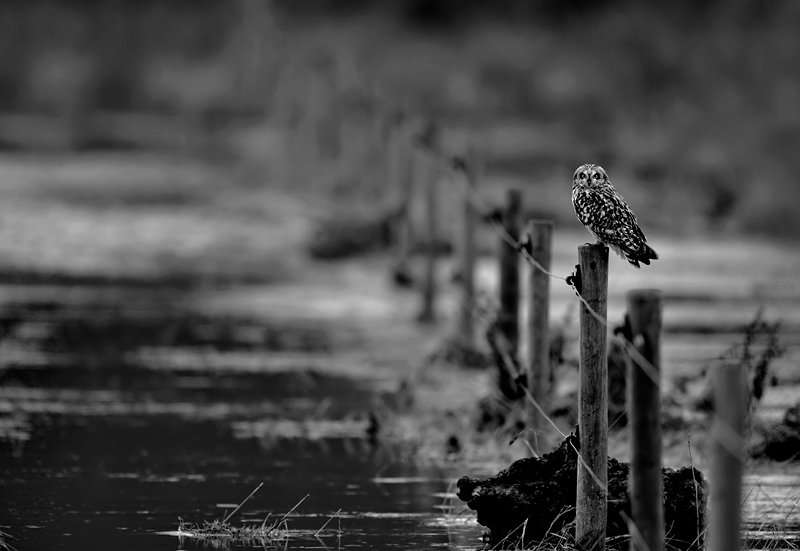

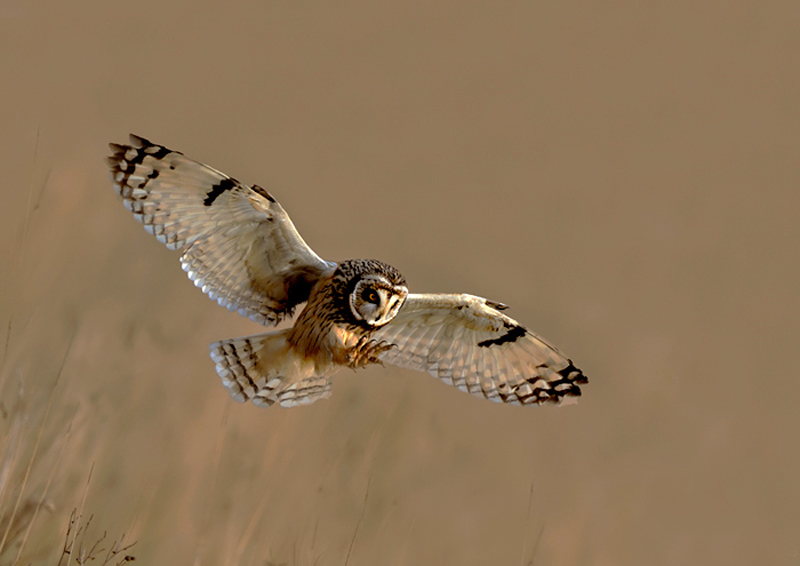
Wildlife hasn’t had a great time either with vast areas of the countryside underwater where many animals have suffered like illustrated with the images above of a Short-eared Owl trying to hunt but for miles around all the fields with flooded, quite a sad and upsetting thing for me to see as I really felt for this owl while I recently watched him to to hunt.
I have started working on my Great Crested Grebes project, a bird I love, their elegant pose, their beautiful markings and stunning plumage makes them one of the most handsome water dwelling birds in the UK in my eyes. They are the largest of the European Grebes and during the spring and summer they are such a striking bird, with their spectacular head, ruff and spiky head tuffs when they greet each other or display during courtship.
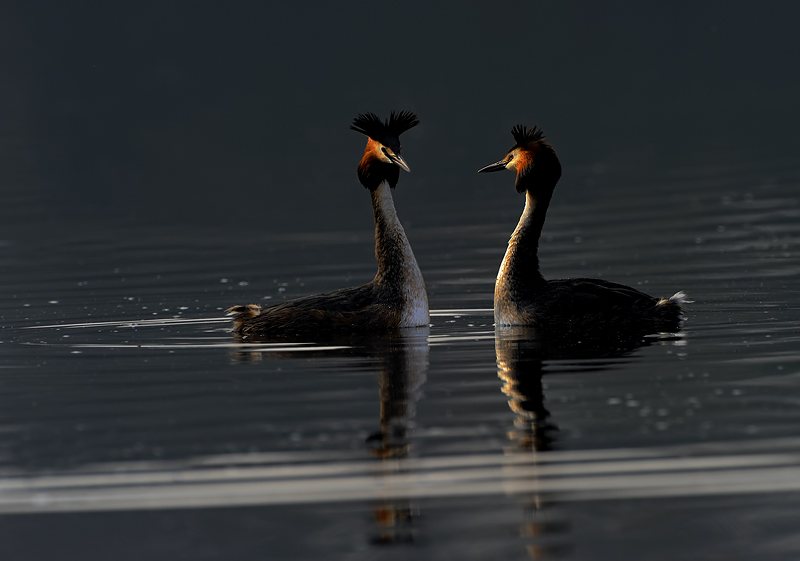
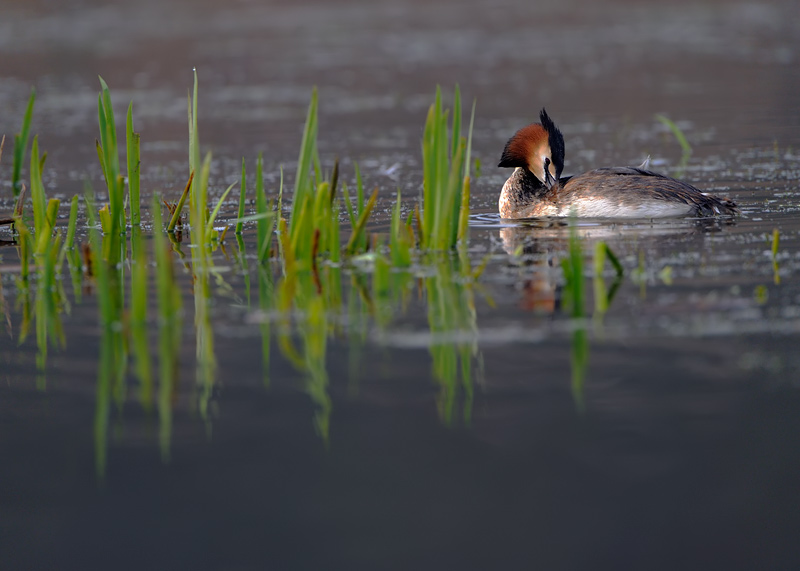

Last year I photographed these birds at the same site but was unable to go back at the start of the breeding season due to commitments, so this year I’m hoping to capture them as they build their bond between each other and go through their amazing courtship dance where they dive for weed, surfacing with this in their bills and offer it to one another while sharply turning their heads back and forth.
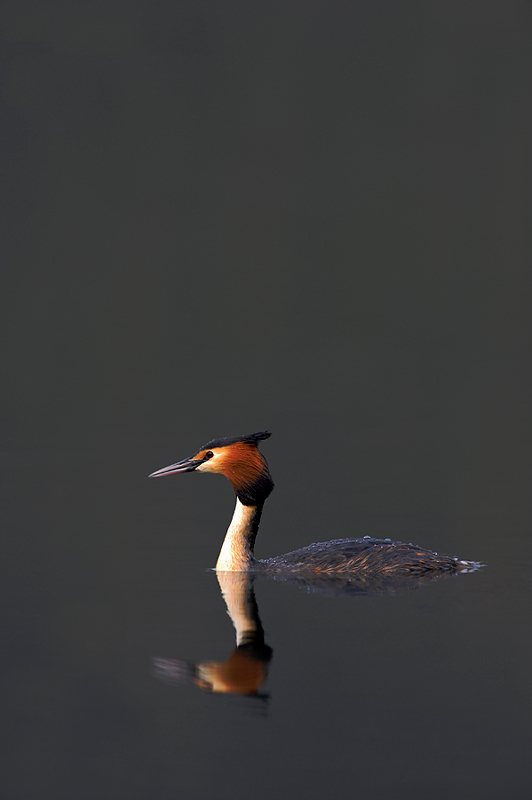
In between the pouring rain there have been breaks in the weather and I have spent alot time there now, the lives of these amazing birds played out before me on each visit. They show real love and care for each other, when one goes out of sight the other calls in an attempt to locate its mate, such a strong bond which is so lovely to witness.

I am using a hide on the shore to photograph this pair of Grebes, just on the water’s edge and not in the water as this disturbs the birds and other species of animals around too much. Getting there before the sun comes up, with the dawn chorus as my companion, each bird jockeying for their own patch, staking their clam to that bit of land.
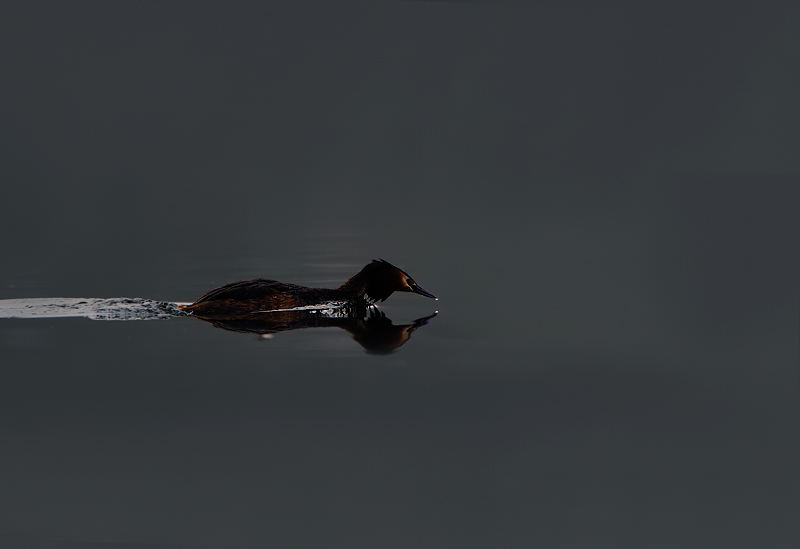
The are many species of birds there too, all starting to defend their patch so to speak, most are vocal from before dawn onward and there seems lots of fighting and warning off others in readiness to find a lady and breed. I love to watch and capture animal behavior and by doing so you learn so much more about your subject over time. I managed to capture a full frontal of the male Goldeneye here, if luck is on your side and if you get the head face on they can have a real evil look to them as in the image below.
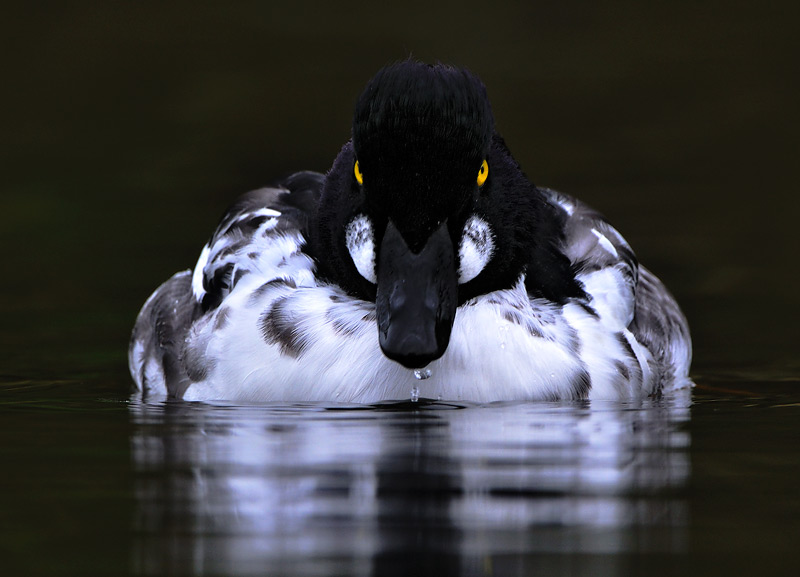

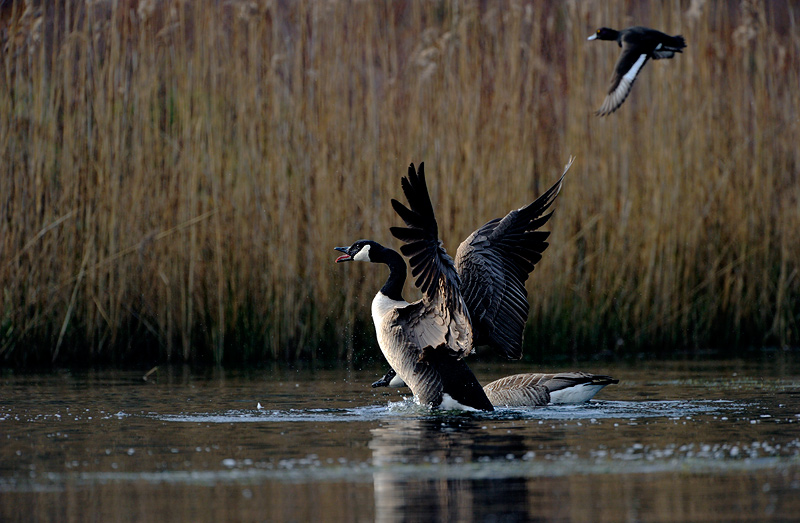

Canada Geese calling and fighting break the mornings silence many times during my recent visits there, I only wished these images had sound.It’s such an amazing time of day and one you greatly benefit from for being among its beauty and peace. The water levels are still high here so im hoping everything settles down and things can return to normal as soon as possible for people and wildlife really.

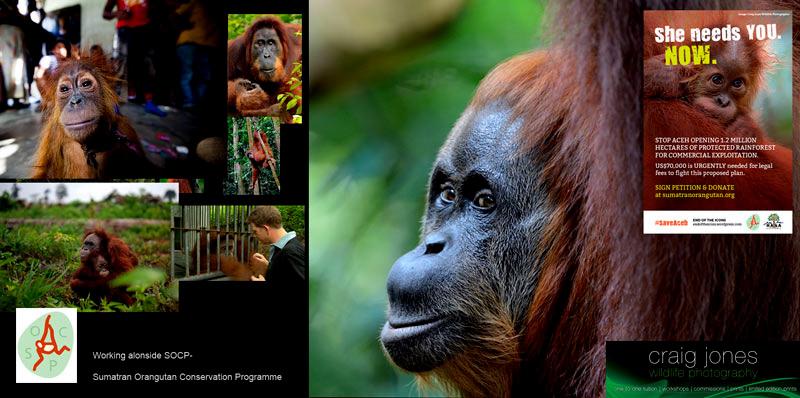
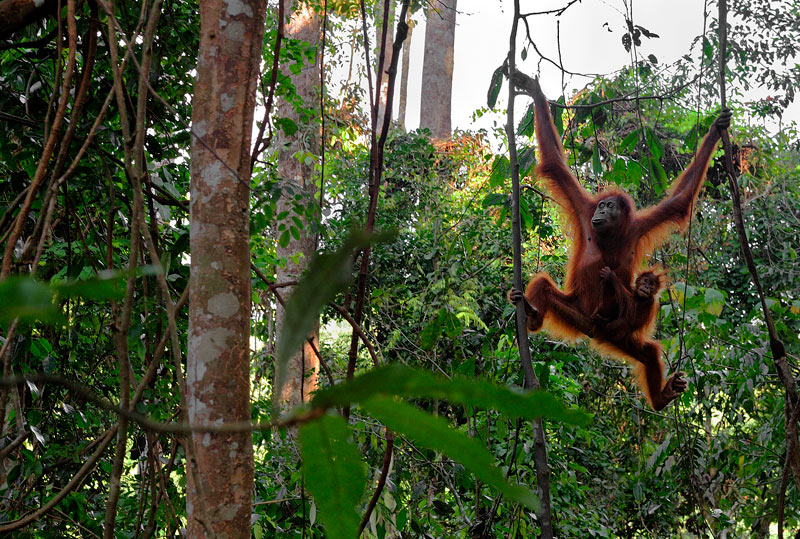
I really am hoping to spend as much time at this site over the next several weeks before I leave for Sumatra for two weeks where I will be working and shadowing the amazing work of SOCP – Sumatran Orangutan Conservation Programme, headed up by Dr Ian Singleton, but more news on the very soon.
In the meantime I have some 2015 dates for my photo tours now up on my website click here to view them. My One to Ones now in their fifth year are as popular as ever so if you’d like to learn more about everything from fieldcraft, to subject knowledge to your own photography then click here to see the places I visit with clients.
I will update my blog with more images from this site in due coarse, I wish you all well with the weather and the forthcoming season of Spring, many thanks.

One of the most important tools in wildlife photography is fieldcraft. Getting to know the subject, spending time watching, listening and looking, learning its behavior, its habits and calls. In turn all of this will reward you with a far better chance of capturing images that show the subjects natural behavior.


Regardless of the level of photographic skill your at you will need to learn fieldcraft to capture those images you see while among Mother Nature. With this though comes a great responsibility and integrity to your own work and your own foot print you’ll leave behind you when you leave the wildlife and go home.
Wildlife photography’s power rests on the belief that it represents an event that occurred naturally in the wild, something witnessed and recorded by the photographer with his camera at that given time. Clever use of friendly animals, hot spots, bait and the per-arranged perches or props along with digital technology has forced everyone to re-evaluate and question the validity of images they see now.
Living animals have feelings, emotions not to dissimilar to our own, tap into that whatever the subject maybe and you will see the real and true beauty of wildlife unfold in front of you. Apply your passion and respect on top of fieldcraft and the images will come.


Many species of mammals and birds will allow you to approach them closely if you are careful and take your time, no fast movements and using the correct techniques. Read the land for yourself, see what’s in front of you, in between you and the subject, use natural gulley’s and shapes to break up your approach. Never make the mistake of walking directly towards your subject as the chances are the animal will have long gone.


All wild animals that have no or very little contact with humans are scared and fear man. They see and smell us the moment we enter their world of which they are designed for and we aren’t. They have an in built fear of man and see us as a threat to their lives to put it bluntly. For me its how the person deals with that level of fear and stress using their fieldcraft that’s important.
Animal tracks tell you so much about what’s happening around you. It’s their highway, the way animals navigate their chosen habitat. Look for darkened earth a clear sign there’s life around. Just standing still for several minutes and look to see any natural lines, faltered grasses or earth moved or piled up. This then will give you a bigger picture of the main routes in and out of a forest say or farmland track leading to a wood and so forth.
Look towards the sun when studying tracks, you will see the shadows better. Footprints in soft ground will begin to deteriorate around the edges within 2 hours depending on the humidity, sunlight, and breeze giving you vital clues to what and how long ago an animal passed by that spot. The depth of the tracks and length of the stride can indicate the weight of the subject and the physical strength of the animal that made them.

Find out which way the wind is blowing making your approach better as most animals have a great sense of smell and it’s the first thing to give you away. The wind always wants to be blowing into your face, this will blow your scent away and remember to forget the aftershave or perfume along with soaps that are high in perfume as these will be picked up from great distances away. It is also important to recognize and learn the signs of stress within the animal so you know when to stop and leave the animal well alone. The last thing you ever want to do is cause undue stress and disturbance through your actions in order to get the shot.
Clothing, wind direction, covering the ground, shape, shine, staying low, can all help in capturing those moments in nature where you have to work harder with some animals than others. Some species will accept human presence quicker, taking only hours, where as other more sensitive subjects will take weeks if not months.


It’s the way I work while capturing wild animals in their their natural habitats while working very ethically alongside nature. Composing the wildlife to show others how they go about their lives,where they live and conduct their lives. So correct fieldcraft is an integral part to the way I work as a wildlife photographer. Being at one with nature is amazing and with time and effort and applying good fieldcraft everyone is capable of capturing those beautiful moments I am blessed with seeing each time I enter the natural world.


In July’s issue of Practical Photography I give my top ten tips and advice in order to help you, whether you’re just starting out or more accomplished in regard to fieldcraft the article is written passing on my many years of experience in this field over the years. Fieldcraft is the foundation to my work and style as a wildlife photographer today and has been since the moment I picked up a camera.
Look at the Foxes ears below, he couldn’t see me, but he could just make out the faint noise of my shutter noise from my camera. Each ear is facing in a different direction, one facing forward and the other facing towards where he heard the noise. He’s doing this to locate the sound in a bid to locate me, wonderful animal behaviour you can learn to read by using your fieldcraft skills.


Today people really want to see how you got the image and as a wildlife photographer you not only have a duty of care to your subject’s welfare but also to the general public who buy your work or follow you I feel. Showing and explaining how that image was taken, the skills you employed to achieve the image are paramount today.

The most important tip and piece of advice I can give in improving your fieldcraft is respect your subject, let wildlife live their lives without fear or stress from your presence. Apply all my tips from the article and the animal will benefit first and foremost and be able to carry on with their lives. Applying these tips will also allow you to capture images with a real story. Leaving little or no disturbance from the photographer is the best piece of fieldcraft you can learn and apply.

People then can see your fieldcraft and subject knowledge behind that particularly image. Learn the basics of fieldcraft and you can implment these to any real time situation within the amazing world of nature you will come across. I hope you enjoy the article which you can see by clicking here, many thanks.

Back lighting can give your subject a strong outline and add a great atmosphere to your image with a great deal of impact at the same time. Allow where possible you’re subject to be the main feature of your photograph with the use of simple composition with the sun directly behind it. The best times for back lighting to be at its best is dawn and dusk when the sun is low in the sky, creating the warm colours and glow from this wonderful time of the day. If the shape of the subject is easily recognizable through its strong outline it will make for a beautiful photo.

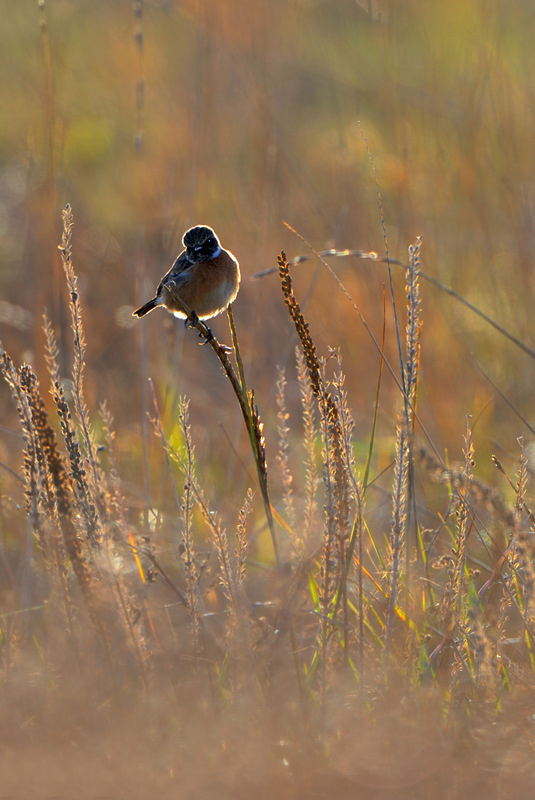

The correct exposure for backlit shots can be tricky so you will have to experiment with darker and lighter exposures in order to get the desired effect and overall feel and mood of the image you want. Use single selected focus point and spot metering where you can take a reading from the subject’s body and set the exposure in camera. Dealing with the ever unpredictable subject of wildlife though the subject may not allow you the time to take a reading for the perfect exposure. And always try to keep the affect of lens flare down by keeping out of direct sunshine as much as possible when taking the photo.


So in closing back lighting can transform an image, adding a beautiful atmosphere within the photograph with loads of impact to the main subject. Great care must always be shown not to point the lens directly at the setting or rising sun as it will damage your eyes. The lens must be clean and free from smears and dust, and sometimes the effects of flare can add a lot to the image so don’t throw the images away until you get them home and reviewed them on your computer. I hope that has helped you a little in understanding back lighting in wildlife photography, if you have an queries about anything I have mentioned then drop me a line here and I’d be pleased to answer them.


I will be presenting my presentation; Dawn to Dusk at Calumet’s spring open days in Manchester and London over the next couple of weeks. Click here for details and dates. I will be available all day to answer any questions or general help or advice you may need for your own wildlife photography. I also run one and two days seminars in conjunction with Calumet, for more details click on their seminars page.


I’ve just spent a great weekend leading my two day Beauty Of Wildlife workshop in conjunction with Calumet photographic, Manchester. My aim of these wildlife workshops I run throughout the year is to offer some fantastic practical one and two day seminars in some great locations where you will learn many tips and techniques, most of which I use in my own work as a wildlife photographer.
You can then put these into practise within your own work which will improve your photography, at the same time learning more about the wildlife that you see and capture with your camera. I enjoy sharing my vast accumulated experience of the natural world, at the same time I’m very passionate about helping each of my clients hone his or her photographic vision.

On the first day I went through a mixture of talks, slideshow presentations and photographic tips and advice all geared into inspiring everyone within their own photography while at the same time helping them understand more about their settings, cameras and most of all fieldcraft. This was all rounded off with a cup of tea and biscuits. After which I went through each client’s camera showing how to get the best from each make and model in readiness for the second day out on the moors.

The group was a great mix of people, from all over the UK at varying levels of competencies and were really good company. We met at 5am on the second day, in the pitch black of the morning. I had gone through some key elements to wildlife photography the previous day in my presentation to the group. One of those elements was ‘light’. Find it, work with, and create your image alongside what light you have. The weather was really kind to the group with a beautiful spring day which started with an amazing sunrise.

The group had a very nice surprise very early on during the day in the form of a couple of Mountain hares still in their winter coats. They stuck out very well against the heather which made them amazedly jumpy to approach I had touched on in the previous day’s presentations the importance of fieldcraft and your approach to wildlife so it was good to see everyone putting this into good use. The hares were very jumpy though due to their winter coats so were very hard to capture photographic wise.


Out in the wild, working with wild animals those tips could make all the difference to a well composed image so I made sure everyone had a better understanding of the key elements in order so they’d really benefit from their time with me. All the information and advice we discussed was contained in a handout I’d prepared for each client as seen above, this would help once the group had gone home to use as a reference guide.
After lunch the group were free to explore for themselves, put into practice skills and tips I embedded throughout those two days and it was really good to see them all going about their own work and capturing some lovely images with strong composition, good use of natural light and above all listening and watching wildlife to build a picture of whats happening around you.

Photographing wildlife in ‘the wild’ is the only real and true way of learning about behavior and fieldcraft, so it was very important for me to show the group on the second day how I work and go about getting the images that I achieve, while working with subjects that are free to come and go as they please and have fear for humans. Where you have to work the land and the environment to try and obtain an image, straight from the wild so to speak. The key to my photography is fieldcraft first and foremost, photography for me came much later in life.

On all my workshops, photo tours I have and do always stress the need to understand nature more and be able to work with her, alongside her in order to become part of their landscape and habitat without disturbing wildlife. The result is a better understanding of the wildlife and more importantly a greatly respect for the subjects around us all key ingredients in making better wildlife photographs in my eyes. My next wildlife workshops with Calumet can be viewed here
A big thank you to all the clients for your time and efforts during the two days. I really hope you got a lot from the days and learned something new. You were all great on the second day and looking back now you can see through the images you captured why the early start was so important to capturing lovely images of wildlife.

I recently judged the -New Beginnings Spring postcard competition 2012 where the first prize was a chance to see your image in print – over 50,000 times and also on Calumets invitation postcard for their customers for the Spring Open Days in our stores next month. Calumet had a phenomenal amount of entries for the competition. It was a tough decision for me to choose a winner, with so many outstanding images to choose from.
There was an excellent standard across the whole group where many could have won the first place. I chose this image because from the first moment I opened the image up it popping out of the screen at me with its beautiful and vibrate colours, clever use of depth of field and really nice out of focus areas giving the image a real soft and delicate appearance. The colours and the flower symbolize new life and the coming of spring for me, a wonderful image.
Congratulations to the winner Nigel Burkitt who’s winning image can be seen here and will represent Calumets Spring Open Days that can been seen by clicking on this link. The image can be seen above alongside the dates. I will be attending the Manchester and London stores to do a couple of wildlife talks and presentions during those days so hope you can come along.

There is a real air of spring around at the moment among the UK countryside, with the odd spell of frost or even snow on the higher grounds, just to add to the confusion for nature. 2011 was one of the warmest years on record with lengthy periods of warm weather each month right up until the end of the year. In with the New Year and again those mild, warm temperatures seem to be still with us with little promise of the cold spells we’ve had in previous years.
On the ground nature is confused, the sudden warming temperatures for this time of year is playing a cruel game with nature, one minute warm the next an overnight frost. You can see and hear the birds singing to attract a mate, defending their territories with great cause. Dippers displaying and starting to gather nesting material, the countryside really feels like it should be much later than it really is due to the influence of the warmer weather.


Mother Nature is powerful though and animals and plants will overcome and survive. I believe as nothings is as powerful as nature. While being among wildlife you get the impression that you’ve missed something or they have, what I mean is by watching the behaviours of the wildlife its seems that winter has been by-passed and were heading straight into the season of spring. I really hope that the cold spells of weather that nature has endured in 2010 and 2011 wont now come along and catch the wildlife out as that would be one of the cruelest lessons in which to learn from. However, I fear that this could happen quite soon.


As each year passes and we hear that a warming record has been broken, or nearly broken again, it provides further evidence that unfortunately we are not just seeing a natural cycle of global warming, but instead humans are having an effect on the climate. I am not qualified on paper to start debating what is right or wrong I just know on the ground among wildlife things are changing and I do hope nature won’t be caught in between these warming temperatures and strange happening among the seasons.

Over the last three months though there has been one bird that seems to be doing really well within the warming temperatures and that is the beautiful Short-eared Owl that seems to have invaded many areas of the UK feeding on the bountiful supply of rodents. The internet is awash with brilliant images showing this often rarely seen owl outside of the breeding season. Recently I have spent back to back days there trying to capture different angles and images of these stunning owls.


Over that time the owls are late risers and rarely come out before the early afternoon but I go there at dawn and wait as you never know what may happen, as the site has other birds of prey. Fortune often rewards me and I was lucky enough to see a lone Shot-eared owl hunting in the morning light. I’d located an area in which these ground dwelling birds roost overnight and then just suddenly appear in the afternoon. I set my gear up overlooking this area, not to close to disturb them, placing my converter on my long lens as I waited.

Often the periods of waiting were greater than the time I’d see them but for me it’s just the enjoyment of being around wildlife. That’s enough for me anything else is always a bonus. I often say I could sell all my camera equipment tomorrow and still be happy sitting and watching with my binoculars.


I have witnessed them diving for prey, perched in the morning light, and hunting in the pouring rain, which is very rare to see. This is a costly exercise for owls as they don’t do well in rain. As I witnessed this it does pull on my heart strings as you just know that owl is hungry and gathering enough food to stay alive. It was tough viewing this.


I also have had some lovely encounters with a pair of Barn Owls that have lived in this area for some time now. They appear when they want to and unlike some Barn Owls I photograph in Norfolk they are rarely seen in the day. They don’t have any routine here and this Barn Owl came out as the sun was setting and gave the whole area a lovely warming glow and feel, which is a welcome relief if you have been there since before dawn. You have to use fieldcraft skills and patience when photographing owls as they sometimes fly past you, and in this case straight at me. Another amazing encounter as the sun was setting. I am really lucky to see and witness this.


Their hearing is one of the best in the animal kingdom so great care when you start to shoot is needed otherwise they will bank off from where they hear that noise, in this case the camera shutter, so hold your nerve and wait and then press when you’re happy. I’ve seen some wonderful behaviour in both the Short-eared owls and this pair of Barn Owls recently that I have tried to capture within these images.


After the success of my previous wildlife workshops with Calumet Photographic I have several others now lined up on their seminars page. Two dates for the amazing Spring/Summer Tides in Norfolk covering this event which has captivated me for many years and Sping Time on the Moors in the Peak District. For those that live in and around the capital, London, I will be doing a two day Beauty of Wildlife workshop at Calumets Drummond Street branch on April 14th and 15th. These workshops are open to all skill levels and backgrounds within wildlife photography.


The workshops are designed to give you the best opportunities to take the best images from your day in the field whatever nature throws up. To ensure that everyone’s needs are met the workshops are limited to 8 participants. You’ll be in good company, sharing your ideas, images and love of photography amongst the beauty of wildlife.
You’ll take your photography to the next level and in the process you’ll immerse yourself in your photography and I will be right there giving you a personal photography lesson. For more details click here to be taken to Calumets seminars page, then either click on the Drummond Street branch in London or the Manchester branch to see the full list of wildlife workshops that I am doing in conjunction Calumet Photographic.
Many thanks and I look forward to seeing you.

Inspiration can come in many forms and from many different avenues I believe, personally I get inspired by many different things, most of which are visual, where words dont need to be spoken, let the image speak for you and inspire those to see the wonderful world of wildlife and the subjects it supports. Over the last two weeks I have been working on my own projects at the same time working with clients in improving their own photography while seeing and witnessing that inspiration, which for me is nature. Watching nature and capturing her beauty is a wonderful thing where I am at total peace,surrounded by her beauty.


Over the weekend I visited London for the annual WildPhotos 2011, a selection of the best photographers go through their work, how they work and tips etc which I find very inspiring and during the 3 years I have visited this event it never fails to ignite yet more passion in me. This year I had a nice surprise as the editor of the BBC Wildlife magazine, Sophie Stafford used one of my images, kissing Puffins so show the audience what the magazine look for when it comes to images submitted and different looks etc.
The image captures two Puffins kissing each other and going through their bonding process with the onset of the breeding season ahead of them. Nice moment as I sat there and looked up at this Puffin image, remembering the moment I captured them like it was yesterday. BBC wildlife magazine chose my image “Kissing Puffin’s for a full page spread in their June issue.


Last week I visited several different areas around the UK to photograph the annual deer rut, this year with the added warm temperatures and the warmest October since records begin it seems to have never really reached its peak, instead just slowly building with action and deer still calling and claiming their females as I write this.
I witnessed fighting, gentle young Fallow Deer learning their skills from their mums within the different habitats I visited from open grasslands to dense woodland that offered the deer a safe place to hide, making the process of finding them just that bit harder.


I witnessed some beautiful moments along with the males fighting for control over their females. I’d got into place just before dawn at all the places I visited, some I got really lucky at others the deer failed to show. One morning I was feet away from two fallow Deer’s stags fighting, t he noise of that smashing in to each other could be heard from far and wide such was the brute force. Then on the other hand I saw a young Fallow Deer following her mum through the thick cover only to become separated and disoriented.
The image below captures that special moment , soon after she caught up with her mum and everything was fine again.

Nature is wonderful to be around and spend time alongside where I am always inspired everytime. The places I go and also run my trips and workshops too always come up with something different and I am constantly learning more and more about the subjects or the environments and animal behaviours.

After my trip to London on Saturday just gone I had almost back to back one to ones in the Peak District, on my Mountain Hares workshop and then mostly in Norfolk for Barn Owls and two Spring tide days with the predicted high tides. Living out of my bag and just having time to charge my cameras batteries along with my own has been the routine but I love every minute. Helping clients take better photographs and learning more about their own equipment is something I pride myself on during the time spent with clients.


Over the three days we had a mixture of weather, sunshine, rain but on the hold the weather was kind to all my clients which is something I always wish for. As the dawn broke each morning the thousands of geese would travel in from their overnight coastal roost site and head inland to feed during the day light hours, before heading back out just before dusk. The skies where full of calls,shapes,formations over our heads and it was amazing to witness. The dawn light was just amazing, with the cloud formations creating a very beautiful feel to those mornings with their shapes and colours.


The light was just stunning as the sky filled with geese and also waders during these spring tide days. Norfolk is famous for its winter flocks of geese, wildfowl and waders who begin to gather here to make their home during our winter months, amazing spring tides with thousands of Waders being pushed up the beach as the tide works its way in covering the mud and sand flats, submerging the whole estuary.


Once the majority of these areas have been consumed by the sea the birds are forced into the ‘Pits’ which are behind the beach where the RSPB have built a number of hides from which you can watch this amazing spectacle. Where large flocks of Knot, Dunlin, and Oystercatchers come into roost escaping the tide, forming great masses of birds as they all move and sleep in a synchronized manner.
The birds almost fly as one, one minute dark the next flashing silvery-white as they all turn one way their dark backs are facing you, then their pale undersides, in a show of coordination that is second to none, all without a signal or mishap. I have never seen any two birds ever make contact in all the years I’ve witnessed this beautiful site.

The only time you see them make any form of contact is on the ground when they hustle together shoulder to shoulder. The return to the mudflats once the tide starts to retreat is a less coordinated affair, but the smaller flocks still reward you with some fine performances. It can be a really quiet place most of the time, with the Waders feeding on the mudflats some distance away on the estuary, but on these high tides the place is awoken with a bang, bursting to life, and for me the place never disappoints, with so much going on it truly is one of nature’s wonders.

Once the sea starts to retreat it exposes the vast mudflats and this is when all the waders return back to feed on the rich food sources of the mudflats that make up this area of Norfolk.


On the last morning though the weather wasn’t the best,with overcast conditions, I took a few hi-key images that morning, capturing a different feel within the images. I covered this technique on my blog under photography tips sometime ago now, click here to read it.


After our time on the beach we leave and head around the many places I know around this stretch of North Norfolk’s coastline. From my first visit on the Sunday I had witnessed some amazing behaviour while watching some Black Tailed Godwits. From a hide we watched as different adults would be feeding one minute then the next warn each other off, or away from the food source they were feeding on. Most went their own ways and there was peace, but a few times that peace was shattered with some of the most violent behaviour I have seen in birds.

Each bird would try to drown the other, forcing their heads under the water, the bird that submitted would then escape as quickly as possible. It was difficult to witness as we all watched on the three days we were there, with each client being amazed at this action at the same time a little taken aback such was the level of aggression.

The following series of images will hopefully show you what happened during these hard to watch moments. Nature is so beautiful, but at times so cruel too, where only the strong survive, this was a perfect example.
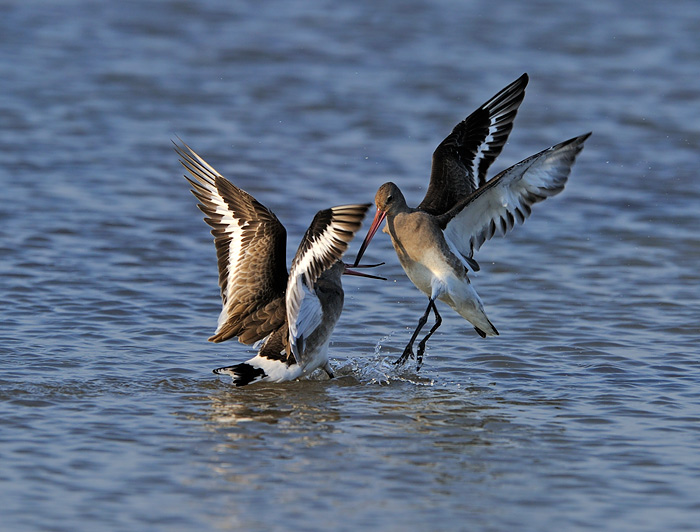


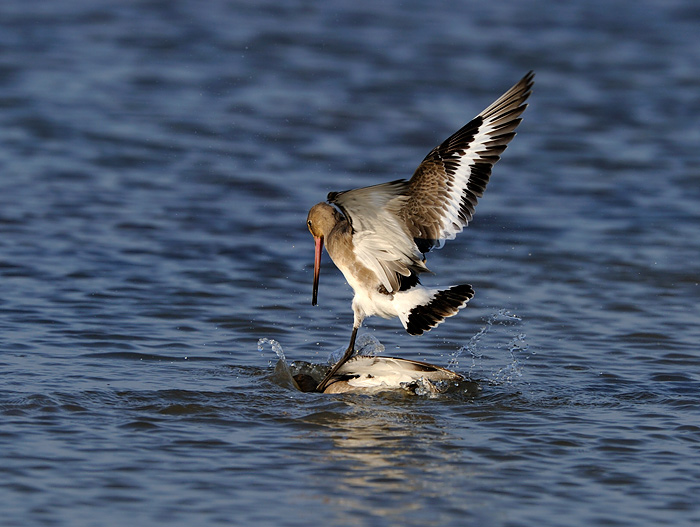


Truly breathtaking behaviour to see and capture this was, the bird seen being moved off was unhurt be the ordeal of being drown so everything was ok in the end. On these spring tide or Norfolk days I run we always finish the days at one of the Barn owls sites I know there hoping to capture this most beautiful on birds at work, hunting. The owls showed up for all my clients which was nice as the sun set and once in the morning light,showing just what a master they are at hunting and flying silently.


Know matter how many times I visit an area I never fail to be inspired but something I witness, there’s always a different take on what I may have already witness. Many different images to be taken because you just do not know whats around the corner when you photography wild animals, this has been and always will be my greatest enjoyment while observing nature.
A big thanks you to all my clients over the last week, thank you for your company and I wish you all the best within your own wildlife photography.

Mull is a magical, raw, unplanned and thought provoking place where you can see and view beautiful wildlife. Red Deer roam the hills, Eagles soar over the skylines, Seals bask on exposed banks and Otters frequent the many bays and inlets along Mulls coastline. Almost every other telegraph pole there’s a lone Buzzard sitting, acting as a physical welcome to the island. Mull’s magic derives from its special blend of mountain and coastal landscape which forms such a tremendous variety of habitats that offer excellent opportunities for wildlife.
For me the most memorable aspect of being on this beautiful island is viewing the abundance of wildlife against the entrancing background of tranquil loch shores and beautiful woodlands, amongst the architecture of amazing mountains, with the mornings being the best to see this island awaken.


I’ve just returned from a wonderful week with clients on my twice yearly photo tour I call “Magic of Mull“. The Isle of Mull lies on the west coast of Scotland and has a breathtaking coastline of 300 miles. The climate is a mixture of rain and sunshine and from the moment you step onto this beautiful island the wildlife is everywhere and the scenery is stunning. Our base for our 6 day adventure was the picturesque village of Tobermory, made famous by the children’s BBC programme Balormory, with its brightly painted buildings. The hotel is overlooking the harbour of Tobermory and facing out to Calve Island and the sound of Mull, which can be seen in the below image, on one of the many sunny days we had there during our stay on Mull.

Mull’s climate is extremely unpredictable and at any time of year you should be prepared for a wide range of conditions. The weather during our time on the island was good and kind to use. There were days that were overcast where we had rain but on the whole the weather was good. After meeting everyone at the port of Oban, we took a short ferry ride over to Mull and then went on to our hotel that we were staying at for the week. We had coffee overlooking the harbour and headed straight out for the day.

The pattern of events for each day were consistant, ensuring that clients get the best out of their time on Mull. An Early start to get into place at one of the Otter sites and hopefully catch them as they wake and start to fish, head back to the hotel for our breakfast at around 8am,then collect our packed lunches and head out for the day. The wildlife on Mull is generally accessible with the few exceptions of specialized birds along with the rare and legally protected birds that are not to be disturbed or approached as they are very senstive to disturbance.

When I have worked alone on Mull in the past I have stayed in one place for some time, getting a feel of the place, getting contacted as I call it. But while leading a tour here for clients you have to juggle the need to see the wildlife along with the time constraints, as alot of the wildlife can be viewed only a short distance from the roads, which for me is ok but the way in which I work is working the land so to speak and this is something I was very keen to show the group.
As a group we covered both methods of approach this during our stay, where everyone enjoyed the fieldcraft tips and advice. I also demonstrated how rewarding it can be on many levels when you blend into the environment, leaving the safety of the car and try to become part of the subjects world, thinking about wind direction, movement, in readiness to take the shot if you come across a chance and other fieldcraft tips and examples I showed and demonstrated. On the first day everyone had seen and captured some lovely images including the very shy male “dog” Otter that would show every so often.
During our time on Mull I had organised two great trips on consecutive days, one was three hours watching White Tailed Sea Eagles on one the Lochs and the other was a full days trip to the Treshnish Isles, a designated site of special scientific interest.

On the White tailed Eagles trip we sailed into the territory of a pair of these magnificent birds. Due to the White tailed Eagle being so protected and looked after, close up views of these birds is almost impossible so this tip offers that chance. We had a Gull escort to the site as they dived for bits of bread that the crew threw out for them. There was no noise as the engine was stopped and a lone dead fish was thrown out. The first real sign the Eagle was coming the Gull’s behaviour changed and they disappeared knowing this beautiful, massive bird was coming our way.

The sheer size of these birds becomes apparent when they soar past you, with a ten foot wing span they were truly stunning to see so close. They soared past, then in a flash dived for the fish, the whole thing was over in seconds. The whole group loved the trip and seeing these birds so close was a wonderful experience for them all. The birds are truly wild and this trip has been passed by all the governing bodies that work to protect this bird with their ongoing work.


To see this behaviour without the fish placed out for them could take days of waiting around etc, so deep down for me from a wildlife photographers point of view it was too staged to pass the photographs off as a truly wild moment captured with my time and fieldcraft, but never the less a great way to see these birds and I can highly recommend the trip.

We visited the small islands of Staffa and Lunga the next day. Staffa is a beautiful, uninhabited island which is home to hundreds of seabirds and set within waters teeming with marine life. The island is best known for its magnificent columns of rock. The best place to see this is in Fingal’s Cave. Lunga is one of the best places in the UK to see Puffin’s and it is teeming with other birds too like Razorbill’s, Guillemots and Seals.


The name Staffa is thought to come from an old Norse word meaning wooden building staves, which look similar to the islands basalt columns. The name is a reminder of the region’s Viking history. People have marvelled at Staffa’s columns for centuries. As you approach the island from the sea, you can see these columns of rock and the very impressive cave known as Fingla’s Cave.
According to legend, Fingal was a Gaelic giant who fell out with a Ulster giant and in order to fight Fingal, the Ulster giant built a causeway between Ireland and Scotland. When the causeway was destroyed only the two ends remained, one at Staffa and the other at the giants causeway in Antrim. The columns you can see today are the remains of this causeway.


Fingla’s cave named after this giant is the most impressive site on this small island, as you enter the smell if excrement is very strong as nesting birds and bats litter the small ledge and over hangs as you slowly walk in using the path people have used for centuries. The shapes in the rocks formed by the sea over time are amazing, they look like they have been made by an experienced stone mason rather than the force of mothernature. A great place and one I would recommend a visit to.

One of the best places in the UK to see Puffin’s, and teeming with other birds too, Razorbill’s, Guillemots and Seals is Lunga the second small island we visited that day. It was a small journey to this stunning little island thats home to my favourite seabird the charismatic Puffin.


We spent over two hours on this lovely little island and from the moment you scale the landing steps and head up onto the flat top of the island the Puffins are not far from you. Their calls can be heard first before they show themselves from the burrows and vegetation hiding them away from view. We all got into place, settled and let the birds relax and over time if you sit still and don’t make too many movements the Puffins accept your presence and go about their lives around you which is wonderful to witness and watch.
As I was watching these birds and enjoying their interactions with each other this little fellow landed not far from me. I was handholding the 70-200mm lens as he was close, he seemed to enjoy the company before flying off and back out to sea. The noises in the background are the other birds nesting along this cliff, Fulmars and Razorbills.
I wanted to portray the habitat the Puffins were nesting in, at the same time capturing one in flight with a wide angled lens to give you a sense of the world they live in. The images below shows the cliff and this coastal habitat on Lunga.


It is one of the best places in the UK to see Puffins that’s for sure, close up views, Puffins going about their lives all in close proximity of you as long as you stay still and make little or no movement. Two great days and two very good day trips and the rest of the week flew by as we all concentrated on photographing Otters.
Each day we saw the Otters fishing far from shore among the different Lochs on Mull. The shot the group wanted was a close up of this beautiful mammal and towards the end of the week and even on the last day those wishes were granted with a mixture of luck and being in the right place at the right time. We were able to watch the same male Otter that had given us the slip most of the week, catch larger fish and come ashore not to far from where we were lying in wait.

He came ashore slightly higher up the beach at first, dispatching the fish he’d caught quickly then heading back out to sea to fish. We thought that would be it as once Otters have had a good feed they tend to lie up somewhere for a sleep and this was late afternoon. But lady luck came again and he came back to shore with a larger fish. He ate the fish and that was the last we saw of him but a perfect end to a great week, underlining the sentence “you only get out what you put in” and the whole group did very well all week with the early starts and long days.


We were all sad to leave the island on the Friday but everyone had some great memories of this magical island sculpted by nature. A big thank you to all the group for your company during our time on Mull. I hope I helped you all in seeing nature and learning more about her beauty while learning and showing you real and key camera skills that work on the ground.
I will be back on Mull in October during which time the Red Deer rut will be in full flow along with the amazing autumnal colours and snow capped mountains. I have a few places left so to see the trip or book please click here. We stay in the same hotel over looking the bay of Tobermory, I always try to get clients the best place in which to stay as after a long day in the field comfort and good food is key.
