Being among nature is a place I belong and feel most at easy at so its been great to get back out with my camera recently to start photographing the beautiful wildlife on the lead up to spring, the favorite time of year for me. With the issues with rain and flooding over the last several weeks it has delayed some of the projects I have planned for this year. The rain though, fingers crossed seems to have given us the worst and as many communities are still underwater around the UK my sympathies go to them.
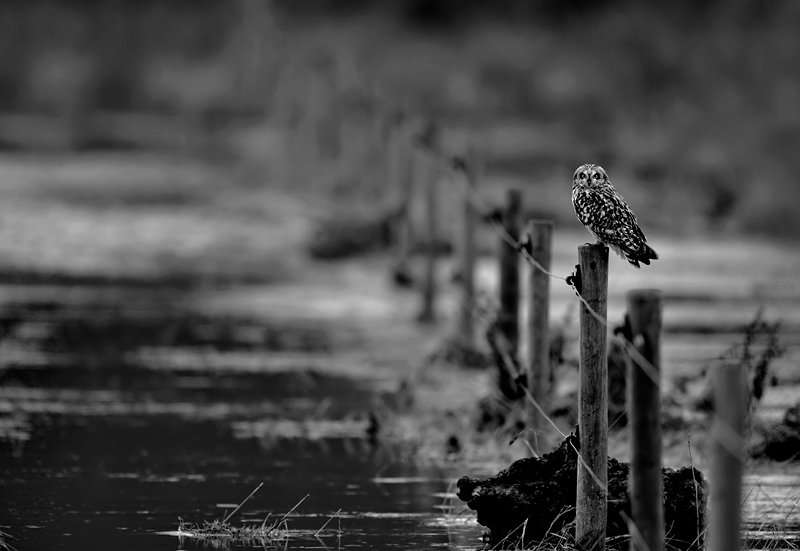
Wildlife hasn’t had a great time either with vast areas of the countryside underwater where many animals have suffered like illustrated with the images above of a Short-eared Owl trying to hunt but for miles around all the fields with flooded, quite a sad and upsetting thing for me to see as I really felt for this owl while I recently watched him to to hunt.
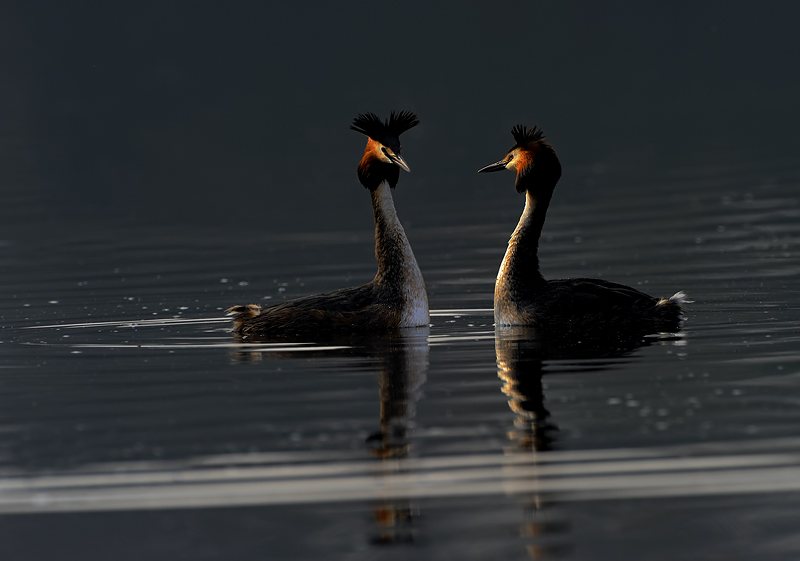
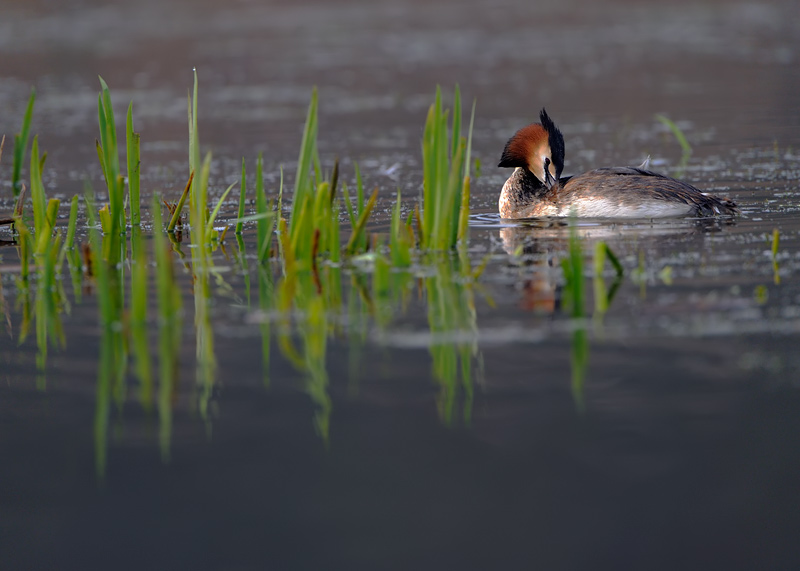
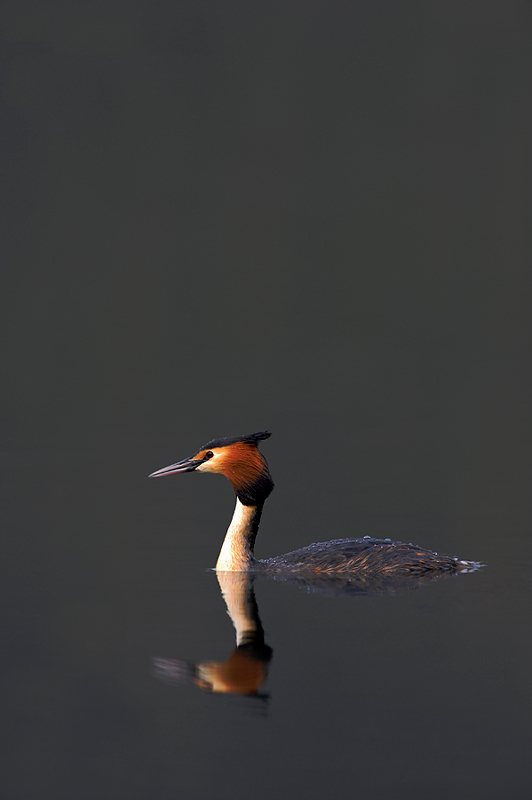
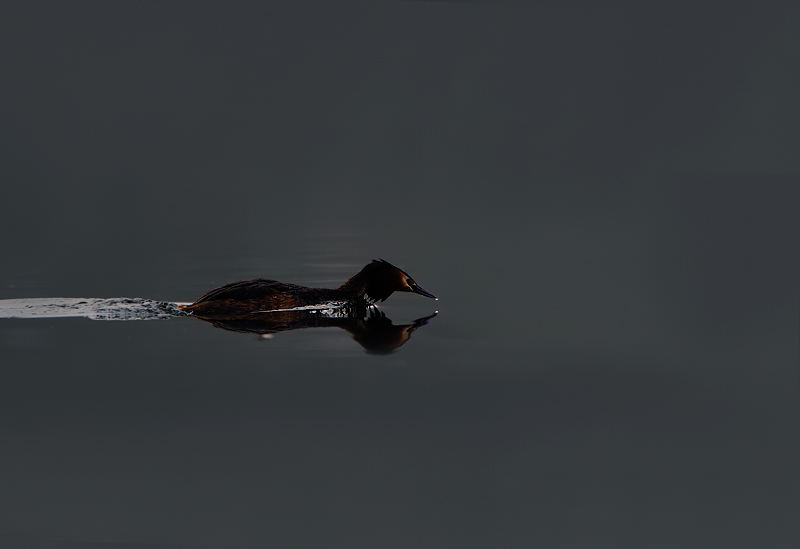
I have started working on my Great Crested Grebes project, a bird I love, their elegant pose, their beautiful markings and stunning plumage makes them one of the most handsome water dwelling birds in the UK in my eyes. They are the largest of the European Grebes and during the spring and summer they are such a striking bird, with their spectacular head, ruff and spiky head tuffs when they greet each other or display during courtship.
Last year I photographed these birds at the same site but was unable to go back at the start of the breeding season due to commitments, so this year I’m hoping to capture them as they build their bond between each other and go through their amazing courtship dance where they dive for weed, surfacing with this in their bills and offer it to one another while sharply turning their heads back and forth.
In between the pouring rain there have been breaks in the weather and I have spent alot time there now, the lives of these amazing birds played out before me on each visit. They show real love and care for each other, when one goes out of sight the other calls in an attempt to locate its mate, such a strong bond which is so lovely to witness.
I am using a hide on the shore to photograph this pair of Grebes, just on the water’s edge and not in the water as this disturbs the birds and other species of animals around too much. Getting there before the sun comes up, with the dawn chorus as my companion, each bird jockeying for their own patch, staking their clam to that bit of land.
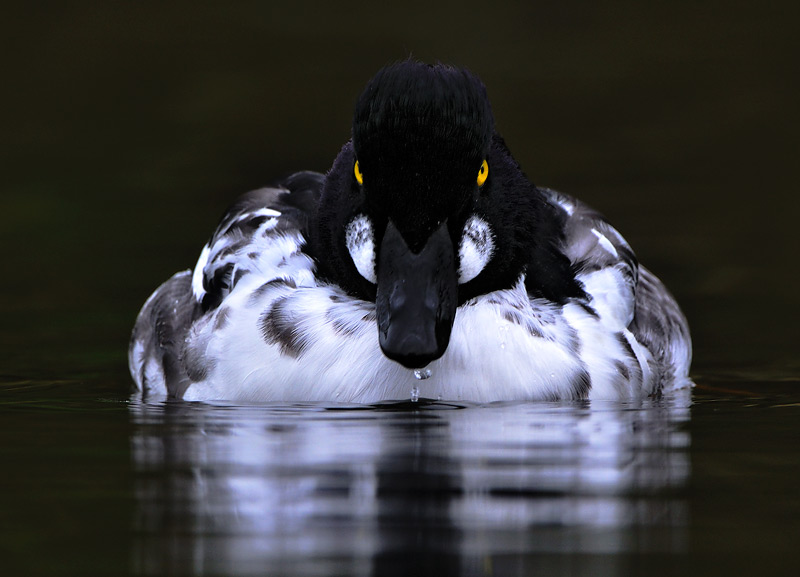
The are many species of birds there too, all starting to defend their patch so to speak, most are vocal from before dawn onward and there seems lots of fighting and warning off others in readiness to find a lady and breed. I love to watch and capture animal behavior and by doing so you learn so much more about your subject over time. I managed to capture a full frontal of the male Goldeneye here, if luck is on your side and if you get the head face on they can have a real evil look to them as in the image below.
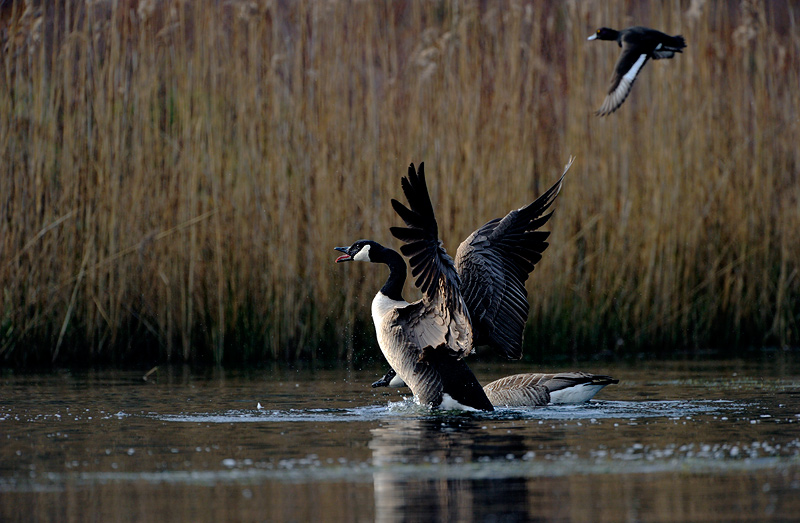
Canada Geese calling and fighting break the mornings silence many times during my recent visits there, I only wished these images had sound.It’s such an amazing time of day and one you greatly benefit from for being among its beauty and peace. The water levels are still high here so im hoping everything settles down and things can return to normal as soon as possible for people and wildlife really.
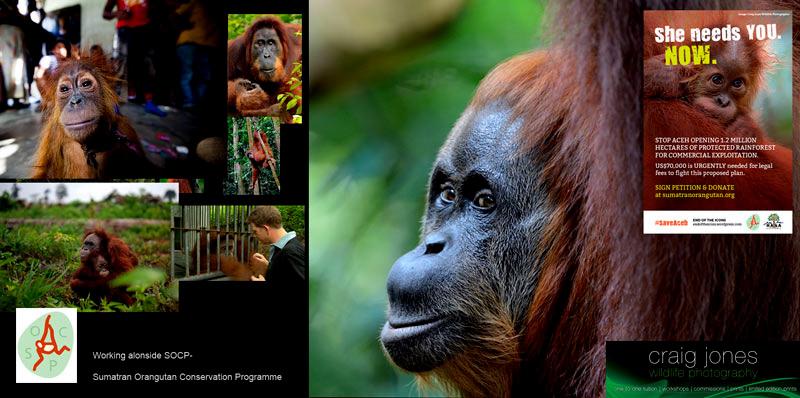
I really am hoping to spend as much time at this site over the next several weeks before I leave for Sumatra for two weeks where I will be working and shadowing the amazing work of SOCP – Sumatran Orangutan Conservation Programme, headed up by Dr Ian Singleton, but more news on the very soon.
In the meantime I have some 2015 dates for my photo tours now up on my website click here to view them. My One to Ones now in their fifth year are as popular as ever so if you’d like to learn more about everything from fieldcraft, to subject knowledge to your own photography then click here to see the places I visit with clients.
I will update my blog with more images from this site in due coarse, I wish you all well with the weather and the forthcoming season of Spring, many thanks.
I’m delighted to share with all my followers of my blog that one of my favorite Sumatran Orangutan photos called Beautiful Eyes has been selected to form part of Nikon Pro special tablet edition of their magazine showing all that’s best with Nikon and the associated products. Read a short introduction to this amazing app here on I am Nikon Blog.
Nikon Pro is the tri-yearly print and tablet magazine for professional photographers and serious enthusiasts. It features the best in photographic imagery and technical advice from around the world, and is available in print in English, German, French, Italian and Spanish. to subscribe click here
You can download it from iTunes here Google play here
To have one of my images alongside some of the biggest names in the world of wildlife photography is a massive honor. Having only celebrated fours years as a full time professional wildlife photographer last month this is just amazing. So thank you to the guys at Nikon Pro, Nikon.
I feel from a photography point of view my work has only just really started, utilizing my many skills learned over the years. I look forward to spending the next twenty or so years among nature, happy, where I hope to share what I see with my peers and followers. I’d like to thank everyone who has supported me over the last fours years. Below is the Nikon pro press release issued today with the launch of this brilliant App.
Nikon launches Nikon Pro WILD special tablet edition
We are proud to present Nikon Pro WILD – a free special tablet edition, featuring the very best in wildlife photography and giving you a taste of the full Nikon Pro magazine. This special edition issue is themed around Wildlife and is free of charge from the App Store or Google Play. Designed to give newcomers a taste of what the full Nikon Pro magazine has to offer, the WILD version celebrates awe-inspiring photography and the stories behind the image, just as the regular Nikon Pro does
From the chilled-out posture of lounging polar bears to the steely eyes of the Amazon leaf frog, Nikon Pro WILD supplement features a bespoke collection of stunning images and video captured by some of the biggest names in wildlife photography.
Contributors include Vincent Munier, who talks about his latest solo trip to the Arctic, and National Geographic photographer Joel Sartore, who shares video and arresting, portrait-style images of some of the world’s endangered species. This special edition is available for download exclusively via the Nikon Pro app, on both iTunes and for Android on Google Play
Nikon Pro WILD is produced by the Nikon Pro team.
‘Wildlife is a photography enthusiast’s dream,’ Nikon Pro’s editor says. ‘Getting these kind of shots can take weeks or even months of painstaking work, which is why we’re delighted to be able to bring these images together in a single collection on tablet, for people all over the world to enjoy.’
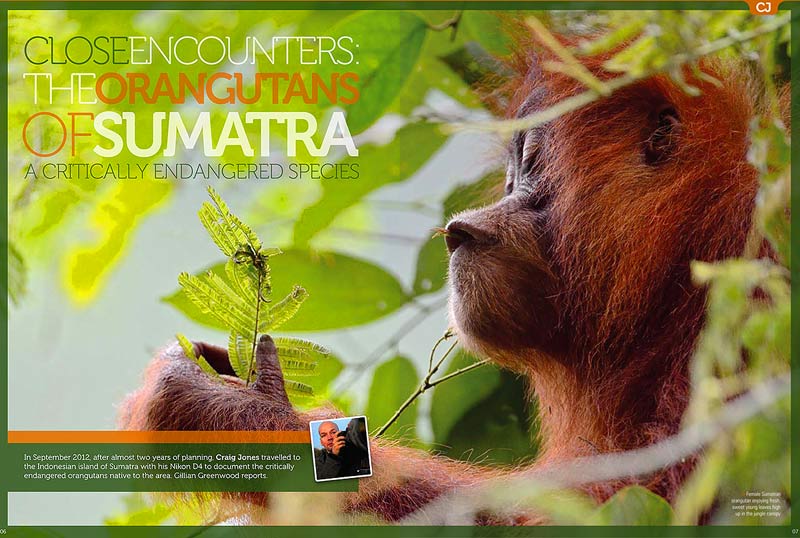
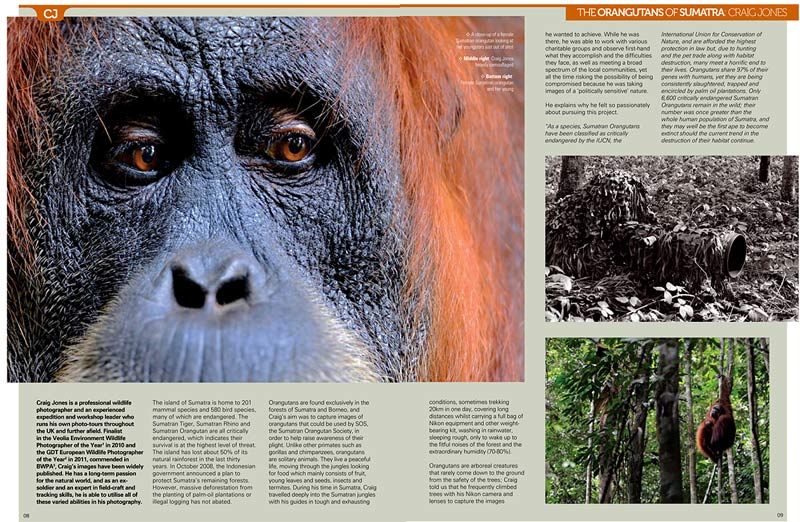
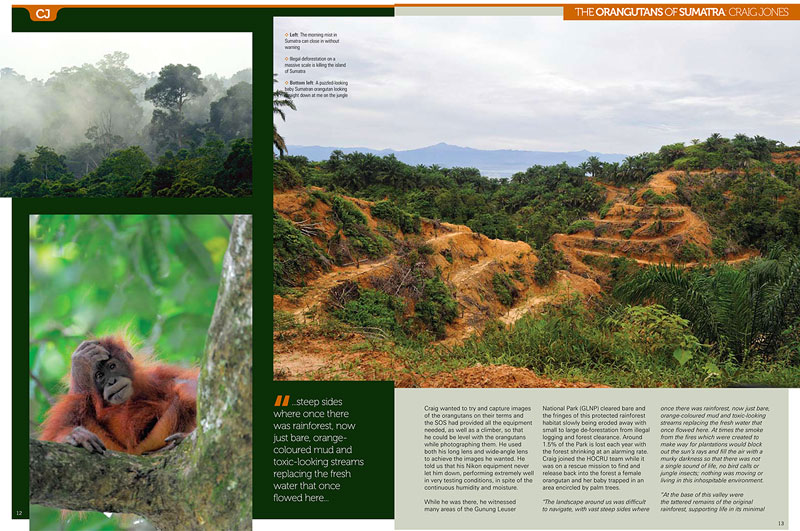
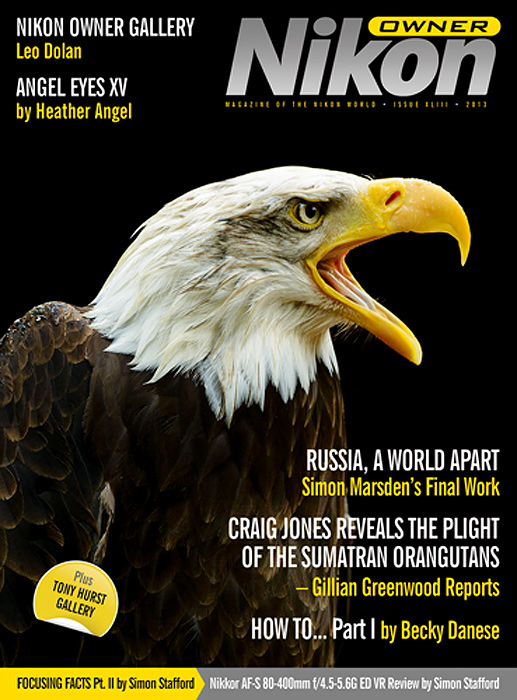
Really proud to show you a wonderful article that has now been released in the world renowned Nikon Owner Magazine. The coverage of this magazine is worldwide and once more the plight of the Sumatran Orangutans will be seen on a global stage. My promise and continued mission for these apes is to give them a voice through my images and that’s what I have done tirelessly over the last 12 months since my visit to Sumatra.
For those of you on here that wont be able to see this magazine I have carefully placed all the pages from the PDF document the owner of the magazine has just sent me so you get to see this. The article is dedicated to those Sumatran Orangutans that are killed, trapped, slaughtered and sold as pets each and every week.
My images though speak for those Orangutans and all these images have been donated by myself to a wonderful charity SOS- Sumatran Orangutan Society headed up by Helen Buckland from their small office in Oxford. She works very hard for these apes and its been a pleasure to work and help SOS and Helen. I will be back there in the early part of next year and also later on in the year with my trip. In the meantime I hope you enjoy the article and thank you.
Nikon owner Magazine can be seen by clicking here or you can see their facebook page here. Some of my prints from this trip can be brought from SOS”s website where 100% of the money goes to helping these great apes in their native country of Sumatra, click here to see and purchase them.
If you would like to visit Sumatra and join me on an amazing adventure into the jungles there at the same time support the charities that work tirelessly to save these great apes then click here to see my 2014 photo tour to this amazing place. Its open to anyone and everyone not just photographers.
I will show you the amazing jungles and the unique wildlife that live there and you will get chance to see the work that’s been done to rebuild the rainforests there. Some of your money too will go directly to the Sumatran Orangutan Society- SOS, a charity set up to help these beautiful apes.
A massive thank you to the team at Nikon Owner Magazine for publishing this article and helping me in spreading the word on what’s happening in Sumatra and extending the Orangutans voices to a wider audience, many thanks guys.
I’m pleased to announce that I have been asked back to the amazing Natural History Museum in London to present two talks on different days as part of their season of Salgado-related talks in the Darwin Centre’s Attenborough Studio. These form part of their daily Nature Live programme of events. To see the Salgado events please click here.
It’s always lovely to see your own work published but in this case it’s even more wonderful. I am proud as ever to see these Sumatran Orangutans I spent time with pride of place on the BBC Wildlife website. This coverage is helping these peaceful animals reach a wider worldwide audience and highlight their plight which was the whole aim of my 2 week trip to Sumatra.
A selection of my photographs have been chosen to form part of the online gallery of the highly prestigious and respected BBC Wildlife magazine; Discover Wildlife. It’s the second time now that my images have been chosen for the Discover Wildlife website. By clicking here you can view the first set of images I had published. With coverage in the January issue of BBC Wildlife magazine and now the online website it’s wonderful that the Sumatran Orangutans plight is being seen and viewed by a much wider audience.
In this my third and last blog from my trip to Sumatra I will show you and go through a day I will never forget for as long as I walk this earth. These images have been held back until now due to national coverage over the last several days. The company that is tearing up this forest landscape is a member of the round table on Sustainable Palm Oil (RSPO), an industry group which regulates certified sustainable palm oil according to a set of principles developed by palm oil companies.
These dramatic images have been released as evidence in time for the RSPO annual three-day conference in Singapore. Some of my images formed the evidence to support the case against this company. The following links will show you the full story- The Sun and the Daily Mail.
Orangutans are found exclusively in the forests of Sumatra and Borneo and are one of the most loved animals in the world. Yet at the hands of humans they have and are been slaughtered, reduced to a few thousand individuals, trapped and encircled by palm oil plantations. Orangutans are afforded the highest protection in law but sadly due to hunting and the pet trade along with habitat destruction many meet sad and horrific ends to their lives.
With their habitat being eroded weekly they often are seen moving at the edge of their forest, close to plantations and large open areas. In turn they become easy prey to poachers who can make huge earnings from the black market pet trade.
One of the shocking and direct consequences of this poaching is the death of the mother who is killed in the process of poaching a younger Orangutan. Shock for the baby is devastating and those that survive have a marked existence with so many crucial skills missing. Their lives of forests swapped for a life chained to a post or a cage that’s too small as they grow. Even writing this makes me sad for those Orangutans you see reduced to this life in books and on TV.
This situation is tolerated and considered normal in Sumatra and Borneo, keeping one of these guardians of the forest can elevate the social status of the person.
When they are rescued the road back to the wild is hard without their mother, this makes their independent survival almost impossible. I witnessed many rescued Orangutans during my time in Sumatra, my guide Darma knew everyone of them. Most have forgotten the pain they went through and forgiven their jailers but just hearing their individual stories sent shivers down my spine and filled me with such sadness.
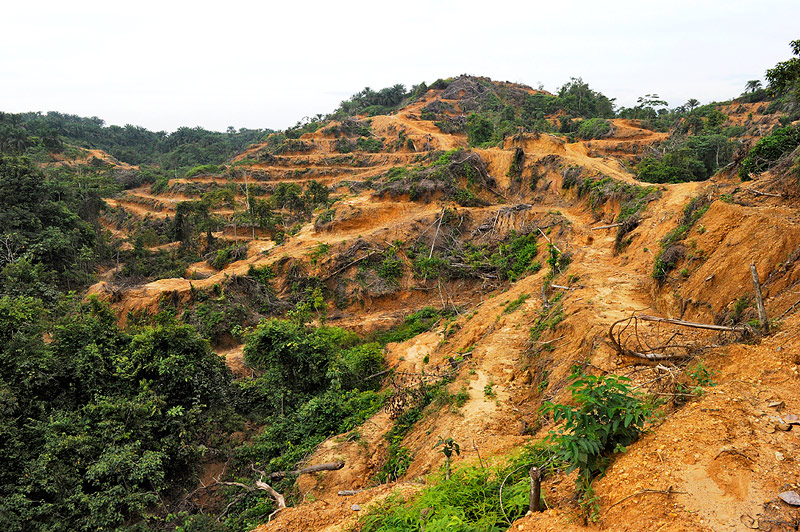
From the moment we received the rescue call, the days plans changed instantly. I really didn’t know what was waiting for me, as we drove north to the providence of Ache. All I knew was that a mother and her baby were trapped, and we were heading in that direction as fast as will could. When we arrived all I saw was mile upon mile of this horrific landscape. Walking through a tattered landscape of barren red earth and alien palm oil trees, where once one of the finest rain forests in the world stood, is just impossible for me to describe. They take the best rain forest in the world and change it into a sole less landscape of palm oil within a matter of weeks, with brutal efficiency. Anything in its way gets crushed, killed and discarded.
It wasn’t until I arrived the following day that I witnessed such a shocking and inhospitable place. The wasted landscape surrounding me looked like something from a film set, it wasn’t real I said to myself. Surely humanity couldn’t do this to something so beautiful I asked myself. The colours of the palm oil crop tinted with the Orangutans blood within its deep red colours as shown in this image above.
Every way I faced and looked this landscape was looking back at me, somewhere at the base of this god forsaken land there was a tiny pocket of primary forest left. Inside were Sumatran Orangutans desperately clinging to life, encircled and cut off by palm trees. It was a site I just could’nt believe I was seeing.
There was little time for my thoughts as the HOCRU – (Human Orangutan Conflict Rescue Unit) team kicked in, led by a kind hearted man called Krishna who the night before we had all shared jokes and laughed over our evening meal. We all slept on the floor as the vet got his equipment ready for the following day.
Once we arrived the kit was checked and the vet loaded up the tranquilizers just before setting off to find the mother and baby Sumatran Orangutan. Looking around though it was unbelievable anything was living in this sad looking place.
Desperately they started searching for the mother and her baby Orangutan. HOCRU was created by Panut Hadisiswoyo, the Director of the Orangutan Information Centre –OIC. It was set up as a direct response to the Orangutans that get stranded along the east and northeast areas of Sumatra.
The team go through their well practiced drills and I’m desperate to help in anyway. I stand back and admire these young guys going off into this hostile landscape, with soaring heat and humidity which seems worse here with little or no tree cover to shelter in.
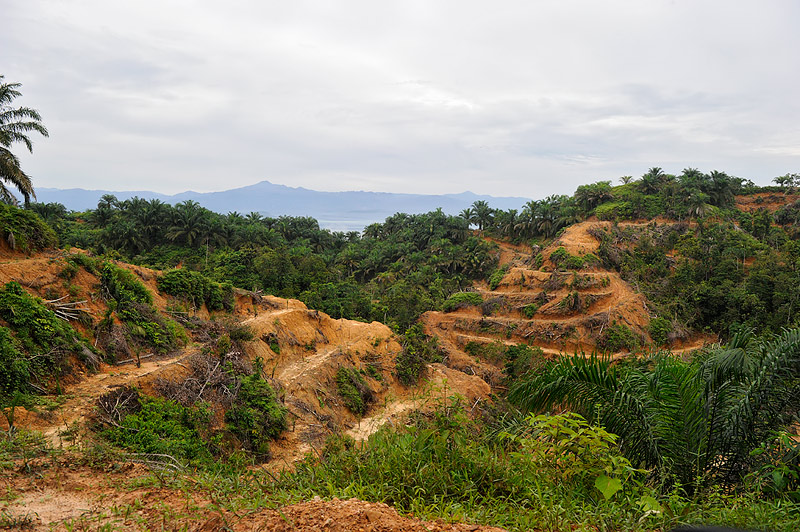
The landscape was tough, with vast steep sides where once forest grew, now just bare orange coloured mud, making our searching for these Orangutans torturous. A well worn track, in and out, curling like a corkscrew, visually showing you the path they took when they bled this land of its riches. A muddy, toxic-looking stream replacing the fresh water that had once flowed here.
At the base of this valley was the tattered remains of the original forest, supporting life in its minimal form. I stayed at the top as the team and their spotters had located the Orangutans. The shooter also stayed up high, hoping to get a clean shot with the tranquilizing dart. They communicated with each other well and soon word came back they had found another Orangutan there too. “It is a male” they shouted. He had joined the mother and baby here. There was just one problem! We only had one cage.
The next several hours I watched and listened to the guys making noises, mimicking the Orangutan to hopefully get her into a place where the shooter could get a clean hit. Its hard to explain as I write, I don’t really know the words to write and express how I felt watching this event unfold before me. I knew they were going to be cared for and moved but watching and hearing the Orangutans call and become so stressed that their fur stood on end is perhaps the most upsetting and emotional moment I’ve ever witnessed in nature. At times when I saw them I’d shout out loud “go down please, just let them dart you”. It was so upsetting it is beyond words.
Then from nowhere the mum and her baby came level with me. The image above shows her standing up on the highest branch, with the encircling palm oil trees seen as her backdrop, imprisoning them in this most shocking man made landscape. Mum and her baby were right in front of me. After a few fleeting looks at me she moved back into the remaining trees.
Then to my right another Orangutan stopped on a branch level with me. This must be the male I thought, he looked at me, his eyes going straight through me as he called and called. Heart breaking, so heartbreaking to see these peaceful animals so highly stressed, not understanding that we were there to rescue them, so that they could be in a better, safer place.
Putting the Orangutans through this is the very last resort for the HOCRU team and they try every other options before this. The male kept coming level with me as I was on higher ground, and he climbed to the highest point, surrounded by this broken landscape, each time giving me a distrusting look I’ll never forget. He was calling the female, as they had separated, looking out for each other even in tough testing times like this, putting a real human edge to the proceedings.
The male Orangutan disappeared and would be stressed from the event. It is believed that he is still in the area and hopefully the team will be able to track him so that he can be rescued also.
Soon the noises stopped and word had come back that they’d managed to dart the female. I managed to locate the team and when I arrived I could see them with the net spread out below her. Incredibly she was hanging on, I could see the dart in her body, her eyes looked over at us all and I could just sense she was hanging on to save her baby that was clinging to her. As it’s a mum’s most basic of instincts to protect their child.
That basic instinct a mum has to protect her child, fueling her to just hang on and not give into the tranquilizer. Heartbreaking is a word I’ll use a lot in this story but no other word really conveys what I witnessed. I was praying she’d just let go so they could receive help. But her will went on for around fifteen minutes. By this time it was almost too hard to watch, the team all the time moving and watching them just to make sure the net was in the right place, as she could fall at any time.
By now though you could see she was becoming slightly clumsy, missing branches that she was trying to hold onto. Then she went to just one arm, and then she just fell into the waiting net below.
The team scrambled up the steep hillside. Separation is a term these guys give when they take the baby away from the unconscious mother at the first available chance. I managed to capture that incredibly moving moment with this image, as the mother is carried off in the net she fell into, while one of the team give the signal to where they have to go.
I followed the team back to the top of this tough and testing landscape, by now my eyes were stinging and full of sweat dripping from my brow, the heat was just so intense and the humidity so bad I couldn’t cool down. By running behind the team up hill I created a little cold air on my face. It was just that hot.
Once at the top of the hill, the vet took over in a well drilled, well planned execution of their skills and also great passion to help and get the job done. They had around 40 minutes before the sedative wore off and good percentage of that the Orangutan had fought, hanging in the tree. Time was tight and the vet took blood, checked her teeth, bum area and general health. It was so sad to see but I knew these guys were helping her.
While I took this images the baby was being held by one of the team so that they can check over the mother. This is the safest way. All the time they were apart the baby struggled, trying to bite his handler and screaming. That scream I can here now, the tone went through you, the pitch could have broken a glass it was so high and shocking to hear.
I carried on taking images so that I could tell and capture this story no matter what. I had the mother looking straight at me with an indescribable emotional stare, and in the background the little baby screaming. The mother was slightly under weight but she was fine otherwise. The vet gave her the antidote which brings the Orangutan around by counter-acting the tranquilizer.
At that point fresh leaves were put in the cage we’d brought for her. She was placed inside the cage and the baby was reunited with his mother. I didn’t really truly take on broad what I’d just witnessed and been part of until after. At the time I was just on auto pilot.
I had a photograph taken with the team just before we left, an amazing bunch of young men, the last line of defence for the Sumatran Orangutans.
We loaded the mother and baby into the back of our vehicle then drove to the release site which is part of the national park. The cage is taken down a slope and tied off with rope and the slide door is slowly opened by the vet. It was amazing to see them both slowly appear, the mother climbed up with her baby and within a few minutes they had vanished into the dense forest. The team named the baby “Craig” after me which was a great honor and very touching. I hope he keeps that fight in his belly that he displayed when he was separated from his mother as this will stand him in good stead for the uncertain future that awaits these Sumatran Orangutans.
These guys do this week in, week out, rescuing stranded Sumatran Orangutans before they are either killed by the plantation staff or die through being cut off from the forests. It’s a shocking job but so important. The team at the moment know of around sixty other Sumatran Orangutans in this same position. Getting access, the correct paperwork and permission takes time.
The male they couldn’t rescue has not been seen yet. He is in my thoughts a lot as he came level with me in the tree canopy so many times, as you can see from the images I have shown above. I hope the team can find him. He saw the female and baby removed from this area which may have caused him so much anxiety that he may have moved on further putting himself at risk of being killed.
I have relived my two week trip to Sumatra extensively since my return within these blogs. Over the last few weeks I have visited this place in my dreams, through my images and talks I’ve presented. I wanted to get the whole story out into the public domain and now this last blog has been finished I feel better within myself. I wanted to give these Sumatran Orangutans a voice through my photographs and I hope I have achieved this. I’m only the photographer it’s the experts that need to save and change things in this part of the world.
I witnessed so much in Sumatra, it has been an emotional roller coaster with so many ups and downs, looking into an Orangutans eyes and seeing yourself in parts has filled me with so much joy at the same time sorrow. I have loved these enduring animals since childhood and now as an adult helping them is a blessing for me.
I have met locals, poachers, so many people just trying to survive with no help from the Indonesian government. I’ve listened, I’ve watched and had amazing behind the scenes access. One of the main things I kept hearing was that the government fails to protect the national parks, these areas that contain so many endangered flagship species of wildlife. The same government that hands out licensees to palm oil companies letting them play god with some of the richest forests on earth.
I visited schools, villages and watched with great delight the OIC team give out free books and presents films in order to educate them all into looking after, caring and keeping safe the wildlife of their country.
My Closing Thoughts –
Long term initiatives like reducing corruption, massive changes in management regimes and actions, long-term institutional change, as well as monitoring trade and prosecuting criminal behaviour will take to long to develop to an effective level to halt the immediate crisis. Without direct intervention in the national parks the Orangutans along with other forest-dependant wildlife- like the Sumatran Tigers and Elephants will become progressively scarcer until their populations are no longer viable.
Given the rate of deforestation in the past several years, and the recent widespread investment in oil palm plantation’s and bio diesel refineries, calculations suggest that 98% of lowland forest maybe destroyed by 2022. The incentive to log the protected areas will grow as timber companies run out of supplies outside of the parks, in turn they will start to degrade the national parks. These areas have to be protected and many times during my visit to Sumatra I heard and was told by locals that the government is letting everyone down by the lack of enforcement here.
There are some 2155 field rangers at the last count that patrol an area of 108,000km square. They have no access to helicopters, aeroplanes and necessary arms or military patrolling skills that would enable them to prevent illegal activity. Logging companies use bribes and are better armed and equipped than most rangers. If the rangers had the necessary training, communication, transport and arms then they’d be better placed to protect and prevent these illegal acts against the protected forests. They Indonesian government does have such a small force in the shape of their SPORC -rapid response ranger units. However their impact and presence is too small and they lack the mandate, training and equipment to prevent illegal loggers from operating inside the protected areas.
The removal of illegally grown plantations such as the one above, with mining and agricultural development inside the national parks is another major thing that needs to be implemented.
Reducing the rate of deforestation over Indonesia as a whole will also have a dramatic impact on the regional carbon dioxide emissions and thus help to prevent dangerous levels of global climate change. If the logging of national parks continues unchallenged it could under-mine the protected area concept worldwide. The Indonesian initiatives to strengthen the protection of their parks therefore urgently need substantial support from the international community if the Orangutan habitats and national parks are to be rescued from this growing state of emergency that’s happening there now.
I have really enjoyed my time in Sumatra and I would like to thank Helen from SOS, Panut from OIC and the rest of the people involved in helping me on this trip. I am returning next year to live and work alongside the Sumatran Orangutans again. I am also putting together an 8-9 day trip there for nature lovers and wildlife photographers. Where a percentage of your money from this trip will go directly to the Orangutan charities SOS and OIC. The trip will visit some of the projects and work I have mentioned in my previous blog posts.
This trip will show you what these guys are doing on the ground in Sumatra to save this special place. I will have more details for you shortly. The images I have donated to SOS will be available in their online shop soon. There will also be some limited edition prints coming out also, all the money raised going to this charity to help this beautiful creature survive.
One magical day I spent with the Sumatran Orangutans is covered in this slideshow below. I used a ION Air Pro Wi-Fi camera attached to my head to film some of the trekking scenes. The camera was kindly donated to SOS by Wex Photography. A massive thank you to them and soon I will be doing a blog covering this peace of kit and showing the stuff I captured in Sumatra with it.
Make sure you watch both slideshows in full HD for the best results.
I hope you all have enjoyed my Spotlight Sumatra blogs, the talks and the images. For me as a person it has been a dream come true to see these amazing animals in their own habitat. I will now build on the work, the images and continue to help the Sumatran Orangutan Society to highlight the plight of these animals.
After everything I’ve seen during my time in Sumatra there is still hope, a lot of great work is being done on the ground there by these two charities. I’d like to finish off my amazing journey on a real positive note with this short slideshow.
It seems strange I am leaving this place now through my blog, but I hope I have done these Orangutans proud, many thanks.
I have just had two amazing days presenting my talks from my recent trip to Sumatra alongside Panut the founder of OIC from Sumatra. A big thank you to everyone that attended the Spotlight Sumatra talks in the Natural History Museum, London and Chester Zoo. I’ve only been back from Sumatra a few weeks and my trip is still so raw, with every image I process and publish taking me back there. I had amazing access over the two weeks and the images formed the basis of my talks. To speak at two such amazing and well respected places was a great honour for me.
I’ve made many visits to both places since childhood, Chester Zoo is an hour away from where I live and has an amazing successful breeding programme with all its animals but more so the very rare wildlife entrusted into its keeping. Sumatran animals are doing so well at the zoo. The Sumatran Tiger and the Sumatran Orangutans all giving birth to babies there. I met some amazing, passionate people during our time there all doing amazing work. The zoo does so much for wildlife conservation around the world. I have visited many places being a wildlife photographer from Madagascar to India and very often the locals in the countries I visit always mention Chester Zoo somewhere in our talks, that just shows you how respected this place is.
Helen Director of SOS, Panut and I had a guided tour of the zoo by vet Steve Unwin. I had sat in on a meeting he’d being having earlier with Panut and Helen and other important staff from the zoo. I was amazed at his knowledge and passion for the Orangutans. His no-nonsense approach really struck a chord with me and afterwards I told him. Time is running out for many animals throughout the world, but the problem is so acute now for the Sumatran Orangutan that everybody using all their knowledge and expertise needs to come together to help save this first great ape that may become extinct should current trends of de-forestation in Sumatra be allowed to continue. These words were echoed throughout Steve’s conversions.
During our visit we witnessed the new baby Sumatran Orangutan that was born there last week. His proud mum, Emma who was showing off here new baby boy to the public. Holding the baby so close reminded me of their wild counterparts in Sumatra. I have never witnessed such a close bond between mum and baby outside of humans during those encounters I saw in Sumatra and the same bond was clear to see here in Chester Zoo. Click here to read this amazing news.
Both talks were full houses and again I cannot thank everyone enough for attending and showing their support for the problems facing the Orangutans and their rainforest habitat. I met some wonderful, lovely people during those two days. I met some of the Sumatran Orangutan Society trustees who were all very nice, thank you all for helping Helen and SOS each of you. Thank you to the guys at the Natural History Museum for all your help in setting up the talks and slideshow. Special thanks to our host who helped Panut and me through it all, Ana Rita and kind lady.
Thank you to everyone from Chester Zoo for caring so much about the wildlife within your zoo and around the world. We had two lovely ladies helping us through the talks, comparing and doing the raffle. So a massive thanks you to Penny and Andrea for your help. Both have worked for many years at the zoo doing wonderful work, I hope we can see you all again in the future doing something along the same lines.
Lastly a huge thank you to everyone who attended both talks, what’s happening in Sumatra cannot go on any longer unchecked. With firm and loyal support small things will lead to change on the ground there and in turn a safer world for the Orangutans. I’d like to finish this blog with one of the presentations I showed. Just processing these images brought every emotion I went through in Sumatra flooding back to me. It’s a mixture of what I saw during my time there. It upsets me just watching this clip such was the effect this place and trip had on me. For best results watch in HD on YouTube full screen here.
The Spotlight Sumatra talks have been hugely successful already, raising money for SOS from prints, and many other items. Showing through powerful presentations what is happening out there. If you are a school. Trust, Zoo, Camera Club or anything like that who would like to host this series of talks then please get in touch with Helen Buckland, UK Director SOS here. Alternative contact me through email here many thanks.
The Orangutan is one of our closest relatives in the animal kingdom, sharing 96.4% of our DNA. Indigenous people of Indonesia and Malaysia call this ape “Orang Hutan” which literally translates as “Person of the Forest”. They are intelligent, friendly, and very gentle and spending time with these animals gave me so many wonderful memories which I will treasure. These animals are native to Indonesia and Malaysia, and their survival is seriously endangered by illegal logging, forest fires including those associated with the rapid spread of palm oil. Over the last few years timber companies have increasingly entered the last stronghold of the Orangutans, the protected national parks. I’ve seen this first hand travelling around Sumatra.
The situation is now so acute for both the Borneo Orangutan and the Sumatran Orangutan, both of these species are classed as endangered and critically endangered respectively by the World Conservation Union (IUCN) and are listed on Appendix 1 of the Convention on International Trade in Endangered Species of Wild Fauna and Flora (CITES).
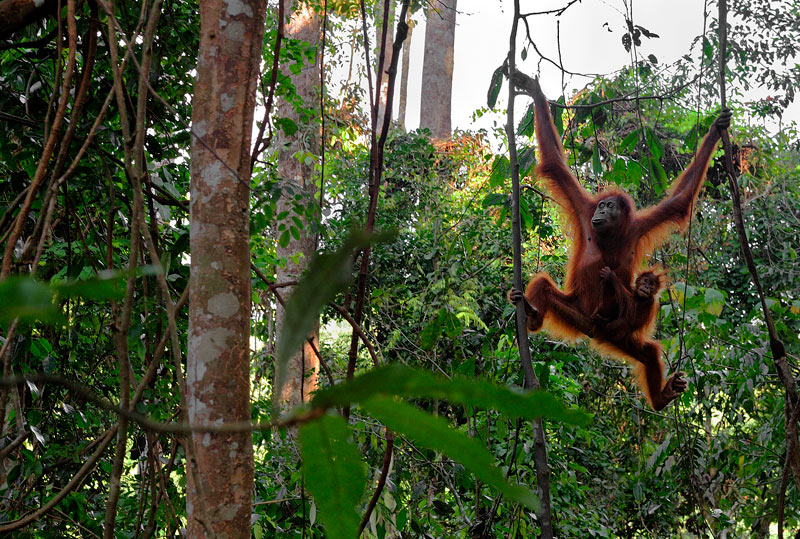
After my first week in the jungles of Sumatra I was sad to leave Darma, but equally I was very sad to leave the Orangutans that I had seen and spent some wonderful moments with, watching and capturing with my camera. It felt like I’d lost someone as during the intensity of those days trekking through the dense jungles looking for these guardians of the forest I became very close to these Orangutans. I hope they will remain safe, I will be returning to these amazing jungles next year. Here are some images of the Orangutans I saw and left behind in Sumatra, these moments were special.
I have named the image above “Hope”. Hope is a great thing, without it you can become crushed, you should always have and believe in hope. The Sumatran Orangutans are in a fight for their lives and need every bit of help. This image, of a baby Sumatran Orangutan playing with her mum sung out that word to me. Her mum is called Sepi and again she was rescued from a vile world you couldn’t even imagine, many years ago and has been given a second chance in life. The baby is called Casa and is a year and a half in age. Born in the rainforests of Gunung Leuser National park, she represents the future. Watching her cling to her mum here, acting shy just like a human baby. She saw me and tried to hide behind her mum’s fur.
After I left Darma we drove north to the providence of Ache where I spent two days with the HOCRU team– (Human Orangutan Conflict Rescue Unit). I will be telling you this story in my next blog and not here for reasons I will explain in good time. After two tough and exhausting days I spent the rest of the second week with the OIC team, witnessing the wonderful work they do in the community and the re-forestation areas with replanting programmes in order to give the land back its rain forests. I spent two days at the Re-forestation site, which is on the edge of the Gunung Leuser National Park. Its a small, self contained house where workers spend time replanting the forest in different areas in the neighbouring areas.
Since 2005 they have been involved in the reforestation of degraded land through tree nursery and replanting projects, and have planted over half million trees to date. This project involves the regeneration of illegally cleared forest land in the Besitang region of the Gunung Leuser National Park (GLNP). The programme is the first of its kind in Sumatra, with OIC being the first and only NGO granted permission to conduct restoration work within the national park. Working in close collaboration with the national park government authorities and local communities, the project aims to undo damage caused through illegal large-scale conversion of forest into oil palm plantation agriculture.
I helped the team out during my time there, often they spend three to four weeks at a time here away from their families doing this work. It was amazing what they have achieved in just a few years through hard work, passion and a belief that things can change running through all the team members. I also planted some trees that fingers crossed will become put of a new rain forest in the future, another wonderful moment for me on a personal front.
In addition to the forest rehabilitation, the project also provides sustainable alternative livelihood schemes for local people living adjacent to the park. They benefit from the restoration of natural ecological services, having previously suffered droughts as a result of high water uptake from the illegal planting of oil palms, and also receive business development training. There is a strong educational element to the project too, with training and skills development on tree nursery management and replanting seedlings. Indigenous tree species are planted to hopefully put back what was taken with the illegal actively conducted in these areas before these projects were set up.
I also visited some of the offices the team has, where classroom based education and training goes on within the communities. All building awareness of the plight of the Orangutans and their habitats which in turn are the homes of those people that they try to educate about what’s happening to Sumatra.
After a wonderful few days seeing this brilliant and committed work that is going on I headed North to Ketambe, an area within the province of Ache. I was going to be staying with the Ketambe Reforestation and Ecotourism Development Initiative team (KREDI) which is part of OIC/SOS. The organisation works at the grassroots level in northern Sumatra to raise awareness of the critical importance of the sustainable use of natural resources and ecosystem conservation.
For the first few days I was invited to a two day workshop put on by OIC. The local communities turn up along with Ministry for National Park delegates in the region. Regional commanders from the police and military. They are invited to voice their concerns about the problems in the area mainly caused by the large scale de-forestation. Slideshows, talks are put on and everyone is encouraged to talk about their issues while still trying to help and save the forests and the Orangutans. However, people have to make a living and people there were saying and in the absence of any real help from the government, people are left to just do whatever thay have to in order to survive and feed their families.
Travelling around this area of Aceh I witnessed many areas of the Gunung Leuser National Park (GLNP) cleared bare and the fringes of this protected rain forest habitat slowly being eroded away with small to large de-forestation and illegal logging and forest clearance. At times the smoke from the fires would block out the suns rays and fill the air with that heavy smoke smell you get from burning. Seeing this on such a large scale was truly shocking and nobody was doing anything to stop it. It goes unchecked. Panut the founder of OIC told me around 1.5% of the GLNP is lost each year this way and is shrinking at an alarming rate.
On the surface the country is driving itself into a brick wall as fast as is humanly possible, because the carbon emissions, the green houses gasses the air population is everywhere in Sumatra. The whole area of Indonesia produces so much green houses gases from burning, it now has such a major role in the global weather patterns and the fast changing weather we are all seeing.
Through translators I heard many members of the public who had turned up for this two day workshop say the government of Indonesia does not protect the forest, they allow large scale illegal logging to go on unchallenged . Sitting at the back and hovering around with my camera I was met with a little suspicion at first, until I was introduced as a friend from England just on holiday, that was my remit and I said nothing.
It was clear to see and hear from local people that it is those that you have to work with if you’re ever going to safeguard the rainforest and then in turn the amazing array of wildlife they support. They feel helpless with a government that does not firstly protect their forests and secondly hand out licences to palm oil companies that come in and turn the whole place into a foreign landscape so far removed from the wonderful rainforest they rip up so violently.
With no safeguards in place the critically endanged Sumatran Orangutans are a flagship species, along with the Tigers, Elephants and Rhinoceros and have little chance of survival. That’s the cold and hard truth from what I heard and saw during my time there. Flying in the face of that, with passion, hope and drive are the guys from OIC/SOS that work tirelessly with the communities, schools, and local people in order to just keep that hope alive, hoping the animals that live on this island Sumatra and neighbouring island Borneo may just have some kind of future.
After being around for those two days, watching and listening to the proceedings and trying to blend in as much as possible the head guys seem to accept me and wanted to talk to me through a translator. I had to remember though I was on holiday so I didn’t really say too much just listened. At the end of the day I asked for a group photo of them all and I took the chairs out for the officials, told people where to stand and even had the front row straightening their arms out, they all took it in good faith and here everyone is.
The backdrop being that special place everyone is fighting to keep, the Gunung Leuser National Park, which I found would be the perfect background when putting together this image. I learned a lot over those two days, I had amazing access to locals, their politics, their unhappiness and their total bewilderment at a government that is failing them at each time of asking. At times I felt like I was on an undercover mission, sailing under the radar and trying to become a local if that makes sense? I applaud the whole team for their work over those two days, amazing and very inspiring seeing how doing something is better than doing nothing. These workshops are put on as often as OIC can manage and afford and from my point of view are invaluable in building trust and respect.
Over the next couple of days we visited the local schools in the area in the ‘OranguVan’, a mobile environmental library. They present conservation films hoping to raise awareness about issues such as illegal logging, the pet trade, and the dangers of disturbing the rainforest ecosystem. The van travels around North Sumatra and Aceh, visiting local communities and schools. They provide free access to books, hold discussions and debates, show environmental films and give presentations on Orangutans and the importance of conserving their habitat.
They have a cycle-powered cinema that shows a wide range of education films. A team member cycles to produce the power needed for the projector. When we drove in to the schools the kids went mad, running out of their classrooms and mobbing the van which was great to see. Staff told me they use to do this once a week but now with funding being low they only manage it once a month, sometimes more if possible which I found really sad. The classrooms were very basic compared to ours in the UK but everyone was so polite and kind, the teachers came to say hello and introduced me to the children. Through a translator I said hello and why I was there which met with cries of “ohhh and Ahhh”.
Many of the children were shaking my hand and then placing my hand on their foreheads which I found out later is something to do with their religion, it was a wonderful time.
We visited three different schools as well as visiting locals communities in the evening, presenting these films and giving away books as presents for the children, which in turn sent out a strong message to look after your environment and its animals.
Each time the children would gather round the van and the team would hand out books that contain information about the Orangutans but in a funny way, as a story, to make it easy to remember. Once the books have been given out the children then settle down to read them, either standing up or sitting down.
Some absolutely brilliant work going on and happening in this area from the OIC/SOS team. I really enjoyed my time here and the whole team looked after me during my time there. All the children posed for this final farewell photo.
The day before I was due to head back to the capital of Sumatra, Medan, I was told about a place that had recently been illegally cut down. Work had stopped as locals had seen the burning and reported this to the relevant people. However, the people that did this, cleaned many hectors of primary rainforest from the GLNP which is protected and should not be cut down by law. Below I am standing on a once proud tree now flat on the ground.
Beautiful trees littered the ground, their roots sticking up into the air where they were violently cut and felled. I was told this happened recently and to try and get rid of the trees they set fire to the whole area. A lot of the fires had gone out but a few remained. As I stood there I just couldn’t make sense of why anyone would do this.
Majestic 300 year old trees just thrown over like they were nothing surrounded by primary forests. It greatly moved me standing there, the silence only broken every so often with a single bang that echoed down this valley. A lone logger was cutting down a tree in the distance even as we stood there. I was speechless. I sat and looked around alone, plants still clinging to the tree trunks, fruits on the ground, roots sticking up into the air. This is happening everywhere on Sumatra and Borneo.
It was such a scene of devastation, and it was a really sad end to a great week. However, I witnessed lots of positive stuff and real hope for the future. The next day I travelled back to Medan which took nearly all day, my guide dropped me off at my over night hotel, only the second time in two weeks that I’d had a bed as all the other times it was the floor, the car seat or the ground that was my bed, so I was looking forward to a shower and the bed. The following day I flew back to the UK and at this stage everything I’d seen and witnessed just seemed like a blur in my mind.
On my third blog I will cover the rescue, a day that moved me with what I witnessed!
Just before I go I’d just like to remind you of a couple of talks coming up towards the end of October. I will be presenting a number of presentations and talks alongside Panut who I had the pleasure of spending time with in Sumatra. He has worked in Orangutan Conservation for over a decade and has a dedicated team in Sumatra all doing their best for this great apes survival. For more details of these talks then please click here. I will also be doing this presentation on Thursday 25th October at the Natural History Museum in London as part of their Nature Live talks.
You can see this by clicking here. I hope you’ve enjoyed my two Sumatra blog posts so far. If you’d like to help SOS with anything you can think of then please click here to be taken to their website, many thanks and I look forward to seeing you on my talks.