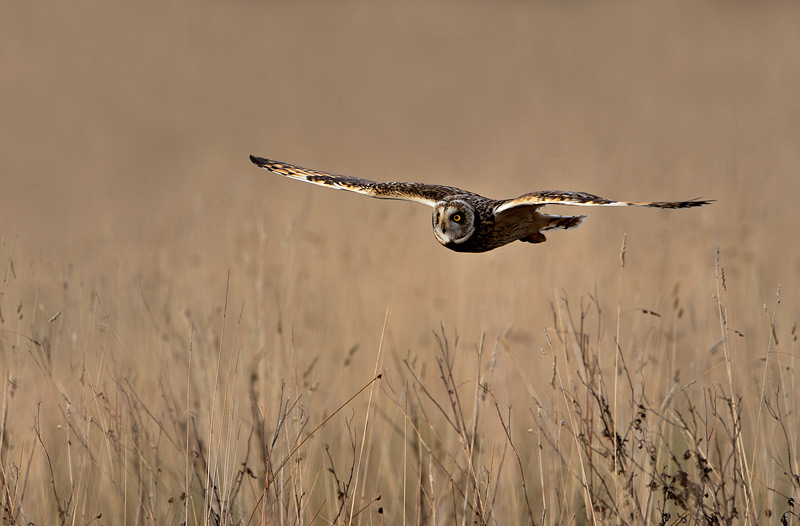
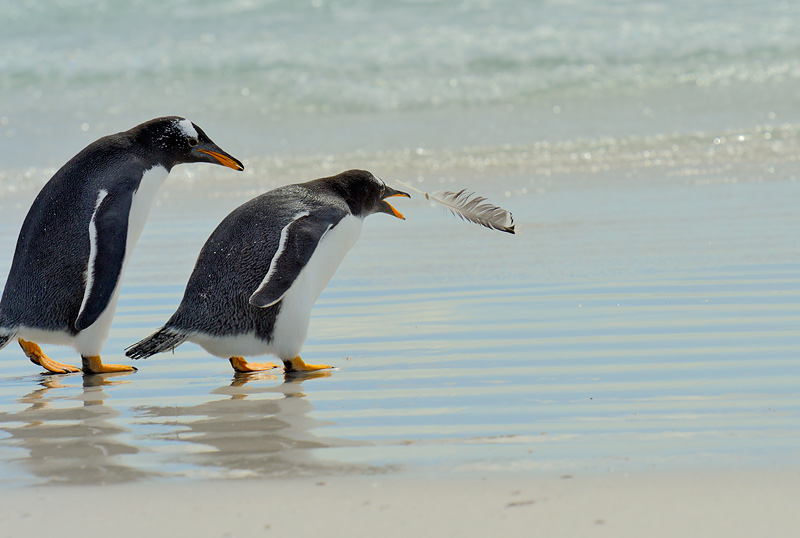
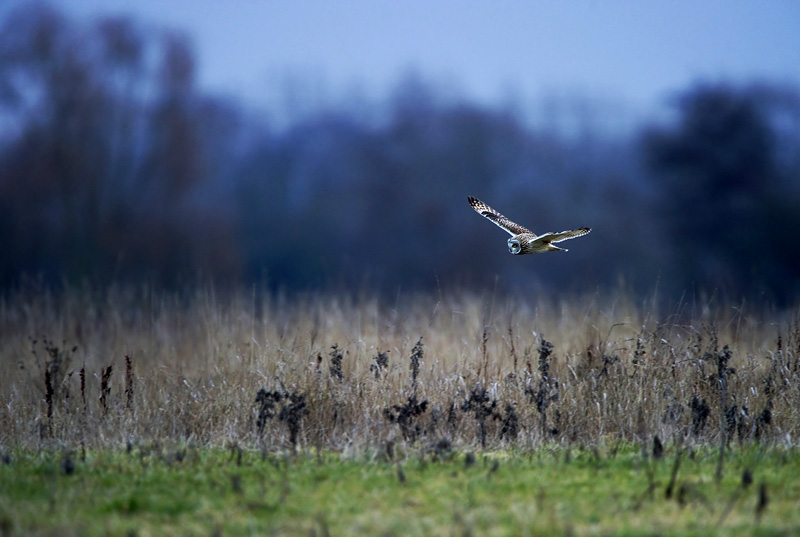
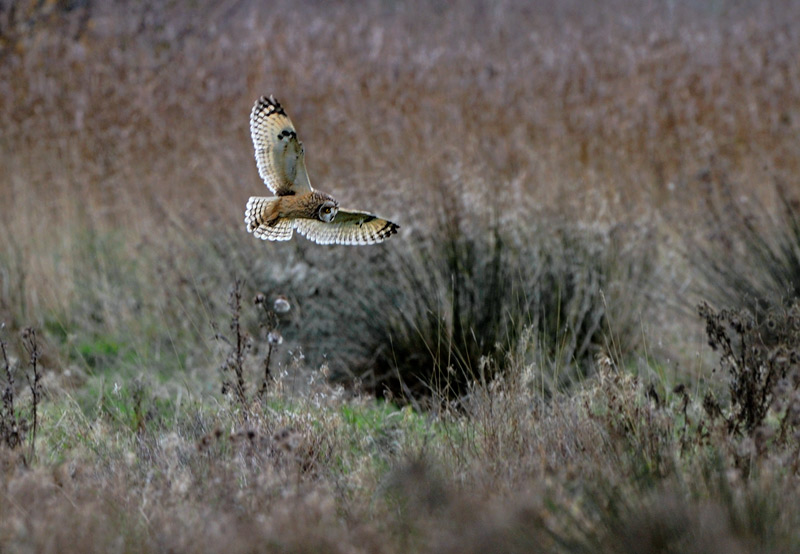
In June’s issue of Bird Watching magazine there is a wonderful competition to find the ” Bird Watching Photographer of the Year 2015“. In the Open section, the winner receives a day’s one-to-one in-the-field tuition with me (at a date and location to be mutually agreed), and a bundle of photographic accessories.
My one to ones are designed to help you improve in all the aspects of wildlife photography, while learning about the environment and the wildlife that it supports.They are designed to the very highest standard, enabling every participant to get the very best from my photographic knowledge and fieldcraft expertise, where all the locations chosen offer unrivalled photographic opportunities.
The winner of the Cover Star section will see their work used on the cover of Bird Watching (subject to approval), and will win a bundle of photographic accessories. Both winners will have their work showcased in Bird Watching and displayed at Birdfair 2015, and there are mystery prizes in each section, too. Please submit original unedited jpgs – all images must have been taken since the beginning of 2014.
Both winners will have their work showcased in Bird Watching and displayed at Birdfair 2015, and there are mystery prizes in each section, too.
Please submit original unedited jpgs – all images must have been taken since the beginning of 2014.
Send your images by email to birdwatching@bauermedia.co.uk (but not more than one email, please), by file-sharing services, or on a disc (which won’t be returned so please make a copy) to Bird Watching, Media House, Lynch Wood, Peterborough PE2 6EA.
The deadline to the competition is 31st July 2015 and your image along with others will be displayed at the British Birdwatching Fair where I will be presenting the prize to the winner on the Bird Watching stand. For all the competition information see inside June’s issue of this magazine where they have a special photography section. For full details of this competition then please see the following link .
Wildlife Ethics, some might say what does that mean? does it matter? In an age where we can get whatever we want twenty-four hours a day with little effort. In an age where wildlife is under great pressure we have a duty of care to all living animals to put them first and respect them and so the term “ethics” is born.
I first picked up a DSLR in 2008 and taught myself how to use a camera I twinned this up with my lifelong love of nature. We can all do our bit, we can all care about our impact on those animals, birds and other living creatures we come into contact with and the one word that is at the heart of my wildlife photography and should be everyone else’s is “integrity”.
This article for me has been years in the writing because it’s something I have always felt so strongly about and its one of the things I see some many that take photographs of wildlife getting so wrong time and time again. I have written several articles on fieldcraft, something again I feel so strongly about and the two go hand in hand for me. Since turning professional in October 2009 where I have made my sole income from my wildlife photography I have seen so much change.
Ethics and the welfare of the subject where instilled into me by my late mother, who took me to nearby woods and places where wildlife were as a small child. She learnt me about the circle of life, where my food was from. She taught me always to respect wildlife and listen to the woods, listen to nature and it will give up her secrets. Back then being brought up in a single parent situation my mum couldn’t afford a camera so my trusted 8×40 binoculars where always around my neck or in my bag.
I learnt very early on that once I came across a wild animal it was down to me how long that encounter would last. Meaning if I was nosy, didn’t respect the subject and did lots of moving around then that would impact on the subject’s life and they would disappear back into the undergrowth. So I learnt to become part of the landscape, often pretending I was the animal and I tried to think like them and act like them. Using those principles my encounters lasted longer and so my knowledge became better and better. But the most important thing was that the subject I was with was not disturbed or troubled by my presence and this was the most important thing I learnt and is the foundation to my work today.
I still have a book my mum brought for my eighth birthday presence which I have managed to keep with me all over those years. Nature and those encounters taught me many wonderful things and gave me an amazing understanding of wildlife and empathy for it and life. Growing up my mum had cancer twice and on both occasions nature and those places I visit today helped me cope with seeing my mum waste away before me.
My school years weren’t great, my current day dyslexia can vouch for those troubled years, in-between the home visits I became my mum’s carer and growing up was put on hold. Nature, drawings, Dippers, Barn Owls and others animals and places gave me great peace and it was an escape from seeing my mum dying. I was twelve when she first got breast cancer and it returned three years later when I was fifteen and that time it calmed her life after an amazing battle to beat this for a second time. I became an orphan at fifteen and basically brought myself up from then to the present day. I was looked after by my aunties instead of going into the care system until I joined the army at sixteen.
Those lessons about nature, its beauty and that respect still live inside of me today. I treasure those memories and lessons my mum taught me and that duty of care I speak about to all living creatures. Nature has helped me grow and survive and today I pay respect to that with my photography where each image I capture means something to me.. That’s a bit of background to where my beliefs came from, because to understand something or someone you have to understand the back story and what is behind those images or beliefs because everything started somewhere I believe.
What people take photos of is their business where they take photos is their business what I want and have always wanted since turning pro is the photographer to be honest and have integrity to their work where the welfare of the subject is first. Don’t make the animal do something or perform in order for you to get your images. Tell those that view your image and comment and award you those awards that you then go onto using to say your better than the rest the story and skills used to get the shot , the back story. If you can only shoot in zoos or captive that’s great for you and there’s nothing wrong the problem is with the explosion in photography and people not being honest and put the lives of animals and birds at risk for the image .
I see photographs derived from using flash, set ups , food placed out , animals made to do something for reward or food , animals flying through the air to reach food, where the photographer does not tell what’s the story behind the image. Changing an animals behavior in order to get an image isn’t right and not true wildlife photography in my eyes it really isn’t. I call it image making where you employ props and bait to trick the animal. It seems today wherever wildlife is someone, somewhere will put a hide in, a stick or perch/prop in and charge people for the opportunity to see and take the same photograph almost as the person who first discovered the place which is not wildlife photography.
Animals blinded by flash is a pet hate of mine, how dare the photographer do this to an animal and then tells us ” oh they don’t mind ” All living animals have an iris similar to a humans eye and any sudden change in light will affect the animals balance and movement which causes them a level of stress and disturbance. Until an animal can tell us themselves we have to go with caution and not use flash for the welfare of the subject. You can read an interesting article here to all those that use flash within the world of wildlife photography that defend it and make money from this practice.
Photography brings great joy to many people I see this but we are visitors to their world whatever way you look at this. Treat animals with respect whether they are behind bars or free, always put your subject first. Tell the truth behind the image , don’t impact on the animals life take pride in learning about the subject and its habitat, see how it interacts with its own kind, watch how it finds food and so on.
Applying all of this will benefit you as a person and secondly a wildlife photographer. In a time where there is great pressure on the natural world we need to step back , see the bigger picture and never impact on the subjects life. For many people the weapon of choice now is the camera, use this wrongly and you impact on the lives of animals that have no voice, that won’t be able to report your actions, it will be down to you on the ground to work in a way that gives the animal peace rather than stress by your presence.
Each day I see images and conversations on blogs and social media where everyone calming they have the subject’s welfare at heart then go and use flash or disturb the animal or get the animal to perform for food. It seems to suit at times other times not. I have found over the years that those with the most to hide become the most defensive and practice such methods as I describe here and all become friends together in this ever growing market of set ups where animals are made to do something in return for food or reward.
Diving Kingfisher shots where a fishtank is placed beneath a perch and fish placed in and so the Kingfisher dives into the tank. How many of these images do we have to see before someone asks “what’s behind the image?”. Birds flying at the cameras lens because a bird caller of their call is used and often results in a stressed bird who makes itself look bigger flying or running towards the camera to ward off the intruder it thinks is in its patch when its just a photographer with a caller with zero respect for the bird.
The photographer gets the shot and the praise but says nothing of the back story. There is a massive explosion in set ups being sold to the public where you can choose your background and perch. A photographer finding a subject or area that has been good to them and then the next thing they are selling the place and the wildlife to the public in order to make money is another massive market. I have places I take clients but they are all wild and nothing is prepared.
I then have my own projects and places that I wouldn’t dream of taking paying clients because this just duplicates my images and impacts on the welfare of the subject and their habitat.This is wildlife photography today in the UK where in most parts its better to make money than to think of the welfare of the subject and how your actions impact on that animal your getting to do something for reward as in the background a volley of shutter buttons go off from paying clients. But dare to say anything and you come up against the self-styled cartel which all turn out to be those offering such workshops and taking that easy money off the public.
I have visited places where the wildlife does not like my presence; the Farne Islands is where this Arctic Tern was taken is one such place. They nest right by a path you have to walk on to past these Terns. To see such stress was painful as I put my camera above my head and ran along the path. There were people there disturbing these terns on purpose for a dramatic shot using flash to brighten the underneath but never thinking would that impact on the subject. Ive not been back to the Farnes since, but this is just one of the many many places throughout the UK and abroad you can see the shocking behavior of photographers.
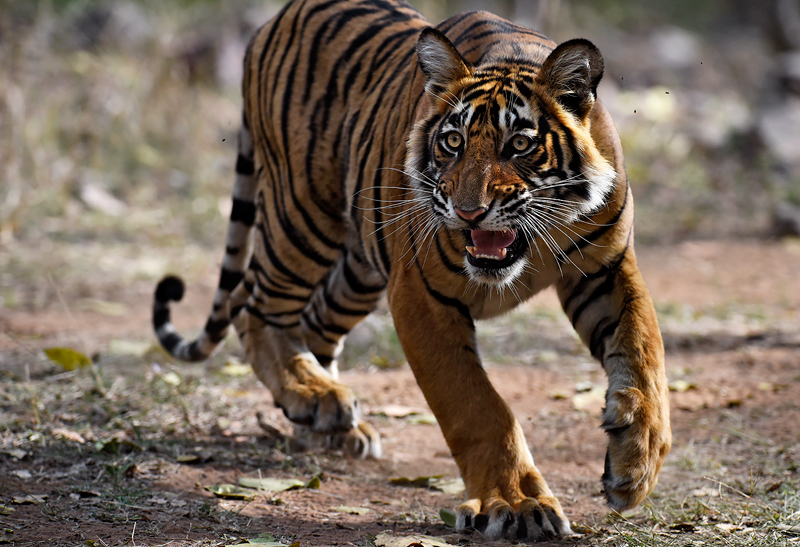
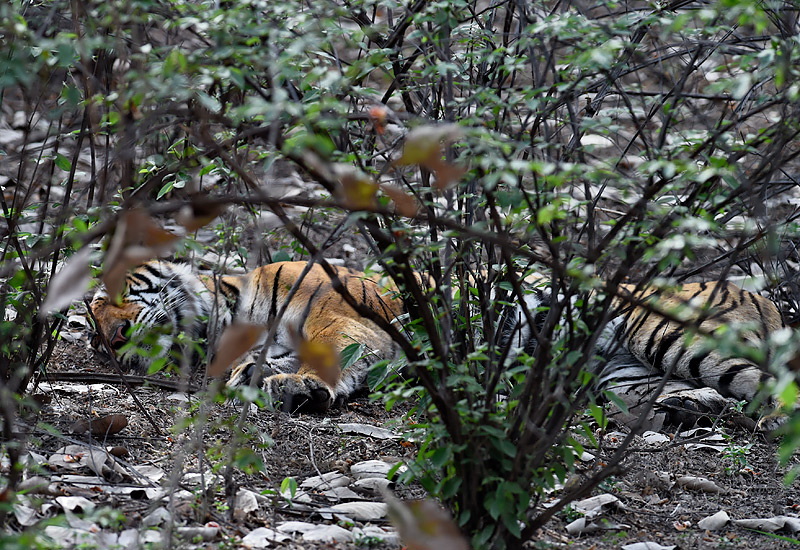
A few recent images from India. Each year I go I always pull away when I can from such disturbance on the Tigers, getting my guide to remove ourselves from the medley of pressure and stress from jeeps the Tigers have to endure. Once you find a Tiger you’re very rarely have that moment to yourself before the army of trophy hunters turn up. On several occasions over the years I have refused to stress the Tiger and follow so we stayed back and in the end the Tiger came back to where we were hidden.
I work ethically and my trips are run this way. If you book with me you get this if you want to be part of a circus then go book with others. It’s all about money there now and those that make the money will tell you its fine and the Tigers don’t mind, but behind that is a vested interest in keeping their money coming in and that lifestyle that has given them a platform to speak from. Over the years I’ve had many crossed words about “ethics” with people I respected and thought they respected the Tigers but when the chips where down all I saw was a selfless attitude to do whatever they wanted where the Tiger is just a cash cow for them now and I will never forget that or forgive them.
The image above is a Bengal Tiger cub following his mum who was disturbed by other jeeps. We where in place first and sitting and watching and witnessed this. On another occasion we were watching a female Bengal Tigress, who we were told is very shy and doesn’t do well seeing jeeps or people. her own mother a few years back was poached and her body has never been seen to this day. We waited for hours alone then a jeep turned up where someone in that jeep was making male Tiger calls. She woke up and moved off and growling all the time.
The list is endless, I have seen photographers in the water outside schedule one protected Water voles placing out a mound of salad leaves to get them to sit on. People walking up to nesting birds on the ground, chasing owls up into the air the list of shocking behavior I’ve seen is never ending and endless. Dead animals placed on the end of a fishing line and the dead animal reeled in as a wild owl watches then comes to take the prey the photographer has tricked so the photographer can get the image. Live bait is also used and the thought of this is just shocking.
So much of the true ethics and welfare of the subject is lost in today’s wildlife photography and this is something I truly feel and see myself. We have a duty of care to all living beings and for me we can all do something to minimize our impact on the countryside. When an animal, birds or any living creature shows clear signs of stress at your presence you have to back off and leave the them alone. Do not carry on adding more stress and more anxiousness to them.
I don’t work with captive animals or sets ups, I’ve never taken this easy route to getting paying clients and securing a regular wage or images making them look wild when they were captive or tame animals. Instead I choose to work “as seen” on the ground using my skills, fieldcraft, passion and ethics. This has brought its own problems over the years in my private life with lack of money and sticking to my beliefs. I lost my home of ten years and my wife because of those beliefs and my stance on set ups, ethics and putting the subject first which created its own stresses. I wouldn’t do set ups or captive for the easy money so we grew apart and the pressures of money, bills and everyday life took its toll. But I stuck to my ethics and didnt want to abuse that trust with wildlife my mum taught me.
I had to start my life all over again two years ago, moving from my home and getting divorced but never did I change my ethics or the way in which I work. Its better to be able to stand up and explain every image you took and its story where the importance of that subject was the first thought in my mind. In an age where we all want something overnight you cant rush or kid nature or people and your images and the back story to how you got the image are the most important things behind the welfare of the subject and come under the banner “ethics”
These are my thoughts in an industry where for alot of wildlife photographers a front cover or an award or how to win one is more important than the welfare of the subject and the mess you left behind once you go home. Ethics, fieldcraft should be the first thing you develop before passing yourself off as a wildlife photographer, something I am and take great pride in and my work. Be true to yourself and your work is something I’d rather die than give up and that’s my thoughts on ethics.
Ask what you can do for nature rather than what nature can do for you and who cares what award you’ve won or who has given you a free coat or tripod, if you do this for a living or just as a hobby you have to have that duty of care and integrity otherwise you have nothing.
Those lessons I learnt from my late mum are how I judge my encounters with nature today, not all will have such a story to tell or lean on but what I would say is everyone can put wildlife first, don’t change a thing that you see, just sit, watch and listen and nature will give up its secrets around you it truly will. The results will be a better encounter, an ethical image but more importantly a relaxed, happy and free to leave subject that has allowed you into their life for however long it lasts.
This has been a very personal account of where my love of wildlife started, at the same time where my own ethics where born out of without me really doing at the time. If anyone wishes to talk further about this then please feel free to call me or email me.
Thank you for reading this article and I hope in some way it helps you understand we can all apply ethics in some sort of way to our own wildlife photography whoever we are and for whatever reasons you take photographs of wildlife and we can all make a difference. Thank you to the nurses from Macmillan Cancer care for making my mums last days as comfortable as you could. I have donated prints to this charity that can be seen on the following link, many thanks.
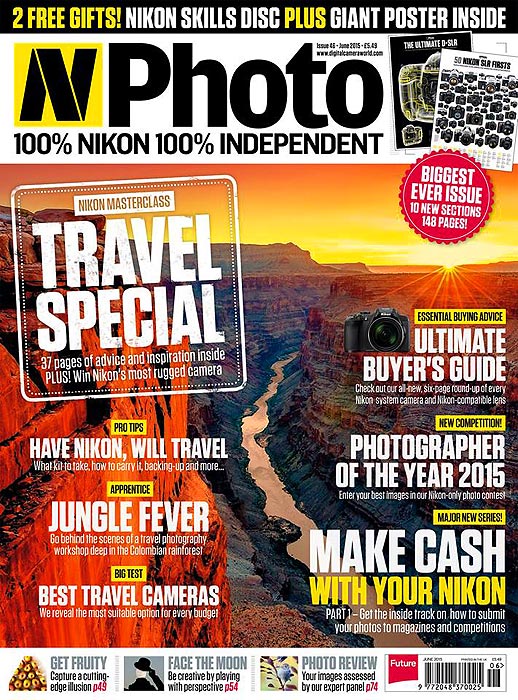
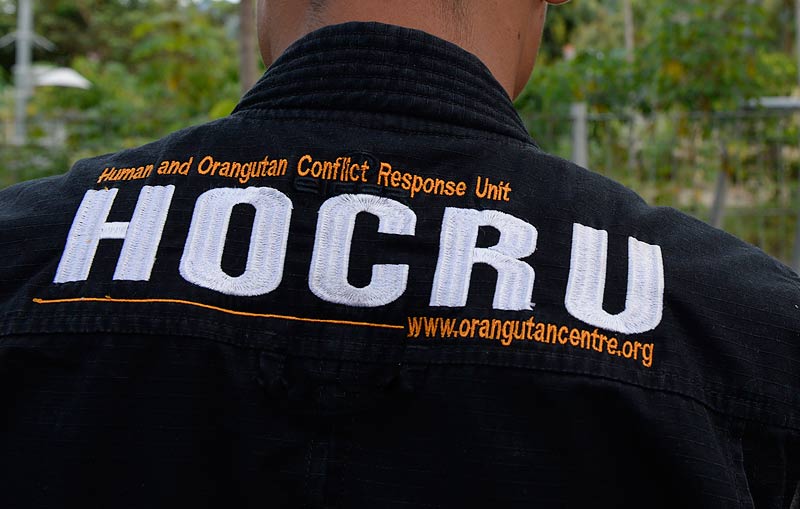
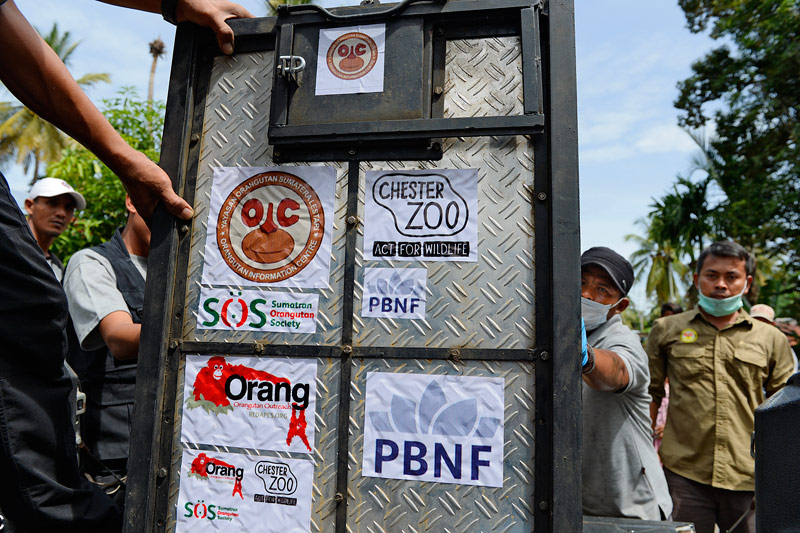
In the June issue of N-Photo magazine, out now in all good newspaper shops and online there is a brand new feature called “On assignment”. Paul the editor asked me if I could be the first photographer to launch this and talk a little about my recent two week trip to Sumatra shadowing and living with the HOCRU ream from the Orangutan Information Centre. You can see this post on my blog by clicking here.
The work they do is amazing and it has been a privilege to work alongside this team since 2012 on my first trip with them on my “Spotlight Sumatra” 2 week trip. To see those blogs going back a few years now please click here. Below is the first rescue I did with this amazing team back in 2012.
It was a very tough 2 weeks back in February of this year, but very rewarding and I hope my images continue to gave those critically endangered Sumatran Orangutans a “voice” outside of their native home of Sumatra. At the same time show the world of the wonderful work these charities are doing on the ground.
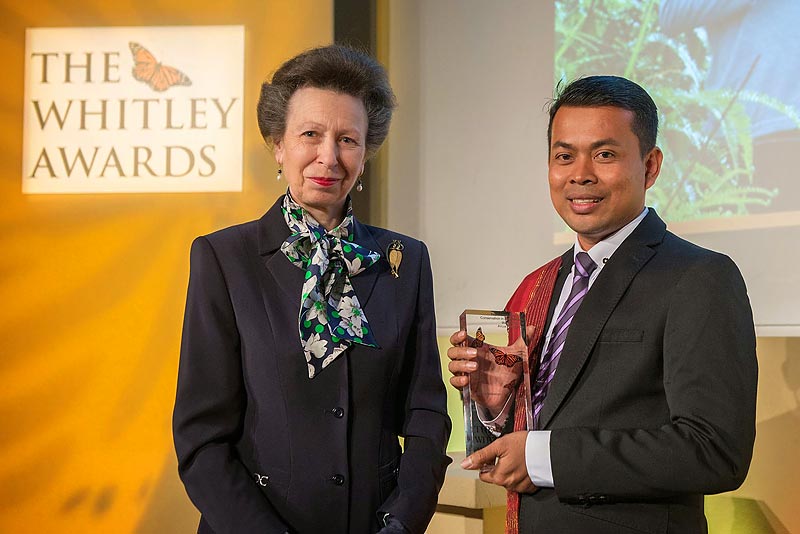
Since my return from Sumatra, Paunt Hadisswoyo the founder of OIC- Orangutan Information Society has won the prestigious international nature conservation award & prize ” The Whitley Award. Which recognizes his tireless work to save these great apes and their forest homes at the same time educating the local people in saving their country and in return you save all those critically endangered animals that live there ie- Sumatran Tiger, Rhino, Elephant and Orangutan. Click here to see this amazing news.
Paunt is seen here being presented by the HRH The Princess Royal at a ceremony at the Royal Geographical Society, London and I couldn’t be happier for him and all the OIC team on the ground back in Sumatra they do an amazing job and often at their own risks, so well done all.
The magazine is available in many formats from online to a magazine format available in most papershops in the UK. I hope you enjoy this and it once more sheds light on whats happening there and also to those on the ground working tirelessly to save these great apes and their forest homes. I also go through a few tips and camera information on this assignment too. Thanks to Paul and the team at N-Photo for asking me many thanks.
Sumatra, the remote, Indonesian island where I was shadowing the rescue team –HOCRU from the Orangutan Information Centre- OIC. during the two weeks there. The last time I worked with these guys was just before the Spotlight Sumatra exhibition in London, which was an amazing success.
As soon as I arrived in Medan the capital of Sumatra I was picked up by Panut and we headed over to the HQ of OIC. We went through a very loose plan for my trip because nothing is promised or can be planned with regard to the rescues of Sumatran Orangutans that find themselves cut off, surrounded on all sides with conflict palm oil. This rescue team was set up by Panut as a direct response to these conditions these crucially endangered orangutans face on Sumatra each and everyday.
With the preparation, travelling and release there is alot of time involved with each rescue so during the two weeks I rarely had any free time. My aim by shadowing these guys is to show the world what they do and how etc. This is the only rescue team on the island of Sumatra, something when I say it still surprises me because the scale of the problems in Sumatra with Sumatran Orangutans are massive.
After spending the night travelling we reached the house in which we were to spend the night ready for the following morning when we were to meet with the forest police force and then go and rescue this orangutan. OIC has a network of local people that help them, and they also put the team up whenever they can, looking after them.
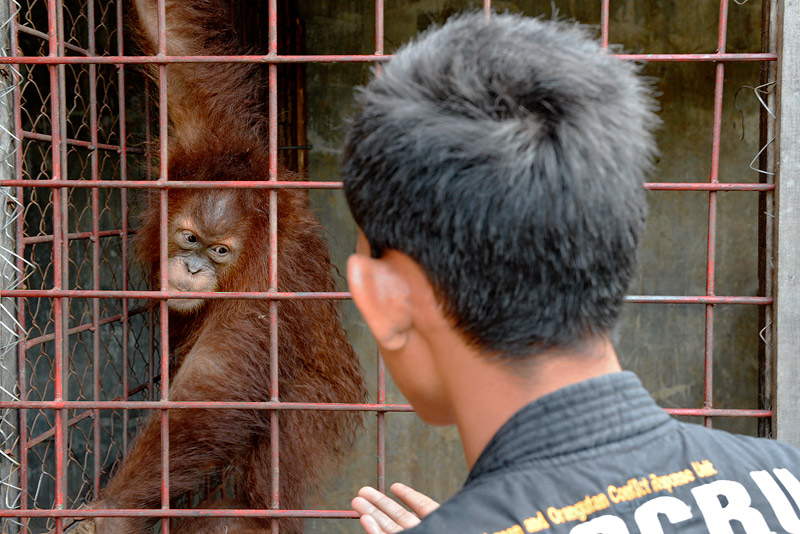
On the morning of the raid we were up early, I dont sleep well when Im getting ready for something so I was up way before the rescue team from Orangutan Information Centre. We had some breakfast, a team talk from the director of OIC- Panut and we set off. All I knew was a young Sumatran Orangutan was being held as a pet and that we could gain access into the courtyard at a certain time and with the help of the local/forest department police we would rescue her.
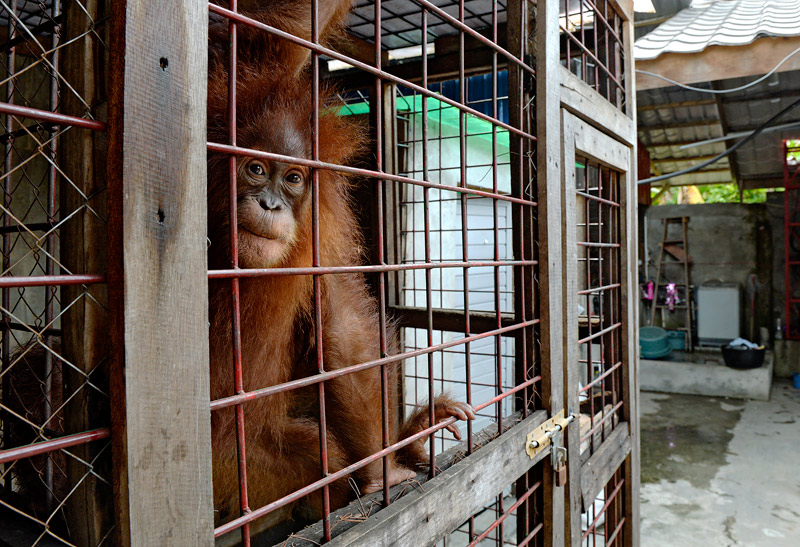
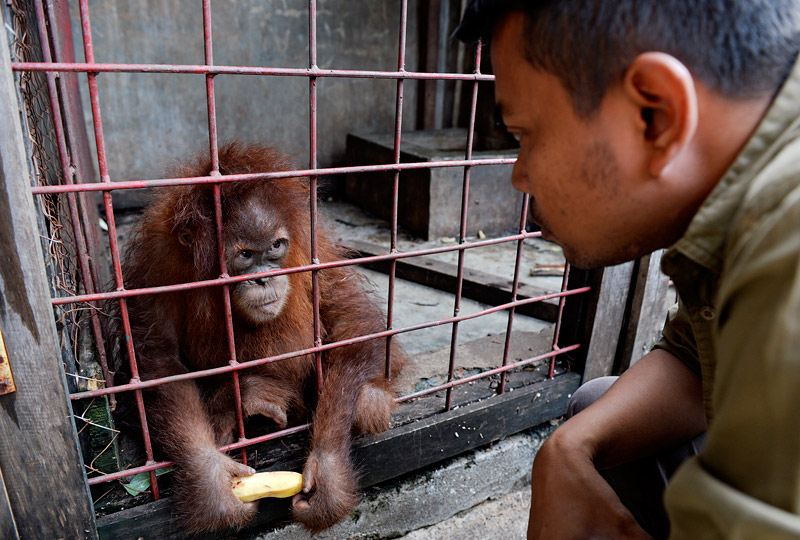
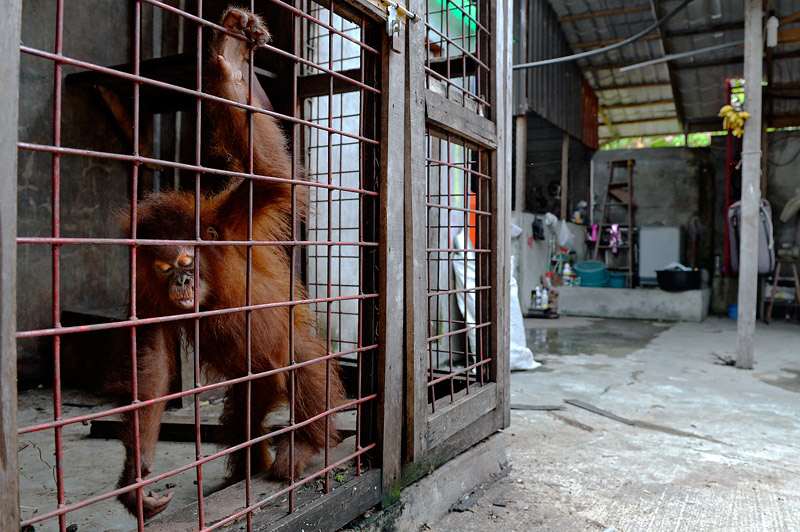
On the way I got my cameras ready, settings and lens chosen, once we arrived we parked up we entered the small courtyard and to my left I saw a tiny cage with a Sumatran Orangutan slumped on the floor. The smell of urine was really bad as this tiny head lifted up and made eye contact with us. In the background I saw the owner come a man around 45-50 average build and he was talking to the police and team as I lay level with her and spoke to her. She was banging her body into the cage, perhaps excited there were new people in the yard. I’d like to think for those brief moments she came alive and was happy as I was saying “you’re okay now you will be free in a minute so relax”.
Then the tone and tempo changed and the man was standing in front of me talking loudly in Indonesian and waving his arm with a pointed finger. I ignored him and carried on taking images of the young female.Then I heard ” Craig… we have to go he wants us to leave” I was puzzled and said very little. Once back in the car I was told the police got scared, didnt want to take the orangutan or apply the “Law” that they have the power to do. The man holding the Orangutan told them he was an ex-Aceh rebel and was part of the mafia in that area and that if the orangutan was taken we would all disappear.
A common problem I have come across in Sumatra, fear, intimidation, corruption, bribes, money and a total lack of willingness to apply the rules the world have applied to these critically endangered animals. OIC dont have the powers of arrest, they depend on the police to help them and have to pay them for their time, petrol and any other costs. Those we met on that morning came in civilian dress, weren’t wearing their uniform and had little interest in their work or helping the orangutan. Soon after they dropped their invoice off to Paunt though for prompt payment.
The helpless task of saving Sumatran orangutans is made so much harder by the corruption there and to this day I am told this female is still being held illegally. She was estimated to be 6 years old and the children there told the team they had had her a number of years. This tiny small cage has been home for years and it was very troubling and upsetting to see. Efforts to gain her freedom continue, these images show just what a tough and emotional job these guys have and even when everything is on their side things still don’t go their way.
I’d like to think for a few moments her life changed as we were there, she woke, took food from Paunt and begin moving around her tiny cage. Leaving her behind troubles me to this day. This was as close to the frontline as you can get , in the yard of a mafia mans home seeing the results of the illegal pet trade close up for myself. The following images visualize what we saw on that morning I hope, and are dedicated to that Sumatran Orangutan.
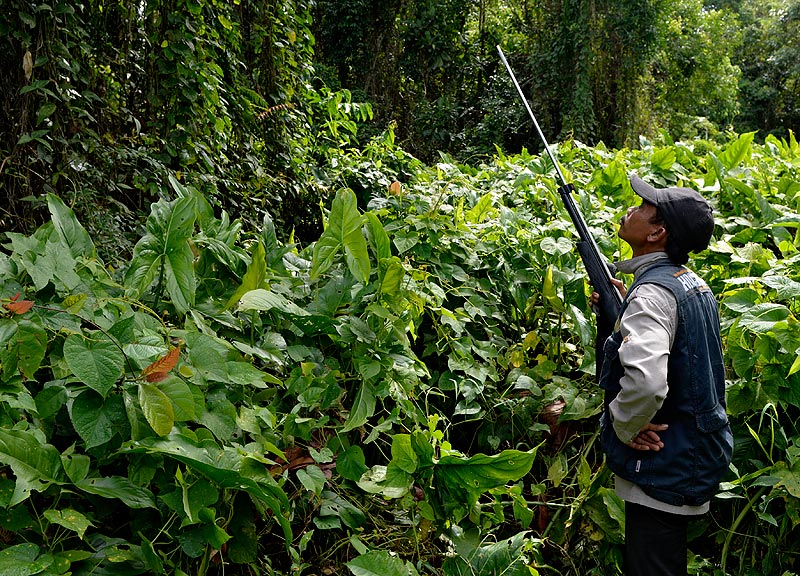
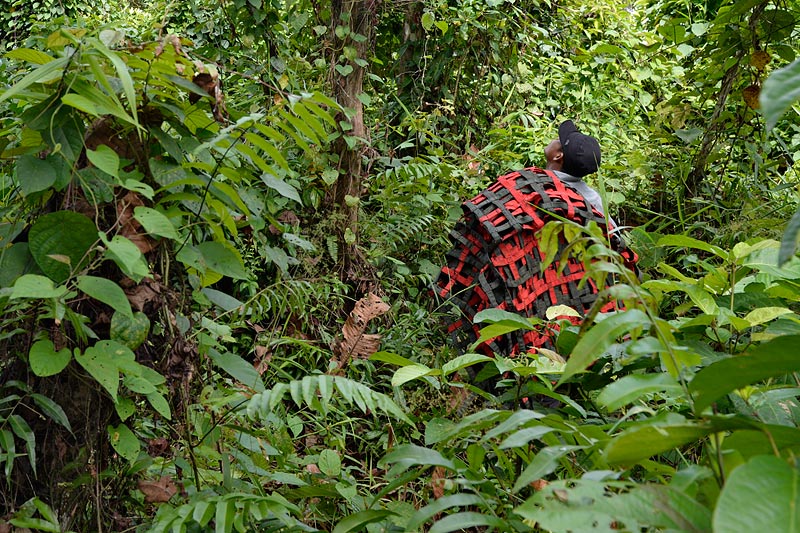
We then headed back to the locals house to eat and rest for the next day as the plan was to locate the female and her baby and fingers crossed rescue her. Again we woke early, got our gear together and set off for the area in which the reports had come into the team of her presence. A number of locals were helping to locate her so when we arrived the team knew roughly the area. I watched as Ricko the vet and the rest of the team put into practice a well drilled operation they have gone through many times.It was then just a matter then of waiting, watching, listening and fingers crossed we’d find her.
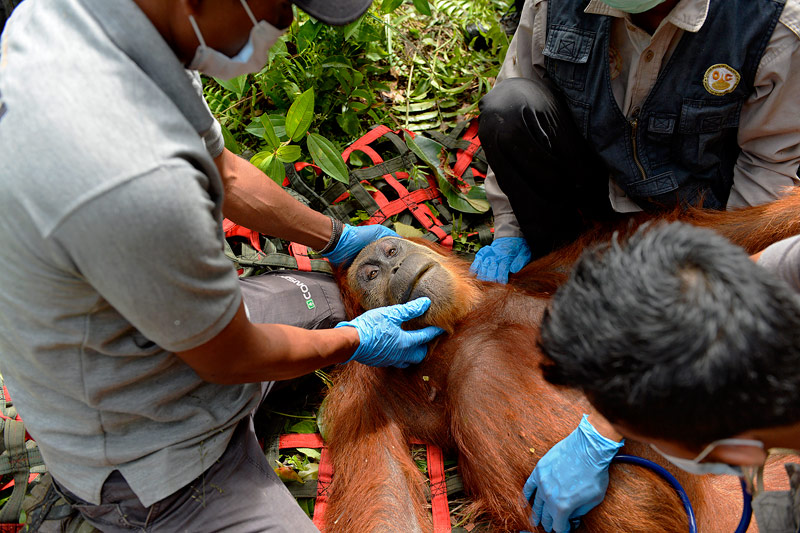
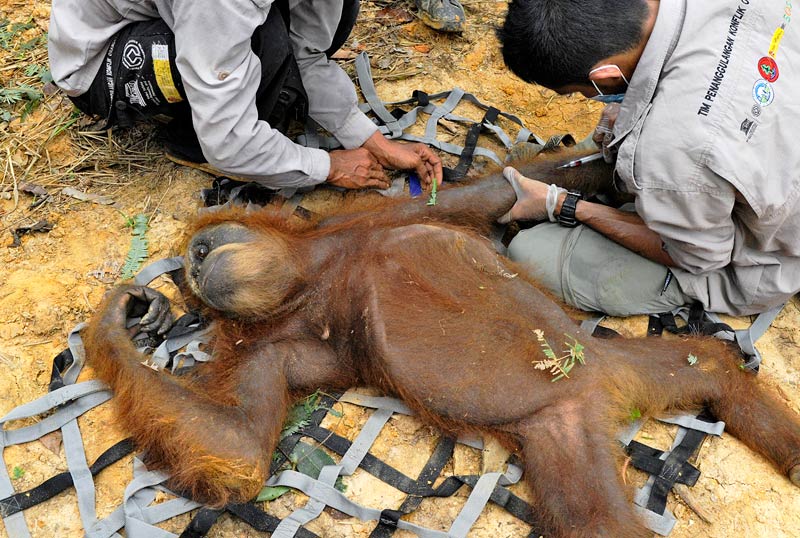
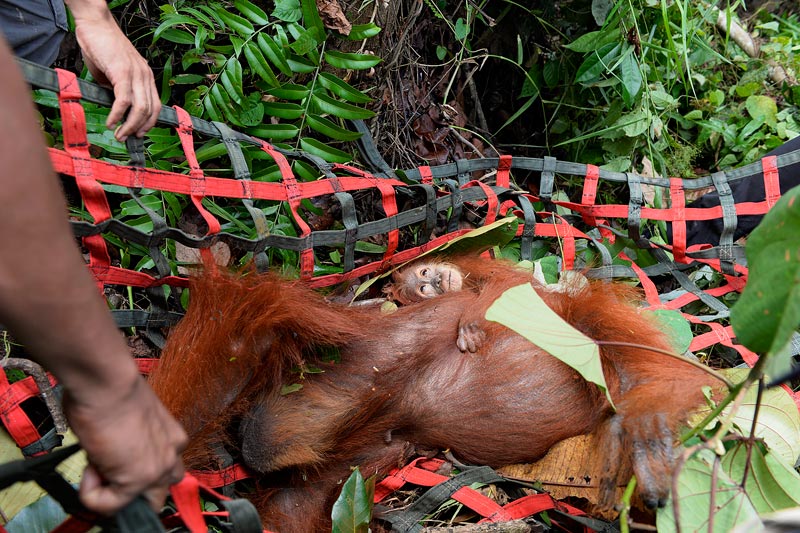
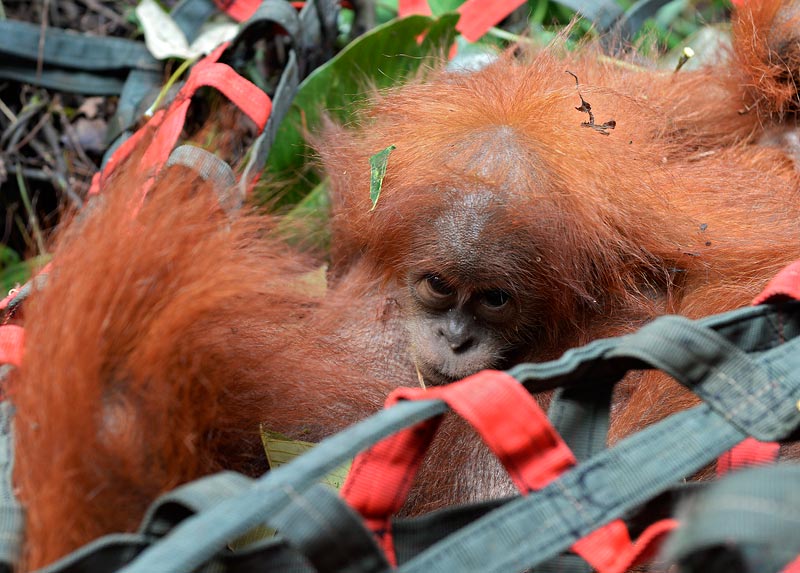
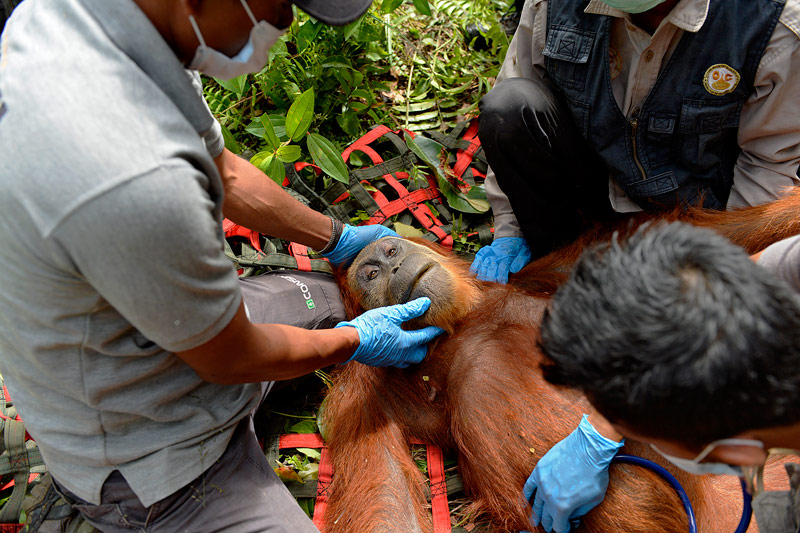
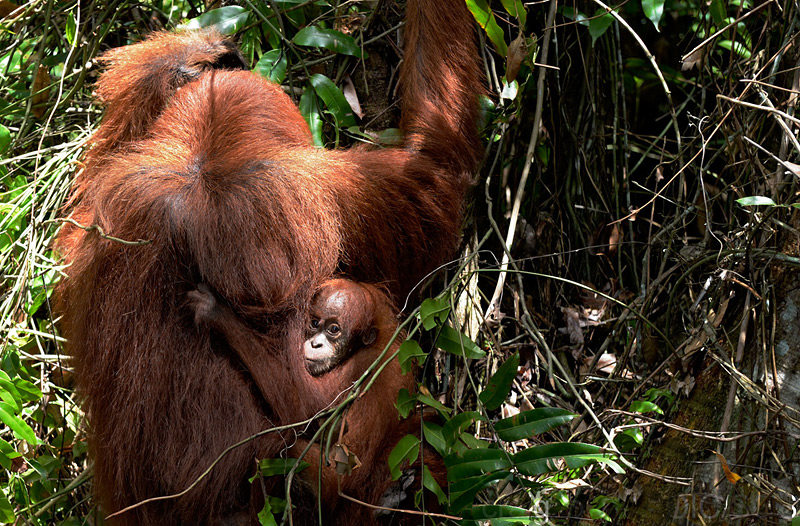
The shout came back and I followed Ricko the vet, walking through the fragmented forest, we came across several trees and it was then I first saw her. The marksman had already darted her and soon after she fell into the large net held out and open below her by the whole of the HOCRO team as well as some locals. In a matter of minutes I heard a loud crash and she and the baby fell from the trees and landed safely into the net. The team took her to a safe area so they could do their vital checks.
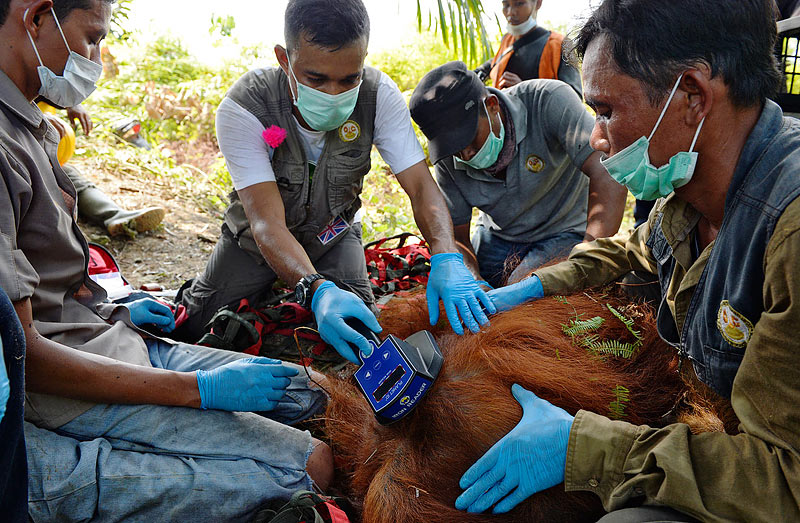
When you see these beautiful animals up close you are always struck by their size and colour. It is amazing to be so close to one and I remember my first rescue with this team back in September 2012. Once in a safe place the baby was taken from the mum in order for the check to be carried out. A member of the team got the baby and walked off very carefully so as not to stress the baby any further. Then the vet, Ricko checked the female, inserted a microchip, checked for any injuries, state of heath and so on.
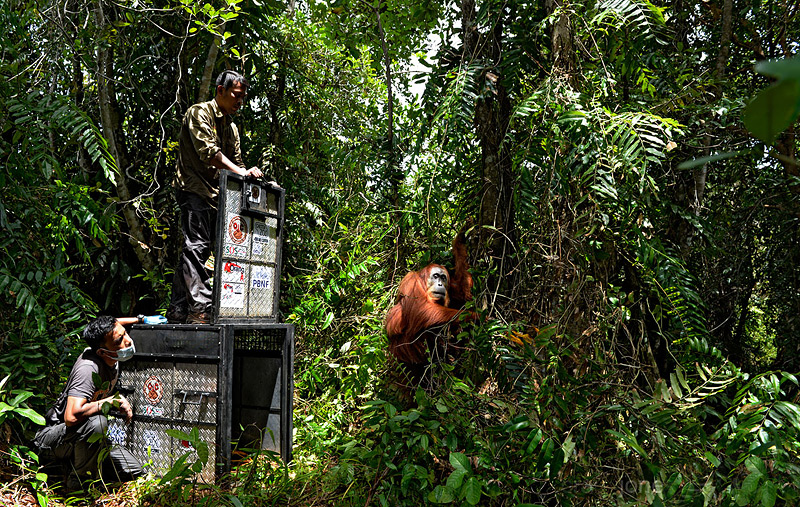
Once this was done the team carried her to the rescue truck and reunited mother and baby as they placed them both in the cage that was to take them to a safer part of the national park and a second chance of life. We then drove an hour or so to the release site where we had to cross,shoulder deep a river to reach the safe part of the national park.
It was great to witness all this and the end result once the team lifted the door of the cage and slowly she came out along with her baby and climbed the first tree she saw. Just wonderful to witness and see and it was a great day for the team and these two Sumatran Orangutans. We then crossed the river once more which I must say was so refreshing as the temperatures in Sumatra at this time of year is a blistering 36-38 degrees and the humidity levels are very high so you’re always wet anyway.
Once back to our base in Aceh we washed off and relaxed for a while before the 10-12 hour drive south back to the HQ of OIC in Medan. The driving and planning like I say often takes many hours if not days so even though a rescue itself is short its the before, after and traveling that makes the hours flyby.
Once we got back to the headquarters of OIC in Medan a long 12 hour drive the HOCRU team cleaned and packed away the kit and headed home. Some had been away from their families for nearly ten days so everyone was looking forward to the rest and time with loved ones. I cleaned all my camera equipment and charged batteries and backed up my images and did some editing of the rescue images to send back to the UK for SOS– Sumatran Orangutan Society. That night I slept at Panuts house and met his lovely family, wife, and two young children, one boy and one girl. The following day I woke and had breakfast and then headed to the office with Panut and carried on doing some editing to get the images back to Helen, the director of SOS. The news was breaking back in the UK and many sites carried the story and images – EIA– SOS.
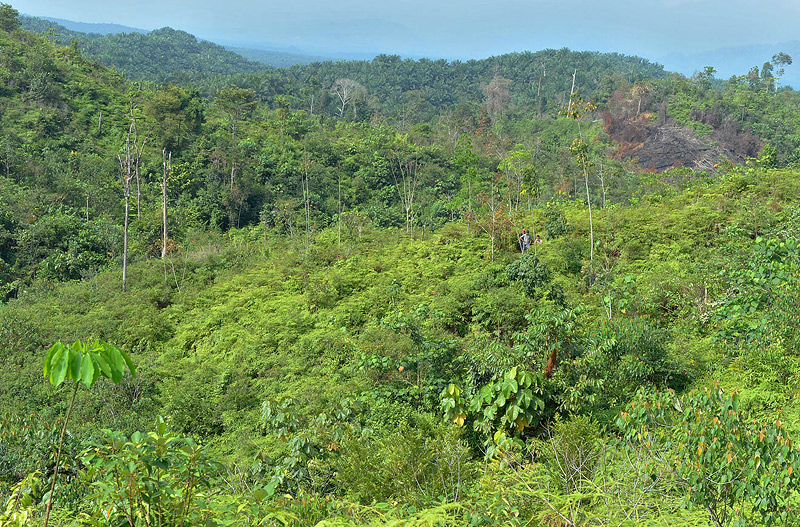
That afternoon though everything changed, the team had a call to let them know a male Sumatran Orangutan had become trapped in land just outside a palm oil plantation. After several calls the team were called in from their homes and we all gathered our gear and headed north once more to the province of Aceh. All we knew again was their was a male there that had wandered into land where locals were working and they had become scared.
OIC has posters up all around this area and with the help of locals they ring and alert them should a Sumatran Orangutan come into conflict with humans or became trapped and this was a perfect example of that once more. I had been in the country less than a week and already we were on our way to our second rescue it was unbelievable and quite sad that the Sumatran Orangutans are in such danger because for every one that gets rescued there must be many more that don’t and end up being killed or sold into the pet trade which really saddened me.
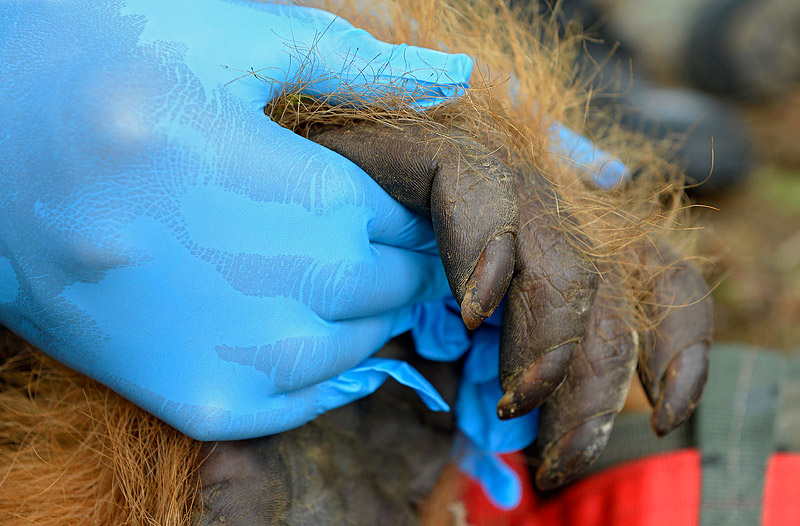
We reached there quite late, with around a couple of hours light left. The team went into their well drilled routine and off they went to try and locate this male. After a while we caught a brief sighting of him, a hand then he vanished. He seemed to know how to hide and the sun set that night as he gave us the slip. The search was called off as dusk fell, we stayed in a nearby plantation which were helping the rescue team. They made us welcome and cooked some food for us which was a welcome break as with the travelling and searching not many of us had eaten. We then got our heads down and looked forward to the morning.
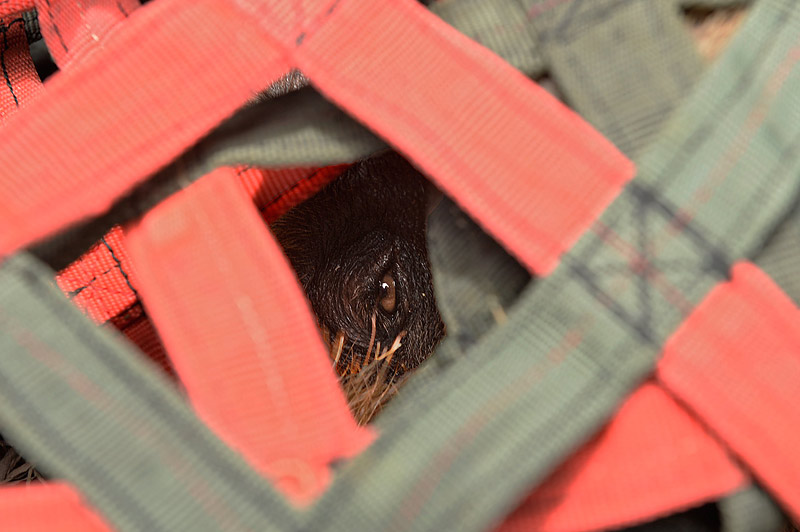
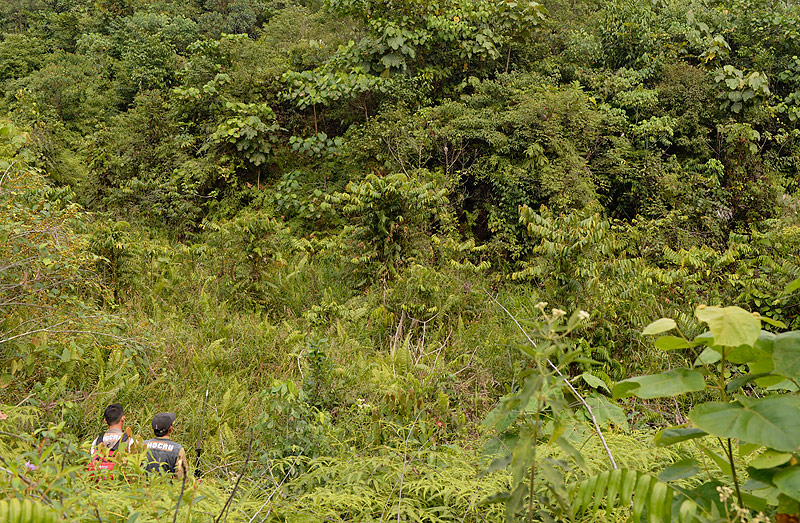
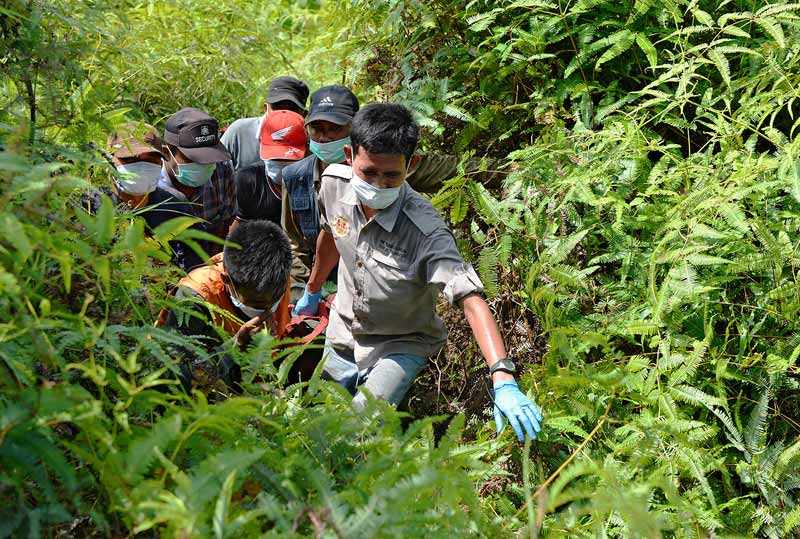
Before first light we were all up and in place, the team were searching and watching for any tell tale signs of movement. After searching for two hours, they found him, I was on the top of the valley looking down as the team went in. Not long after they had darted him and then began the long walk to the top carrying him in the net with the locals and people from the nearby plantation helping to carry this massive male to where the vet could check him.
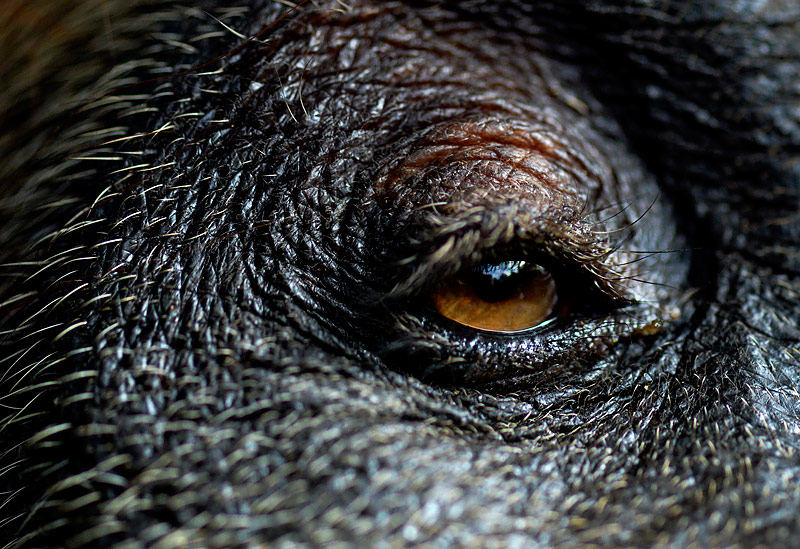
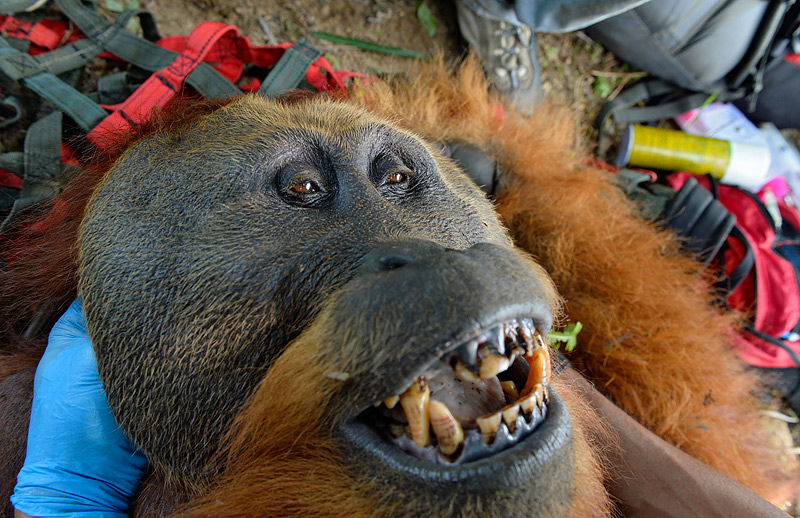
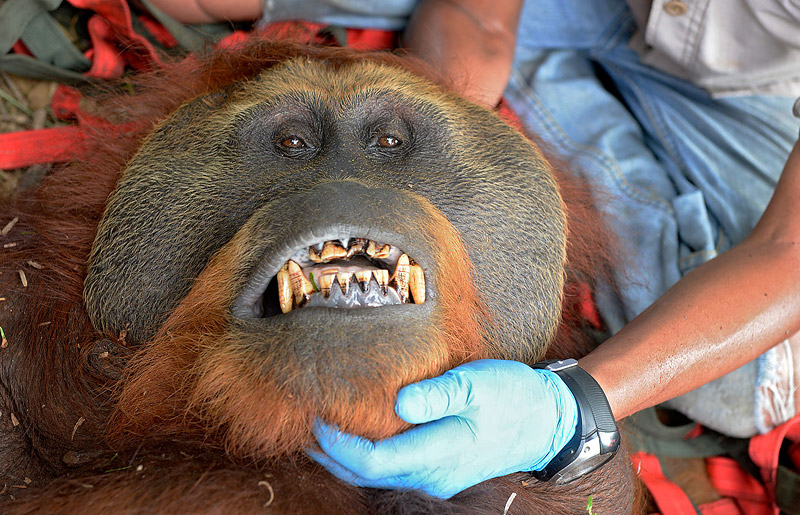
The male Sumatran Orangutan is the most beautiful of all the great apes. With privileged access I wanted to try to reflect that beauty within an image. After the team had done all checks on him, I was given the nod by Ricko the vet and I took this very personal image again with my macro lens. Being so close at times felt surreal, 5-6 times stronger than man, this male whose age was around 35 was in his prime and very handsome. He wouldn’t have woken up from the tranquilizer given to him at the point of rescue but still being this close to such a massive and powerful ape made my heart beat so fast. His facial hairs I love and are one of the key characteristics Sumatran Orangutans have from their Borneo Orangutan cousins. The following images take you through that days events.
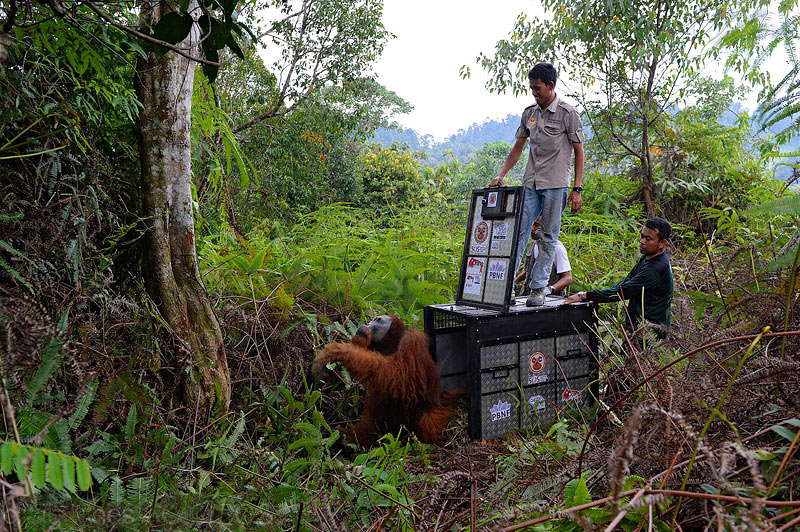
These are the HOCRU team and some of the helpers from the plantation and locals that helped to carry this massive male pictured above. Once he was safety in the cage we loaded up the truck and headed some distance away to the national park to release this beautiful male back into the rainforests where he belongs. When the gate on the cage is pulled up I’m always nervous as to how the Orangutan will come out, they always climb the nearest tree and vanish. This was no different, so amazing to see and witness though and this image below captures that wonderful moment.
As we headed back to Medan from Aceh the team were over the moon and so was I. We drove through the night to get back and once home everyone was so tired. The rescue team were given a few days off by Panut and headed home. I backed up my images and headed to bed also. In just over a week on the island of Sumatra I had witnessed three Sumatran Orangutans rescued and relocated and it was amazing to see and witness. As I closed my eyes that night I hoped they were all doing well back in the wild.
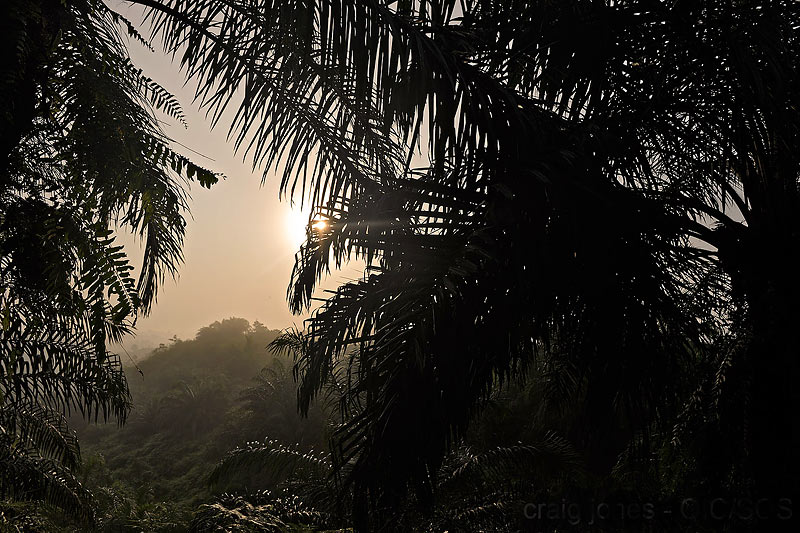
My itinerary gave me some time to edit and get the images ready for OIC/SOS over the next day or so and I had time to sleep and get some much needed rest. While you travel around Sumatra it’s hard to escape the vast palm oil plantations that cover most of Sumatra now and also the deforestation that litter the landscape of Sumatra. The following words and images reflect how I saw this and how I felt driving through these soulless places.
“THE BIRDS DONT SING ANYMORE” by craig jones
Soulless, a lifeless landscape of palm oil forests. The sun still rises in the East, each day it tries desperately to bring life to the spot where once some of the worlds finest rainforest stood. But nothing grows, nothing lives apart from alien palm oil trees
Nature wont forgive, a defiant act, its last stand against those that came without warning ripping every bit of life out in such a brutal manner, killing everything that lived there.
Nature wont allow the same to happen again
Over the next few days the plan was to visit Medan Zoo for a mission that I hope will end happily for a certain animals while I photographed some of the conditions the animals live in there. After that I headed to see my friend Darma a guide for the forest who I hadn’t seen since September 2012 when I spent several days trekking wild Sumatran Orangutans. I spent some time in the jungles with him again and some much needed peace and beauty after the last week or so. Then I spent time with the HOCRU team in the field once more, after which I spent a wonderful day with the Sumatran Elephants before doing some undercover work and photography. All of this will be covered in my next blog.
I hope you have enjoyed this first blog and if you’d like to donate to this rescue team, the only one of its kind on the island of Sumatra then please see this link many thanks.
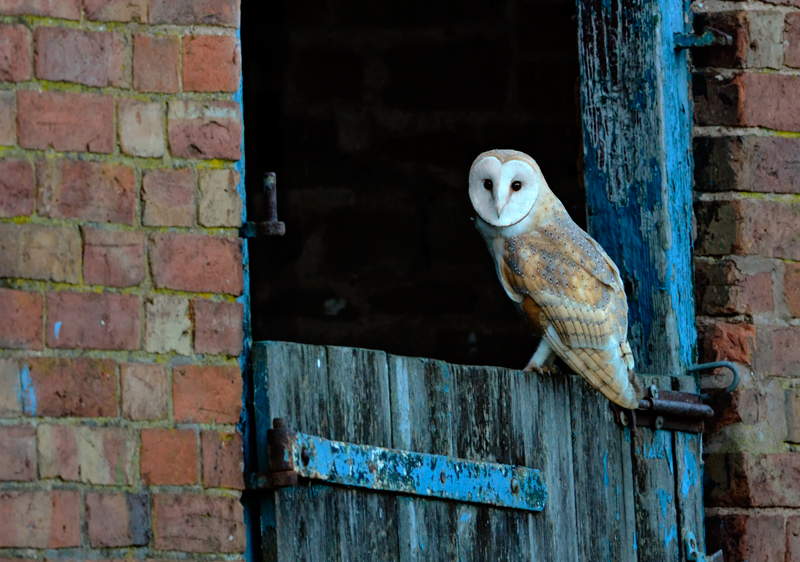
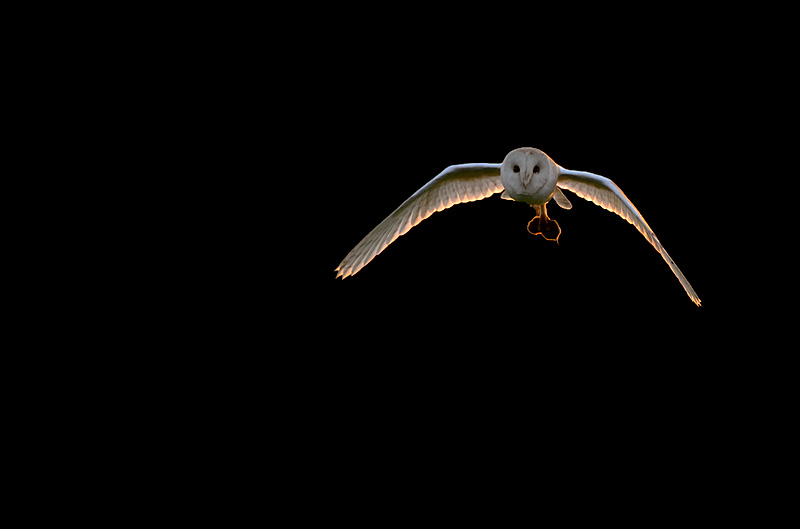
The Barn Owl trusts 2014 population report has just been published and it was a much better year for one of my favorite birds, the Barn Owl. After the disastrous previous year in 2013 one of the worst on record for Barn Owls 2014 was much better. In most county’s of the UK the breeding populations where up and all reported successfully rearing young which is wonderful news.
I donate my images to this trust because simply I love Barn Owls and have done all of my life. Proud to say the trust has used my image on the front page of the report which is lovely to see. Making a difference and helping those subjects you love is something my photography enables me to do of which it gives me great satisfaction. We can all do something to help wildlife I feel and I have done since the moment I turned professional.
To see the full report click on the following link. This month also see’s my article on these amazing birds in the wonderful Wild Planet photographic magazine. click here to see this. I hope the population carries on growing and good luck to everyone that helps these wonderful birds.
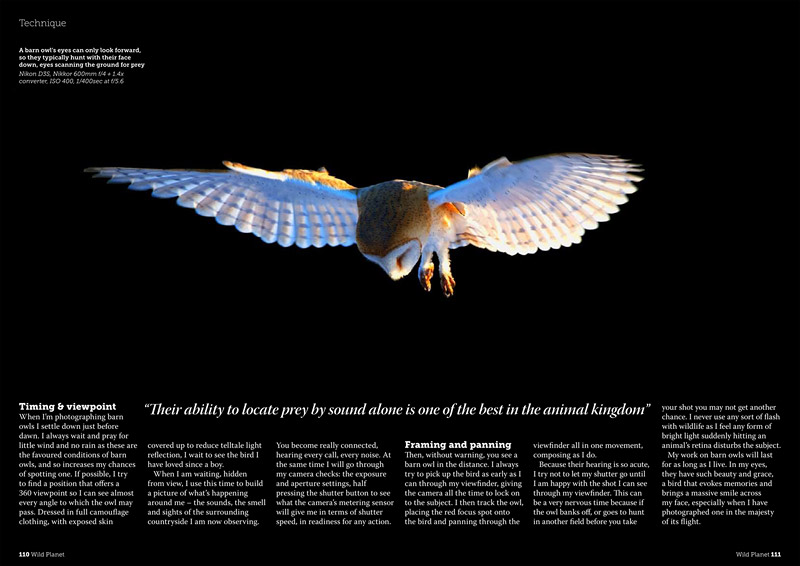
In the February’s issue of the highly acclaimed photographic magazine ; Wild Planet I have my third article published to date, talking about my life-long love of Barn Owls and the struggles they face with the changeable weather conditions here in the UK.
My first memories of Barn Owls are from childhood, where I’d rush home from school, dump all my school bags, pick up my little rucksack, bird guide and binoculars and head on my push bike to a nearby stretch of farmland not far from my home in the hope I’d see a pair of Barn Owls Id spent many years watching. I did my first ever project on Barn Owls for the the Young Ornithologists Club (YOC) which is now the Wildlife s Explorers Club. Recording trips in and out of the nest with what prey, collecting pellets, drawings and all sorts it was amazing.
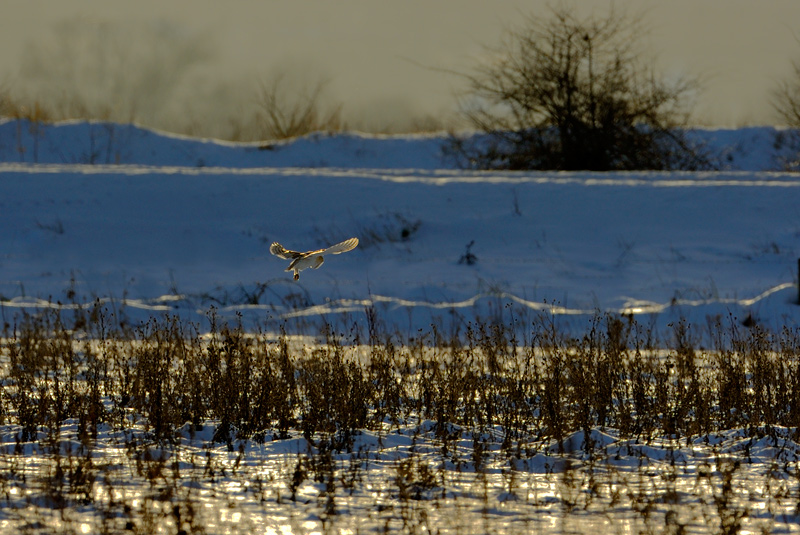
Quartering over farmland, hovering with moth like silence, flying effortlessly on the wing in the half-light at dawn or dusk is the supreme hunter, the Barn Owl. A bird that has always created a sense of great excitement and fascination for me. In British folklore, a screeching Barn Owl is believed to predict that a storm or cold weather was imminent. During a storm, if a Barn Owl was heard, it indicated that the storm was nearly over.
You wait and wait for a passing glimpse and a view into this bird’s life entrenched with mystery, then from nowhere and without warning one turns up in perfect silence, gliding, riding the currents of air, traveling effortlessly. Eyes glued to the ground beneath, on the lookout for small rodents that they feed on, as you witness their very distinctive appearance with a white heart-shaped face with no ear tufts and sharp black eyes all contributing to its striking appearance.
Those large black eyes only let the Barn Owl look forward in a fixed position and cannot move to the side, so consequently the Barn Owl has to turn its head to see to the side or back. Their hearing is amazing and the ability to locate prey by sound alone is one of the best in the animal kingdom.
Barn Owl’s feathers make them perfectly adapted for silent flight, but this makes them prone to water logging so they are not well suited to hunting in wet weather. The key to an owl’s silent flight is in its feathers, the next time you find an owl feather, turn it on its side and look at the edge — the line of fibers is scalloped, like a stretched seam. The slight alteration in shape allows the feather to cut the air without making sound, making them perfectly aerodynamic.
For more of my article, how I work with wild Barn Owls and alot more information then please click on the following link. Also there is a link to Barn Owl Trust, based in Devon who have brought out a conservation handbook on Barn Owls, its a comprehensive guide for ecologists, surveyors, land managers and ornithologists.
Some of my images of Barn Owls were used in this handbook and I also help the trust with my images to help to raise awareness of these owls and the issues that face them.
I hope you enjoy the article as much as I did writing this. Over the last couple of weeks I have been out and found a brand new Barn Owl sight in an amazing and old setting that Im looking forward to working on this year as one of my major projects. Also the family of Barn Owls I photographed a couple of years back have also returned so it looks very promising this year with regard to Barn Owls fingers crossed.
Barn Owls are protected by law and so shouldn’t be disturbed so please be careful if or when you come across one. They have suffered in recent years due to extreme weather so they need all the help they can to build back up. The information and protected status of this owl can be read further on this link.
I hope this winter will be kinder to them and I look forward to showing you my new images of Barn Owls in the coming months, many thanks.
In 2016 I will be heading back to the wonderful island of Madagascar. A truly amazing place and so diverse in the species of wildlife there.This trip is now live on my website and already a couple have places have gone. So if you’d like to join me on this amazing photo tour in August 2016 then see the following link for more information and trip details.
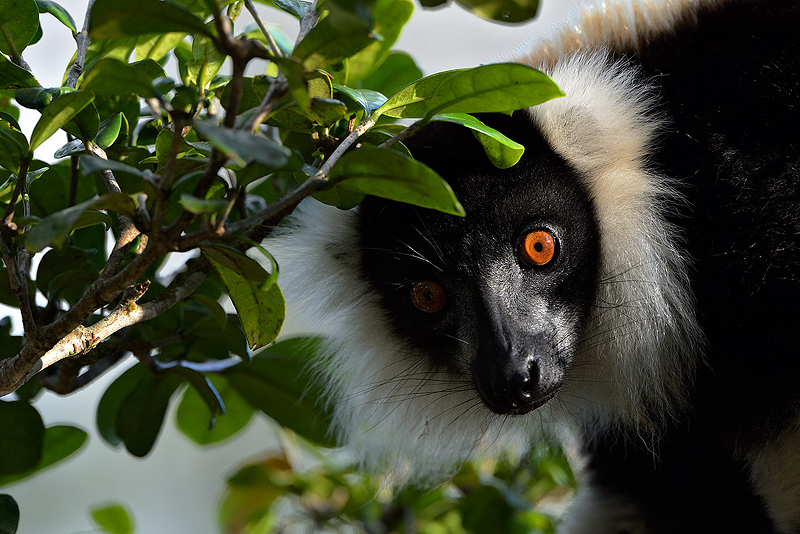
The 12 day trip is open to non-photographers also who simply have a love of wildlife. Also its open to people living outside of the UK as we can all meet in Tana the capital at the start of this amazing adventure. This image of a Black and White Ruffed Lemur was taken on my last trip there and its what in most parts the island is famous for, its many species of beautiful Lemurs found nowhere else on the planet. And below is a close up of the truly amazing Leaf Tailed Gecko also taken on my last trip there.
Any questions or queries about this trip then just email me, and I hope you can join me on this truly amazing photo tour to this stunning island, many thanks
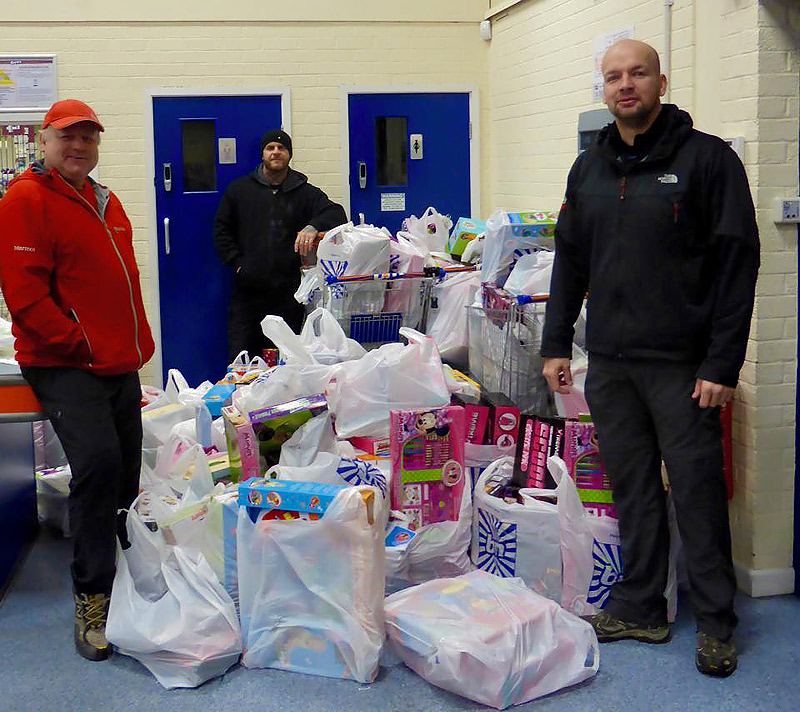
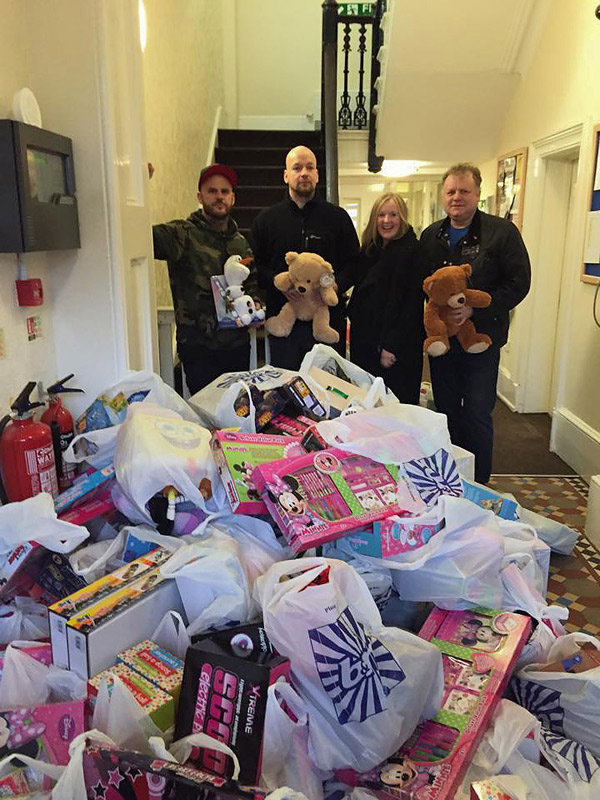
Happy New Year to all my followers and clients past and present, 2014 is now gone and we begin a new year. This year at Christmas I wanted to do something for my local community so with two good friends we managed to raised just over £1800 pounds to give local children something to open on the big day. I sold off 4 limited edition Tiger prints, someone donated a signed football shirt and locals donated what they could to our online donating page.
In the end we managed to buy lots of toys for this local charity that cares for women and children that purely replies on donations. The Arch charity have four refuges for women and children who have experienced, or are at risk of, domestic abuse. They offer accommodation and a place of safety where customers can rebuild their lives before moving on to independence.
Once we had brought everything the next day we dropped everything off and it was a humbling and moving day in many ways, tinted with sadness these places are full to the brim with children hurt and abused along with their mums. When you see people trying to help it restores your faith in mankind. A big thank you to everyone who donated and helped, the toys were divided up between the many safe places this charity runs and all the children had lots to open on Christmas day which was our aim.
After such a moving few days and eating lots over the Christmas period it was back to what I love, being among nature with my camera, working on forthcoming projects that I hope to really spend alot of time on this year. Here are a few of my favorites before the colder weather closed in and the snow came down
So with a weather warning in place, roads closed and quite alot of snow fall on the higher grounds I set off for the Peak District. Extreme weather tests you and your resolve, the wildlife still comes out to feed and carry on their daily life. With a blanket of fresh snow and no tracks walking up to 600m in the dark with a small head torch can be quite strange as everything is covered and you can get very disoriented.Using a compass bearing on your small map and stopping every 100m to get a new bearing you can’t really go wrong when everything around you looks the same and its pitch black.
Once up at the top, I sat down in a small ditch and listened and watched the best I could. You suddenly hear calls, rustling and so forth and in the absence of clear vision your other senses work overtime to compensate you can build up a picture of what’s happening around you and who is around you.
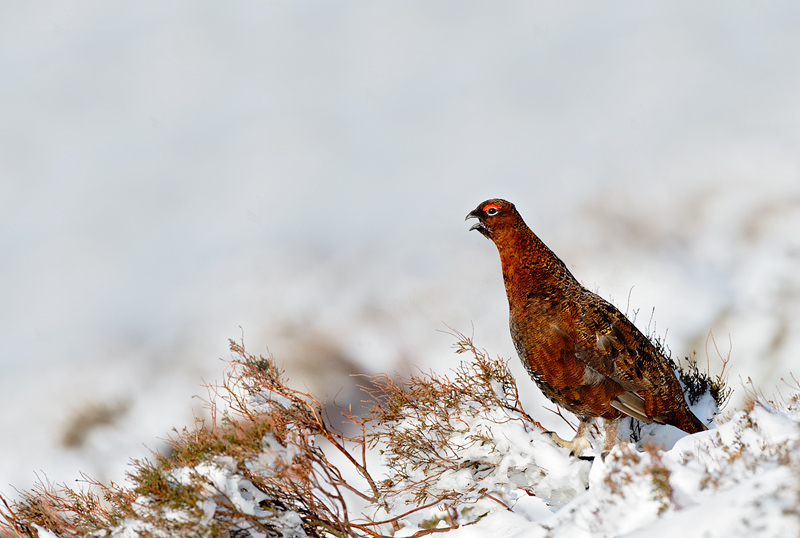
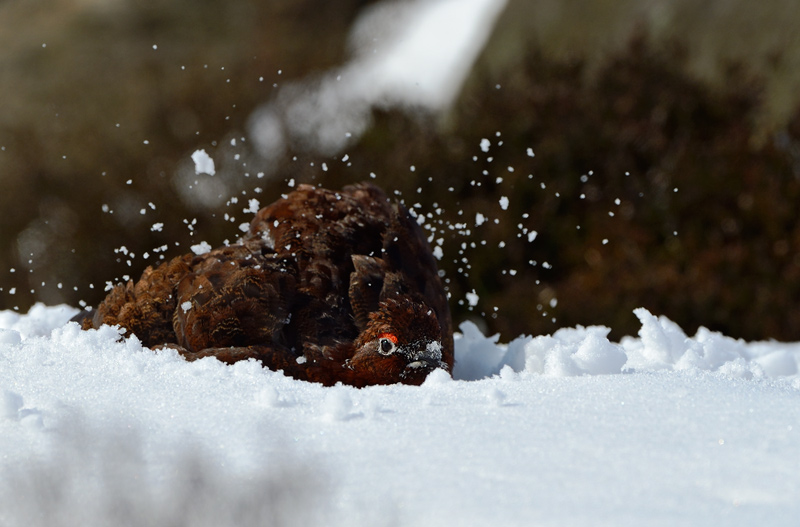
Soon the Red Grouse were calling, seeing each other off with calls all varying in their loudness and pitch. I often feel as though I’m intruding into their world as they wake around me, unaware I’m hiding in the snow. The key to wildlife photography for me is fieldcraft, something I have said, used and applied from the very first image I took years back.
Every living animal knows your there so no matter what you dress as or look like they will have seen you and heard you well before you ever see them. Its how you as the person deals with that level of distribution that’s key and the foundation to your own fieldcraft. Red Grouse are mainly low to the ground, often out of sight, they do two things when they first see you – Fly off, exploding out of the heather and making you jump as you never saw them, or second they see you, put their heads above the heather and call, the sound, pitch and notes they call will depict how concerned they are about your presence.
Go to ground, make yourself small, offer no threat and their calls will slowly start to slow down, fading into a small chuckle and their heads go back down level with the heather as they start feeding once more. The key then is how you get up, get your gear ready and transverse the landscape between you and them without impacting on them and that takes time and skills you can only really learn on the ground yourself.
Those of you that have been with me to the Peak District will know what I mean and I have shown you on the ground how to move and work with these Red grouse and often with a bit of luck you can get really lucky once you apply those fieldcraft skills.
Fieldcraft is a word rarely used today in wildlife photography, many wildlife photographers have never used it now embrace it and talk as though they know it well and it’s their skill. For me it’s the most important element to your wildlife photography and from day one it’s the word I have always used and gone on about. I have written many articles and run many workshops and one to ones covering this topic from the very first day of turning professional.
Fieldcraft can be different from one animal to another. Real fieldcraft is where you arrive somewhere and through your own skills and ethics work out what’s around you, you find tracks, prints, poo and wait and watch and it’s something I have done most of my life. You cant buy this skill, you cant just turn up and the wildlife will be there you can learn it though in its simplest form and then apply it to your photography.
The rewards are massive in the end as you see the animal in its true form and see and witness things you never would see normally. Learning a great deal more about the subject which benefits you and the animal as you can see and watch you subject and learn from them. Fieldcraft and ethics go together for me and its good more and more people are becoming aware of this now and talking about it.
Workshop news and I have a few places for my Wolves trip in July, a few miles from the Russia border. The trip details are here if you’d like to join me. A real highlight for me in 2014 was seeing and spending time watching this family of Wolves, they are so beautiful and intelligent its beyond words. The following slideshow covers my 2014 trip there and a bit of what my clients and I saw.
To see all the other trips, One to Ones and photo tours I run then please click here.
A massive thanks once more to everyone that donated to our toys appeal, thank you to everyone I met in 2014 and for your business and I look forward to meeting new and old clients in 2015. The last twelve months have been really busy for me and this year will be the same, with lots of trips planned alongside my own projects closer to home that I look forward to posting here on my blog. All the very best to you all and thanks again.