As the continued mix of extreme cold weather, then rain seems to be staying with us, this in turn has added a great deal to the photographs my clients and myself have captured over the last two weeks, where the weather has changed animal behaviors, added impact and drama, with the only slight drawback, that its colder and the roads are more difficult to drive on. Nature always finds a way through any hardship and a motto that was taught while I was a serving soldier was- Improvise-Adapt-Overcome. A saying that is well suited to natures power to overcome anything.
I’ve just spent two days at Caerlaverock Wetland Centre, a spectacular 1,400 acre wild reserve situated on the north Solway coast of Scotland with clients. During our winter months this area becomes home to the whole Svalbard breeding population of Barnacle Geese, where some of the best views of this great wildlife spectacle can be seen from the hides within this beautiful place on the North West coast of the UK. On one of the morning we were treating to the most amazing sunrise where twenty minute or so before the sun actually came up the sky was turn bright red. The warm air meeting the cold air resulting in a beautiful dawn.
There are surely few more endearing creatures in the world than the gentle giant of the rainforest, the Orangutan. With around 97% of an Orangutans genetic makeup being the same as a human’s, where such a close affinity to Homo sapiens is obvious upon gazing into their beautiful faces and watching their behavior.
Over the last week I have revisited my Red Squirrel site in the North West coastal region of the UK. It was nice to be back as I hadn’t been back all year due to work. I managed to capture these most adorable mammals in better light, and capturing their cheeky nature. This whole area is managed by the wildlife trust who keeps an eye on the population of Red Squirrels that were almost wiped out 3 years ago. Numbers are slowly increasing with the hard work and dedication of the local trust and volunteers.
I’ve just returned from one of my favorite places in the UK, Norfolk, having not been there for a few months due to being really busy with my photography. It was good to reacquaint myself with some of the best places to view this wonderful counties wildlife. I spent the time photographing my own work, working on ideas I have for projects etc. During my time there the weather became testing at times with heavy rainfall that seems to be the pattern for the whole of the UK at the moment.
I wanted to do something a little different to the in-flight images I have using this same technique with this image above. I managed to capture these Oystercatchers running just before taking off, using a slow shutter speed derived from a low ISO and using an aperture of F5.6 giving me a shutter speed of around 1/30. I still cannot believe you can create something like this with a camera rather than a paint brush.
Whatever the weather and light conditions I truly believe and have always said that there’s always an image to be taken no matter where you are or what situation you find yourself it. This is the advice I always give to my clients, adopting this attitude and ‘can do’ approach will broaden your own ideas along with your creative style resulting in many interesting and different images from your encounters with nature. While at the same time learning new and exciting techniques within your own photography, which can cross over into many different formats of this discipline.
Animal behavior is something I love to capture within my work, and here I managed to capture these Black-tailed Godwits fighting over feeding grounds. You can learn so much from watching wildlife behaviour, and more so the subject you are photographing. Where it can make the difference to your photographs on a massive scale. Sometimes these simple behaviors are right under our noses alot of the time. Always stay tuned into where ever you are and never put the camera down is my best advice.
I had some good sightings during my time there despite tough and testing weather. Using a mixture of fieldcraft and a touch of luck I had some nice encounters. Thousands of Pink, Greylag, Brent Geese have arrived in good numbers now, filling the skies at dawn and dusk. They were all over the place due to the strong, prevailing winds driving in from the coastline. A lot of them were flying above the clouds which made it hard to see but their calls could still be heard.
When I take clients out on my one to ones or workshops I go through their cameras and settings, I also cover fieldcraft, wind direction and the use of natural light, enabling all clients to go home with more tools in their ‘own box’, in turn helping to improve in all aspects of wildlife photography. At the same time showing behaviors in wildlife and the subject in question, looking for impending action and movement, using what’s around you to hide and conceal your presence and much more during these action packed days.
There were good numbers of waders around, and almost everywhere I went the ground was water logged due to high volumes of rain fall, lets hope all wildlife has’nt suffered to much from this wet spell we are having at present. As I said goodbye to Norfolk though, I was treated to a lovely sunset and I captured this lone Kestrel against the setting sun, and also a small group of Greylag Geese flying overhead. Its something of a running joke in that the moment you pack up for home either the subject turns up or the weather changes. This was one of those moments and all you can do is laugh as that’s wildlife photography for you.
It has also been nice to visit some of the areas within the Peak District with clients on one to ones to photograph Red Grouse, Mountain Hares and other iconic moorland wildlife that live in this area. The Red Grouse are a stunning bird and I never tire of showing clients this wonderful bird, so adapted and at home in this testing environment they choose to live in. Again all my clients got some wonderful images and learned alot about fieldcraft, lighting and much more that I show on their day with me.
A big thank you to all my clients over the last few weeks, I run my workshops and one to ones all over the UK and abroad so if any of the workshops I have mentioned interest you have a look at what I offer on my workshops/photo tours page here. Christmas is not far away now and the deadline for postage is approaching so if you’d like to order a signed print or canvas from my online store in time for Christmas then have a look here. I also sale alot of gift vouchers at this time of year as they make an amazing present for someone and can be exchanged for goods or services up to the value from my website.
I like to say a big thank you before I go to David and the students on the MSc Biological Photography & Imaging course, University of Nottingham. I was invited to do a talk just before I left for Norfolk about my work and what wildlife photography means to me and the way in which I work. I presented several slideshows and talked through the images with the class..
It was great to talk to the next general of photographers and I thoroughly enjoyed the day. If you would like to book me for a talk then please email me here, I go through lots of images and they are all presented in a way that takes you on a visual journey. While at the same time explaining everything about my photography and the images presented. I have been very lucky over the last twelve months to speak at some great venues. Speaking about my great passion for wildlife, so thank you too all those people that have invited me, many thanks.
With another year almost over this brings my 2012 photo tour programme to a close. What a year it has been, from the beaches of Norfolk to the heat of the Indian forests of Ranthambhore in search of the majestic Bengal Tigers and the amazing and unique island of Madagascar and its famous Lemurs, to breaching Humpback Whales in the Indian Ocean. Thank you to all of my valued guests for your custom and company and I hope you’ve had a wonderful time on my trips as well as learning more than you knew at the start of your adventure.
My 2013 tours are filling fast, with new destinations added along with my popular and favourite destinations. The emphasis of my tours is to maximize wildlife watching and photography options for everyone while at the same time enjoying and learning more about the habitat and the wildlife that coexists alongside our target species.
I’d be delighted if you’d join me next year or in the future to witness the amazing wildlife my trips offer, while learning more about the subject and photography. The locations chosen for all of my tours offer unrivalled photographic opportunities. The pace of each trip is such that there is ample time to indulge in all that is on offer and maximise the photographic potential of each location.
Here you can read just a few of the reasons why lots of other photographers have chosen to join me.
In February 2013 I will start the year with my amazing trip to the Falklands which is now fully booked. For details of my 2014 trip please click here for more information.
In April you can catch the season moving from winter into spring and see the wildlife of the Norfolk coast come alive on my Early Spring in Norfolk trip with 2 places remaining. Click here for more information and booking form.
Then in the middle of April I travel to the wonderful Dutch island of Texel for my Texel photo tour run alongside friend and fellow wildlife photographer Jeroen Stel who lives in Holland. It’s a haven and paradise for thousands of waders and waterfowl during the spring/summer months where they choose this picturesque island to play out their courtship routines and breed, feeding their young all quite close to you, presenting some of the best opportunities to photograph Avocets, Spoonbills, Caspian, Black Terns, Oystercatchers, Kentish Plovers, and many more waders. Click here to see this photo tour.
Then I round April off and follow through to May with my second trip and head to Ranthambhore for my Tigers of India tour. The Ranthambhore Tiger Reserve is the single largest expanse of dry-deciduous forest left intact in India. It is one of the best places in India to see these amazing animals in the wild. My first trip is fully booked and I have a couple of places left on my second trip. For details please click here. If you would like to buy one of my limited edition Tiger prints that help a charity I support then please click here to be taken to 21 Century Tigers website.
The month of June finds me travelling north to two amazing places for wildlife. Firstly my ever popular trip to the Isle of Mull which lies on the west coast of Scotland. It has a breathtaking coastline of 300 miles and the climate is a mixture of rain and sunshine. The island is a wonderful place to see Golden Eagles, White-tailed Eagles, Otters, Porpoises and a whole host of Hebridean Wildlife. Come and join me as I take you around this beautiful island on this amazing 6 day/5 night trip. I still have places available so click on this link to see the details.
Later on in June I have a new photo tour-Stunning Shetland, where we will spend a whole week on this wildlife packed island. I will be working with my friend who lives on the island to deliver you some of the best animal and birdlife in the UK. I only have two places left so for more information please click here.
I start the month of July off with a brand new trip to the wild forest of Finland. You will get the opportunity to photograph wild Brown Bears, Wolves and the very unique Wolverine all from purpose built professional hides perfectly designed for photographers. These shy, iconic predators will go about their business around you, giving you a unique insight unto their lives at the same time giving you some if not the best opportunities to photograph these rare and elusive predators. I have a couple of places free so for more information or to book click here.
Another brand new photo tour for 2013 is my Jaguars of Brazil trip. Join me on this amazing 8 day trip in August to the Pantanal in Brazil to see the beautiful Jaguar in its wetland and woodland habitat. Wildlife in the Pantanal includes Anteaters, Howler Monkeys, Jaguars, Giant River Otters, Caimans, Anacondas, Ocelots and Capybara, along with a host of colourful and exotic birds. I have places free on this trip at present so for more information or to book please click here.
In September I am planning a 9 day trip to Sumatra which hopefully will be completed and ready for you to view very soon. Then in the month of October it’s my Madagascar photo tour. After this year’s successful trip to this amazing island I am doing another 11 day trip photographing the very unique wildlife this island has to offer. For more information click here.
I then finish the year off with my Winter Waders in Norfolk trip. This place is famous for its winter flocks of Geese, Wildfowl and Waders who begin to gather here to make their home during our winter months. I have places free at the moment so for more information please click here.
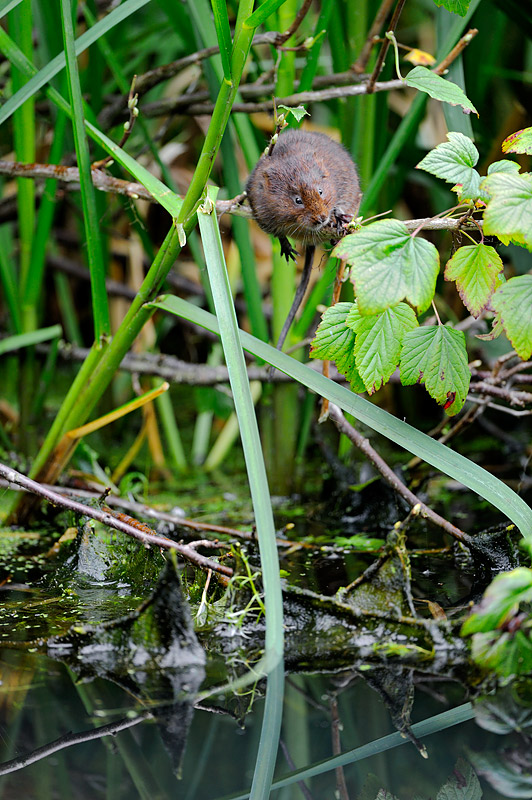
In between all of these trips I also offer workshops to Skomer to photograph the Puffins, Mountain Hares, Spring Tides & Barn Owls. I also run workshops for Dippers, Red Grouse and Water voles which are still as popular as ever, all these worshops can be viewed here. I take clients to places I have visited since my early teens so they are very personal to me and make great one day workshops photographing these subjects as they go about their lives in the wild.
Lastly, my One to Ones, which are still very popular. The list of places throughout the year and more information can be seen by clicking on this link. Many thanks to all of the wonderful people that I’ve met this year and I look forward to meeting new and existing clients in 2013.
Just before I go if your looking for a wildlife calender for 2013 that helps and supports the amazing work of the wildlife trusts then click here to purchase this amazing calendar. I am proud to say that my Otter image has been chosen as the front cover and also January image of the month.
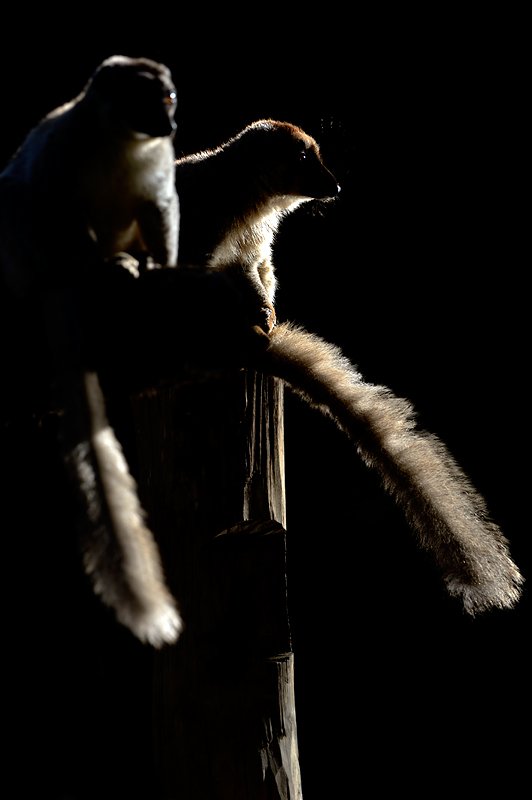
Madagascar the fourth largest island in the world! Unique due to its diversity of species. It is known as the 8th continent and is a breathtaking place for wildlife. I have just returned from this amazing place where my 11 day photo tour took clients to some of the best places on the island. Everyone witnessed the amazing aray of wildlife, flowers, and flora that this special island has to offer. The image below is of two Common Brown Lemurs sitting on posts near to the water as the evening sun began to set. I under-exposed by two full stops to gain this effect.
A Golden Sifaka Lemur shown above moving through the trees which I was lucky enough to capture here with a fish-eye lens. I have changed the image to black and white showing you just how dense this area of primary forest in Mantadia National park is. Another fisheye image from the same amazing forest can be seen below, showing some of the forests strange and wonderful trees.
Madagascar as we now know it, separated from the African mainland nearly 160 million years ago. Then 80 million years ago it broke away from India and from that moment it has stood alone in terms of an island within the India Ocean. This isolated so many species of wildlife to this one island, thus making its wildlife very different and unique, where many of the species only live and exist on this island. You have to constantly look twice at things as you are just never certain if what you’ve just seen is living or a piece of wood, a twig, branch or something like that.
This image below clearly demonstrates what I have just described. Its a Leaf-Tailed Gecko and it only lives on Madagascar in a few places on this island. It mimics the shape and colours of tree bark to blend in and hunt. It took several minute’s to see this amazing animal after our brilliant guide had found him for us.
The plants, flora and animals are amazing on this island and new species are constantly being found by scientists. The shapes and designs of them really intrigued me, with their armour style leaves, amazing patterns and spiders webs shinning like diamonds in the morning light with droplets of dew decorating them as seen in the following image, along with some of the amazing leaves and flora. You can see a hole which marks the entrance to this spiders den. I gazed at its design for ages with no sign of the occupant. We get some much from nature, ergonomic designs, waterproofing methodology and aerodynamics, all found in species of plants and animals everywhere on this island.
Madagascar is most famous for its wide variety of lemurs, these amazing creatures are found nowhere else in the world and new species are regularly discovered. The different species of lemur are spread throughout a variety of parks and reserves on the island. This lemur was one of the main species everyone came to photograph. With their kind faces they were the perfect animal to photograph during our trip to this mesmerising island set among the Indian ocean.
Due to massive environmental degradation Madagascar’s species are some of the most threatened on the planet. With widespread destruction of habitat known as “Slash and Burn” which can be clearly seen once you travel around the island either by air or road. This technique that is killing the life blood of this country is the traditional way for locals to plant rice, beans and corn to live off.
Small villages supporting many families are forced to settle right up to the edge of these primary forests where it’s clear to see the pressures on both the wildlife and the growing population. This has taken so much of Madagascar’s forests and replaced them with bare land covered either with crops or left just baron. Which in turn has rendered many species on the endangered list. None more so than the islands Lemurs, known for their wide eyes and by far the most famous of the islands residents.
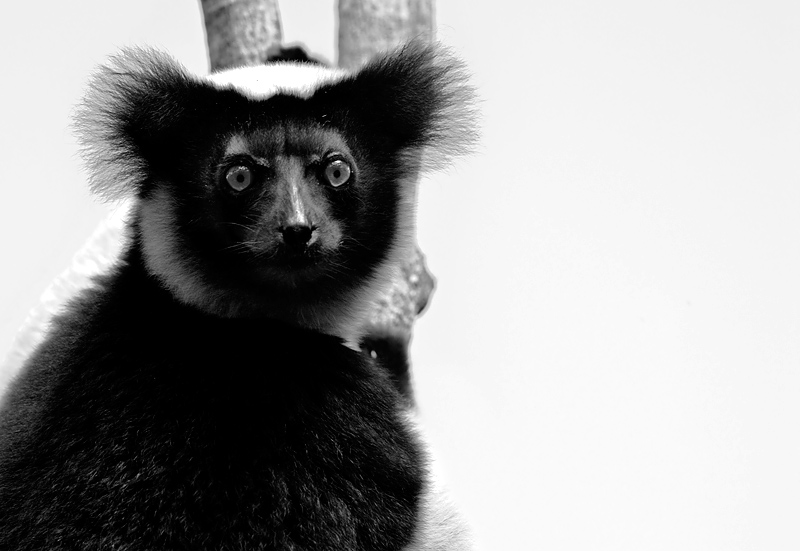
Our trip started in the forest resort of Vakona Lodge, a complex of bungalows sitting amongst the natural forests of Madagascar. We were here for 3 days, exploring Andasibe and Perinet National Parks which are set up to safeguard this amazing primary habitat of Madagascar. One of the famous inhabitants is the Indri Lemurs. These are the biggest of the lemurs with an incredible call that travels for miles. These live in the tree tops and rarely come down as they have a complete fear of man in Andasibe reserve. Capturing images of them was a little tricky due to the dense habitat but all of my clients managed to capture some wonderful images of this amazing lemur.
We had a great guide throughout the trip who’s knowledge helped us all to find and photograph the stunning wildlife this place has to offer. During our stay at Vakona lodge we went on a couple of night walks around these reserves. Madagascar is famous for so much wildlife, alot of which only comes out at night giving you a completely different experience than that in the day. When you lose one of your senses your body over compensates which means your hearing and sense of smell almost doubles in the absence of your eyesight. We’d stay on a road and only venture slightly off path once one of the guides had spotted something with his torch.
A photograph of a Boophus Tree Frog, which has adapted itself to completely blend into the leaves it uses to live and hunt from. We could only just make him out once a small torch light was placed under this leaf. It exposed his shape and his markings that mimic the leaves he uses, just how amazing is wildlife!
A Golden Web Spider sitting among its web waiting for the night time insects to fall fool of its beautiful woven web.
This amazing creature just mesmerised me. It looked like something from a bye gone era, not out of place in the dinosaur age I thought. It’s a Short-horned Chameleon. I was using a macro lens for this image and the depth of field was very narrow. So I focused on his head while leaving his curly tail in the image to gave a sense of size and depth to this image. What a wonderful living creature this was to see and photograph, the night time walks were truly amazing.
During our time at Vakona Lodeg we had 3 days of wonderful walks through the primary forests of Mantadia National Park and Andasibe National Park, both areas saved from the slash and burn policy that has ravaged the forests of Madagascar. We came across a lot of wildlife during our time here and one of the best encounters was of a group of Golden Sifaka Lemurs.
These are one of my personal favourite Lemurs with their striking colours. This image is taken with my fisheye lens. I wanted to try and show you how dense these amazing forests are and I managed to sit down as he fed above my head. I was with a completely wild Golden Safaka Lemur, feet above my head, as he reached for this branch to feed on. A truly amazing moment.
A truly beautiful species of Lemur that only lives in this area of Madagascar, hanging onto survival with its forest homes being cut down. A real pleasure to see this lemur who once covered the whole area of Madagascar. Now only really existing on the east coast in protected areas.
Another wonderful encounter at Mantadia National Park was seeing a pair of Collared Nightjars. Our guide had spotted these among the forest vegetation cuddled up so close to each other. These birds have very poor eyesight during the daylight hours as they are totally nocturnal birds.
This renders them a little vulnerable during the day from prey. I was also told by our guide people hunt them up for food. One by one we carefully approached these sleeping beauties and took a few photos of them before leaving them in the peace that we found them. They had such stunning markings and feathers and were so well camouflaged for their forest home.
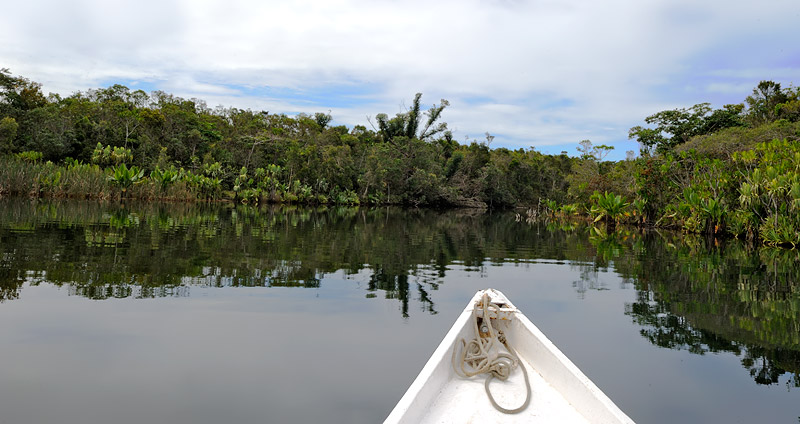
After an amazing start to the trip we said goodbye to Vakona Lodge and the amazing reserves we had visited, and headed towards our next destination. After a 45 minute boat ride along the Pangalanes canals, passing by local villages on the east coast of Madagascar we arrived at the private reserve of Palmaruim.
Staying at the Palmarium Lodge all clients had a wonderful bungalow overlooking the large lakes giving that real contact with nature feel within the location. This place has around 8-10 different species of lemurs including nocturnal lemurs too. Once we settled in we headed out for our first night walk with our guide at Palmaruim to witness the unseen wildlife that this area of Madagascar has to offer.
A wonderful close up of this Boophus Tree Frog. Lit up by our guides torch light.
We had an incredible encounter with a Pigmy Kingfisher during our night walk. This bird is only found in Madagascar. The light from the guide’s torch brings out the wonderful colour of its plumage under the cover of the moonlit evening. During our night walks we had to stay on a path and could’nt go off track, so to see this wonderful bird so close to our path was amazing.
The peace and tranquility of this place made it a wonderful few days, with each bungalow set among the reserves vegetation. A lot of the Lemurs here live in lowland forest, which is completely different to that of the primary forests we’d spent the previous several days at beforehand. Most of the lemurs were fed here and made for wonderful images for the clients. Seeing these beautiful primates up close with the help of a few bananas from our guide.
The wonderful face of the Coquerel’s Sifaka here, again only found now in a handful of places on Madagascar.
This is the Crowned Lemur named after the crown of brown colour seen on top of his head.
Along with the Golden Sifaka or Diademed Sifaka Lemur these Indri Lemurs are one of my favourites. It was very interesting to see that here in their lowland habitat the colour is more darker than that of their black and white counterparts that live in the primary forests of Andasibe and Mantadia reserves which we’d seen earlier in our trip. Indri are the biggest Lemurs and for me are beautiful and very graceful as they move through the canopies of the forests.
During our stay at Palmaruim we were able to photograph the largest of the Chameleon family, a true dinosaur looking creature that only lives in a few places now. The Panther Chamelleon has a massive tongue which it hunts and catches its prey with. Their markings are truly special and here I captured him moving from a high branch to a lower branch. Giving a different view point to this amazing living creature who’s markings are just stunning.
We had a great time at both Palmaruim and Vakona Lodge which are staying on my itinerary for next year’s Madagascar photo tour as clients really enjoyed these places and its peacefulness along with its variety of wildlife. I took a few images of a wonderful spider we kept seeing during our time on Madagascar, the stunning Golden Web Spider.
The following day we took the boat once more but this time headed to Tamatave for our overnight stay at the Sharon Hotel. Traveling for two hours this time to reach our destination by boat we settled into our wonderful hotel in readiness for our early morning flight to the beautiful island of Sainte Marie where we would be finishing our photo tour hoping to see the Humpback Whales that come to this area to give birth and raise their calf’s.
Sainte-Marie, known as Nosy Boraha, is an island off the east coast of Madagascar, it’s a fantastic location to see Humpback Whales during the months of June until September. The channel between Sainte-Marie Island and Madagascar is a hot spot for these whales. Substantial groups of Humpbacks migrate from the Antarctic to this idyllic breeding place. These quiet giants find conditions here favourable for the growth of their young and it is also well suited to their courtship before their return towards the cold seas in late September.
We spent 2 days and nights at our beautiful Masoandro Lodge, with 1 whale watching trip each day. The first day we saw nothing as we sailed in our small boat in the vast India Ocean. Crossing our fingers for the next days trip we all hoped we’d see the incredible Humpbacks.
I see many things while among nature that blow me away, many private moments I’m able to see and photograph, where I count myself very lucky indeed. So following a mother Humpback Whale and her calf in the Indian Ocean the following day ranks right up there with the very best moments I’ve been privileged to see in my lifetime so far. The weather had turned from sunny to cloudy on this day and the sea looked rough, very rough and all of my clients decided to give the boat trip a miss instead opting for our last day in Sainte Marie, so I went alone, as fortune favours the brave I believe.
The sea was choppy at first but the weather broke and the sun came out. We adopted a different tactic than that of the previous day and waited for signs that whales were around. We saw one and ended up following her and her calf, the guides kept the boat at some distance away and stopped the engine as not to make a single noise. Floating in the massive Indian Ocean in a small, tiny boat with the current throwing you around certainly gets the blood pumping through your veins to say the least.
We had followed her and her calf for nearly an hour, often we just drifted as they dived and played around our tiny boat. Sometimes stopping to play and flap one of their fins at each other, such lovely tender moments for such a massive animal. A few minutes had passed where we thought they’d dived deep and vanished. Then from nowhere the female jumped up, clearing the sea then landing in seconds. I had around a faction of a second to take these images. The power, noise, splash and the wave that happened during and after this jump, I just cannot explain in words.
Never have I seen anything so powerful created by a living animal in all my life. I was speechless. The following sequence of images captures that incredible moment. What a way to end an amazing trip to Madagascar, my clients went the following day and were also able to see this pair and take some lovely images but the female never jumped so I count myself very lucky that day, as I witnessed something that will stay with me forever.
I would like to thank my clients who came from as far afield as the USA and Australia to join me on my photo tour. We had a great time, brilliant images, fantastic accommodation and a real laugh along the way. Thanks to Shaun Stanley from World Primates Safaris for helping me with the logistics on the ground, guides, hotels and transport as it’s the small things that make the big things happen. And lastly I would like to thank my guide, Rija whose knowledge of the amazing wildlife in Madagascar helped us all in capturing some wonderful images with our cameras.
I will be returning to this breathtaking island of Madagascar in October 2013. Visiting a lot of the places you’ve seen on this blog. So if you’d like to join me on this amazing photo tour next year then please click here to be taken to the link and all the information you will need, many thanks.
Slovakia is one of Europe’s most mountainous countries, with lofty summits and deep-cut valleys making up almost a third of its area. With the dramatic Tatra Mountains forming an amazing backdrop to this stunning area. The Carpathian Mountains in Slovakia has everything a photographer could wish for, beautiful landscapes and wildlife with that unspoilt feel to the whole area which is set in one of Europe’s most dramatic mountain regions. I’ve just returned from this amazing place after running a photo tour there with clients to photograph the beautiful Brown Bears that live in this region of Europe. It was my first trip there and I was blown away with the beautiful landscapes and wildlife.
This country offers a chance to get close to these amazing and powerful mammals from well protected hides. Where you are able to photograph wild Brown Bear in their natural habitat. Our hides were located at beautiful locations, very basic in design as they double up as places in which the rangers count the bear numbers. The scenery around each one was stunning, providing you with the perfect backdrop for Bear images.
Working from hides positioned in varied habitats gave us the best opportunities to photograph this amazing predator in the safest way possible. Each guest had the opportunity to photograph the animals in different locations against a variety of backgrounds, gaining a unique and privileged insight into their lives.
Photographing the Brown Bears took place mainly during the early mornings and nights, spending the time in these 2-3 person hides. During the day we grabbed as much rest as we could at our comfortable lodge and I also presented some slideshows which gave an insight to how I work and the key elements that I feel are important within wildlife photography. In between this I went through some of the images clients have captured, offering help and support to improve what they had already captured during their time with me.
In the 1920’s Slovakia’s brown bear population was almost eradicated by hunting. From around 1932 until the 1960’s the hunting was stopped and the bears were protected. However, in the 1960’s this ban was lifted as the population of bears had reached a high level and conflict with humans was becoming a common event. During this time though the population sharply dropped and by the mid 1980’s the bears were again at risk of eradication.
EU legislation was imposed as the European brown bear was now classed as an endangered species and therefore protected by EU law. To date the hunting of bears is still allowed in the Carpathian Mountains, but the number of animals killed is strictly controlled and only regulation shooting or protection shooting is permitted. Keeping the population at around just over 1,000 brown bears living in Slovakia’s mountains.
Still largely undeveloped, the glorious natural landscapes remain home to many animals such as Chamois, Marmot, Lynx, Eagles and Wolves. The mountains are also home to the brown bear, one of Europe’s most impressive and threatened predators. Amidst rugged mountains and ancient forests lies hidden one of the last strongholds of European wilderness. This whole area represents thousands of square kilometers of nature encircled by a sea of civilization.
It felt almost like a miracle that in the middle of Europe there still exists such a refuge for these amazing mammals. Throughout Europe there remains almost no area untouched by humans. Wildlife though is returning again to these places where it was once forced out. Around sixty years ago it wasn’t chamois or deer herds that roamed these valleys, it was cattle, grazing. Vast forest areas were destroyed and burned to make way for grazing areas for the livestock. Wolves were completely wiped out, and the entire National Parks records only showed several bears remaining.
Everything has changed since then, the valleys have become a safe home once more for the brown bears. Wolves are increasing their numbers with new cubs recorded each year. Species only found in primeval forests many years pervously are reclaiming their territories once again. This fascinating evidence of the power of nature tells us that many similar stories can happen anywhere in the world. We only have to give nature enough time and space and by allowing this to happen the wilderness will return, and will become a place of inspiration for us all. A place where we can meet wild animals, living their lives in peace, while wondering through these ancient forests once more.
I felt I’d almost been transported back in time, hundreds of years back in time when these animals would have roamed all if not most of Europe freely without persecution. This story for me though is as much to do with the people who work and live in this area as it has the bears. Their patch covers hundreds of kilometers and staff and resources are thin on the ground to say the least. But it’s these guys here and many others throughout the world that are helping key species to hang onto life among the surrounding populations.
Whether it is Africa, India or here in Slovakia these people are key to the subjects survival, their knowledge, passion and love for the subject cannot be counted. In this area only 30 Brown Bears remain, the rangers have two camera trips, placed in and around these basic observation hides that we used, which record bear numbers at certain parts of the year.
Seeing a different environment for me always sends my brain into over drive, new smells, different tracks, different animals and remains of deer eaten by Lynx that roam these forests. I sat by the bones to try and get an idea of size through the prints of the these very rare animals. Just sitting and watching always helps me in my thought process when trying to build a picture or recreate what went before me at that particular place.
To get any idea of the numbers of bears in this area or to see if any have gone missing the rangers place small amounts of maze around these hides. This is designed to basically get the bears to come to the area in which these several hides are placed. So they can keep tabs of the population. Either by using the camera technology or good old fashioned sitting and waiting. Censors are conducted once or twice a year at key times.
The other reason this food is put out is to hopefully discourage the bears at key times of the year traveling down to the towns and villages below these areas in which the bears live. Where conflict often results in the killing or serious injury of the bear, as people protect their property or livelihood.
To hear this was a shock for me and really sad as I hate any form of cruelty towards any animal, but in panic people often dont think until after the event. Unfortunately this means that the lives of around 30 bears lie in the hands of wonderful and passionate people that work in this beautiful area daily. With population numbers increasing and tourism on the up, the bears sole existence is in the hands of man. On one side you have the gun, either to protect or to hunt them and on the other you have this amazing animal who was here first hanging onto life, while roaming these vast forests that once almost stretched the whole area of Europe.
They where just so amazing to watch and at times very comical and enduring. Here a female is seen scratching her nose area after a fly had just landed. The fly can just been seen hovering above after she’s moved the fly with her massive paw.
So for us as wildlife photographers on this trip, the real work of getting to see the bears had been acheived, as over the many years the rangers had placed maze as a supplementary food source, designed to bring these amazingly shy bears into a few areas of safety within this vast mountainous range, where you just may get the briefest of glimpses into their lives.
This place really only has one road in and one road out, you cannot roam around or create damage, as there are very strict rules in place to protect the wildlife. It’s also not safe to wander around because if you spook one of these bears they may attack you, otherwise they are frightened of man and just walk away. Often though at dusk you might see a lone bear using this road to navigate their way through the forests or just a short cut.
Once they have eaten the maze they disappear just as quickly as they had arrived, no playing around, no climbing, nothing. They are so quite for their size, and without any indication alot of the time they just turned up. Sometimes though you would hear a distinct noise of a fallen branch snap, breaking the silence of the moment, as a bear approaches or passes. Heart racing as your eyes almost pop out of your head looking for what had made the noise. Alot of the time the noises came from deep within the forest canopy so it left you wandering whether it was a bear or not.
I explained that as a wildlife photographer myself you have a duty of care to the subject but also to the viewing public, to tell the story and facts behind the image, as the power of wildlife photography rests on the belief that the image you captured represents an event that occurred naturally in the wild, something witnessed and recorded by the photographer with his/her camera at that given time. The moment it goes away from this is when you have to explain to the viewing public what is behind the image and how you took this.
For me personally you have to have a complete transparency to your work, even more so as a professional, in order for your peers and public to judge your skill when working with wild animals, demonstrating fieldcraft and sharing subject knowledge. In this case we wouldn’t have got near these bears without firstly the expert help from Jaro and secondly the small amounts of maze placed out for the bears.
This maze is only placed out for counting purposes at certain times of the year and for the very few photo tours that come to this beautiful place throughout the year. Again this is done so in such a delicate way as not to impact on any the wildlife and more so the bears. Which made the whole experience feel that bit more special knowing that only a limited amount of the public have been where you were sitting.
It was good to see that the bears hadn’t become use to the food and at the same time would never become use to humans or any form of interaction with them, which in turn will keep them safer from being harmed in the future. All that was left to do for us was to wait in those areas inside these very basic hides for our moment with this amazing and very rare mammal.
My aim as the professional wildlife photographer on this trip was to have all the clients ready for those moments and to have the confidence to use their equipment to the best of its ability, while watching and learning about this amazing predator. Everyone on the trip captured some really nice images of the bears, as at times they were elusive, which in turn made those encounters we did have just that bit more special.
I met some lovely people during my time there and I would like to thank every one of you for all the laughs, the company and for sticking with the early mornings and late finishes very well. I wish you all well in your photography, many thanks.